Key facts of the era
Key Events
Journey through the events, people, wars and ideas that shaped Slovakia, from the Neanderthals of the Tatra foothills to the republic of today.
Follow the Celts of Bratislava and the Romans on the Danube, Samo's revolt against the Avars, Pribina's Nitra and Great Moravia with Cyril and Methodius, the Hungarian kings and the mining towns of Kremnica and Banská Štiavnica, Pressburg as capital of Royal Hungary, the Ottoman frontier and the uprisings of the magnates, the national revival of Bernolák and Štúr, Czechoslovakia and the Slovak State, the National Uprising of 1944, the Prague Spring and the Velvet Revolution, and independence in 1993.
Meet the princes, kings and presidents who ruled the Slovak lands, and the prime ministers and Party leaders who governed them.
From Samo, Pribina and the princes of Great Moravia and the kings of Hungary to the presidents of Czechoslovakia and Slovakia, with the prime ministers and Party leaders who governed the country.
A Journey Through the Ages
Slovakia, a landlocked country of mountains and fertile lowlands in the heart of Central Europe, between Czechia, Poland, Ukraine, Hungary and Austria, has been inhabited since Neanderthals lived beside the warm springs of Gánovce below the High Tatras about 100,000 BCE. Neolithic farmers, Bronze Age metalworkers and Hallstatt hillfort builders were followed by the Celtic Boii and Cotini, by Roman legions on the Danube frontier at Gerulata and Laugaricio, and by the Germanic Quadi, before Huns, Lombards and Avars passed through and from the 5th and 6th centuries Slavic settlers took the land.
Samo's tribal union of about 623 and Pribina's Principality of Nitra led to Great Moravia, whose Mojmirid princes received the Byzantine missionaries Cyril and Methodius in 863 and whose ruler Svatopluk made it a great power before it fell to the Magyars in the early 10th century. Slovaks and Czechs both claim Great Moravia as an ancestor, and historians still disagree about where its heartland lay. From the year 1000 the country belonged for nine centuries to the Kingdom of Hungary as Upper Hungary: German settlers founded the mining and market towns of Spiš and the Hron valley, the Mongols devastated the land in 1241–1242, Kremnica minted the gold florin, Hussite captains and Jan Jiskra's Brethren held the north, and Matthias Corvinus founded the Academia Istropolitana at Pressburg.
After Mohács in 1526 Pressburg (Bratislava) became the capital and coronation city of Habsburg Royal Hungary while the Ottomans held the south, and the estates' uprisings of Bocskai, Bethlen, Thököly and Rákóczi, the Reformation and the Counter-Reformation left deep marks. In the 19th century Bernolák and Štúr codified a Slovak literary language, the Slovaks took up arms in 1848, and Matica slovenská was founded in 1863 and dissolved in 1875, as Hungarian governments pursued Magyarisation and hundreds of thousands of Slovaks emigrated to America. Hungarian historians have long described this as the building of a single political nation, Slovak historians as a campaign against their own.
In 1918 the Slovaks joined the Czechs in Czechoslovakia, whose democracy was strained by Hlinka's autonomists and by Munich and the First Vienna Award in 1938. The Slovak State of 1939–1945, led by the priest Jozef Tiso as a client of Nazi Germany, deported most of its Jews and was challenged by the Slovak National Uprising of 1944; Tiso was executed in 1947, and the Beneš decrees expelled most of the Carpathian Germans and burdened the Hungarian minority. Communist rule from 1948 industrialised Slovakia and ended in the Prague Spring of the Slovak Alexander Dubček in 1968, federation in 1969 and the Velvet Revolution of 1989. Slovakia became independent on 1 January 1993, was led through the 1990s by Vladimír Mečiar, and joined NATO and the European Union in 2004 and the euro in 2009; the murder of the journalist Ján Kuciak in 2018 and the shooting of Robert Fico in 2024 marked a polarised politics. Explore the eleven ages below through selected events from the timeline.

250,000 BCE – 451 BCE
Neanderthals, farmers and the first metalworkers.
From the Neanderthal of Gánovce and the Venus of Moravany to Neolithic farmers, Bronze Age cultures and the Hallstatt hillforts of the Danube and the Carpathians.

About 22,800 BCE a Gravettian hunter carved a small mammoth-ivory figure of a woman, found at Moravany nad Váhom in the Váh valley.

About 5000 BCE the Bükk culture decorated pottery and used the vast Domica Cave of the Slovak Karst, now a World Heritage Site.

From about 4800 BCE the Lengyel culture dug circular ditched enclosures, among the earliest monumental structures of Central Europe.

About 700 BCE the hillfort of Molpír above Smolenice became a fortified centre of the Little Carpathians.

450 BCE – 622
Celts, Romans on the Danube and the coming of the Slavs.
The Celtic Boii and Cotini, the Roman Danube frontier and the Germanic Quadi, the Marcomannic Wars, the Huns and Lombards, and the arrival of the Slavs and the Avars.

About 60 BCE the Boii of the Bratislava oppidum struck silver tetradrachms bearing the name Biatec, one of the earliest personal names recorded in Slovakia.

In 19 CE Rome set the Suebian Vannius over the Quadi north of the Danube, a kingdom that lasted until his fall about 50 CE.

During the Marcomannic Wars the emperor Marcus Aurelius is said to have written part of his Meditations in his camp on the Hron.

In the 5th and 6th centuries Slavic groups of the Prague–Korchak culture settled the Váh, Hron and Nitra valleys.
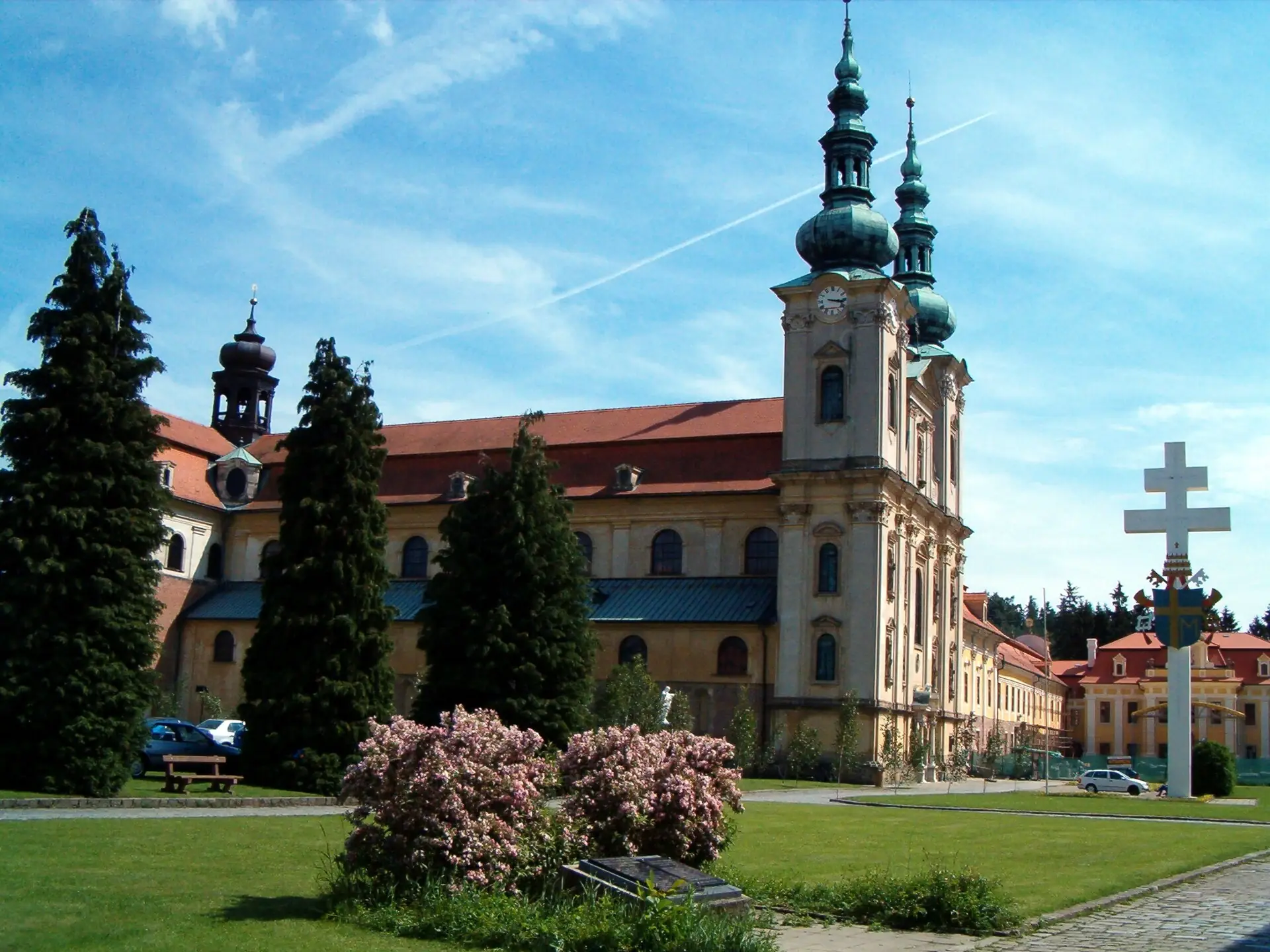
623 – 906
Samo, Pribina and the realm of Cyril and Methodius.
Samo's tribal union, Pribina's Principality of Nitra and Great Moravia under the Mojmirids, with the Byzantine mission of Cyril and Methodius.

The Frankish merchant Samo united Slavic tribes against the Avars about 623 and defeated the Franks at Wogastisburg in 631.
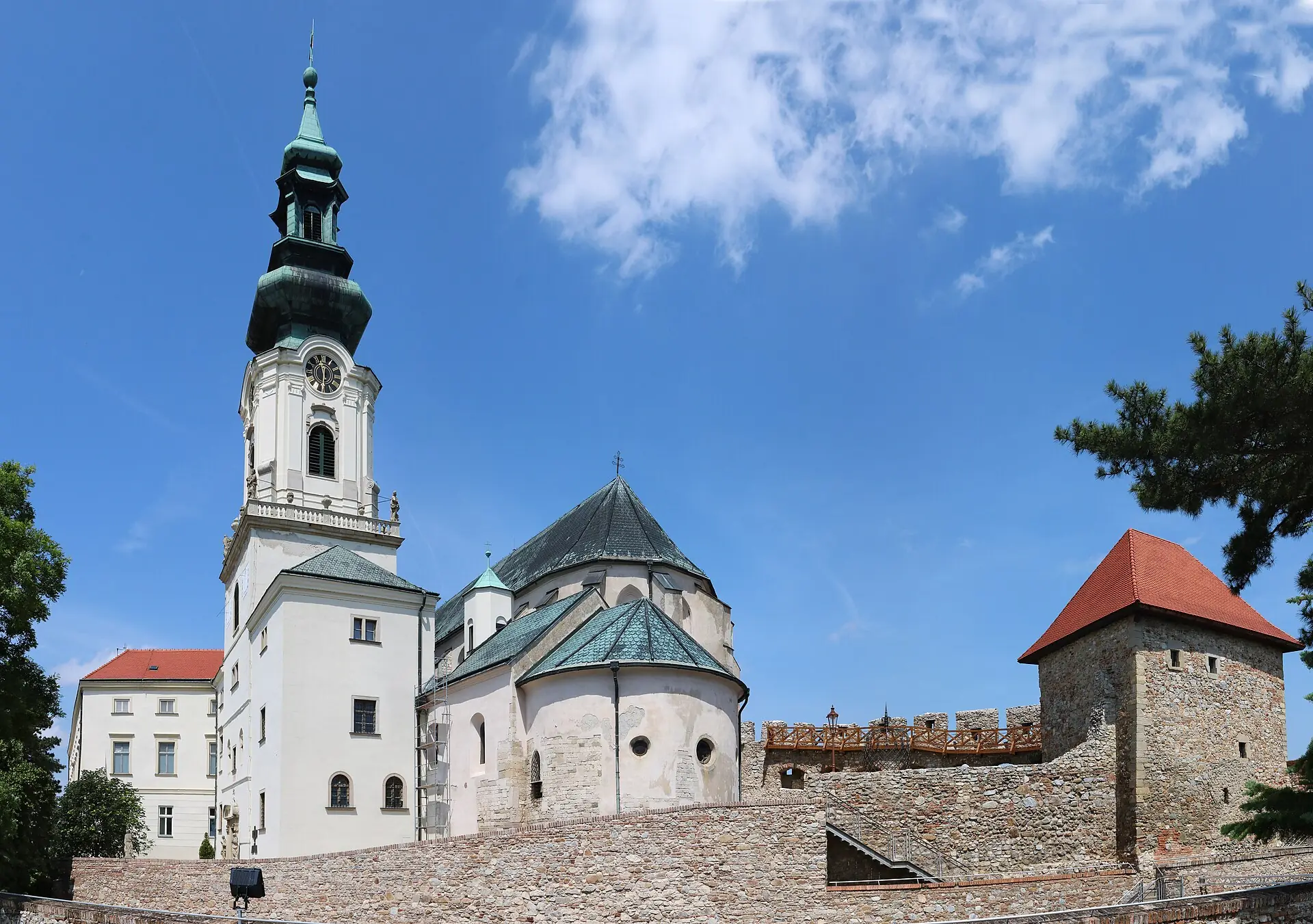
About 828 Pribina, prince of Nitra, had one of the first Christian churches in the Slavic lands consecrated at his seat.

Constantine, later Cyril, devised the first Slavic alphabet in the early 860s for the Moravian mission.

Weakened by Frankish pressure and Svatopluk's succession quarrels, Great Moravia disappeared before the Magyar cavalry about 906.
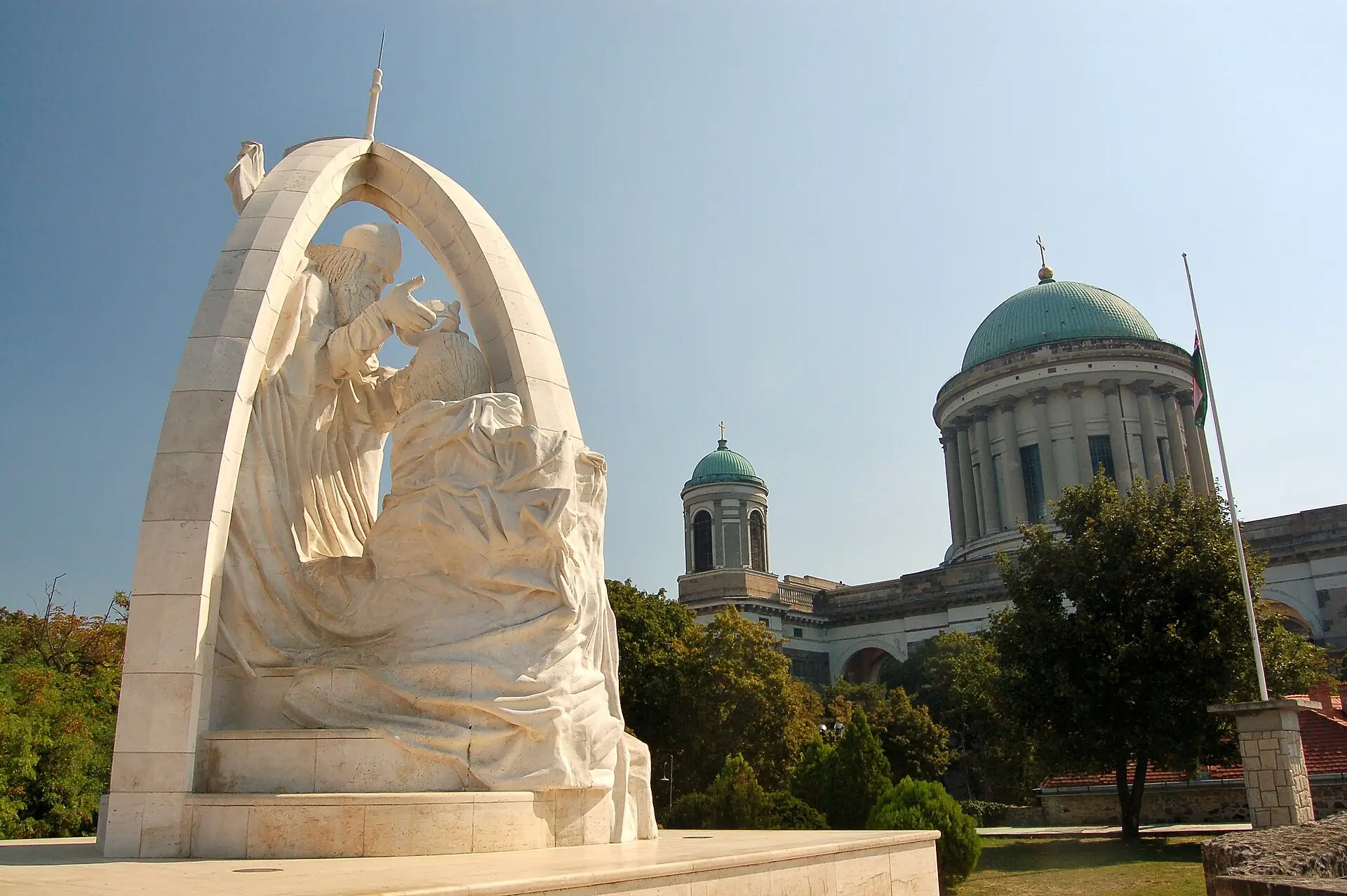
907 – 1301
A frontier of the new Christian kingdom.
After the fall of Great Moravia the territory became part of the Kingdom of Hungary; Nitra was a ducal appanage, German settlers founded mining and royal towns, and the Mongols invaded in 1241–42.
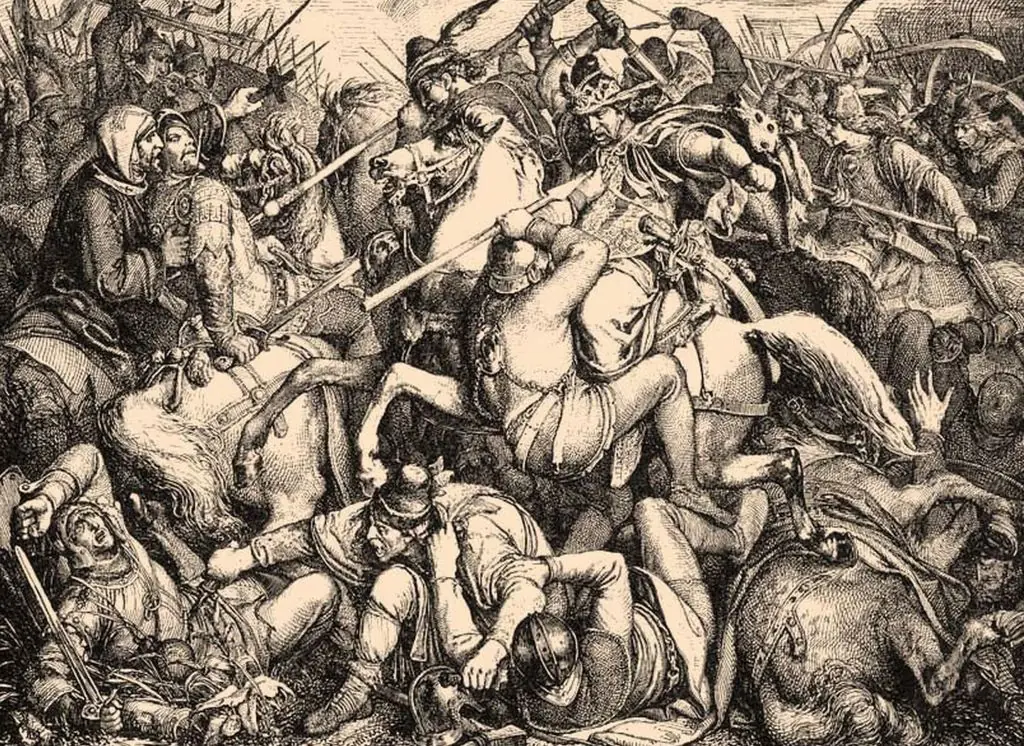
In July 907 a Bavarian army was destroyed by the Magyars near Pressburg, a battle that ended Bavarian rule on the Middle Danube and confirmed Magyar control.

In 1222 Andrew II granted his nobles the Golden Bull, a charter of liberties that shaped Hungarian noble rights for centuries.

In 1241–1242 the Mongol army devastated much of the kingdom, and Béla IV answered by encouraging the building of stone castles and walled towns.
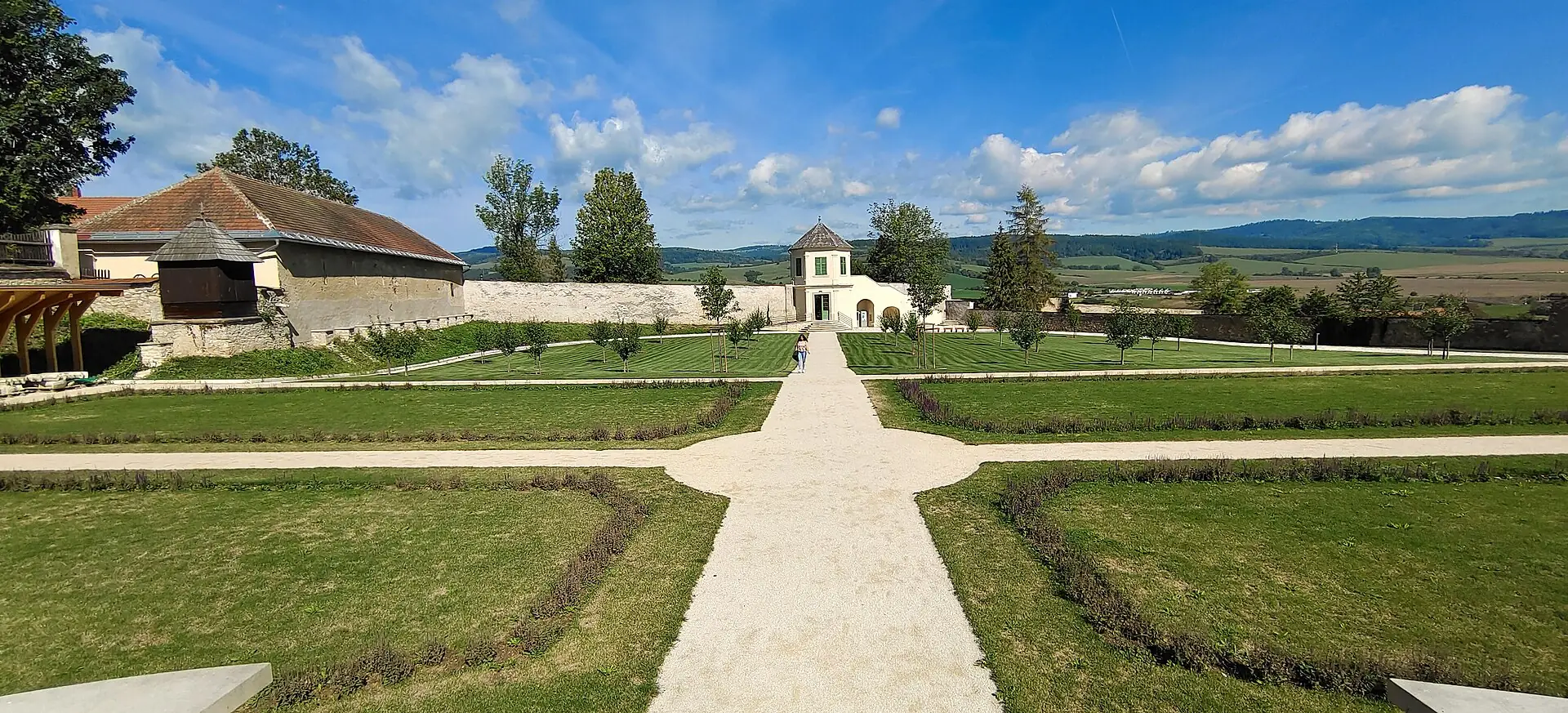
From about 1150 the kings brought German settlers into the Spiš, who founded towns and later won their own privileges.

1302 – 1526
Gold, silver and the Hussite wars.
Matthew Csák's domain, Angevin and Luxembourg kings, the gold and silver of Kremnica and Banská Štiavnica, Hussite raids and Jiskra's Brethren, and Matthias Corvinus's Academia Istropolitana.

Matthew Csák ruled a quasi-independent domain of the northwest from his castle of Trenčín until his death in 1321.
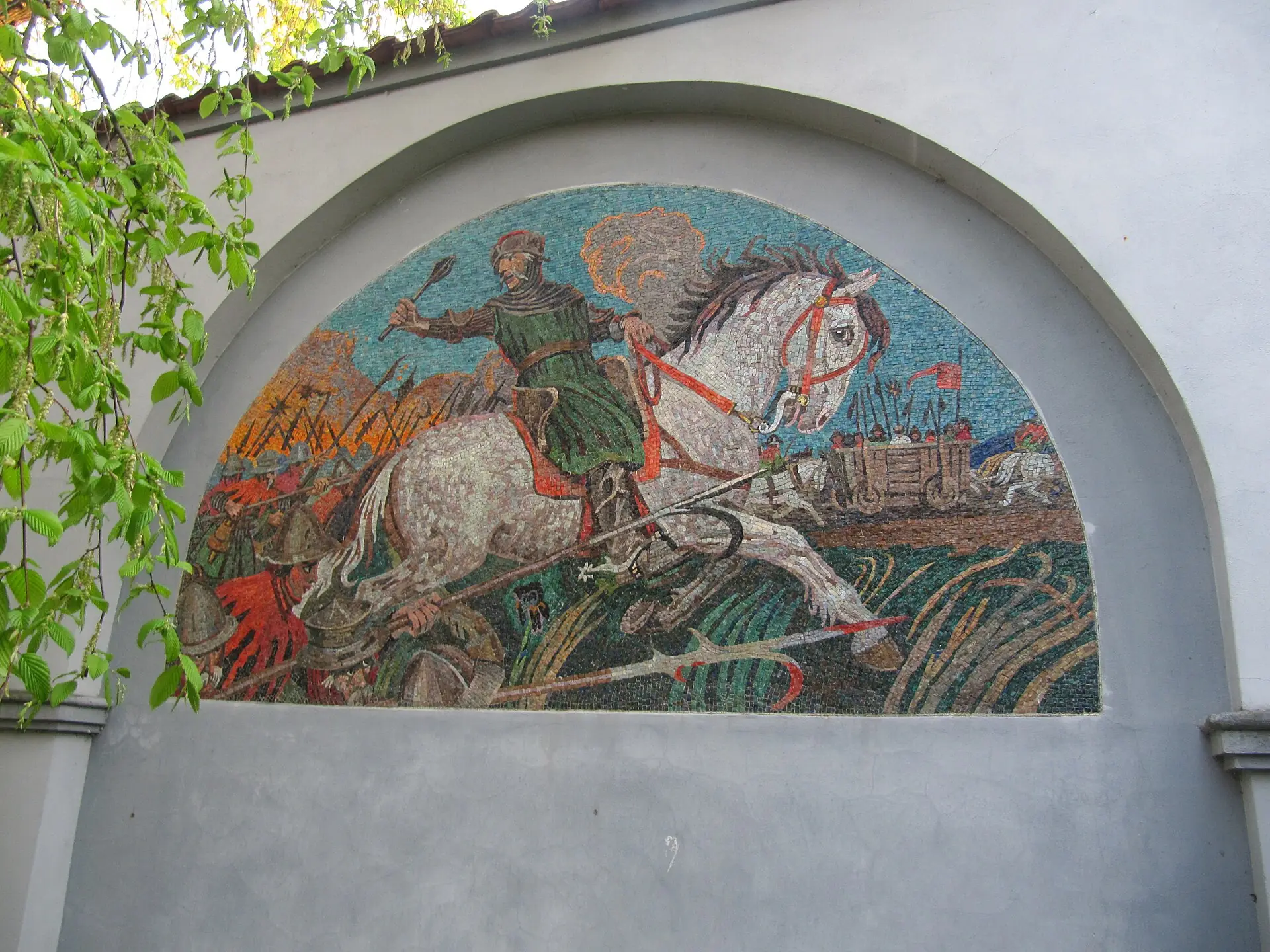
From 1428 Hussite armies raided Upper Hungary, and Jan Jiskra's Brethren later held its mining towns for two decades.

In 1465 Matthias Corvinus and Archbishop Vitéz founded the Academia Istropolitana, the first university in what is now Slovakia.

On 29 August 1526 the Ottomans destroyed the Hungarian army at Mohács and King Louis II died, ending the medieval kingdom.

1527 – 1789
Pressburg as capital, the Turks and the estates.
After Mohács, Upper Hungary was the heart of Habsburg Royal Hungary with Pressburg as its capital and coronation city, amid Ottoman wars, Protestant estates' uprisings and Counter-Reformation.

Founded by Archbishop Pázmány in 1635, the Jesuit university of Trnava was for a century the only one in Royal Hungary.

From 1703 to 1711 Ferenc Rákóczi led the last great anti-Habsburg uprising, fought largely on the soil of Upper Hungary.

Juraj Jánošík, a highwayman from the Tatra foothills, was executed at Liptovský Mikuláš in 1713 and became a hero of Slovak folklore.

In 1741 Maria Theresa was crowned King of Hungary at Pressburg and the Diet rallied to her cause.
1790 – 1918
A language, an uprising and Magyarisation.
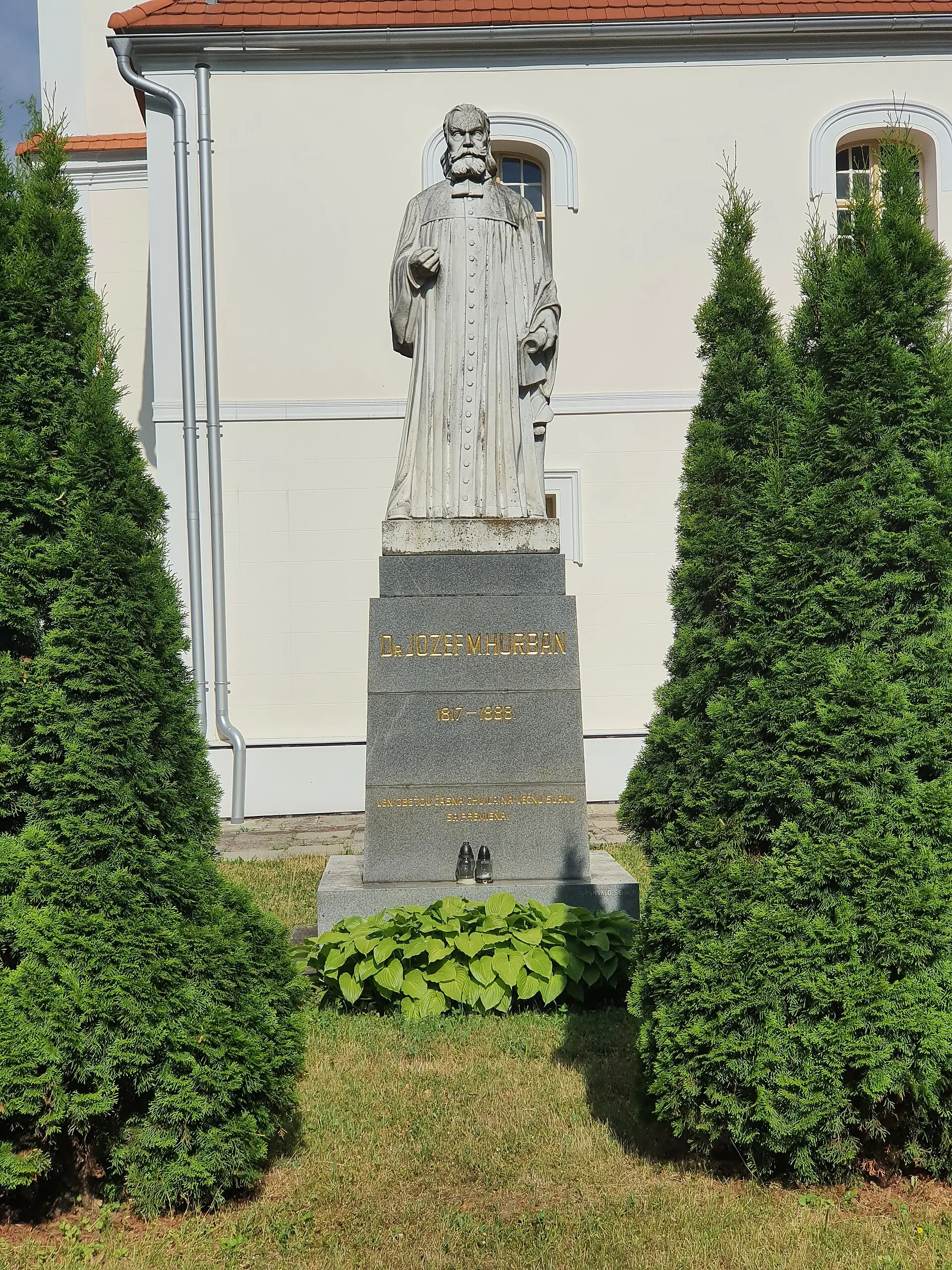
Bernolák and Štúr codified Slovak, the Slovaks rose in 1848, Matica slovenská was founded and closed, and Magyarisation and mass emigration shaped the decades before the First World War.

In September 1848 Slovak volunteers took up arms against the Hungarian revolutionary government in support of the emperor.

Founded in 1863 at Martin, the Matica became the Slovaks' main cultural society until the Hungarian government dissolved it in 1875.

On 27 October 1907 gendarmes fired on villagers at Černová gathered for the consecration of their new church without their suspended priest Andrej Hlinka, killing fifteen.

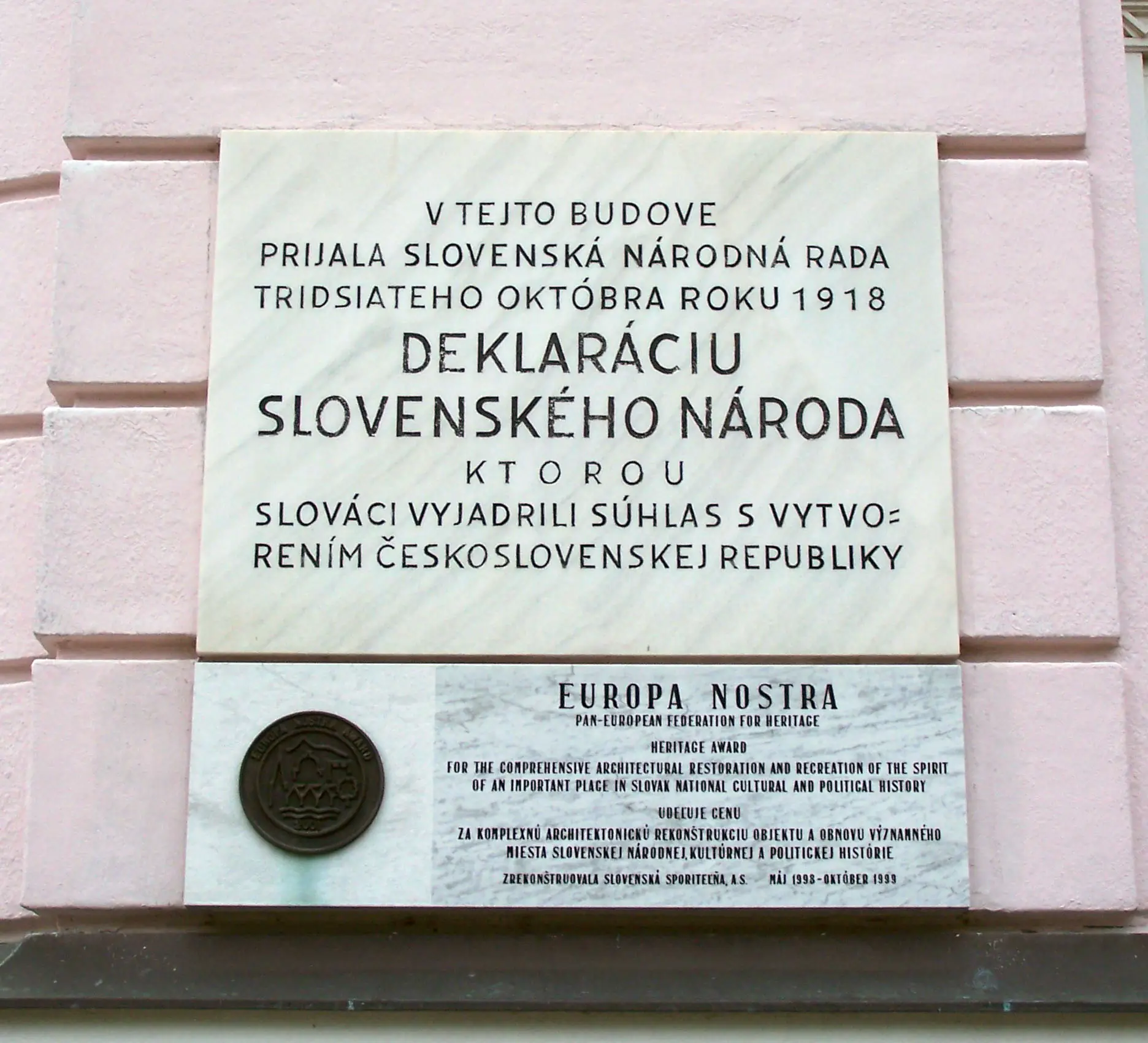
On 31 May 1918 Czech and Slovak organisations in the United States agreed to a common state with Slovak autonomy.
Population: Linear interpolation between 1910 (Census 1910: 2,916,657) and 1921 (Census 1921: 2,993,859).
1918 – 1938
A common state for Czechs and Slovaks.
Slovakia joined the Czech lands in Czechoslovakia (1918); a democratic republic developed while autonomists led by Hlinka demanded self-rule, until Munich and the Vienna Award of 1938.

Czechoslovak forces drove the Hungarian Soviet Republic's army out of southern and eastern Slovakia in the summer of 1919.

In 1919 Bratislava, renamed from Pressburg, gained a Czechoslovak university named after Jan Amos Comenius.

After Munich the Žilina Agreement of 6 October 1938 created an autonomous Slovak government led by Hlinka's party.

On 2 November 1938 Germany and Italy awarded southern Slovakia, including Košice, to Hungary.
Population: Linear interpolation between 1930 (Census 1930: 3,324,111) and 1950 (Census 1950: 3,442,317).

1939 – 1945
A client state, deportations and an uprising.
The Slovak Republic under Tiso was a client state of Nazi Germany that deported most of its Jews; the Slovak National Uprising of 1944 was crushed before the Red Army's arrival in 1945.

On 14 March 1939 the Slovak Diet proclaimed an independent state after Hitler had pressed Tiso to choose between independence and partition.

In 1942 the Slovak government paid Germany to take some 58,000 Jews, who were sent to Auschwitz and Majdanek.

Two Slovak Jews, Rudolf Vrba and Alfréd Wetzler, escaped from Auschwitz in 1944 and wrote the first detailed report on the camp.

Decrees of 1945 stripped citizens of German and Hungarian nationality of their property and rights, and most Germans were expelled.
Population: Linear interpolation between 1930 (Census 1930: 3,324,111) and 1950 (Census 1950: 3,442,317).

1946 – 1989
Industry, show trials and the Prague Spring.
Restored Czechoslovakia fell to the Communists in 1948; Slovakia was industrialised, the Prague Spring of Dubček was crushed in 1968, and federalisation created the Slovak Socialist Republic.

The Communists took power in Prague, and Slovakia's Democratic Party, which had won the 1946 elections there, was broken.

In 1952 Rudolf Slánský and thirteen others were tried, and the Slovak Communist Vladimír Clementis was hanged.

On 1 January 1969 the Czechoslovak federation created a Slovak Socialist Republic, the one reform of 1968 that survived.

On 19 November 1989 the movement Public Against Violence was founded in Bratislava as Communist rule collapsed.
Population: Linear interpolation between 1980 (Census 1980: 4,991,168) and 1991 (Census 1991: 5,274,335).

1990 – present
A new state in NATO, the EU and the euro.
After the Velvet Revolution, Slovakia became independent on 1 January 1993, joined NATO and the EU in 2004 and the eurozone in 2009, with politics shaped by Mečiar, Dzurinda, Fico and the Kuciak murder.
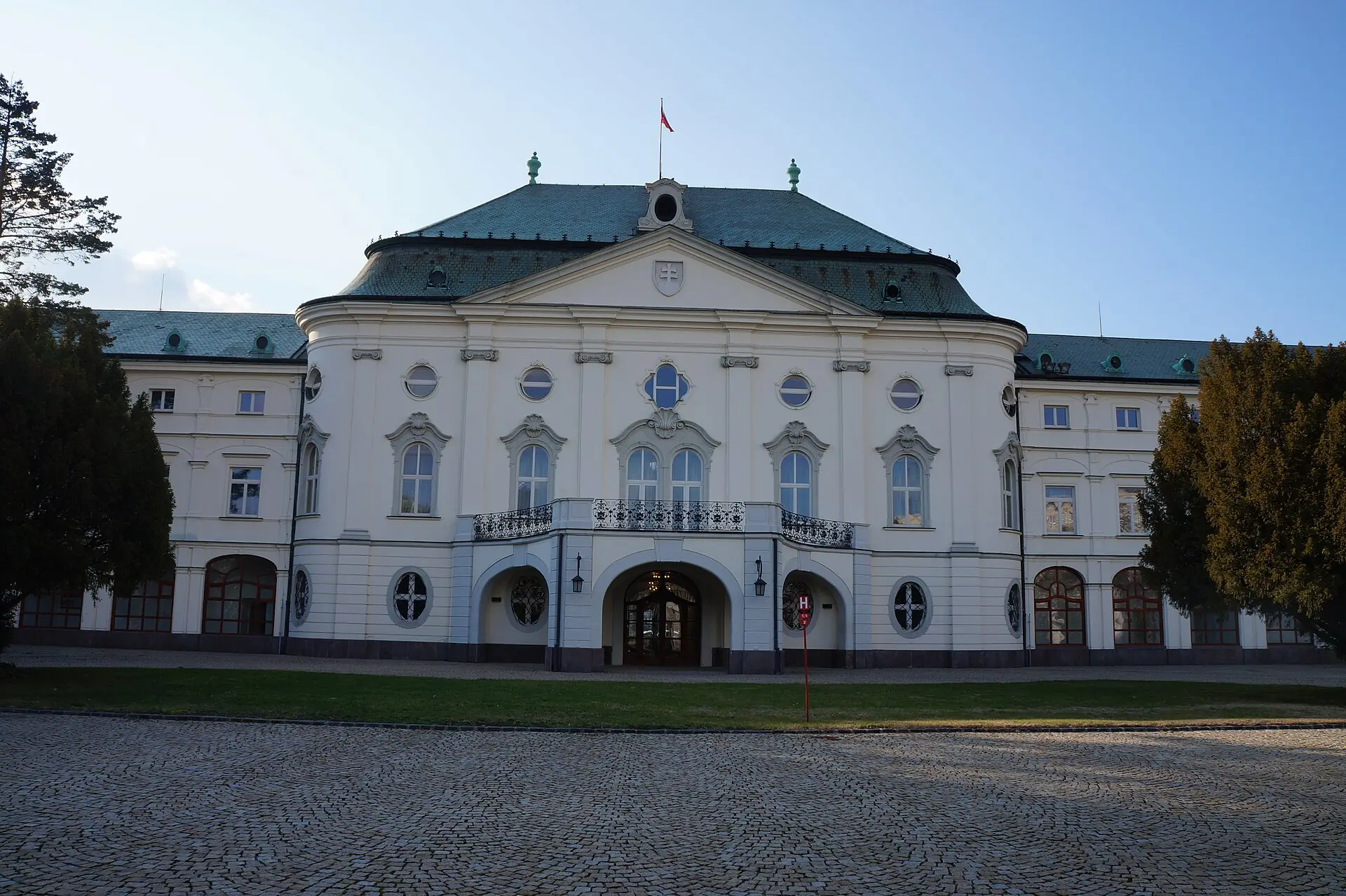
Vladimír Mečiar's third government of 1994–1998 was criticised abroad for its treatment of the opposition and the media, and delayed Slovakia's accession to NATO and the EU.

On 1 May 2004, six weeks after joining NATO, Slovakia entered the European Union, and it adopted the euro in 2009.
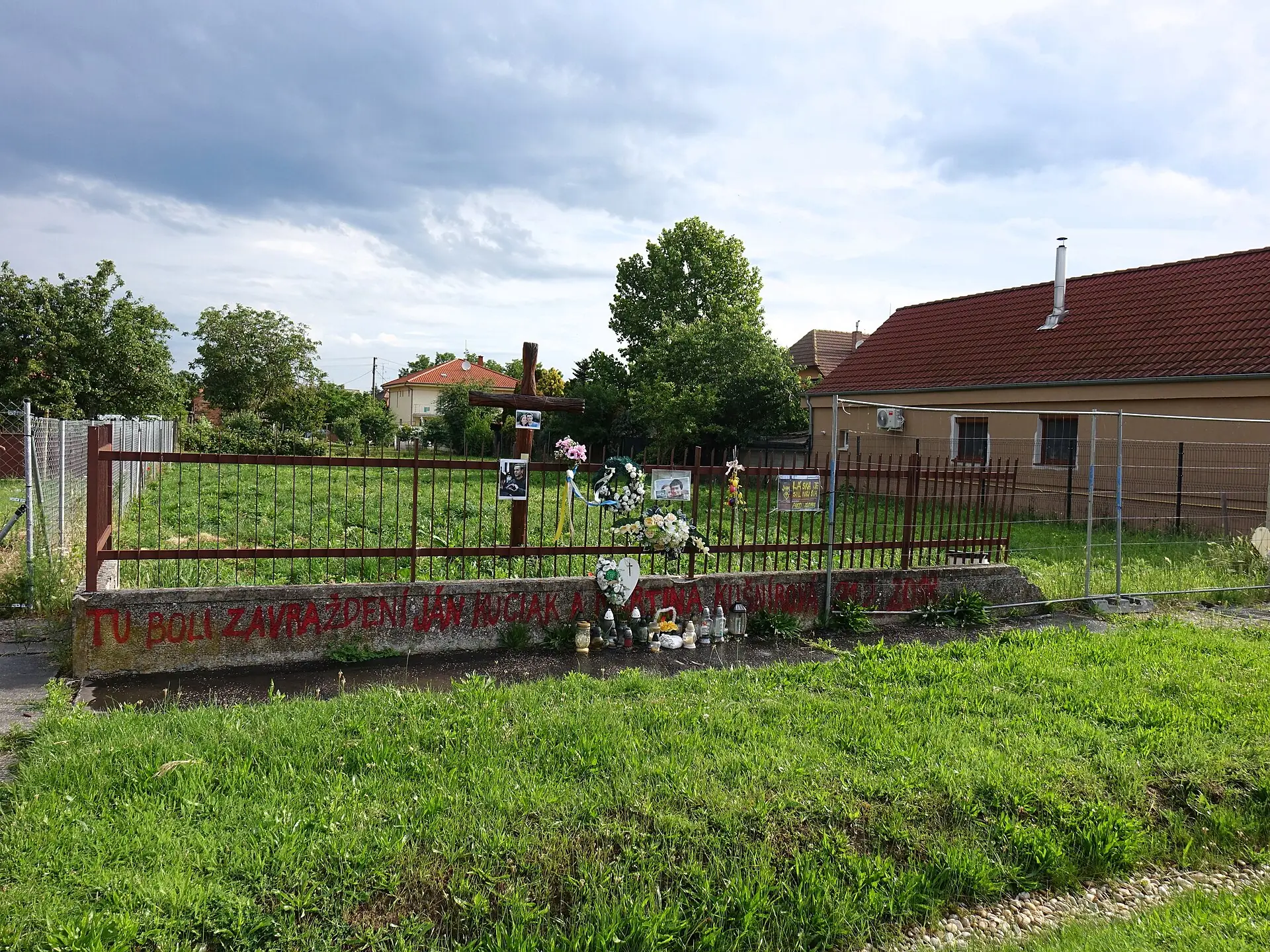
The murder of the investigative journalist Ján Kuciak and his fiancée in February 2018 led to the largest protests since 1989 and to the fall of Fico's government.

On 15 May 2024 Prime Minister Robert Fico was shot and badly wounded at Handlová, in the an attack that shocked the country.
Population: Linear interpolation between 2021 (Census 2021: 5,449,270) and 2025 (Statistical Office estimate 2025: 5,413,600 (Wikipedia, Demographics of Slovakia)).
Great Moravia, the Kingdom of Hungary, Czechoslovakia and Independence – Prehistory to Today
From Neanderthals, Celts and the Roman Danube frontier to Samo, Nitra and Great Moravia, nine centuries in the Kingdom of Hungary, the Ottoman frontier and Pressburg as Hungary’s capital, the national revival, Czechoslovakia, the wartime Slovak State and Uprising, communism and independent Slovakia.
If the page stays blank, the site doesn't allow embedding — use “Open in new tab”.
From the castles of Spiš and Devín to the mining towns of the Hron valley, the history of Slovakia has left the world the heritage of Great Moravia and the Cyrillo-Methodian mission, a Central European land where Slovaks, Hungarians, Germans, Jews, Roma and Ruthenians lived side by side, a literary language codified in the 19th century, the wooden churches of the Carpathians, the memory of the Uprising of 1944 and of the Holocaust, and a young state still debating how to remember Tiso, Trianon, the Beneš decrees and its own place between Prague, Budapest, Vienna and Brussels.
The Spiš Castle, one of the largest castle complexes in Central Europe, and the Gothic Church of St Jacob in Levoča with Master Paul's altar, the tallest Gothic wooden altar in the world, were inscribed on the UNESCO World Heritage List in 1993, together with the mining town of Banská Štiavnica and the hamlet of Vlkolínec. Bardejov, the best-preserved medieval town of the east, followed in 2000, the wooden churches of the Carpathians in 2008, and the Roman frontier of the Danube, with Gerulata at Rusovce and Iža, in 2021. Bratislava Castle, rebuilt after a fire in 1811 and again from the 1950s, St Martin's Cathedral, where the kings of Hungary were crowned, Devín above the Danube and Trenčín Castle, which Matthew Csák ruled, recall the long centuries of the Kingdom of Hungary.
Cyril and Methodius brought the Glagolitic script to Great Moravia in 863, and Latin and Czech served Slovak writers for centuries until Anton Bernolák codified a Western Slovak in 1787 and Ľudovít Štúr a Central Slovak standard in 1843, the basis of the language today. Ján Kollár and Pavel Jozef Šafárik gave the revival its Slavic ideas, Pavol Országh Hviezdoslav is regarded as the greatest Slovak poet, and in the 20th century the lyric poets Ivan Krasko and Janko Jesenský, the novelist Martin Kukučín, who wrote from Dalmatia and Chile, and Milo Urban shaped modern prose. Hungarian, German and Czech are also part of the story, and the state language acts of 1995 and 2009 have shown how political the question remains for the Hungarian minority.
Christianity reached the Slovak lands with Pribina's church at Nitra and the mission of Cyril and Methodius, and the country was later divided by the Reformation, which won over most towns and nobles, and the Counter-Reformation led from Trnava. In the 2021 census about 56 per cent of the population were Roman Catholic, about 5 per cent Lutheran, about 4 per cent Greek Catholic and about 1 per cent Orthodox, with a large Calvinist community among the Hungarians, while roughly a quarter declared no religion. The Catholic Church sustained the national movement of Hlinka and Tiso, suffered under the Communists, who closed the monasteries in Action K in 1950 and imprisoned bishops, and kept an underground church with secretly consecrated bishops such as Ján Korec.
Jews lived in the Slovak lands from the Middle Ages, and the yeshiva of Pressburg, led by the Chatam Sofer, Moses Schreiber, until his death in 1839, was the greatest centre of Orthodox learning in the Hungarian kingdom. Before the war more than 100,000 Jews, perhaps 135,000, lived in towns such as Bratislava, Košice, Nitra and Michalovce, in a community with Orthodox, Neolog and Zionist strands. The Slovak State defined Jews by the Jewish Code of 1941 and in 1942 deported some 58,000 to the camps in occupied Poland; about 13,000 more were deported after the German occupation in 1944, and the Sereď and Nováky camps held others. Memorials in Bratislava and Sereď and the grave of the Chatam Sofer recall the dead.
The Slovak National Uprising of 29 August 1944, centred on Banská Bystrica, is the central event of modern national memory, marked by the Museum of the Slovak National Uprising, the SNP Bridge of 1972 and a public holiday on 29 August. Its meaning was disputed under Communism, which presented it as a Communist achievement, and again after 1989, when the nationalist right defended the Slovak State of 1939–1945 as the first independent Slovak state. Historians point to Tiso's role in the persecution of the Jews, his execution in 1947 and the Church's conflicted memory of him. Nemecká and Kremnička recall the massacres of the autumn of 1944, and the Dukla Pass the battles of the Red Army and the Czechoslovak corps in the east.
The mining towns made Upper Hungary the richest part of the kingdom, and the Mining Academy of Banská Štiavnica, founded in 1762 and among the oldest institutions of its kind in the world, trained engineers from all over Europe. Wolfgang von Kempelen of Pressburg built his chess-playing Turk and a speaking machine, Jozef Maximilián Petzval of Spišská Belá designed the portrait lens, Aurel Stodola of Liptovský Mikuláš pioneered the steam turbine, and Štefan Banič patented a parachute in 1914. Milan Rastislav Štefánik, astronomer, general and statesman, was one of the founders of Czechoslovakia, and the factories of the socialist years, such as Slovnaft and the ironworks of Košice, made Slovakia an industrial country that now leads the world in cars made per head.
The Slovak coat of arms, a silver double cross on three blue hills on a red shield, descends from the arms of medieval Hungary and has stood for the Slovaks since the 19th century, while the white-blue-red tricolour of the Slavic revival was taken up by the Slovak National Council in 1848. The double cross was also used by the Slovak State of 1939–1945, which still colours debates about it, and the constitution of 1992 placed the arms on the flag of the Republic. Constitution Day is kept on 1 September, the Day of Cyril and Methodius on 5 July, the anniversary of the Uprising on 29 August and the founding of the Republic on 1 January, and the Velvet Revolution is remembered on 17 November. The Hungarians, who make up about 8 per cent of the population, keep their own memory of Trianon, and Slovaks theirs of the school laws of Count Apponyi.
Slovakia lies in Central Europe, where the Danube, the Morava and the Carpathians have joined and divided Germans, Hungarians, Poles, Czechs and East Slavs. Its history is shared with all its neighbours: Hungarians speak of Upper Hungary, the Felvidék, and see the kingdom as a common homeland, Czech historians stress Great Moravia and the common state, and Slovak historians the continuity of the Slovak nation across the centuries. Independent Slovakia joined NATO and the European Union in 2004, Schengen in 2007 and the euro in 2009, and with Poland, Hungary and Czechia belongs to the Visegrád Group; its relations with Russia and Ukraine, and with the European consensus, have divided its politics since the war of 2022.
The timeline is built from the project's own research dossier and its event, ruler, head-of-government and map datasets, checked against English Wikipedia, Encyclopaedia Britannica, the Statistical Office of the Slovak Republic, the Office of the President and the Government Office of the Slovak Republic, the Museum of the Slovak National Uprising, Yad Vashem, UNESCO, the OSCE Office for Democratic Institutions and Human Rights, The Slovak Spectator, WorldStatesmen.org and other references. Linked articles are starting points for verification, not proof that every claim has been independently checked. Prehistoric dates are archaeological estimates; the dates of Samo, of Pribina's church at Nitra and of the union of Moravia and Nitra rest on few sources and are marked circa, and the fall of Great Moravia is placed about 906–907. The location of the Great Moravian heartland, the Polish rule over parts of the Slovak lands in 1003–1018 and the Venus of Moravany's find year (1938 in most accounts) are debated. Hungarian rulers are listed from Stephen I, and the Slovak State is shown with Jozef Tiso as its head of state. Estimates of the numbers killed in the Second World War and in the deportations vary by source. Population figures are census counts for the present territory from 1869 to 2021, with the Statistical Office's estimate for 2025. The most recent events, from 2024 to 2026, rest on sources that are still changing; the shading of districts on the map is indicative and uses modern district borders for historical frontiers.
Every event and every ruler has its own sources. See Sources & Further Reading in each timeline entry and ruler profile.
History is connected. Explore the bigger picture.
AllHistories is an independent visual history project designed to make the past easier to understand, explore, and connect.
History is more than a collection of dates, rulers, and battles. Events rarely happen in isolation. Borders shift, civilizations influence one another, ideas spread, and decisions made centuries ago continue to shape the world today.
Through interactive timelines, historical maps, and visual storytelling, AllHistories helps uncover these connections and makes complex historical subjects more accessible and engaging.
Travel through centuries, discover turning points, and understand how historical events unfold and connect.
Explore how borders, civilizations, populations, trade routes, beliefs, and spheres of influence have changed over time.
Go beyond dates and discover the individuals, places, decisions, and circumstances behind historical developments.
Explore connections between countries, empires, civilizations, and historical themes to better understand cause and consequence.
Features vary depending on the historical subject.
AllHistories draws on historical research, published references, public archives, and available historical datasets. The information is organized and presented through interactive digital experiences.
History is not always certain or universally agreed upon. Dates, territorial boundaries, population figures, and interpretations may differ between sources. Some information is necessarily simplified or estimated for visual presentation.
The goal is to encourage curiosity and independent exploration, not to replace academic publications or specialist historical research.
When you visit AllHistories, the web server may process technical information such as your IP address, requested pages, browser details and access times to deliver pages and maintain the service.
Some pages load Google Analytics, Google Fonts, externally hosted images, maps or other third-party resources. Requests to these providers can transmit technical information, including your IP address. Contact forms may use Google reCAPTCHA to help prevent abuse. These providers apply their own privacy policies.
The website uses browser storage for preferences such as the selected theme. Country microsites also use a session cookie to support website functionality, including request protection. Analytics or other third-party services may use additional cookies or storage, depending on the page and your browser settings.
When you submit a correction or contact form, the information you provide, such as your name, email address and message, is processed to review and respond to your request. Please avoid including sensitive personal information.
You can manage cookies and site storage in your browser and control third-party requests through browser privacy settings. For privacy questions or requests concerning information you submitted, use the contact option on the microsite where you sent it.
Links to sources and other websites take you to services with their own privacy practices. Review their policies before providing personal information.
AllHistories provides historical information for general education and exploration. Its content is not professional, legal, financial or other specialist advice.
We aim to present useful, well-sourced summaries, but cannot guarantee that every date, statement, translation or interpretation is complete or accurate. Verify important claims against the cited sources and relevant scholarship. Content may be corrected or updated.
Maps are simplified historical illustrations. Borders, place names and territorial labels may vary by period and source. Their appearance does not express a position on sovereignty or present-day territorial disputes.
Images and source material may belong to their respective creators or rights holders. Consult the image credit, source page and license before reusing material. A link or credit does not grant additional reuse rights.
External links are provided for reference. AllHistories does not control the content, availability or policies of third-party websites.
To report an error or a concern about credited material, use the contact option on the relevant country microsite and identify the page, material and supporting details.