Key facts of the era
Key Events
Journey through the events, people, wars and ideas that shaped Belarus, from the Ice Age hunters of the Pripyat to the republic of today.
Explore Polotsk, the Grand Duchy of Lithuania, the Polish–Lithuanian Commonwealth and the Russian Empire, then follow Belarus through war, Soviet rule, Chernobyl and independence. Meet the rulers and leaders who shaped its history.
From the princes of Polotsk, the grand dukes of Lithuania, the kings of the Commonwealth and the Russian emperors to the leaders of the Belarusian People's Republic, Soviet Belarus and the Republic of Belarus, with the council chairmen, prime ministers and Party first secretaries who governed the country.
A Journey Through the Ages
Belarus, a landlocked country of forests, rivers and marshes between Poland, Lithuania, Latvia, Russia and Ukraine, has been inhabited since Ice Age hunters camped at Yurovichi on the Pripyat about 24,000 BCE. Neolithic and Bronze Age cultures were followed by Baltic peoples who built hillforts along the Dnieper and the Dvina, and from the 6th century East Slavic tribes, the Krivichs, Dregovichs and Radimichs, settled the land along the river route from the Varangians to the Greeks.
Polotsk, first mentioned in 862, became the seat of a principality ruled by the descendants of Rogneda, and with Turov it received Christianity from Kievan Rus'. Prince Vseslav built Polotsk its own Cathedral of St Sophia, and in the 12th century Euphrosyne of Polotsk and Kirill of Turov shaped its Christian culture. From the 13th century the Belarusian lands were drawn into the Grand Duchy of Lithuania, a state that Belarusian and Lithuanian historians both regard as their own, where Ruthenian, the ancestor of Belarusian, was the language of government and of the Statutes of Lithuania, and Francysk Skaryna printed his Bible from 1517.
The Union of Lublin joined the Grand Duchy with Poland in the Polish–Lithuanian Commonwealth in 1569. The Union of Brest divided the Orthodox in 1596, the wars of 1654–1667 cost the country about half its people, and the nobility adopted the Polish language. The partitions of 1772–1795 gave all of Belarus to the Russian Empire, which crushed the uprisings of 1830–1831 and 1863–1864, confined most of its Jews to the Pale of Settlement and pursued Russification, while a national revival grew around Nasha Niva and the poets Janka Kupala and Jakub Kolas.
In 1918 the Belarusian People's Republic declared independence under German occupation, but Soviet Byelorussia prevailed, and the Peace of Riga of 1921 divided Belarus between Poland and the Soviet republics. Stalin's terror, the Second World War, in which the Holocaust, the war against the partisans and the fighting cost Belarus about a quarter of its people, and the Chernobyl disaster of 1986 marked the Soviet century. Belarus became independent in 1991 and has been led since 1994 by Alexander Lukashenko, whose re-elections since 2001 OSCE observers and Western governments have not regarded as free and fair; the disputed election of 2020 brought the largest protests in the country's history, and in 2022 Russian forces invaded Ukraine from Belarusian territory. Explore the ten ages below through selected events from the timeline.

40,000 BCE – 861
Ice Age hunters, Balts and the first Slavs.
Palaeolithic hunters on the Pripyat and Sozh, Neolithic and Bronze Age cultures, Baltic peoples of the Dnieper–Dvina and Bantserov cultures, and from the 6th–9th centuries the East Slavic Krivichs, Dregovichs and Radimichs.

At Berdyzh on the Sozh, Ice Age hunters built their dwellings from the bones and tusks of mammoths about 21,000 BCE.
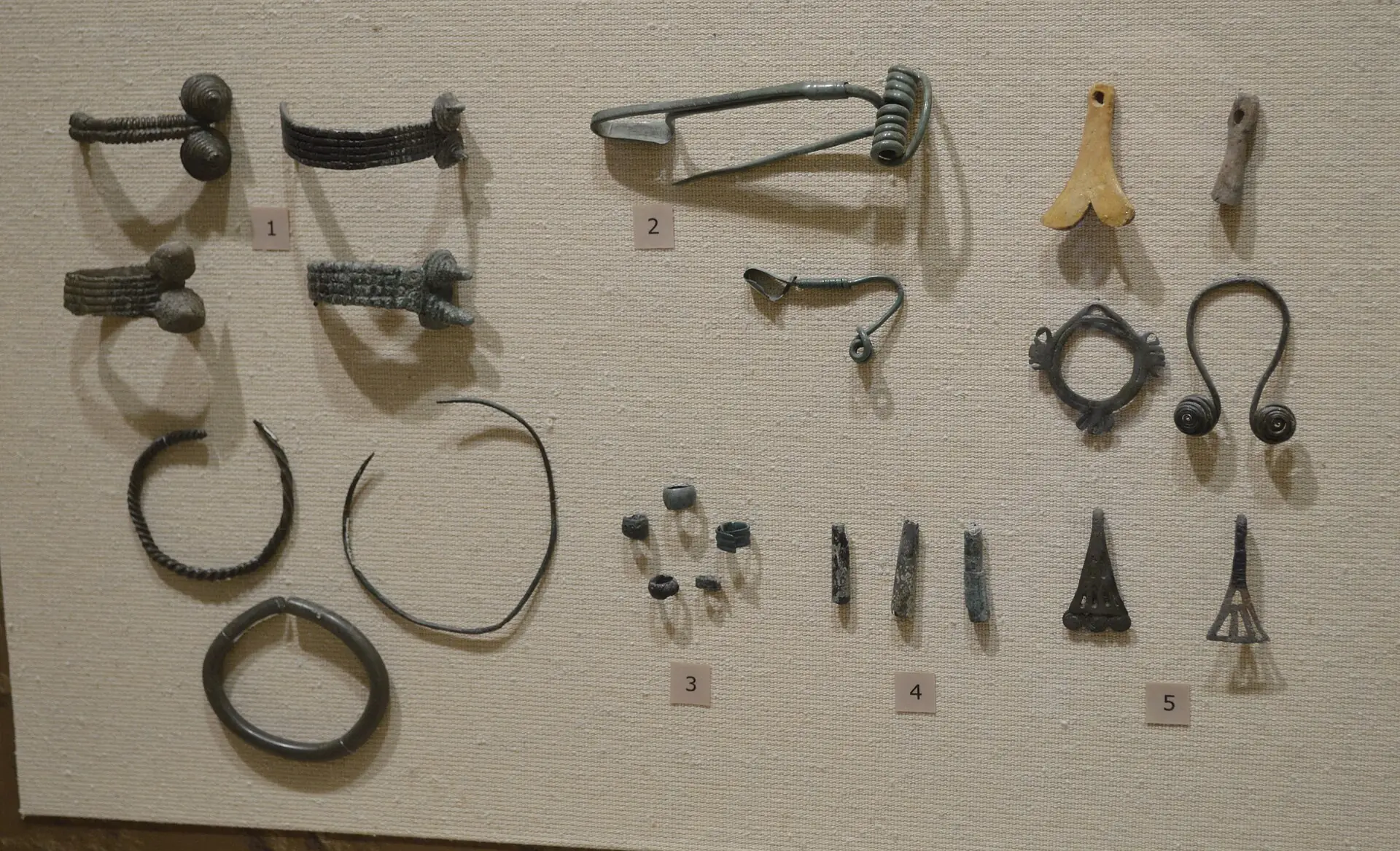
From about 800 BCE Baltic peoples of the Dnieper–Dvina culture lived in fortified hilltop settlements across northern Belarus.

About 450 BCE Herodotus described the Neuri, a people living north of the Scythians whom many historians place in Polesia.

In the 8th and 9th centuries the Krivichs, among them the Polochans of the Polota river, settled the lands of the Dvina and the upper Dnieper.

862 – 1100
The first principality on the Dvina.
Polotsk, first mentioned in 862, became the centre of a principality under Rogvolod and the Iziaslavichi; Turov, Minsk, Brest and Pinsk appear in the chronicles, and Christianity arrived with Kievan Rus'.

Taken by force when Vladimir sacked Polotsk, Rogneda later tried to kill him and was sent with her son Iziaslav to the new town of Iziaslavl.

In the mid-11th century Polotsk built its own Cathedral of St Sophia, rivalling those of Kiev and Novgorod.

In 1067 the sons of Yaroslav sacked Minsk and defeated Vseslav of Polotsk on the Nemiga river, in the chronicle entry that first names the town.

Freed from prison by rebellious Kievans in 1068, Vseslav of Polotsk briefly ruled as grand prince of Kiev.

1101 – 1385
Euphrosyne's Polotsk and the rise of Lithuania.
Polotsk, Turov-Pinsk and smaller principalities fragmented while Euphrosyne and Kirill of Turov shaped a Christian culture; from Mindaugas to Algirdas the Grand Duchy of Lithuania absorbed the Belarusian lands.

Bishop Kirill of Turov wrote sermons and prayers that made him the most admired preacher and theologian of Kievan Rus'.

In 1253 Mindaugas, who had won Black Ruthenia around Navahrudak, was crowned the first and only King of Lithuania.

Between 1271 and 1289 the architect Oleksa built the brick tower of Kamyenyets for Prince Volodymyr of Volhynia.

In 1307 the Principality of Polotsk became part of the Grand Duchy of Lithuania, keeping its own laws and institutions.

1386 – 1568
Ruthenian law, printing and war with Muscovy.
In the Grand Duchy of Lithuania, Ruthenian (Old Belarusian) was the chancery language; Magdeburg rights, Skaryna's printing and the Lithuanian Statutes of 1529 and 1566 marked the era, amid wars with Muscovy.

In 1410 the Polish and Lithuanian armies, with banners from the Belarusian lands, defeated the Teutonic Order at Grunwald.

About 1500 the Ilyinich family began a Gothic fortress at Mir, later rebuilt by the Radziwiłłs and now a World Heritage Site.

On 8 September 1514 Hetman Konstanty Ostrogski's army defeated a larger Muscovite army on the Dnieper near Orsha.
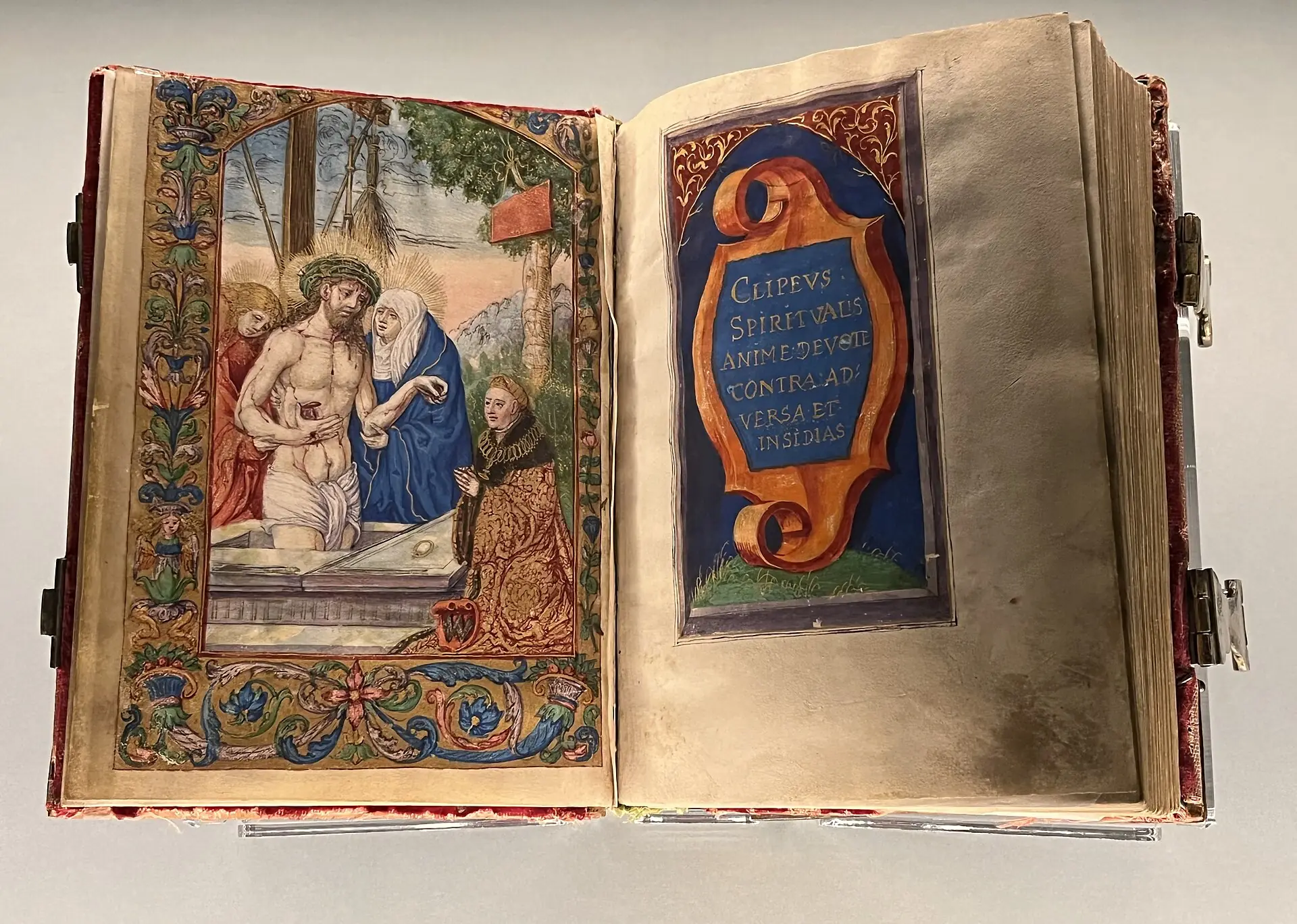
In 1529 the First Statute of Lithuania, a code of law written in Ruthenian, came into force across the Grand Duchy.

1569 – 1795
Union, schism, war and partition.
The Union of Lublin joined Lithuania with Poland; the Union of Brest, the devastating wars of 1654–67 and the Great Northern War, Polonisation of the nobility and the three partitions (1772–1795) ended the state.

From 1583 Mikołaj Krzysztof Radziwiłł 'the Orphan' rebuilt Nesvizh as a fortified palace beside the first Baroque church of the Commonwealth.

In 1596 a synod at Brest united the Ruthenian Orthodox Church with Rome, creating the Uniate Church and a long religious conflict.

War, epidemics and famine in 1654–1667 reduced the population of the Belarusian lands by roughly half.

In 1794 Tadeusz Kościuszko, born near Kosava in Polesia, led the last uprising to save the Commonwealth.

1796 – 1917
The North-Western Krai and a national revival.
Under the tsars the Belarusian lands formed the North-Western Krai and part of the Pale of Settlement; 1812, the uprisings of 1830–31 and 1863–64, Russification, emancipation and a national revival led to Nasha Niva and the First World War front.
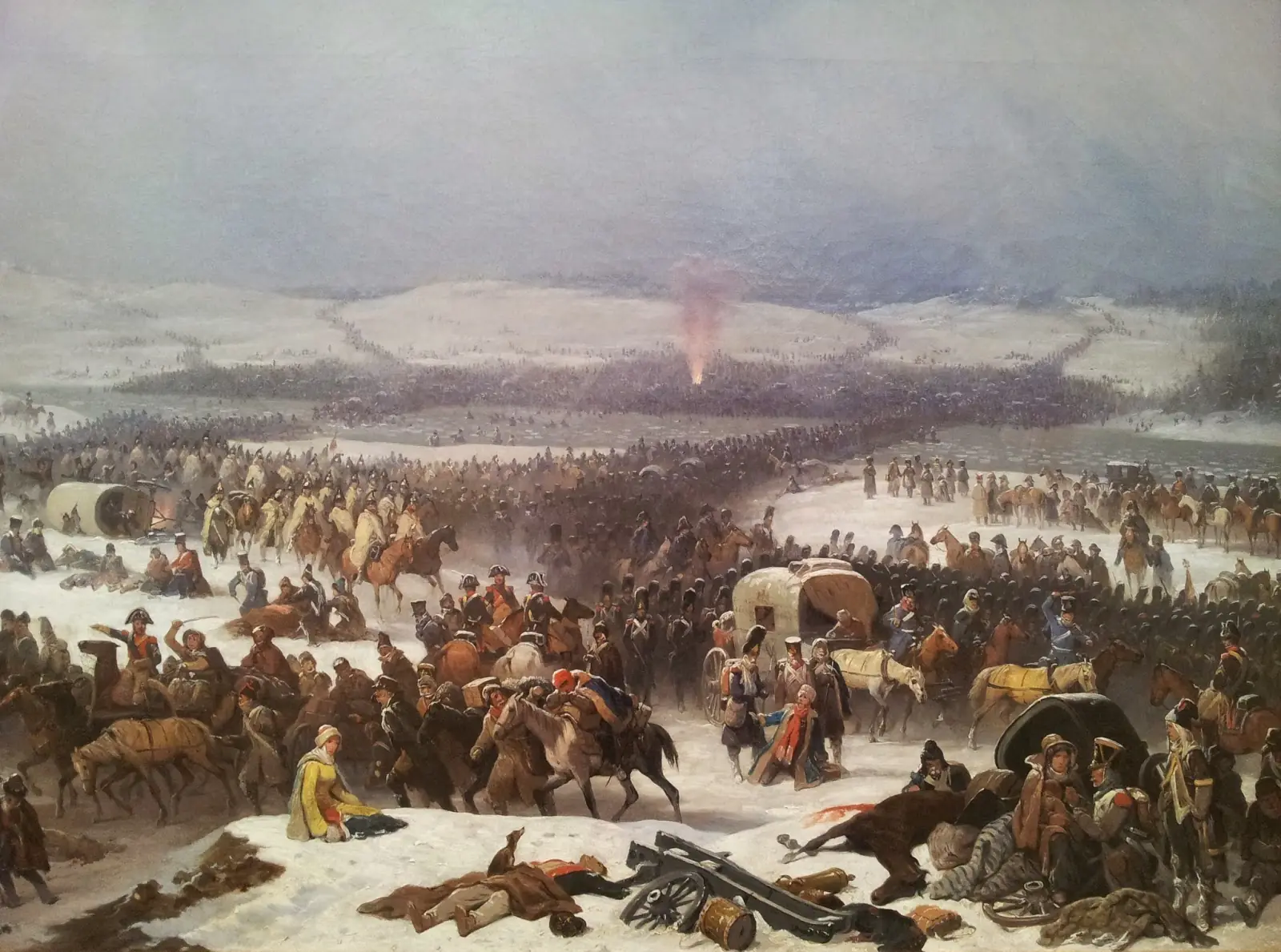
In November 1812 Napoleon's retreating army escaped across the Berezina near Studzionka at a terrible cost in lives.

From 1835 most Jews of the Russian Empire were confined to the western provinces, including all of Belarus.

The weekly Nasha Niva, launched in Vilnius in 1906, gathered the writers of the Belarusian revival and gave its name to an era.

In 1915 the German offensive drove the front deep into Belarus, where it stayed until the revolution.

1918 – 1938
Two republics, a divided land and the Terror.
The Belarusian People's Republic (1918) and the Soviet BSSR (1919) competed for statehood; the Peace of Riga split Belarus between Poland and the USSR, and Belarusization gave way to Stalin's terror and Kurapaty.

The Peace of Riga in 1921 left West Belarus in Poland and the east in the Soviet republics.

From 1924 Soviet Belarus promoted the Belarusian language in schools, offices and the press, until the policy was reversed around 1930.

In Poland, political opponents including Belarusian activists were held without trial at Bereza Kartuska from 1934.

In a forest on the edge of Minsk the NKVD shot and buried victims of the Stalinist terror from 1937 to 1941.

1939 – 1945
Occupation, Holocaust and the partisan republic.
The Soviet annexation of West Belarus in 1939, German occupation from 1941, the Holocaust, Khatyn and hundreds of burned villages, the partisan war and Operation Bagration cost Belarus about a quarter of its people.

After the Soviet invasion of Poland in 1939, a Soviet-organised assembly in Białystok requested the incorporation of West Belarus into the BSSR.

German killing units and occupation forces murdered the great majority of Belarus's Jews in mass shootings and ghetto liquidations.

On 22 March 1943 German-led police units burned the village of Khatyn with its 149 inhabitants, one of hundreds of villages destroyed.

In the summer of 1944 a vast Soviet offensive destroyed German Army Group Centre and drove the occupiers out of Belarus.

1946 – 1990
Reconstruction, industry and Chernobyl.
Reconstruction and industrialisation made the BSSR a Soviet manufacturing centre under leaders like Masherov; Russification spread, and Chernobyl (1986) and the Kurapaty revelations (1988) fed a national movement.

Left almost entirely in ruins, Minsk was rebuilt after 1946 as a planned Soviet capital of broad avenues and heavy industry.
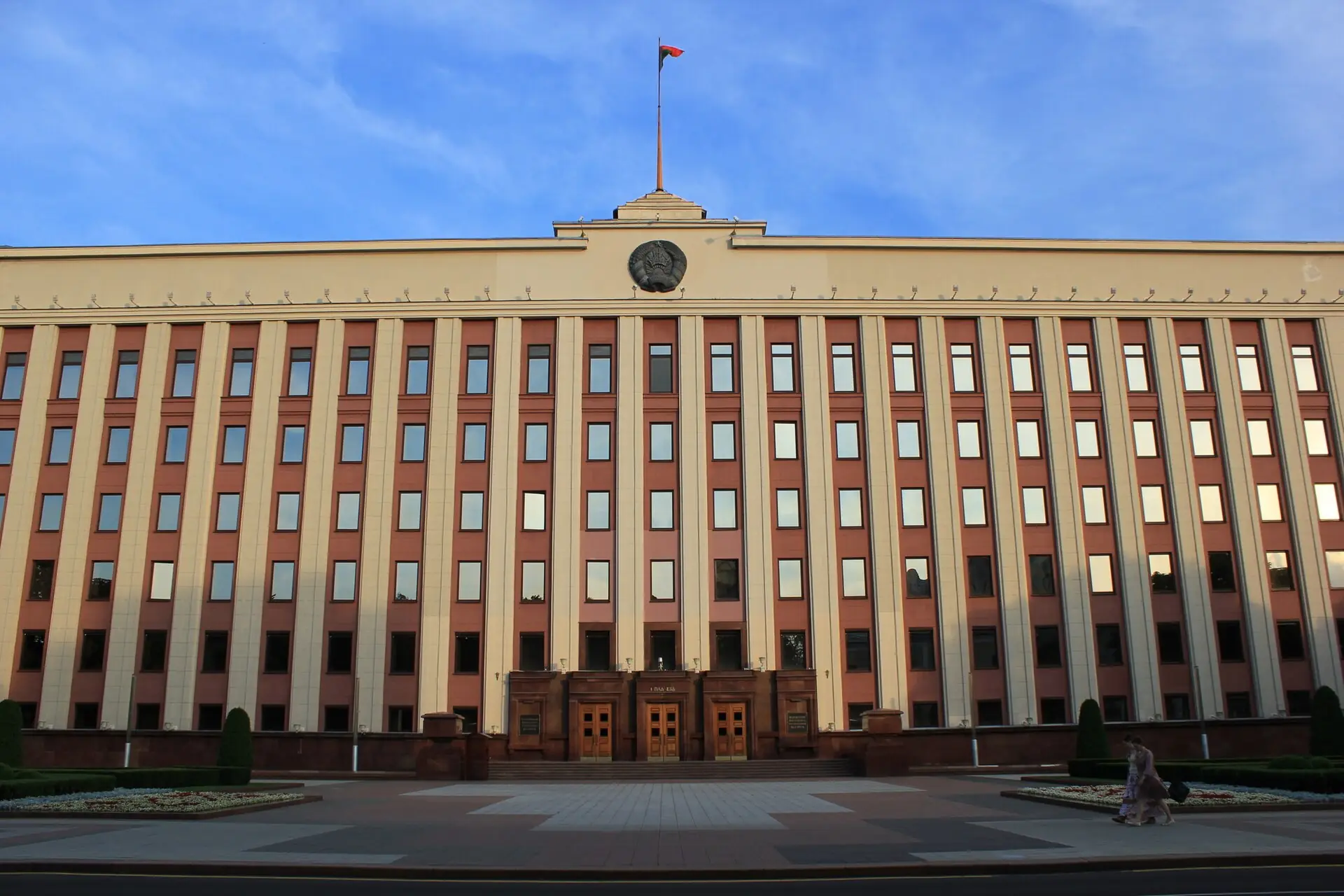
Under the former partisan Pyotr Masherov, party leader from 1965 to 1980, Belarus became one of the fastest-growing Soviet republics.

Vasil Bykaŭ's novella Sotnikov of 1970, later filmed as The Ascent, told the war as a story of conscience rather than glory.

In 1988 Zianon Pazniak exposed the NKVD mass graves at Kurapaty, a revelation that launched the national democratic movement.
Population: Linear interpolation between 1989 (Soviet census 1989: 10,151,806) and 1999 (Census of Belarus 1999: 10,045,200).

1991 – present
Independence and Lukashenko's Belarus.
Independence in August 1991 and the Belovezha Accords were followed from 1994 by Alexander Lukashenko's presidency, the Union State with Russia, contested elections, the 2020 protests and Belarus's role in Russia's war on Ukraine.

In July 1994 Alexander Lukashenko won the first presidential election with about 80 per cent of the vote, and he has held the office ever since.

A referendum in 1995 gave Russian equal status with Belarusian and replaced the white-red-white flag and the Pahonia with Soviet-style symbols.

After the disputed election of August 2020, hundreds of thousands joined the largest protests in the country's history, which were met with mass arrests.

On 24 February 2022 Russian forces stationed in Belarus for joint exercises crossed into Ukraine and advanced towards Kyiv.
Population: Belstat estimate 2024: 9,132,629.
Polotsk, the Grand Duchy, Empires and Independence, c. 24,000 BCE – Today
From Ice Age hunters and the Baltic and East Slavic tribes to the Principality of Polotsk, the Grand Duchy of Lithuania and the Commonwealth, the partitions and the Russian Empire, the Belarusian People’s Republic, the BSSR divided by the Riga line, war and occupation, Soviet Belarus and independence, district by district in 34 narrated chapters.
If the page stays blank, the site doesn't allow embedding — use “Open in new tab”.
From the churches of Polotsk to the castles of Mir and Nesvizh, the history of Belarus has left the world a medieval Christian culture of the Rus', the Ruthenian law and letters of the Grand Duchy of Lithuania, a land where Orthodox and Catholic Christians, Uniates, Jews and Tatars lived side by side, a modern literature reborn in the 20th century, the memory of a war that killed a quarter of its people and of the Chernobyl fallout, and a nation still debating its symbols and its place between East and West.
The Cathedral of St Sophia in Polotsk, built in the 11th century and rebuilt in Baroque style in the 18th, the Church of the Transfiguration in Euphrosyne's convent with its 12th-century frescoes, the Kalozha church in Grodno and the tower of Kamyenyets are the oldest monuments of Belarus. The castles of Mir and Nesvizh, built and rebuilt by the Ilyinich and Radziwiłł families, were inscribed on the UNESCO World Heritage List in 2000 and 2005, alongside the Białowieża Forest, shared with Poland, and the Belarusian points of the Struve Geodetic Arc. The 19th-century Brest Fortress became a war memorial in 1971.
Ruthenian, the ancestor of Belarusian and Ukrainian, was the language of government and of the Statutes of Lithuania until Polish replaced it in official use in 1696, and Francysk Skaryna of Polotsk printed his Bible in a Ruthenian form of Church Slavonic from 1517. Modern Belarusian literature grew from the 19th-century works of Dunin-Marcinkievič and Bahuševič and from the newspaper Nasha Niva, founded in 1906, where Janka Kupala, Jakub Kolas and Maksim Bahdanovič published. Vasil Bykaŭ wrote of war and conscience, and Svetlana Alexievich, who writes in Russian, won the Nobel Prize in Literature in 2015. Belarusian and Russian have been co-official since 1995, and Russian is the language most Belarusians speak at home.
Christianity came from Byzantium through Kievan Rus' in 988, and Polotsk had a bishop by 992; Euphrosyne of Polotsk is the country's best-loved saint. Catholicism spread after Jogaila converted Lithuania in 1387, the Radziwiłłs led a Protestant Reformation in the 16th century, and the Union of Brest of 1596 created the Uniate, or Greek Catholic, Church, which the Russian Empire abolished at Polotsk in 1839. Today most believers belong to the Belarusian Orthodox Church, an exarchate of the Moscow Patriarchate since 1989, with a large Catholic minority in the west and small Greek Catholic and Protestant communities, while the Lipka Tatars, settled by Vytautas, have kept their Muslim faith for six centuries.
Jews settled in the Grand Duchy under the charters of Vytautas, beginning with Brest in 1388, and by 1897, confined by the Pale of Settlement, they made up half or more of the inhabitants of Minsk, Pinsk, Brest and Vitebsk and of many small market towns. The Belarusian lands were a heartland of Lithuanian Jewish learning, with the yeshiva of Volozhin, and of Hasidism, Zionism and the socialist Bund. Marc Chagall painted his native Vitebsk, and Chaim Weizmann, Menachem Begin and Shimon Peres were born in present-day Belarus. The Holocaust destroyed this world; memorials at Maly Trostenets, the Yama in Minsk and the sites of hundreds of ghettos recall the dead.
The Second World War, in which Belarus lost about a quarter of its people, stands at the centre of national memory. The Khatyn memorial of 1969 recalls the villages burned with their inhabitants, the Brest Fortress memorial the defenders of 1941, and Independence Day is kept on 3 July, the anniversary of the liberation of Minsk in 1944. The partisans long stood at the heart of Soviet Belarusian identity, while the Holocaust and the victims of Soviet repression were openly acknowledged only later. Since 1988 Kurapaty, where the NKVD shot thousands of people in 1937–1941, has been a place of remembrance for the victims of Stalin's terror, visited each autumn at Dziady.
The explosion at Chernobyl on 26 April 1986, just south of the Belarusian border, left Belarus with much of the fallout and nearly a quarter of its territory contaminated, above all in the Gomel and Mogilev regions. Hundreds of villages were evacuated, the Polesie State Radioecological Reserve was created on the most contaminated land in 1988, and thyroid cancer rose sharply among those exposed as children. The disaster fed the national movement of the late 1980s, inspired Svetlana Alexievich's Voices from Chernobyl, and is remembered every year on 26 April.
The white-red-white flag and the Pahonia, the mounted knight of the Grand Duchy of Lithuania, were the symbols of the Belarusian People's Republic in 1918 and of the Republic of Belarus from 1991 to 1995, when a referendum replaced them with a red-and-green flag and a coat of arms modelled on those of the Soviet republic. Since then the old symbols have been used by the opposition and the diaspora, and in 2020 the white-red-white flag became the emblem of the protests. Two dates compete as national days: 25 March, the anniversary of the BPR, kept as Freedom Day by the opposition, and 3 July, the official Independence Day.
Belarus has been shaped by its place between Poland and Lithuania on one side and Russia on the other, and its history is shared with all its neighbours: Lithuanians and Belarusians both claim the Grand Duchy, Poles the culture of the Commonwealth's nobility, while Russian imperial historians described the Belarusians as a branch of a single Russian people and Soviet historians stressed their unity with Russia. Since the 1990s Belarusian historians have emphasised Polotsk, the Grand Duchy and the BPR, while the state has drawn above all on the memory of the war. Independent Belarus formed a Union State with Russia in 1999 and joined the Eurasian Economic Union in 2015; after 2020 its ties with the European Union broke down, and a large wave of emigrants left, chiefly for Poland and Lithuania.
The timeline is built from the project's own research dossier and its event, ruler, head-of-government and map datasets, checked against English Wikipedia, Encyclopaedia Britannica, the YIVO Encyclopedia of Jews in Eastern Europe, Yad Vashem, UNESCO, the OSCE Office for Democratic Institutions and Human Rights, Radio Free Europe/Radio Liberty, Belstat, WorldStatesmen.org and other references. Linked articles are starting points for verification, not proof that every claim has been independently checked. Prehistoric dates are archaeological estimates, and the first mentions of towns follow the chronicle dates commonly cited in Belarus (Polotsk 862, Turov 980, Brest 1019, Minsk 1067, Pinsk 1097); Rogvolod is semi-legendary, and the dates of many 12th- and 13th-century princes of Polotsk are uncertain. Dates before 1918 are given in the Gregorian calendar where the sources do so. Estimates of the losses of 1654–1667 and of the Second World War, and of the number of victims buried at Kurapaty, vary widely. Election results since 1994 are the official ones, given alongside the assessments of OSCE/ODIHR observers and Western governments. Population figures are the imperial census of 1897 for the present territory, then Soviet and Belarusian censuses and Belstat estimates to 2026; the interwar figures for the smaller BSSR are not comparable and are left out. The most recent events, from 2024 to 2026, rest on sources that are still changing; the shading of districts on the map is indicative.
Every event and every ruler has its own sources. See Sources & Further Reading in each timeline entry and ruler profile.
History is connected. Explore the bigger picture.
AllHistories is an independent visual history project designed to make the past easier to understand, explore, and connect.
History is more than a collection of dates, rulers, and battles. Events rarely happen in isolation. Borders shift, civilizations influence one another, ideas spread, and decisions made centuries ago continue to shape the world today.
Through interactive timelines, historical maps, and visual storytelling, AllHistories helps uncover these connections and makes complex historical subjects more accessible and engaging.
Travel through centuries, discover turning points, and understand how historical events unfold and connect.
Explore how borders, civilizations, populations, trade routes, beliefs, and spheres of influence have changed over time.
Go beyond dates and discover the individuals, places, decisions, and circumstances behind historical developments.
Explore connections between countries, empires, civilizations, and historical themes to better understand cause and consequence.
Features vary depending on the historical subject.
AllHistories draws on historical research, published references, public archives, and available historical datasets. The information is organized and presented through interactive digital experiences.
History is not always certain or universally agreed upon. Dates, territorial boundaries, population figures, and interpretations may differ between sources. Some information is necessarily simplified or estimated for visual presentation.
The goal is to encourage curiosity and independent exploration, not to replace academic publications or specialist historical research.
When you visit AllHistories, the web server may process technical information such as your IP address, requested pages, browser details and access times to deliver pages and maintain the service.
Some pages load Google Analytics, Google Fonts, externally hosted images, maps or other third-party resources. Requests to these providers can transmit technical information, including your IP address. Contact forms may use Google reCAPTCHA to help prevent abuse. These providers apply their own privacy policies.
The website uses browser storage for preferences such as the selected theme. Country microsites also use a session cookie to support website functionality, including request protection. Analytics or other third-party services may use additional cookies or storage, depending on the page and your browser settings.
When you submit a correction or contact form, the information you provide, such as your name, email address and message, is processed to review and respond to your request. Please avoid including sensitive personal information.
You can manage cookies and site storage in your browser and control third-party requests through browser privacy settings. For privacy questions or requests concerning information you submitted, use the contact option on the microsite where you sent it.
Links to sources and other websites take you to services with their own privacy practices. Review their policies before providing personal information.
AllHistories provides historical information for general education and exploration. Its content is not professional, legal, financial or other specialist advice.
We aim to present useful, well-sourced summaries, but cannot guarantee that every date, statement, translation or interpretation is complete or accurate. Verify important claims against the cited sources and relevant scholarship. Content may be corrected or updated.
Maps are simplified historical illustrations. Borders, place names and territorial labels may vary by period and source. Their appearance does not express a position on sovereignty or present-day territorial disputes.
Images and source material may belong to their respective creators or rights holders. Consult the image credit, source page and license before reusing material. A link or credit does not grant additional reuse rights.
External links are provided for reference. AllHistories does not control the content, availability or policies of third-party websites.
To report an error or a concern about credited material, use the contact option on the relevant country microsite and identify the page, material and supporting details.