Key facts of the era
Key Events
Scroll the timeline, open an event, and discover the people and turning points that shaped Turkey.
Explore rulers and ruling periods across Anatolia, Turkic origins, the Ottoman Empire and the Republic. Some reigns overlap; these are not one continuous succession.
A Journey Through the Ages
The history of Turkey begins long before the modern republic. Anatolia and Eastern Thrace have been home to many peoples, languages and states.
Explore prehistoric communities, the Hittites, ancient kingdoms, Persia, Rome and Byzantium. A parallel Turkic origins strand meets Anatolian history with the Seljuks.
The Ottoman Empire expanded across three continents before territorial losses, reform and war transformed the region.
The Republic was proclaimed in 1923. Its history includes social reform, multi-party politics, military interventions and changing international relationships.


1,200,000 BCE – 2,400 BCE
Anatolia was a land bridge for early humans and one of the places where farming, villages and monumental building first appeared.
A Homo erectus skull fragment from Kocabaş, near Denizli, shows that humans reached Anatolia more than a million years ago, and caves such as Karain were occupied for hundreds of thousands of years.
Around 9600 BCE hunter-gatherers raised the carved stone enclosures of Göbekli Tepe and the other Taş Tepeler sites. Soon after, settlements such as Çatalhöyük became some of the largest and earliest farming towns in the world.
By the Early Bronze Age, fortified centres such as Troy and Alacahöyük traded metals across the Aegean and the Near East.

At Çayönü, near Ergani in Diyarbakır province, villagers lived in rectangular houses with grill-plan foundations, cultivated early wheat and…

Aşıklı Höyük, near Aksaray in central Anatolia, was a densely packed village of mud-brick houses entered through the roof.

At Arslantepe, near Malatya, a monumental public complex of temples and storerooms was built in the late fourth millennium BCE, with thousands of…

In the Early Bronze Age Anatolian elites accumulated remarkable wealth.

1,950 BCE – 547 BCE
Writing arrived with Assyrian merchants, the Hittites built Anatolia’s first great empire, and a patchwork of kingdoms followed its fall.
Assyrian merchants at Kanesh (Kültepe) left the earliest written records in Anatolia. From its capital at Hattusa, the Hittite kingdom became a great power that rivalled Egypt, until it collapsed around 1178 BCE.
In the Iron Age, Neo-Hittite city-states survived in the south-east, Urartu ruled around Lake Van, Phrygia ruled from Gordion and Lydia from Sardis. Greek settlers founded the Ionian cities on the Aegean coast.
Lydia is credited with the first coinage. Its last king, Croesus, fell to Cyrus of Persia in 547 BCE.

Anitta, king of Kussara, conquered Kanesh and made it his capital, then subdued rival cities across central Anatolia.

Hattusili III and Ramesses II concluded a treaty of peace and mutual assistance, known from both an Akkadian cuneiform tablet found at Hattusa and…

Sargon II of Assyria defeated Rusa I of Urartu near Lake Urmia and sacked the Urartian holy city of Musasir, carrying off enormous booty.

Croesus helped finance the great marble temple of Artemis at Ephesus, one of the largest buildings in the Greek world and later counted among the…

545 BCE – 330
For nearly nine centuries Anatolia was ruled from outside — by Persia, by Alexander’s successors and finally by Rome.
Persia organised Anatolia into satrapies after 545 BCE. The Ionian Revolt of 499 BCE helped trigger the Persian Wars with Greece.
Alexander crossed the Hellespont in 334 BCE and destroyed Persian rule. His successors, and local kingdoms such as Pergamon, Pontus and Commagene, spread Greek cities and culture across the peninsula.
Rome took the province of Asia in 129 BCE and gradually absorbed the rest. Cities such as Ephesus flourished, Christianity spread early, and in 330 Constantine made Byzantium his new capital.

For his campaign against the Scythians, Darius I had the Greek engineer Mandrocles of Samos build a bridge of boats across the Bosphorus, allowing…

Celtic tribes, the Tolistobogii, Tectosages and Trocmi, were invited into Anatolia by Nicomedes I of Bithynia as mercenaries.

After the death of the client king Amyntas, Augustus annexed Galatia as a Roman province with Ancyra (Ankara) as its capital.

Constantine assembled around 300 bishops at Nicaea (İznik) for the first ecumenical council of the Christian Church.

337 – 1054
From Constantinople, the Eastern Roman Empire defended Anatolia for seven centuries and shaped Orthodox Christianity.
After Constantine, the empire divided in 395 and the East survived the fall of Rome in the West. Justinian rebuilt Hagia Sophia and tried to restore the old empire.
From the 7th century Arab armies raided Anatolia almost every year and twice besieged Constantinople. The city held, and the frontier was organised into military themes.
Iconoclasm divided the church in the 8th and 9th centuries. Under the Macedonian dynasty the empire expanded again. The schism of 1054 formally split the Eastern and Western churches.

Constantine fell ill and was baptised on his deathbed near Nicomedia by Bishop Eusebius of Nicomedia.

Civil wars and Chinese diplomacy divided the Göktürk realm into an Eastern Khaganate in Mongolia and a Western Khaganate in Central Asia and the…

Caliph al-Mutasim invaded Anatolia and, after defeating Emperor Theophilos at Anzen, captured and destroyed Amorium, near today's Emirdağ, the home…

Seljuk forces under Ibrahim Inal met a Byzantine–Georgian army at Kapetron (Hasankale, near Erzurum).

552 – 1300
Turkic peoples moved from Inner Asia to the Middle East, and after Manzikert in 1071 Anatolia began to become Turkish.
The Göktürk Khaganate, founded in 552, was the first state to bear the Turkish name. Over the following centuries Turkic groups converted to Islam and moved west, and the Seljuks built an empire in Iran.
Alp Arslan defeated the Byzantines at Manzikert in 1071, opening Anatolia to Turkmen settlement. The Sultanate of Rum, ruled from Konya, became a rich state of caravanserais, madrasas and trade.
The Mongol victory at Kösedağ in 1243 broke Seljuk power. By 1300 Anatolia had fragmented into rival Turkish beyliks.

The Sogdian merchant Maniakh led an embassy from Istämi, khagan of the western Türks, to Emperor Justin II in Constantinople, seeking an alliance…

Basil I destroyed the Paulician state centred on Tephrike (Divriği).

Kilij Arslan I, allied with the Danishmendids, attacked the Crusader army near Dorylaeum (Eskişehir).

As Seljuk and Ilkhanid authority weakened, Turkmen principalities (beyliks) emerged across Anatolia: Karaman, Germiyan, Aydın, Menteşe, Saruhan…

1299 – 1566
A small beylik on the Byzantine frontier grew into an empire that took Constantinople and reached the gates of Vienna.
Osman I founded a small principality near Söğüt around 1299. His successors took Bursa, crossed into the Balkans and moved the capital to Edirne. Timur’s victory at Ankara in 1402 almost destroyed the state.
Mehmed II conquered Constantinople in 1453 and made it the Ottoman capital. Selim I added Syria, Egypt and the holy cities of Arabia.
Under Suleiman the Magnificent the empire reached its classical height in law, architecture and military power.
As Seljuk and Ilkhanid authority weakened, Turkmen principalities (beyliks) emerged across Anatolia: Karaman, Germiyan, Aydın, Menteşe, Saruhan…

Murad II had abdicated in favour of his twelve-year-old son Mehmed II. When a Hungarian-Polish crusade broke a truce and invaded, Murad returned to…
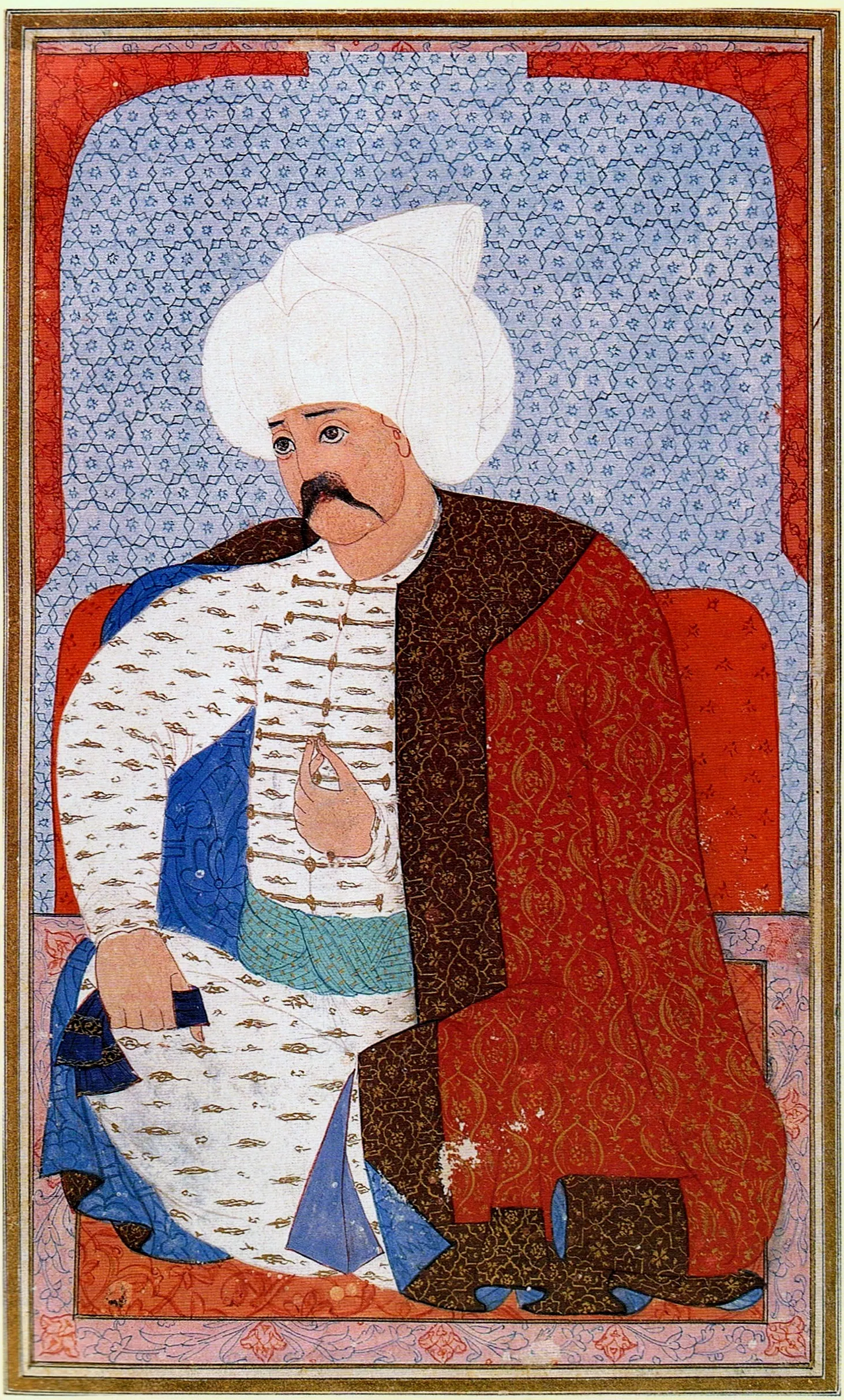
With Janissary support, Selim forced his father Bayezid II to abdicate.

Suleiman died in his tent during the siege of Szigetvár in Hungary.

1569 – 1918
The empire adapted, reformed and fought for survival for three and a half centuries before collapsing in the First World War.
After Suleiman the empire changed rather than simply declined, but defeat at Vienna in 1683 and wars with Russia and Austria cost it Hungary and the Crimea.
From Selim III onwards, sultans and officials reorganised the army and state. The Tanzimat of 1839 and the constitution of 1876 introduced new laws and institutions, while Balkan nations won independence.
The Young Turk Revolution of 1908 restored the constitution. Defeat in the Balkan Wars and the First World War, including the Armenian genocide and the defence of Gallipoli, ended the empire.
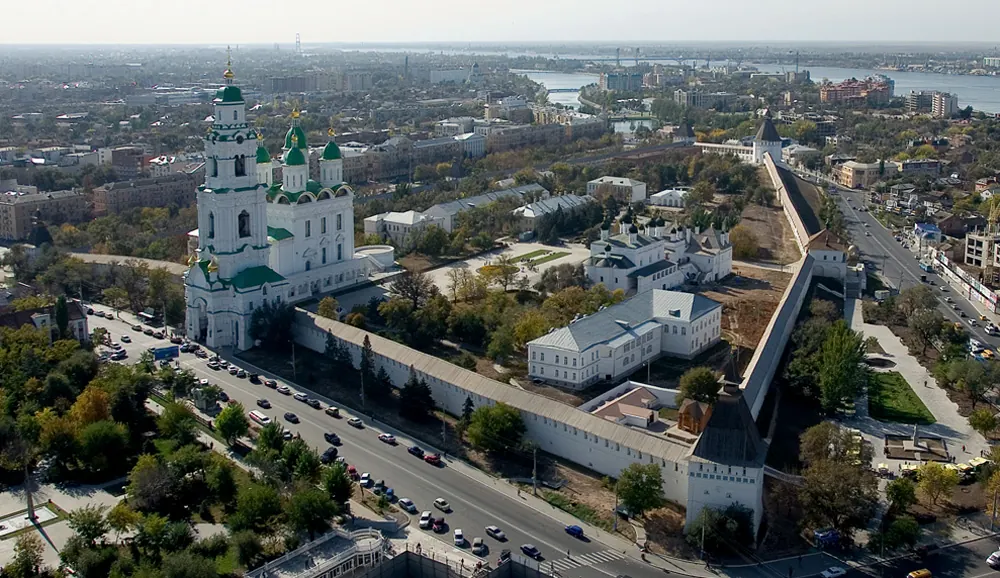
Sokollu Mehmed Pasha sent an army to take Astrakhan from Russia and dig a canal between the Don and the Volga, to link the Black Sea and the Caspian.

İbrahim Müteferrika, a Transylvanian-born convert, received permission to print books in Ottoman Turkish.

Intellectuals including Namık Kemal, Ziya Pasha and İbrahim Şinasi formed the Young Ottomans, calling for a constitution and a parliament grounded…

A British, French, Italian and Greek fleet anchored off Istanbul, and Allied troops occupied parts of the city.

1919 – 2026
The national movement won the War of Independence, and the Republic proclaimed in 1923 has shaped modern Turkey ever since.
After the Greek landing at İzmir in 1919, Mustafa Kemal organised national resistance from Anatolia. Victory led to the Treaty of Lausanne and the proclamation of the Republic on 29 October 1923.
The new state abolished the caliphate, adopted the Latin alphabet and secular law, and gave women the vote. Multi-party politics began with the Democrat Party’s victory in 1950, and Turkey joined NATO in 1952.
Military interventions, the PKK insurgency, economic liberalisation, EU accession talks, the 2016 coup attempt and the 2017 switch to a presidential system shaped recent decades.

With Allied approval, Greek troops landed at İzmir.

By decision of the Council of Ministers, Hagia Sophia was secularised and opened as a museum.

The National Security Council issued recommendations against religious activities, leading to the resignation of Necmettin Erbakan's Islamist-led…

NATO leaders met in Ankara on 7–8 July 2026, in Turkey's first NATO summit since Istanbul in 2004.
From the Hittites to the Republic, 1300 BCE – 2024
From the Hittite Empire and Lydia through Persia, Rome and Byzantium to the Seljuks, the Ottoman Empire and the Republic of Turkey. See who ruled Anatolia in each age, and how far their power reached.
Borders are approximate dated snapshots, not interpolated between chapters, and the states shown were not all Turkish: each chapter highlights the powers that ruled Anatolia at the time. Shapes are clipped to the map window, so larger empires extend beyond it; the dashed line is modern Turkey. Click a capital to open its Wikipedia article.
If the page stays blank, the site doesn't allow embedding — use “Open in new tab”.
The history of Anatolia and Turkey has many legacies. Prehistoric, Hittite, Greek, Persian, Roman, Byzantine, Turkic, Ottoman and republican histories overlap across the region; no single tradition accounts for them all.
Göbekli Tepe, Çatalhöyük, Hattusa and the cities of the Aegean preserve very different stages of life in Anatolia, from the first monumental sanctuaries and farming towns to Bronze Age capitals and Greek and Roman cities. Constantinople and Ottoman Istanbul added Hagia Sophia, Topkapı Palace and the mosques of Sinan to this layered landscape.
The Orkhon inscriptions, the poetry of Rumi and Yunus Emre, Ottoman travel writing and modern Turkish literature belong to connected but distinct cultural worlds. Trade, migration and translation carried ideas across imperial borders, from the first coins of Lydia and the philosophers of Miletus to the caravanserais of the Seljuks.
Ottoman institutions, the Tanzimat reforms, the constitutional movements of 1876 and 1908 and the founding of the Republic in 1923 shaped debates about government and citizenship. Republican reforms changed education, law and the written language, and multi-party democracy, military interventions and the executive presidency continue to define modern Turkish politics.
War, persecution, the Armenian genocide, the Greek–Turkish population exchange and forced migration profoundly changed the region. These histories belong alongside accounts of conquest, cultural achievement and state building.
Explore the timeline for the individual events and their sources.
The timeline follows the History of Turkey research dataset (410 events and 124 rulers and ruling periods). Each event includes its own references. Dates in prehistory and antiquity are approximate, and Hittite reigns follow the conventional middle chronology; summaries and source links should be reviewed as the research develops.
Every event has its own sources. See Sources & Further Reading in each timeline entry. Britannica topic-search links are discovery aids, not citations to a verified article.
History is connected. Explore the bigger picture.
AllHistories is an independent visual history project designed to make the past easier to understand, explore, and connect.
History is more than a collection of dates, rulers, and battles. Events rarely happen in isolation. Borders shift, civilizations influence one another, ideas spread, and decisions made centuries ago continue to shape the world today.
Through interactive timelines, historical maps, and visual storytelling, AllHistories helps uncover these connections and makes complex historical subjects more accessible and engaging.
Travel through centuries, discover turning points, and understand how historical events unfold and connect.
Explore how borders, civilizations, populations, trade routes, beliefs, and spheres of influence have changed over time.
Go beyond dates and discover the individuals, places, decisions, and circumstances behind historical developments.
Explore connections between countries, empires, civilizations, and historical themes to better understand cause and consequence.
Features vary depending on the historical subject.
AllHistories draws on historical research, published references, public archives, and available historical datasets. The information is organized and presented through interactive digital experiences.
History is not always certain or universally agreed upon. Dates, territorial boundaries, population figures, and interpretations may differ between sources. Some information is necessarily simplified or estimated for visual presentation.
The goal is to encourage curiosity and independent exploration, not to replace academic publications or specialist historical research.
When you visit AllHistories, the web server may process technical information such as your IP address, requested pages, browser details and access times to deliver pages and maintain the service.
Some pages load Google Analytics, Google Fonts, externally hosted images, maps or other third-party resources. Requests to these providers can transmit technical information, including your IP address. Contact forms may use Google reCAPTCHA to help prevent abuse. These providers apply their own privacy policies.
The website uses browser storage for preferences such as the selected theme. Country microsites also use a session cookie to support website functionality, including request protection. Analytics or other third-party services may use additional cookies or storage, depending on the page and your browser settings.
When you submit a correction or contact form, the information you provide, such as your name, email address and message, is processed to review and respond to your request. Please avoid including sensitive personal information.
You can manage cookies and site storage in your browser and control third-party requests through browser privacy settings. For privacy questions or requests concerning information you submitted, use the contact option on the microsite where you sent it.
Links to sources and other websites take you to services with their own privacy practices. Review their policies before providing personal information.
AllHistories provides historical information for general education and exploration. Its content is not professional, legal, financial or other specialist advice.
We aim to present useful, well-sourced summaries, but cannot guarantee that every date, statement, translation or interpretation is complete or accurate. Verify important claims against the cited sources and relevant scholarship. Content may be corrected or updated.
Maps are simplified historical illustrations. Borders, place names and territorial labels may vary by period and source. Their appearance does not express a position on sovereignty or present-day territorial disputes.
Images and source material may belong to their respective creators or rights holders. Consult the image credit, source page and license before reusing material. A link or credit does not grant additional reuse rights.
External links are provided for reference. AllHistories does not control the content, availability or policies of third-party websites.
To report an error or a concern about credited material, use the contact option on the relevant country microsite and identify the page, material and supporting details.