Key facts of the era
Key Events
Journey through the events, people, wars and ideas that shaped Serbia and the Serbian lands, from the first humans in the Balkans to the present day.
Follow Lepenski Vir and the Vinča culture, Roman Moesia and the emperors born on the Danube, the first Serbian princes, Stefan Nemanja and Saint Sava, Dušan's empire, the Battle of Kosovo and the despots of Smederevo, Ottoman rule, the uprisings of Karađorđe and Miloš, the Balkan Wars and the Great War, Yugoslavia, its breakup and the road to today.
Meet the princes, kings, emperors, despots, sultans and presidents who ruled the Serbian lands, and the prime ministers of Serbia and Yugoslavia.
From the Roman emperors and the first Serbian princes through Stefan Nemanja, Stefan Dušan, Prince Lazar and the despots, the Ottoman sultans and the Karađorđević and Obrenović princes and kings to Tito and the presidents of Serbia.
A Journey Through the Ages
Serbia lies at the heart of the Balkans, where the Sava meets the Danube at Belgrade and the Morava valley opens the road from central Europe to the Aegean. Its caves hold the oldest human fossil in the Balkans, and its Neolithic and Copper Age peoples built Lepenski Vir and the tell settlements of the Vinča culture, where copper was smelted around 5000 BCE.
Rome made the land the province of Moesia, and some seventeen emperors were born here, Constantine the Great among them. The Serbs settled in the seventh century; under the Nemanjić dynasty their kingdom built Studenica and Dečani, won its own church and, under Stefan Dušan, became an empire. After the Battle of Kosovo the despots held out until Smederevo fell to the Ottomans in 1459.
The uprisings of 1804 and 1815 restored a Serbian state, independent from 1878 and a kingdom from 1882. Serbia doubled in the Balkan Wars, fought through the First World War and in 1918 joined the Kingdom of Serbs, Croats and Slovenes, later Yugoslavia. After the Second World War and Tito's socialist federation, the wars of the 1990s broke Yugoslavia apart, and Serbia became independent again in 2006.
Explore the ten ages below through selected events from the timeline.

400,000 BCE – 30 BCE
From the first humans to the Celtic founders of Belgrade.
The Mala Balanica jaw from the Sićevo Gorge near Niš is the oldest human fossil in the Balkans. Mesolithic fishers built Lepenski Vir in the Iron Gates, the Starčevo culture brought farming, and the Vinča culture raised large tell settlements, left its famous figurines and smelted copper at Belovode around 5000 BCE, among the earliest in the world. In the Iron Age the Triballi, Dardani and Autariatae held the central Balkans until the Celtic Scordisci settled at the Sava–Danube confluence and founded the fort that became Belgrade.

A jaw from the Mala Balanica cave near Niš, at least 397,000 years old, is the oldest human fossil in the Balkans.

From about 5400 BCE the Vinča culture built large tell settlements and left thousands of figurines.
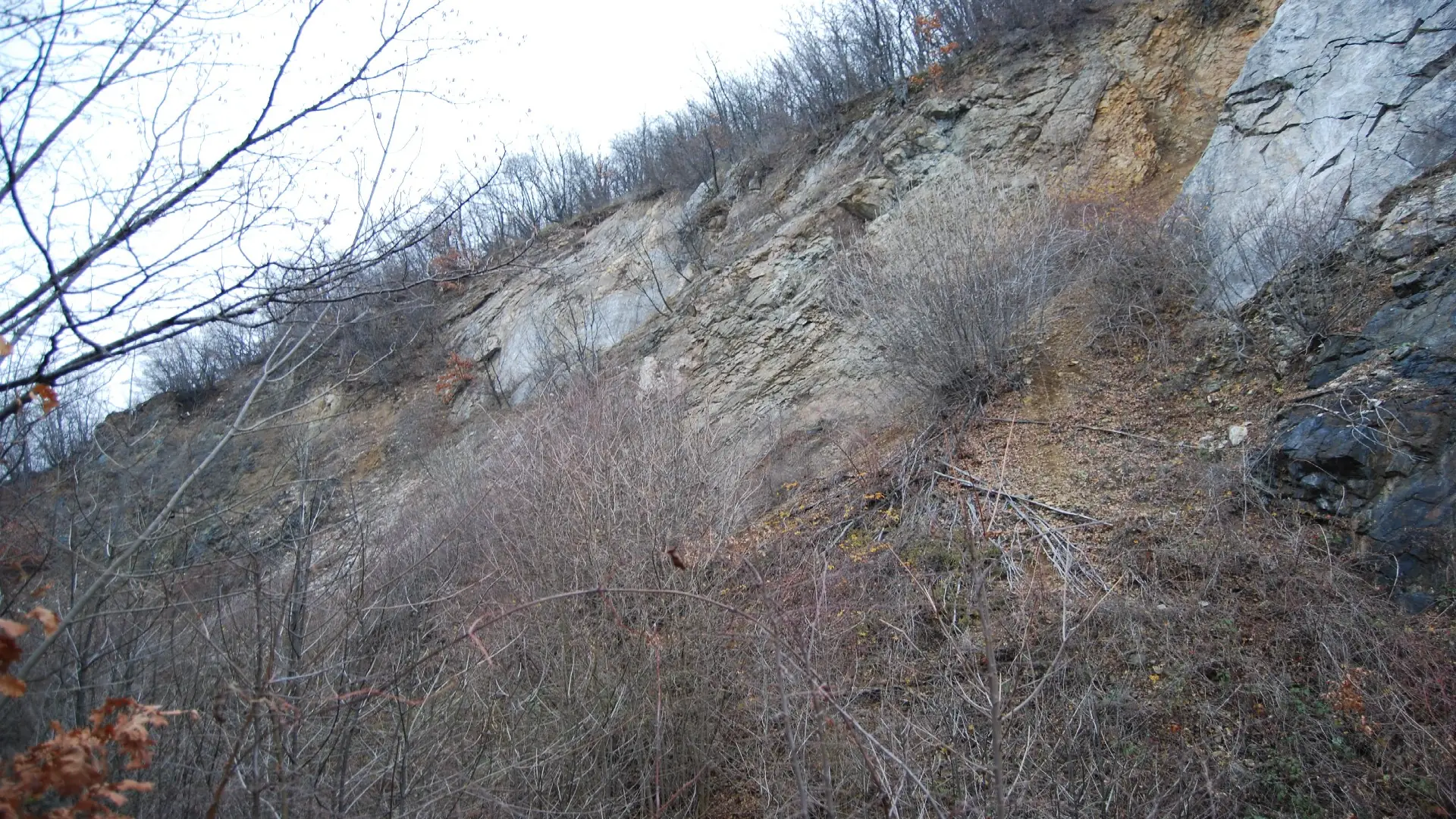
Slag from Belovode is the earliest securely dated copper smelting in the world, around 5000 BCE.
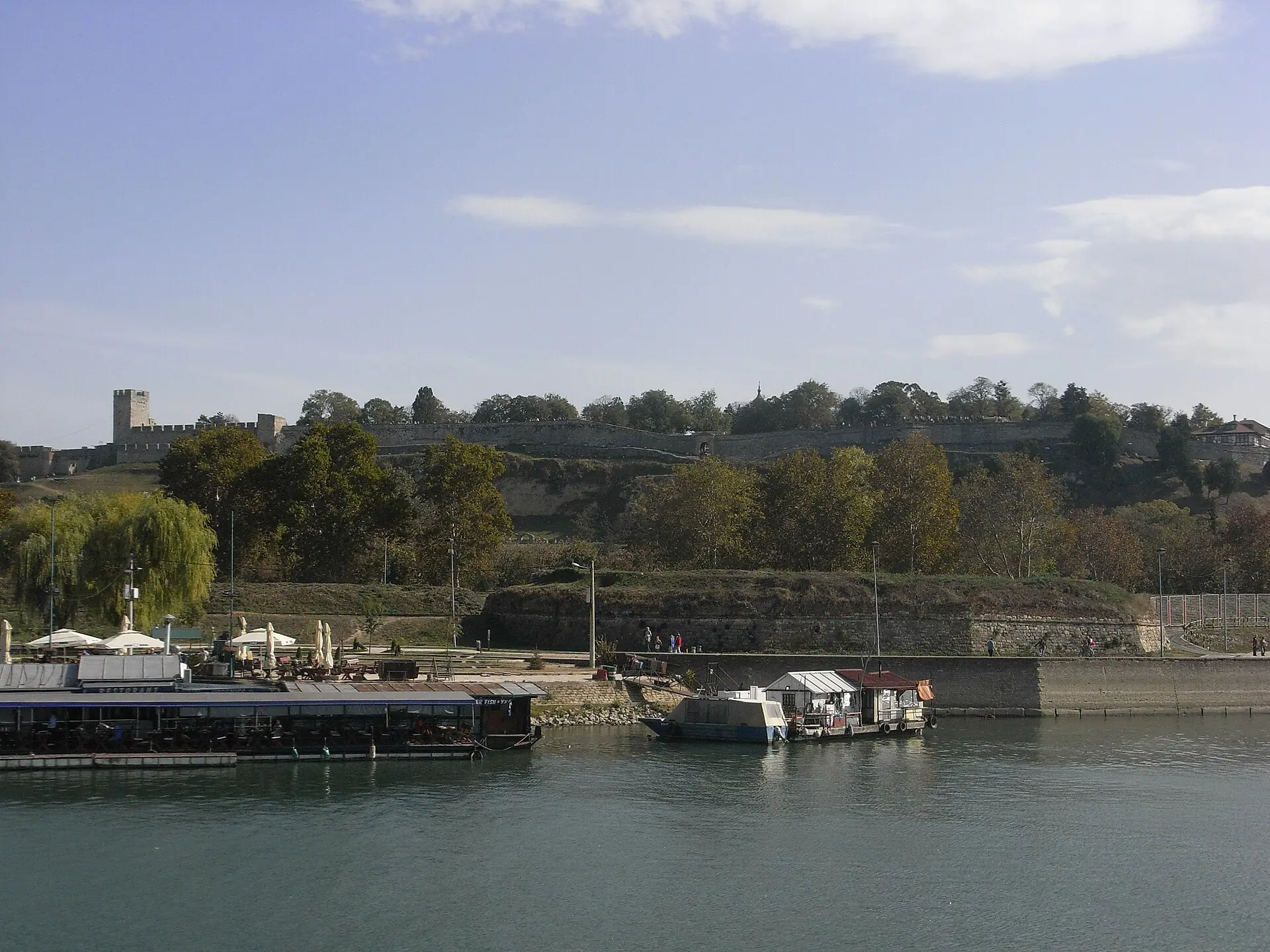
The Celtic Scordisci settled at the Sava–Danube confluence and founded the fort that became Belgrade.

29 BCE – 629
Roman provinces on the Danube and the birthplace of emperors.
Rome conquered the region in 29–28 BCE and made it the province of Moesia, with Singidunum and Viminacium guarding the Danube. Trajan cut his road through the Iron Gates and bridged the river for the Dacian Wars; Sirmium became one of the capitals of the Tetrarchy, Galerius built his palace at Felix Romuliana, and some seventeen emperors were born in these lands, Constantine the Great at Naissus among them. From the fifth century Huns, Goths, Avars and Slavs broke the Danube frontier, despite Justinian's new city of Justiniana Prima.

Trajan cut a road through the Iron Gates and bridged the Danube for his wars against Dacia.

Sirmium became one of the four capitals of the Tetrarchy in 293.

Constantine the Great, the first Christian emperor, was born at Naissus, today's Niš.

Huns, Goths, Avars and Slavs broke the Danube frontier, and the Serbs settled in the Balkans.

630 – 1165
The first Serbian princes between Byzantium and Bulgaria.
The Serbs settled in the western Balkans in the seventh century. Višeslav is the first prince known by name; Vlastimir defeated the Bulgars and Mutimir accepted Christianity around 870. Simeon of Bulgaria annexed Serbia in 924 and Časlav restored it, before Byzantium and Bulgaria fought over the lands. Duklja on the Adriatic became a kingdom under Mihailo I, and from about 1091 Raška under Vukan led the Serbs, caught between Byzantium and Hungary.

Prince Vlastimir united the Serbian tribes and defeated the Bulgar khan Presian.

Simeon of Bulgaria annexed Serbia in 924, until Časlav restored the principality.

Mihailo I of Duklja received a royal crown from Pope Gregory VII in 1077.

Vukan made Raška the leading Serbian state and fought Byzantium for decades.

1166 – 1370
Kings, saints and an empire from the Danube to the Aegean.
Stefan Nemanja united Raška, Zeta and Hum and founded Studenica and, with his son Sava, Hilandar on Mount Athos. Stefan the First-Crowned became king in 1217 and Sava won an autocephalous Serbian Church in 1219. Saxon miners made Serbia rich in silver, Milutin took Skopje and built the great churches of Kosovo, and Stefan Dušan was crowned Emperor of the Serbs and Greeks in 1346 and issued his Code. After his death in 1355 the empire broke apart, and the Ottomans destroyed Vukašin's army on the Maritsa in 1371.

Nemanja's son Sava won an autocephalous Serbian Church in 1219 and became its first archbishop.
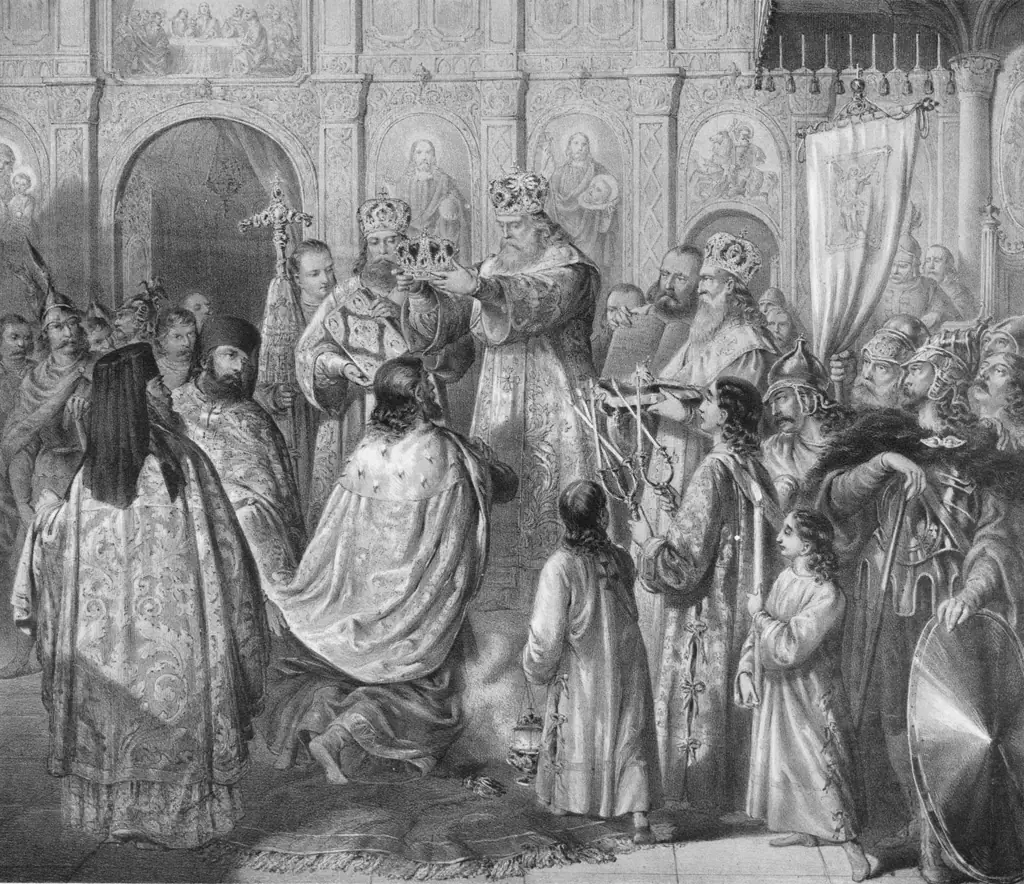
Stefan Nemanjić was crowned King of Serbia in 1217, earning the name "First-Crowned".
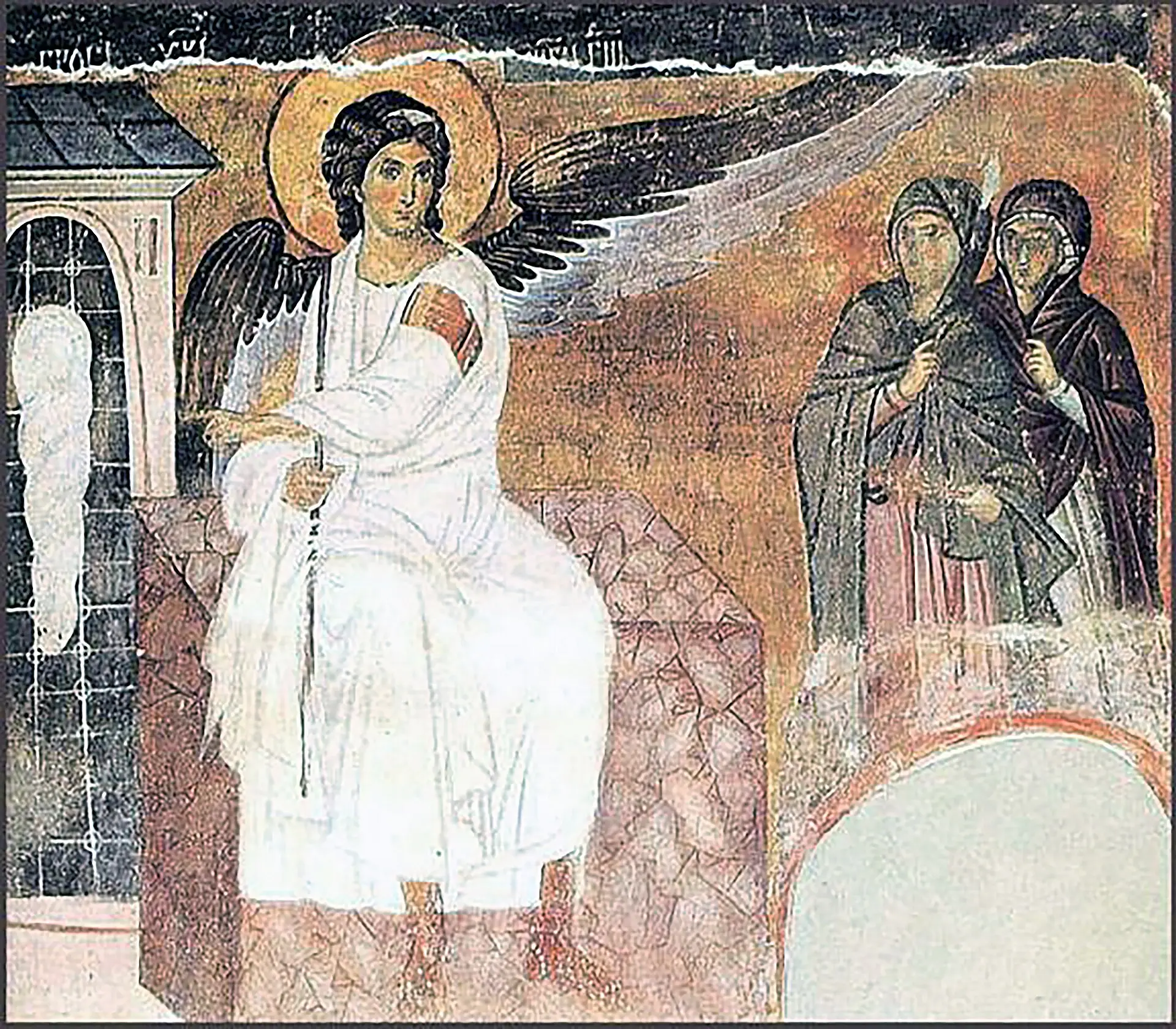
The frescoes of Mileševa, Sopoćani and Gračanica are masterpieces of medieval art.

Stefan Dušan was crowned Emperor of the Serbs and Greeks in 1346 and issued his Code.
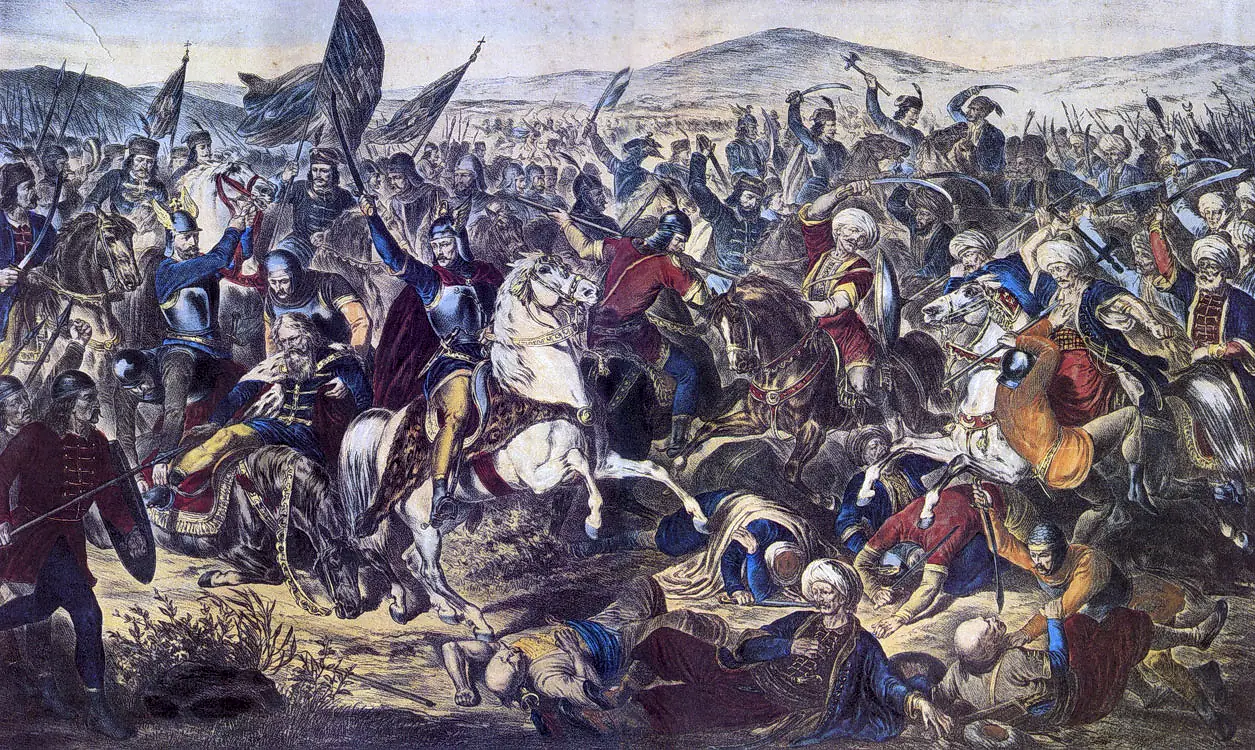
1371 – 1458
Kosovo, the despots and the long fight against the Ottomans.
Prince Lazar built the strongest successor state in Moravian Serbia and fell at the Battle of Kosovo on 28 June 1389, where Sultan Murad I was also killed. Serbia became an Ottoman vassal; Lazar's son Stefan Lazarević became a despot, made Belgrade his capital and patronised the Resava school. Đurađ Branković built the fortress of Smederevo, lost and regained his state, and the despotate ended with the surrender of Smederevo on 20 June 1459.
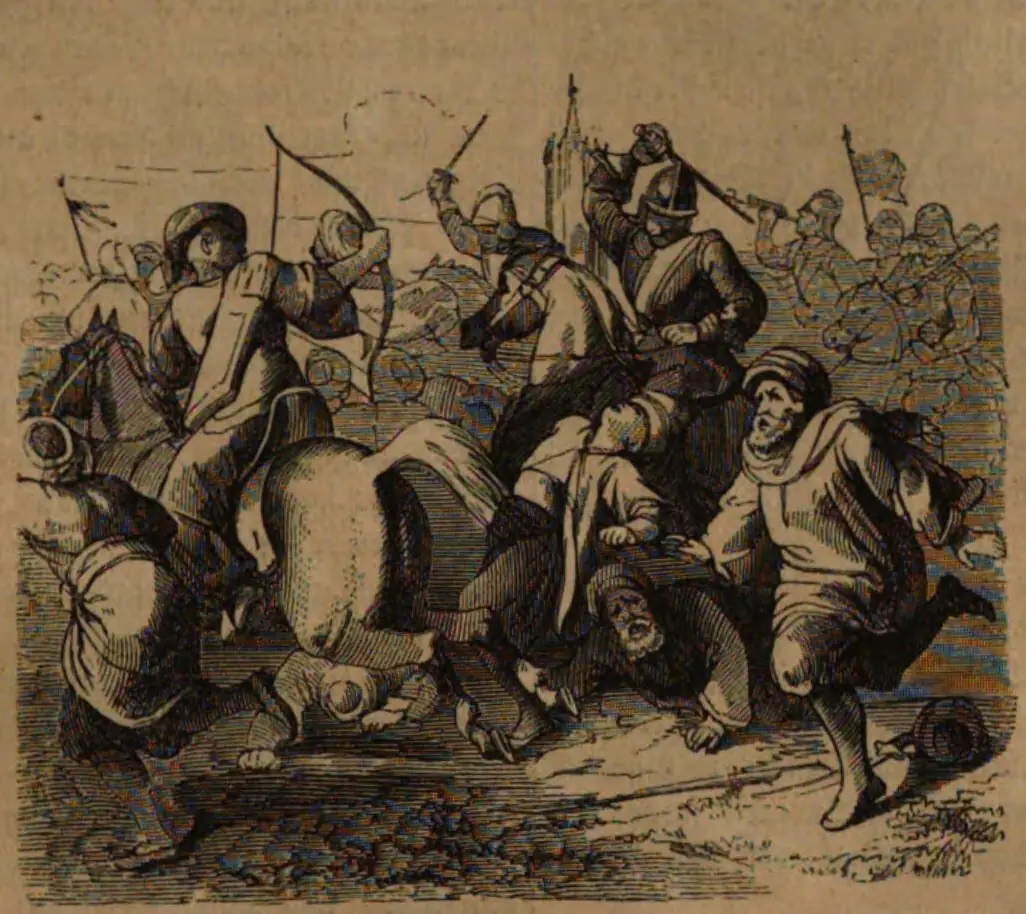
The Ottomans destroyed the army of King Vukašin on the Maritsa in 1371.

Stefan Lazarević made Belgrade his capital and built Manasija, home of the Resava school.
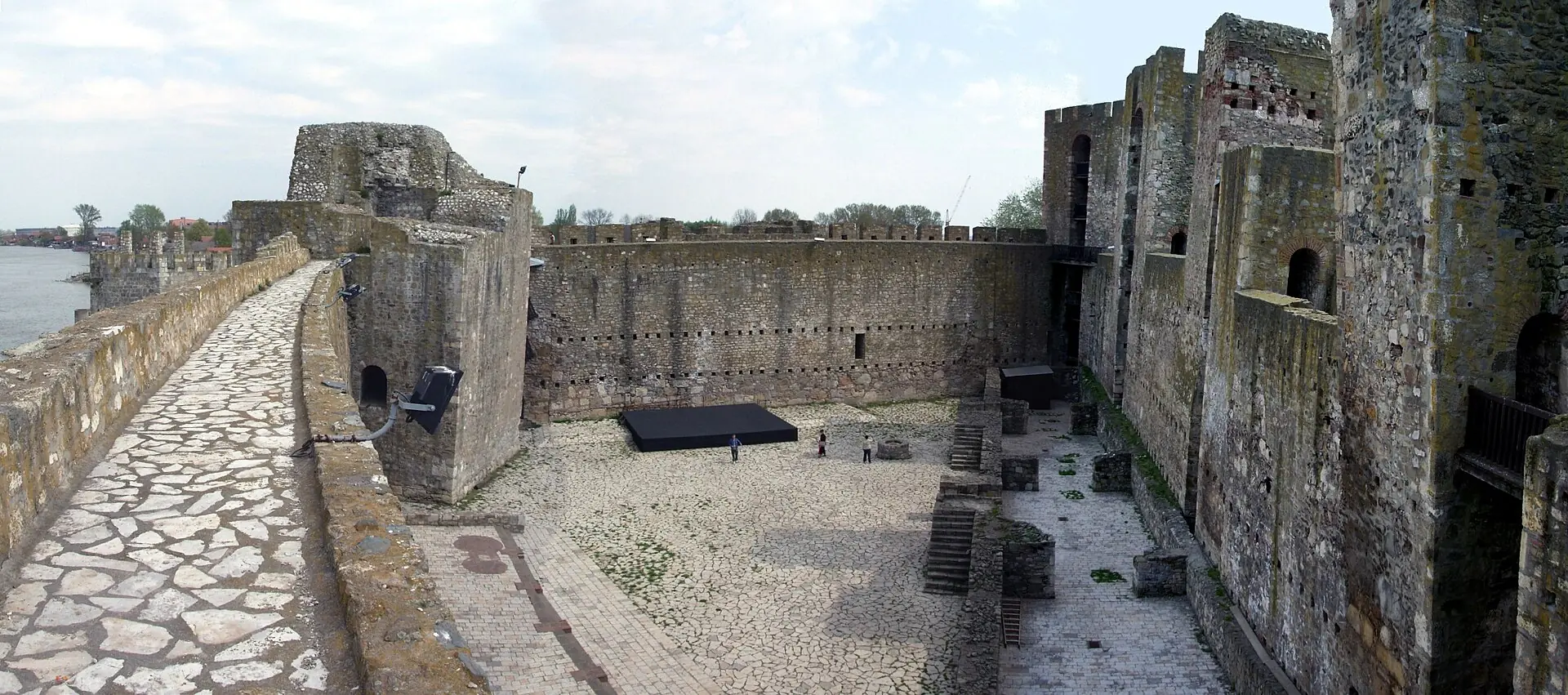
Đurađ Branković built the great fortress of Smederevo on the Danube as his new capital.
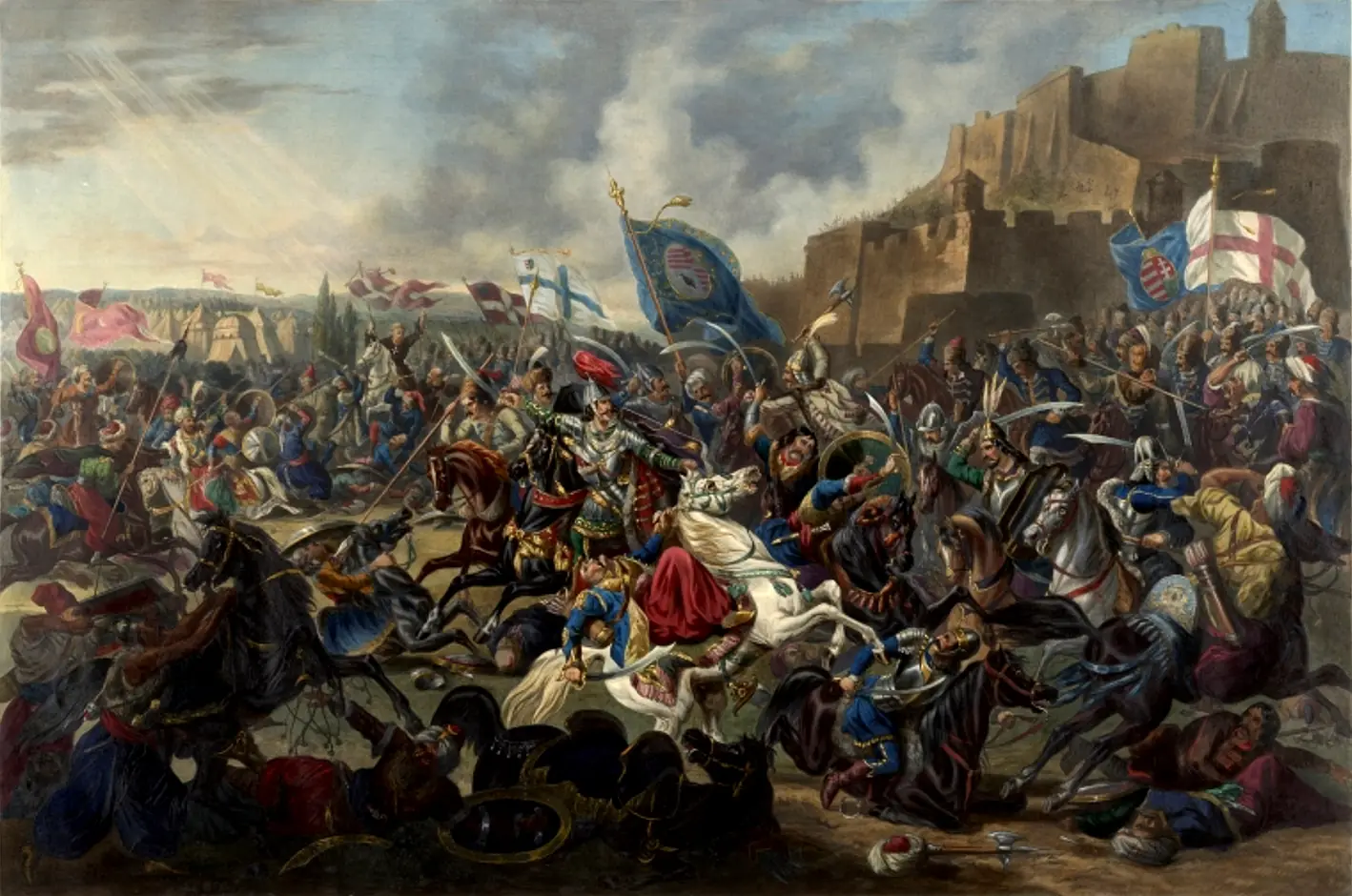
John Hunyadi broke the Ottoman siege of Belgrade in 1456.

1459 – 1803
Ottoman rule, Habsburg wars and the Great Migration.
For three and a half centuries Serbia was the Ottoman Sanjak of Smederevo, and Belgrade fell to Suleiman the Magnificent in 1521. The restored Patriarchate of Peć held the Serbs together, while revolts brought the burning of St Sava's relics. In the wars between the Ottomans and the Habsburgs Belgrade changed hands again and again; the Great Migration of 1690 took tens of thousands of Serbs north, where Sremski Karlovci and Novi Sad became centres of Serbian culture and of Dositej Obradović's Enlightenment.

Suleiman the Magnificent took Belgrade in 1521, opening the road to Hungary.

The restored Patriarchate of Peć held the Serbs together under Ottoman rule.
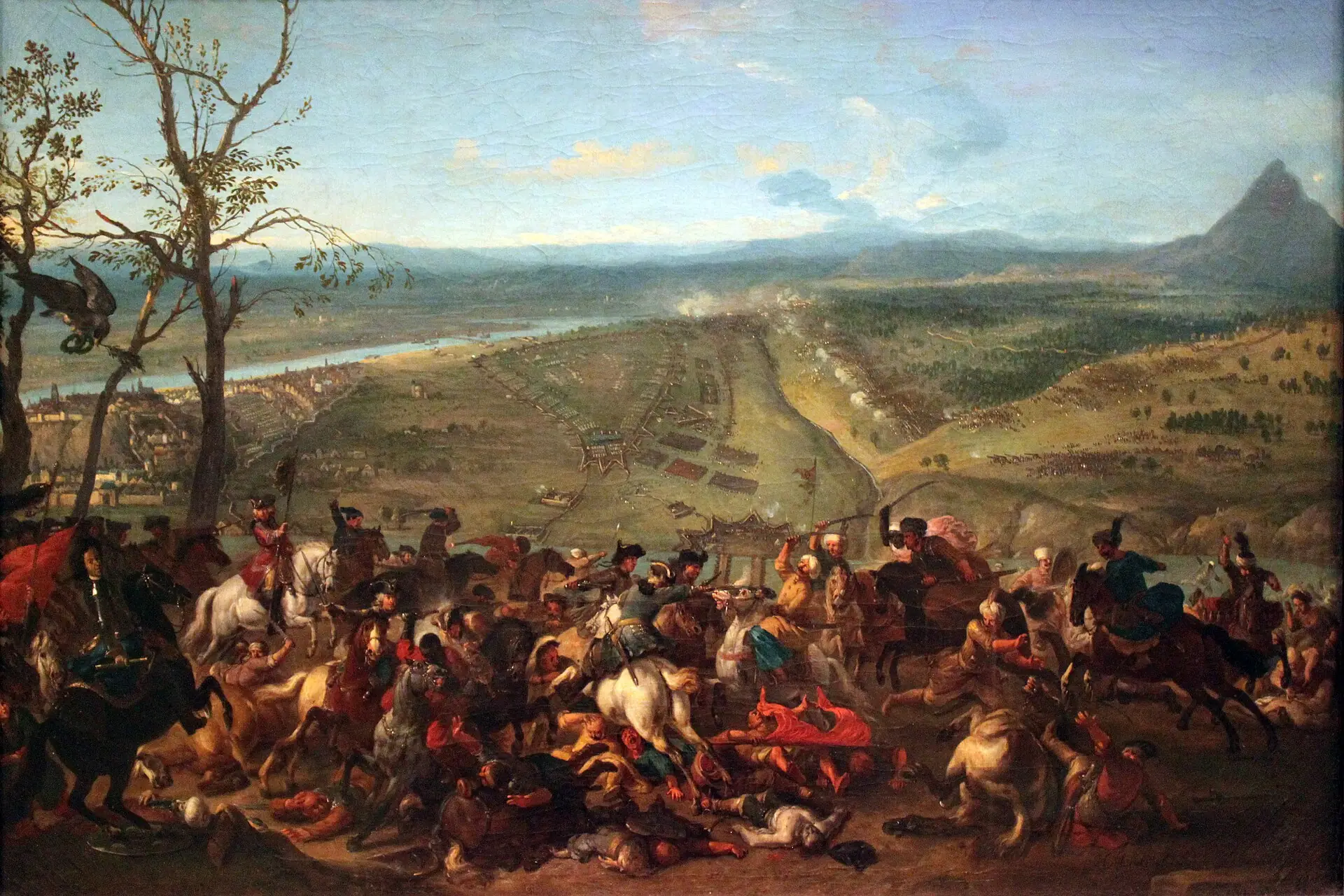
Prince Eugene took Belgrade, and from 1718 to 1739 northern Serbia was a Habsburg kingdom.

Dositej Obradović brought the Enlightenment to the Serbs in their own language.

1804 – 1881
Two uprisings and the rebirth of a Serbian state.
Karađorđe led the First Serbian Uprising in 1804, took Belgrade and set up a government before the revolt collapsed in 1813. Miloš Obrenović's Second Uprising of 1815 and his diplomacy won autonomy in 1830. Constitutions, the rivalry of the Obrenović and Karađorđević dynasties, Garašanin's Načertanije and Vuk Karadžić's language reform shaped the century, and after the wars of 1876–78 the Congress of Berlin recognised Serbia's independence.

Karađorđe's rebels routed an Ottoman army at Mišar near Šabac in 1806.

Miloš Obrenović raised the Second Serbian Uprising at Takovo in 1815.

Vuk Karadžić's dictionary and reform gave Serbian its modern written form.

The Congress of Berlin recognised Serbia's independence in 1878.

1882 – 1917
A kingdom, the Balkan Wars and the Great War.
Milan I proclaimed the Kingdom of Serbia in 1882. The May Coup of 1903 brought Peter I Karađorđević and a parliamentary golden age dominated by Nikola Pašić's Radicals, and the Balkan Wars nearly doubled the country. After Sarajevo Serbia won the first Allied victories of the First World War at Cer and Kolubara, was overrun in 1915, retreated across Albania to Corfu and fought its way home from Salonica, losing perhaps a quarter of its people.

Officers killed King Alexander Obrenović and Queen Draga in 1903, bringing Peter I to the throne.
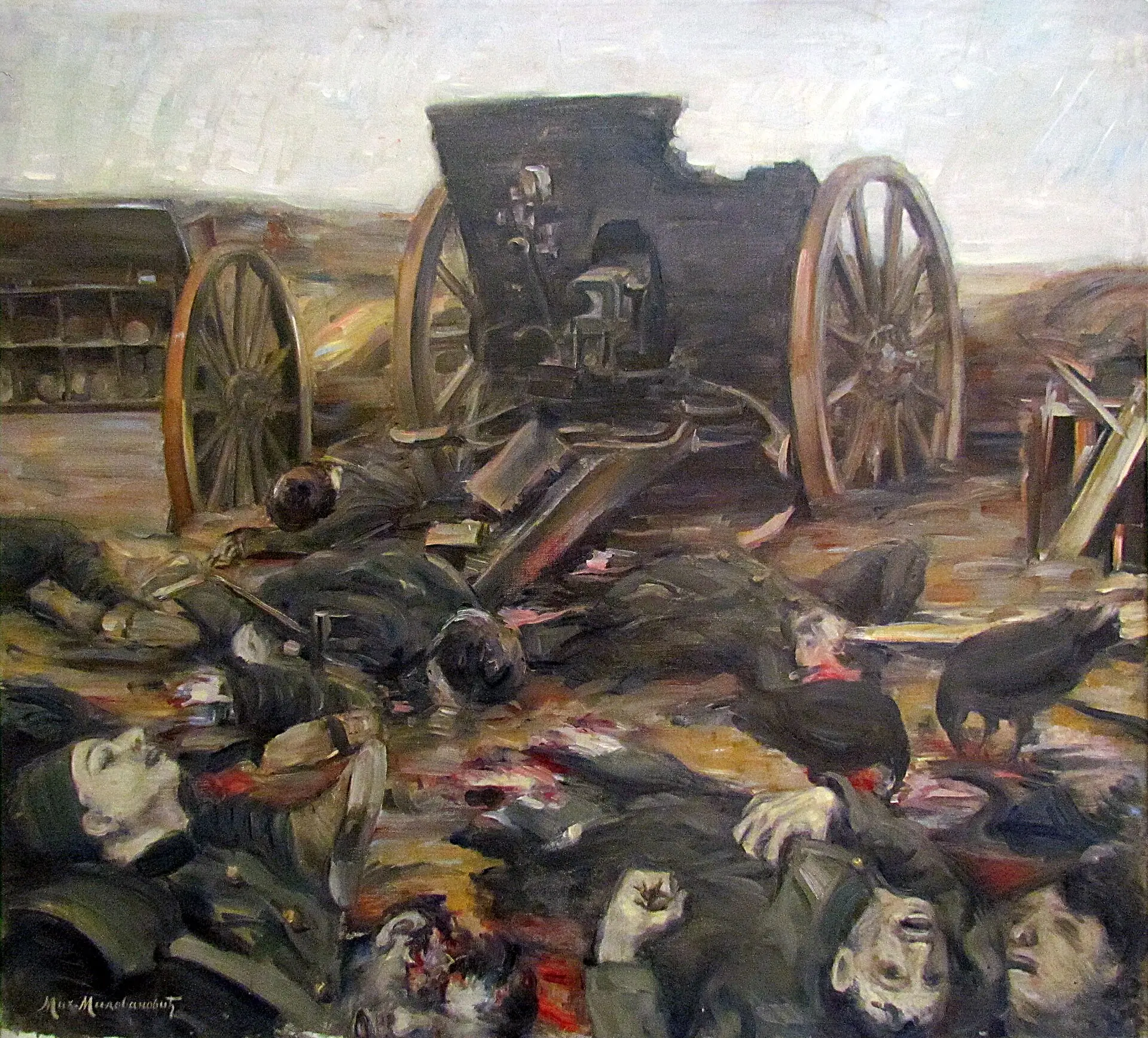
Victory at Kumanovo in 1912 opened Kosovo and Macedonia to the Serbian army.

At Cer in August 1914 Serbia won the first Allied victory of the First World War.

The breakthrough at Dobro Pole in 1918 led the Serbian army home.
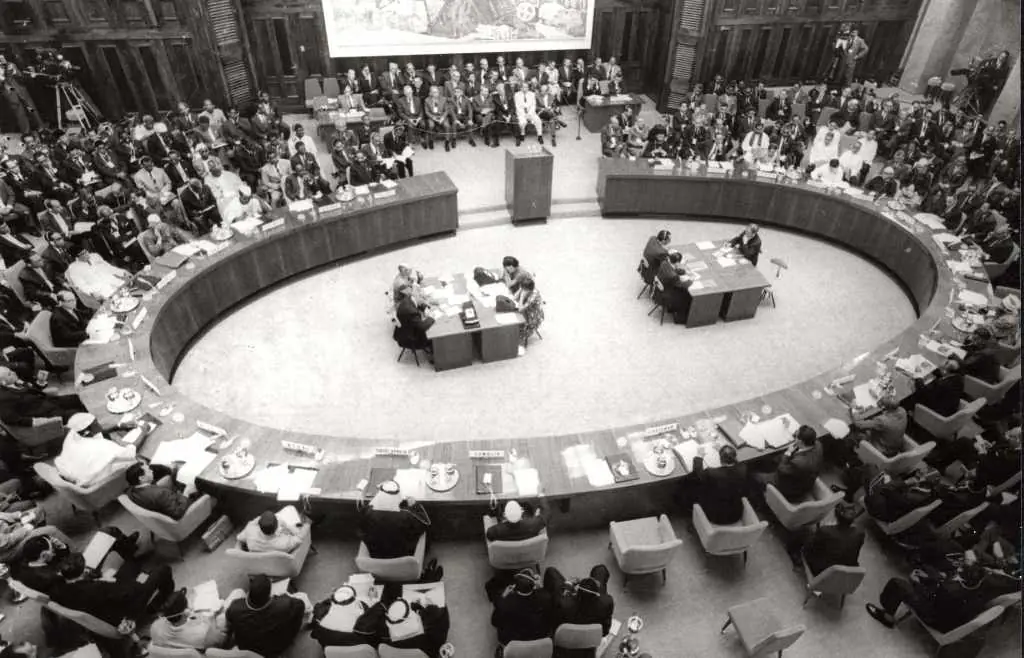
1918 – 1986
A South Slav kingdom, war and Tito's federation.
The Kingdom of Serbs, Croats and Slovenes was proclaimed on 1 December 1918 and became Yugoslavia under King Alexander's dictatorship. The 27 March 1941 coup brought the Axis invasion; occupied Serbia suffered reprisal massacres and the Holocaust while Serbs in the Independent State of Croatia faced genocide, and Partisans and Chetniks fought the occupiers and each other. Tito's socialist Yugoslavia broke with Stalin, built self-management and led the Non-Aligned Movement, but after his death in 1980 the federation sank into crisis.
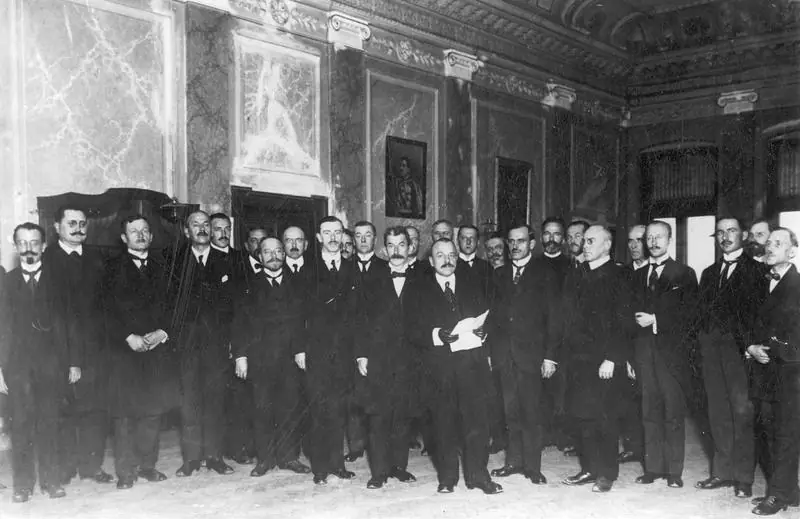
The Kingdom of Serbs, Croats and Slovenes was proclaimed on 1 December 1918.

German bombers struck Belgrade on 6 April 1941 as the Axis invaded Yugoslavia.

Partisans and the Red Army liberated Belgrade on 20 October 1944.

Tito broke with Stalin in 1948 and went his own way between the blocs.

1987 – present
The breakup of Yugoslavia and the road to today.
Slobodan Milošević rose to power in 1987 as Yugoslavia broke apart in the wars in Croatia, Bosnia and Kosovo, under UN sanctions, hyperinflation and the NATO bombing of 1999. The revolution of 5 October 2000 overthrew him; Prime Minister Zoran Đinđić was assassinated in 2003, and Serbia became independent again when Montenegro left the union in 2006. Kosovo declared independence in 2008, which Serbia does not recognise; Serbia became a candidate for the European Union, and since 2024 student-led protests have challenged the government.

Slobodan Milošević took power in Serbia at the Eighth Session of 1987.

NATO bombed Yugoslavia for 78 days in 1999 during the Kosovo War.

Serbia became independent again when Montenegro left the state union in 2006.

The deadly canopy collapse at Novi Sad station in 2024 set off nationwide student protests.
The Serbian Lands, 300 BCE – Today
From the tribes of the Danube and Roman Moesia to Nemanja's kingdom, Dušan's empire, four centuries of Ottoman rule, the Principality and Kingdom of Serbia, Yugoslavia and the Republic of Serbia. Move to any year, or through 40 narrated chapters, and watch the Serbian state rise in Raška and Duklja, reach the Aegean, vanish under the Ottomans and return, first alone and then within Yugoslavia.
Move the slider to any year: every polity recorded for that year is drawn. Serbian states are gold; the powers that ruled the Serbian lands in the current chapter are green, Kosovo is hatched from 1999, and everything else is grey; 40 chapters carry the story. Borders change only where the dataset records a change, and they fade rather than morph between dated polygons. The slider is stretched so that the dense modern centuries get more room than the long ancient ones. Stars mark capitals and dots mark towns, each shown in its own years. Hover a territory for its name and dates; click it to open its Wikipedia article.
Boundaries are approximate reconstructions from the Cliopatria dataset, and ancient and early medieval dates are approximate. Some polity names were adapted for clarity: Cliopatria’s “Serbian Empire” after 1375 is labelled “Moravian Serbia / Serbian Despotate”, its “Serbian Despots” are the lands of Vuk Branković (1375–1414) and Zeta under the Balšić lords (1415–1421), and its 1992–95 outline of Serbia-Montenegro, which includes Serb-held territories in Croatia and Bosnia, is replaced by the 1996–99 outline of FR Yugoslavia. Cliopatria shows the principality of 1815–1832 with its post-1833 extent. Kosovo is shown as a separate area under UN administration from 1999 and after its 2008 declaration of independence, which Serbia does not recognise. The dashed lines are Serbia and Kosovo today, for orientation only.
If the page stays blank, the site doesn't allow embedding — use “Open in new tab”.
From Lepenski Vir and the emperors born on the Danube to the Republic of Serbia, Serbian history has left the world painted monasteries and an independent church, a reformed language and its epic poetry, the first national revolution in the Ottoman Balkans, and a modern history shaped by two Yugoslavias, war and Europe.
In 1219 Saint Sava won an autocephalous Serbian Church, raised to a patriarchate at Peć in 1346. The Nemanjić kings left Studenica, Sopoćani, Mileševa, Dečani and Gračanica; Stari Ras and Sopoćani, Studenica and the Medieval Monuments in Kosovo are UNESCO World Heritage sites, and the family slava is on UNESCO's intangible heritage list.
The Miroslav Gospel of about 1180, on UNESCO's Memory of the World register, is the oldest surviving Serbian manuscript. Vuk Karadžić's dictionary and reform gave Serbian a phonetic Cyrillic alphabet ("write as you speak"), and Serbian today is written in both Cyrillic and Latin. Ivo Andrić won the Nobel Prize in Literature in 1961.
Lepenski Vir and the Vinča culture are landmarks of European prehistory, and slag from Belovode records some of the earliest copper smelting in the world. Some seventeen Roman emperors were born in the lands of present-day Serbia, Constantine the Great at Naissus among them, and Galerius's palace of Felix Romuliana is a UNESCO World Heritage site.
The Kosovo cycle of epic poems, sung to the one-stringed gusle, made the battle of 1389 and Prince Lazar central to Serbian memory; Vuk Karadžić's collections won admirers from Goethe to Jacob Grimm. Singing to the gusle and the kolo circle dance are on UNESCO's intangible heritage lists.
Dositej Obradović brought the Enlightenment to the Serbs, and the Great School of 1808 grew into the University of Belgrade. Serbs such as Nikola Tesla, the pioneer of alternating current, the physicist Mihajlo Pupin and the climate scientist Milutin Milanković changed modern science.
The First Serbian Uprising of 1804 began the first successful national revolution in the Ottoman Balkans. The Sretenje Constitution of 1835, adopted on 15 February, the day the uprising began, was one of the most liberal of its time; that date is now Statehood Day. Serbia won its independence at the Congress of Berlin in 1878.
Serbia lost perhaps a quarter of its people in the First World War, remembered in the Great Retreat across Albania. The Second World War brought the massacres at Kragujevac and Kraljevo, the Holocaust in Serbia and the genocide of Serbs at Jasenovac; the wars of the 1990s left Srebrenica, judged genocide by international courts, and the legacy of the ICTY.
At the meeting of the Sava and the Danube, Belgrade has been besieged dozens of times on the road between central Europe and Constantinople. Serbia was the core of both Yugoslavias, and Tito's non-aligned Yugoslavia hosted the first Non-Aligned summit in Belgrade in 1961. Serbia has been a candidate for the European Union since 2012.
The timeline is built from the project's own research dossier and its event, ruler, prime minister and map datasets, checked against English Wikipedia, Encyclopaedia Britannica, UNESCO, the Government of Serbia and peer-reviewed archaeology. Linked articles are starting points for verification, not proof that every claim has been independently checked. Prehistoric, ancient and early medieval dates are approximate; all dates follow the Gregorian (New Style) calendar, which Serbia adopted in 1919, with Old Style dates such as Vidovdan noted where relevant; contested subjects follow ICTY and ICJ findings and mainstream scholarship; historical borders are reconstructions.
Every event and every ruler has its own sources. See Sources & Further Reading in each timeline entry and ruler profile.
History is connected. Explore the bigger picture.
AllHistories is an independent visual history project designed to make the past easier to understand, explore, and connect.
History is more than a collection of dates, rulers, and battles. Events rarely happen in isolation. Borders shift, civilizations influence one another, ideas spread, and decisions made centuries ago continue to shape the world today.
Through interactive timelines, historical maps, and visual storytelling, AllHistories helps uncover these connections and makes complex historical subjects more accessible and engaging.
Travel through centuries, discover turning points, and understand how historical events unfold and connect.
Explore how borders, civilizations, populations, trade routes, beliefs, and spheres of influence have changed over time.
Go beyond dates and discover the individuals, places, decisions, and circumstances behind historical developments.
Explore connections between countries, empires, civilizations, and historical themes to better understand cause and consequence.
Features vary depending on the historical subject.
AllHistories draws on historical research, published references, public archives, and available historical datasets. The information is organized and presented through interactive digital experiences.
History is not always certain or universally agreed upon. Dates, territorial boundaries, population figures, and interpretations may differ between sources. Some information is necessarily simplified or estimated for visual presentation.
The goal is to encourage curiosity and independent exploration, not to replace academic publications or specialist historical research.
When you visit AllHistories, the web server may process technical information such as your IP address, requested pages, browser details and access times to deliver pages and maintain the service.
Some pages load Google Analytics, Google Fonts, externally hosted images, maps or other third-party resources. Requests to these providers can transmit technical information, including your IP address. Contact forms may use Google reCAPTCHA to help prevent abuse. These providers apply their own privacy policies.
The website uses browser storage for preferences such as the selected theme. Country microsites also use a session cookie to support website functionality, including request protection. Analytics or other third-party services may use additional cookies or storage, depending on the page and your browser settings.
When you submit a correction or contact form, the information you provide, such as your name, email address and message, is processed to review and respond to your request. Please avoid including sensitive personal information.
You can manage cookies and site storage in your browser and control third-party requests through browser privacy settings. For privacy questions or requests concerning information you submitted, use the contact option on the microsite where you sent it.
Links to sources and other websites take you to services with their own privacy practices. Review their policies before providing personal information.
AllHistories provides historical information for general education and exploration. Its content is not professional, legal, financial or other specialist advice.
We aim to present useful, well-sourced summaries, but cannot guarantee that every date, statement, translation or interpretation is complete or accurate. Verify important claims against the cited sources and relevant scholarship. Content may be corrected or updated.
Maps are simplified historical illustrations. Borders, place names and territorial labels may vary by period and source. Their appearance does not express a position on sovereignty or present-day territorial disputes.
Images and source material may belong to their respective creators or rights holders. Consult the image credit, source page and license before reusing material. A link or credit does not grant additional reuse rights.
External links are provided for reference. AllHistories does not control the content, availability or policies of third-party websites.
To report an error or a concern about credited material, use the contact option on the relevant country microsite and identify the page, material and supporting details.