Key facts of the era
Key Events
Journey through the events, people, wars and ideas that shaped Romania, from the first cave dwellers of the Banat to the present day.
Follow the Getae and Dacians, Burebista and Decebalus, Trajan's conquest and Roman Dacia, the migrations, the voivodes of Transylvania, the founding of Wallachia and Moldavia, Mircea the Elder, Vlad the Impaler, Stephen the Great and Michael the Brave, the Princes of Transylvania, the Phanariote era, the Union of 1859 and the kingdom of Carol I, the Great Union of 1918, the Second World War, the communist decades and the revolution of 1989.
Meet the Dacian kings, the Roman emperors, every voivode and prince of Wallachia, Moldavia and Transylvania, the kings, the communist leaders, every president and the prime ministers who served from 1862.
From the Dacian kings and Roman emperors, the voivodes of Transylvania and the princes of Wallachia and Moldavia, to the Domnitor, kings, communist leaders and presidents of modern Romania, with its prime ministers.
A Journey Through the Ages
Romania lies around the arc of the Carpathians, between the Danube, the Black Sea and the plains of Moldavia and Wallachia, with the Transylvanian plateau at its heart. Here the earliest securely dated modern humans of Europe were buried in a cave at Oase some forty thousand years ago, farmers of the Cucuteni culture painted their pottery, and the Getae and Dacians, Thracian peoples who built the fortresses of the Orăștie Mountains, were united by Burebista and defended by Decebalus until Trajan made Dacia a Roman province in 106 CE.
After the Romans left in the 270s, Goths, Huns, Gepids, Avars, Slavs, Bulgars and Magyars crossed or ruled these lands, and the Romanian language, a Romance tongue surrounded by Slavic, Hungarian and Greek neighbours, took shape in an obscure age whose location is still debated. The kingdom of Hungary absorbed Transylvania, while beyond the Carpathians Basarab I won independence at Posada in 1330 and Bogdan I founded Moldavia, two principalities ruled by voivodes and princes who faced the Ottomans, from Mircea the Elder and Stephen the Great to Michael the Brave, who briefly united the three lands in 1600.
Under Ottoman suzerainty and the Phanariote princes, and with the Habsburgs in Transylvania, the Romanians looked to national revival; the revolutions of 1848 failed, but Moldavia and Wallachia elected Alexandru Ioan Cuza in 1859, Carol of Hohenzollern became prince in 1866, independence was won in 1877 and a kingdom proclaimed in 1881. The Great Union of 1918 created Greater Romania, which lost a third of its territory in 1940, fought on the Axis side, took part in the Holocaust and changed sides in 1944. Communist rule under Gheorghiu-Dej and Ceaușescu ended in the revolution of December 1989, and Romania joined NATO in 2004 and the European Union in 2007; the annulled presidential election of 2024 and the government crisis of 2026 mark its most recent years.
Explore the eleven ages below through selected events from the timeline.

45,000 BCE – 1,201 BCE
Cave hunters, painted pottery and the first farmers of the Carpathians.
From the early modern humans of Peștera cu Oase to the farmers of Starčevo–Criș, the painted-pottery towns of Cucuteni and the metalworkers of the Bronze Age, the lands between the Carpathians, the Danube and the Black Sea were home to some of Europe's richest prehistoric cultures.

A jawbone found in a Banat cave in 2002 belonged to one of the oldest securely dated modern humans in Europe, with a Neanderthal ancestor only a few generations back.
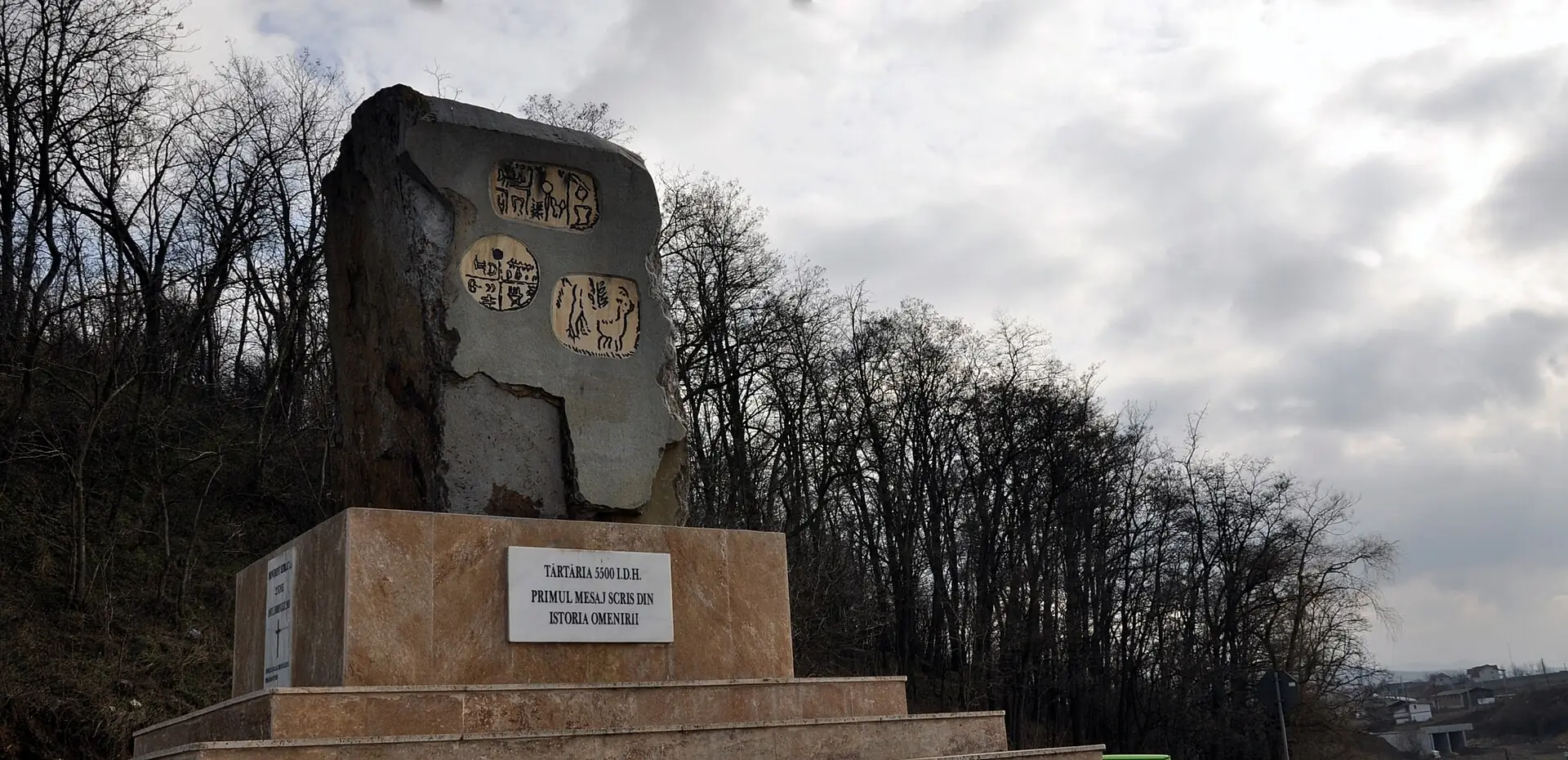
Three clay tablets with incised signs, found in 1961, were hailed as the oldest writing in the world, though their dating and meaning remain contested.

A small clay figure of a seated man from the Hamangia culture of Dobruja has become one of the best known images of Neolithic Europe.

Four rings of earth and timber ramparts in the Banat make this one of the largest prehistoric fortifications in Europe.

1,200 BCE – 274
Greek colonies, Dacian kings and the Roman conquest.
Thracian peoples – the Getae and Dacians – formed tribal kingdoms while Greek colonists founded Histria, Tomis and Callatis on the Black Sea. Burebista united the Dacians in the 1st century BCE, and Decebalus defied Rome until Trajan's conquest. Trajan turned the heart of Dacia into a Roman province. For 165 years towns, roads, mines and colonists from across the empire spread Latin culture north of the Danube, until Aurelian withdrew the legions in the 270s.

Greek colonists from Miletus founded Histria on the Black Sea coast around 630 BCE, the oldest attested town on Romanian territory.

Around 82 BCE Burebista united the Getae and Dacians in the largest state of their history, until his murder in 44 BCE.

Dacian kings built a chain of stone fortresses around Sarmizegetusa Regia, now a World Heritage Site.

The spiral frieze dedicated in Rome in 113 CE is the most detailed visual record of the Dacians and the wars against them.

275 – 1309
Migrating peoples, a new language and the Hungarian frontier.
Goths, Huns, Gepids, Avars, Slavs, Bulgars and Magyars crossed or ruled the lands north of the Danube while Dobruja stayed Roman and Byzantine. The Romanian language and people took shape in this obscure and much-debated period. The Kingdom of Hungary absorbed Transylvania, settled Saxons and Székelys there and ruled it through voivodes, while Pechenegs, Cumans and the Mongols dominated the plains where the first Romanian voivodeships and knezates emerged.

In 376 the Huns broke Gothic power north of the Danube, opening centuries of migrations across the Romanian lands.

Romanian descends from the spoken Latin of the Danubian provinces; where it took shape is one of the most debated questions of Balkan history.

From 1141 the Hungarian kings invited settlers from the Rhine and Moselle lands to southern Transylvania, where they founded Sibiu, Brașov and fortified churches.

The Mongols devastated Transylvania in 1241 and swept away Cuman power, clearing the ground for new Romanian polities beyond the Carpathians.

1310 – 1456
Wallachia and Moldavia against Hungary and the Ottomans.
Basarab I founded Wallachia and won independence at Posada (1330); Moldavia emerged east of the Carpathians around 1359. Mircea the Elder, Alexander the Good and John Hunyadi faced the rising Ottoman Empire.
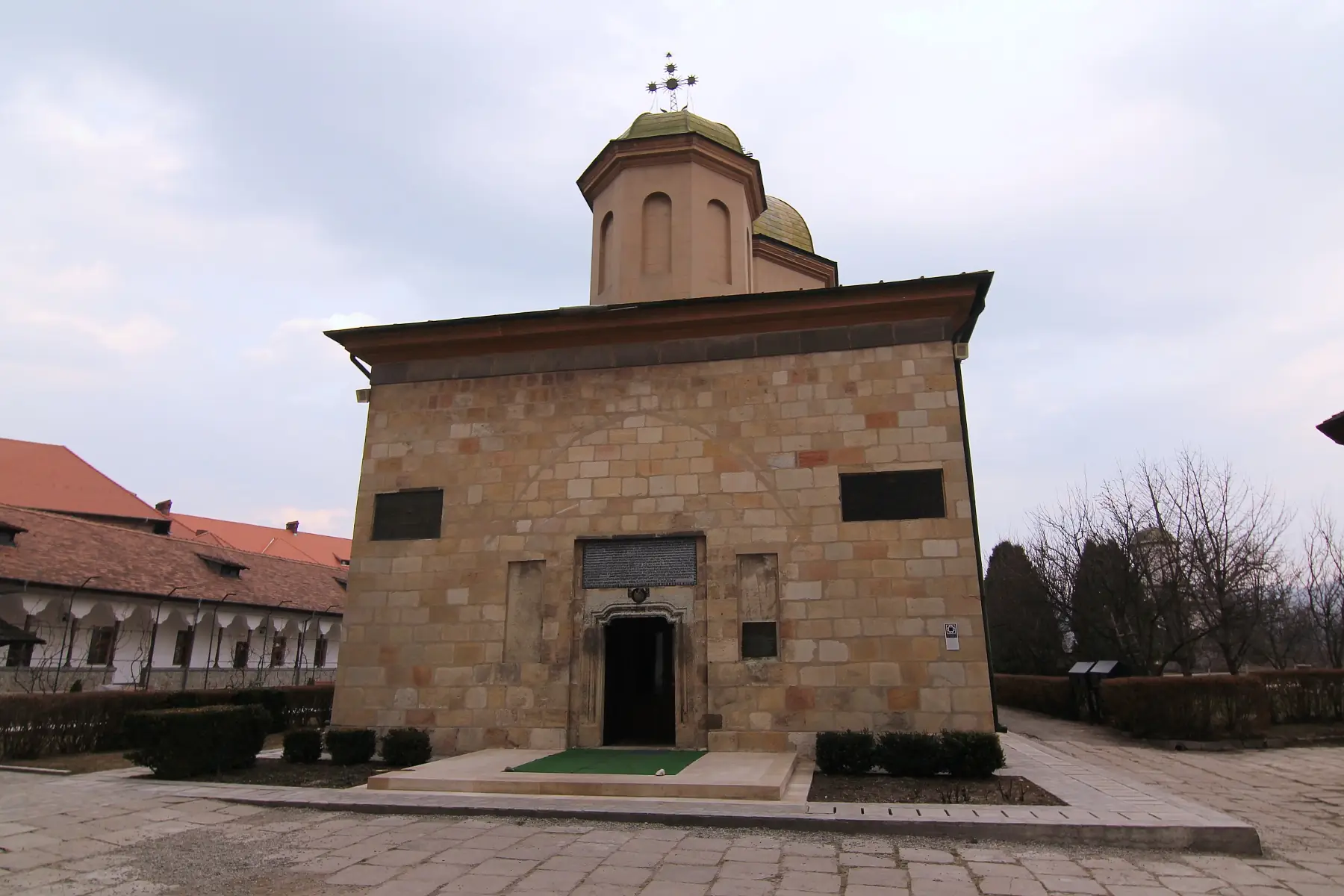
About 1310 Basarab united the lands between the Carpathians and the Danube, the beginning of Wallachia.

Bogdan of Maramureș crossed the mountains and threw off Hungarian overlordship around 1359, founding the second Romanian principality.

Mircea the Elder fought the army of Sultan Bayezid at Rovine in 1395 and later joined the crusade of Nicopolis.

The Transylvanian commander died after the defence of Belgrade in 1456, the last great campaign of the age.

1457 – 1592
Stephen the Great, painted monasteries and tributary states.
Stephen the Great of Moldavia and Vlad the Impaler of Wallachia fought the Ottomans, but after Mohács (1526) Wallachia, Moldavia and the new Principality of Transylvania all became tributaries of the Sultan.

In June 1462 Vlad III led a raid on the camp of Sultan Mehmed II outside Târgoviște, the episode that made his name in European memory.

The monastery founded by Stephen the Great in 1488 gained its famous blue frescoes under his successors.

A letter of 1521 to the mayor of Brașov is the oldest preserved document in Romanian.
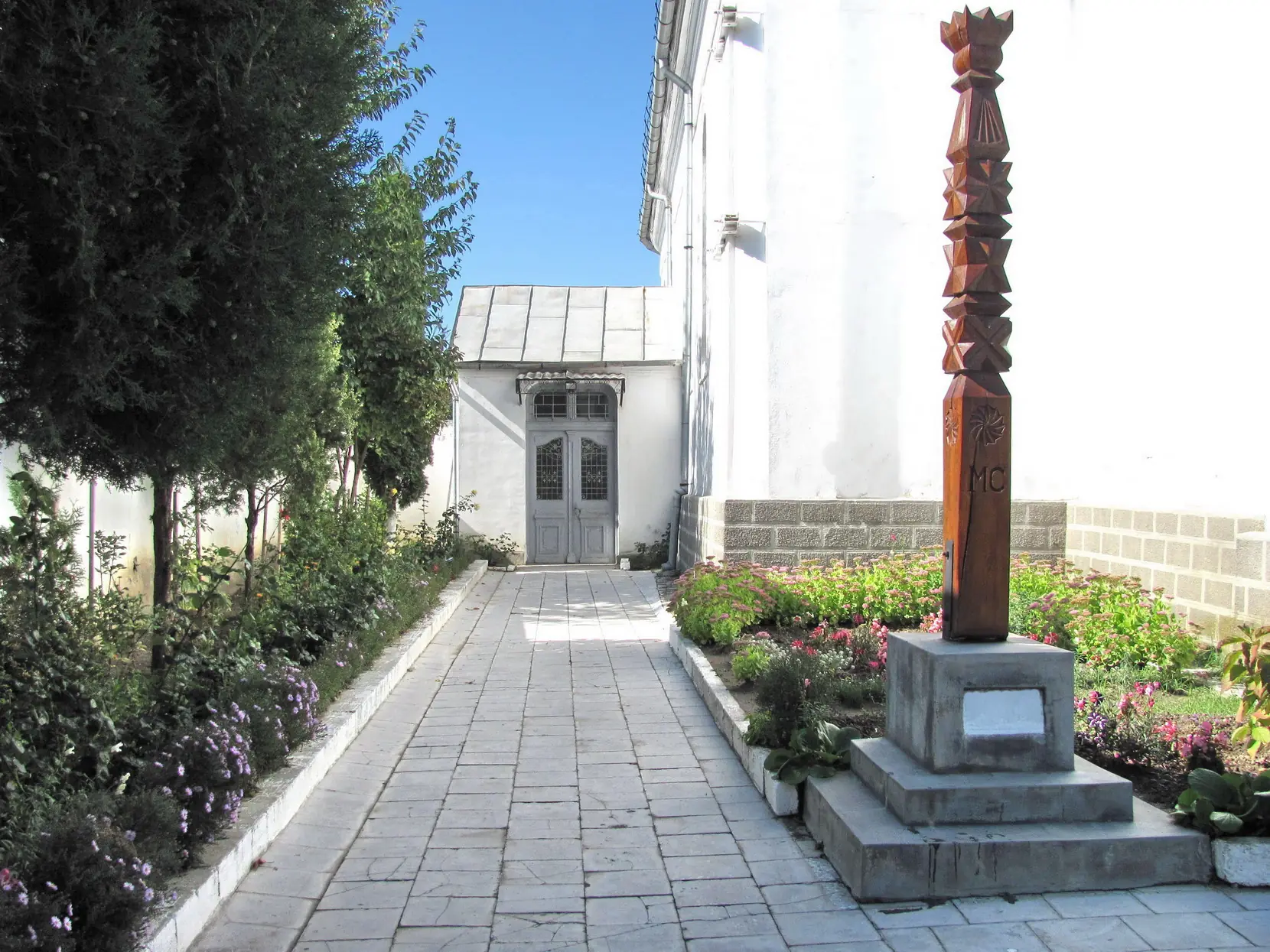
In 1568 the Diet of Transylvania declared that preachers could preach freely and that no one should be persecuted for his faith.

1593 – 1710
A brief union, a golden age of culture and Habsburg conquest.
Michael the Brave briefly united Wallachia, Transylvania and Moldavia in 1600. The 17th century brought the cultural flowering of Matei Basarab, Vasile Lupu and Constantin Brâncoveanu, and Transylvania passed to the Habsburgs.

In August 1595 Michael the Brave halted a larger Ottoman army, a battle that became a symbol of Romanian resistance.

Vasile Lupu's church in Iași, consecrated in 1639, is covered in carved stone and is one of the landmarks of Moldavian architecture.

Constantin Brâncoveanu founded the monastery of Hurezi in 1690, the finest monument of the Brâncovenesc style.

A part of the Orthodox clergy of Transylvania entered union with the Catholic Church in 1698–1701, creating the Greek-Catholic Church.

1711 – 1821
Greek princes, imperial partitions and the first national stirrings.
After Cantemir's alliance with Russia failed, the Porte appointed Greek Phanariote princes in Moldavia and Wallachia. Russo-Turkish wars cost the principalities Bukovina and Bessarabia, while Transylvanian Romanians began their national movement.

After Cantemir's failed alliance with Russia, the Porte began to appoint Greek princes from Constantinople to rule Moldavia in 1711.

The prince of Wallachia was beheaded in Constantinople with his four sons in 1714 and is venerated as a saint.

The largest peasant uprising of eighteenth-century Transylvania ended with the execution of two of its leaders in 1785.

The Treaty of Bucharest of 1812 gave Russia the eastern half of Moldavia between the Prut and the Dniester.

1822 – 1877
From native princes to a united state and independence.
Native princes returned in 1822, the Organic Statutes modernised government, and the revolutions of 1848 failed. In 1859 Moldavia and Wallachia elected Alexandru Ioan Cuza and united as Romania, which gained a foreign prince, Carol I, in 1866.

The first quasi-constitutional texts of the principalities came into force in 1831 under Russian occupation.

The programme read at Islaz in June 1848 launched the Wallachian revolution and demanded land reform and national rights.

Carol of Hohenzollern-Sigmaringen reached Bucharest in May 1866 and founded the dynasty that reigned until 1947.

On 21 May 1877 Romania declared its independence from the Ottoman Empire and fought beside Russia at Plevna.

1878 – 1947
A kingdom, a great war and Greater Romania.
Independence was won in 1877–78 and Romania became a kingdom in 1881. Oil, railways and literature flourished, but the peasant question exploded in 1907. Romania joined the Entente in 1916 and was largely occupied. In 1918 Bessarabia, Bukovina and Transylvania united with Romania. Interwar democracy gave way to royal and military dictatorship; Romania lost a third of its territory in 1940, fought for the Axis, took part in the Holocaust, switched sides in 1944 and fell under Soviet control.

In August 1917 the Romanian army held the last unoccupied part of the country against the Central Powers.

The sculptor completed his memorial ensemble, including the Endless Column, in 1938.

In June 1941 thousands of Jews were killed in Iași, one of the first mass crimes of the Holocaust in Romania.

King Michael arrested Marshal Antonescu in 1944 and took Romania out of the war on the Axis side.

1948 – 1989
From Stalinism to the Ceaușescu years and the revolution.
The People's Republic imposed Stalinist rule, collectivisation and mass repression. Gheorghiu-Dej and Nicolae Ceaușescu pursued an independent line from Moscow, but Ceaușescu's personality cult and austerity ended in the bloody revolution of December 1989.

The secret police created in 1948 arrested politicians, priests and peasants and ran a network of informers until 1989.

The ban on abortion of 1966 raised the birth rate for a time and caused many deaths of women.

At the Montreal Olympics of 1976 a fourteen-year-old gymnast scored the first perfect ten in the history of the Games.
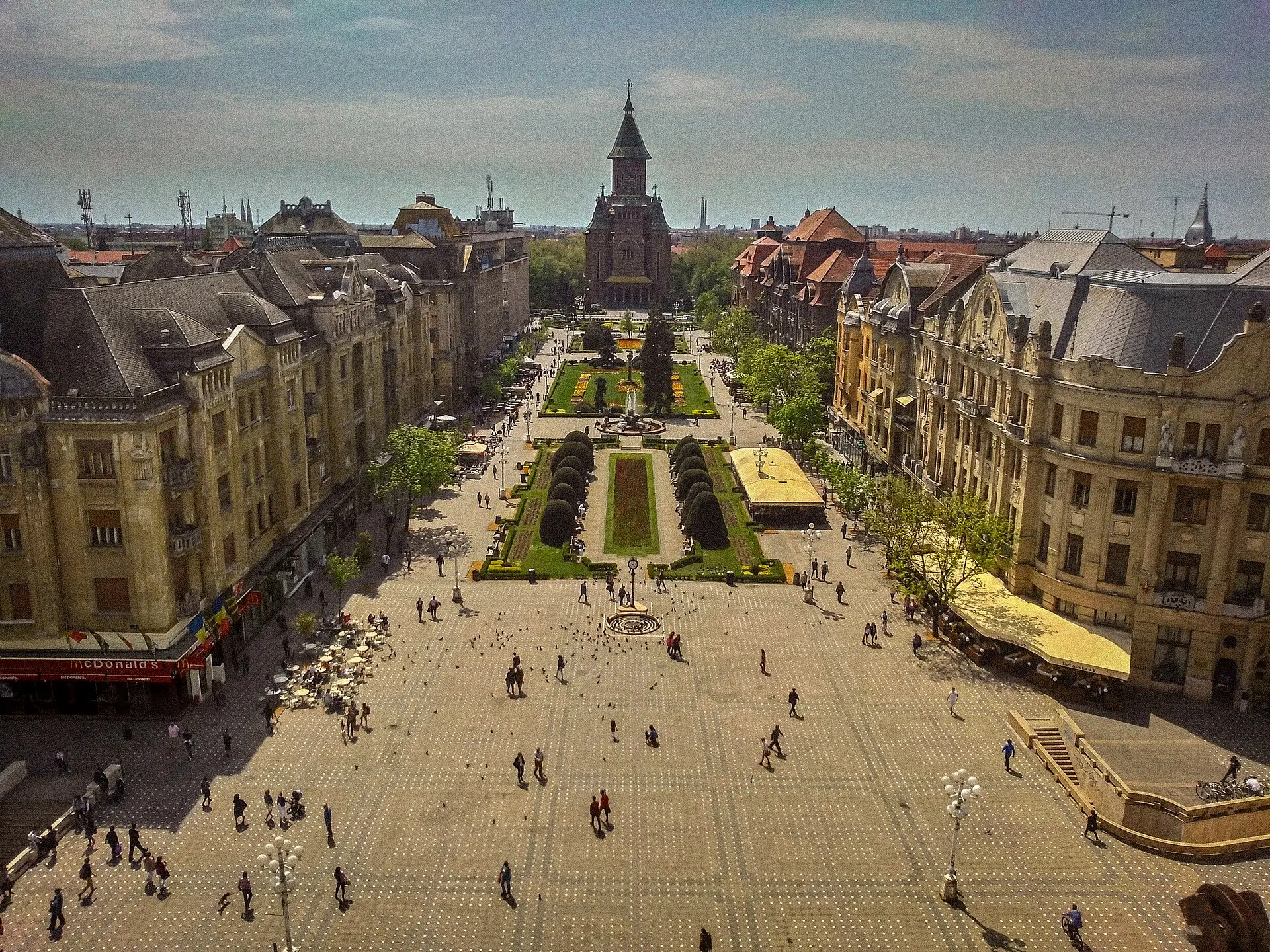
Protest around the home of a Reformed pastor in December 1989 grew into the uprising that spread to Bucharest.

1990 – present
Democracy, NATO, the European Union and an unsettled present.
Romania rebuilt democracy and a market economy, joined NATO (2004) and the European Union (2007), and fought corruption. The annulled 2024 presidential election and the government crisis of 2026 define the most recent years.

Romania joined the North Atlantic alliance on 29 March 2004.

The writer born in the Banat won the Nobel Prize in Literature in 2009 for her accounts of life under dictatorship.

In December 2024 the Constitutional Court cancelled the presidential election after allegations of a coordinated online campaign.

A no-confidence vote on 5 May 2026 toppled the Bolojan government and began months of failed attempts to form another.
From Burebista’s Dacia to the European Union, 100 BCE – Today
The Dacian kingdom and Roman Dacia, the migrations and the first voivodeships, Wallachia, Moldavia and Transylvania under Ottoman, Habsburg and Russian pressure, the Union of 1859, Greater Romania, and the borders that were drawn and redrawn in 1940, 1947 and 1991.
If the page stays blank, the site doesn't allow embedding — use “Open in new tab”.
From the fortresses of the Orăștie Mountains to the painted monasteries of Bukovina, the history of Romania has left a Romance language in Eastern Europe, an Orthodox and Greek-Catholic Christianity of icons and frescoes, a group of principalities that survived between three empires, the Union of 1859 and the Greater Romania of 1918, the sculpture of Brâncuși and the music of Enescu, a literature of exile and the absurd, a rich folk culture, a difficult memory of the Holocaust and of communism, and the revolution of 1989 that opened the way to NATO and the European Union.
Romanian, the only major Romance language of Eastern Europe, descends from the spoken Latin of the Danubian provinces and was shaped by contact with Slavic, Greek, Hungarian, Turkish and later French and Italian. The Transylvanian School of the eighteenth century argued the Latin origin of the Romanians, the Latin alphabet replaced Cyrillic in the nineteenth century, and the name Romania, adopted for the united state in 1862, recalls Rome. Where and how the language took shape is still debated between the theory of Daco-Roman continuity and the immigrationist theory, and the closely related Aromanian, Megleno-Romanian and Istro-Romanian are spoken south of the Danube. Neacșu's letter of 1521 is the oldest surviving text in Romanian, and Romanian is also the main language of the Republic of Moldova.
Most Romanians belong to the Romanian Orthodox Church, autocephalous since 1885 and a patriarchate since 1925, while the Greek-Catholic Church born of the union with Rome in 1698–1701, banned in 1948 and restored in 1989, and the Catholic, Reformed, Lutheran and Unitarian churches of Transylvania, recognised since the Edict of Torda, give the country an unusual religious variety. Stephen the Great and his successors covered the churches of Moldavia with frescoes, such as the blue of Voroneț and the scenes of Sucevița and Moldovița, which are World Heritage Sites together with the Brâncovenesc monastery of Hurezi, the fortified churches of the Saxons and the wooden churches of Maramureș.
Wallachia and Moldavia survived for centuries as tributary states between the Ottoman, Habsburg and Russian empires, paying tribute but keeping their princes, laws and church, and their rulers, from Mircea the Elder and Stephen the Great to Michael the Brave and Brâncoveanu, played a game of alliances that cost some of them their lives. The Phanariote era, Russian occupations and the loss of Bukovina and Bessarabia left a lasting sense of living on a frontier, and Transylvania, ruled by Hungarian kings, Ottoman-protected princes and the Habsburgs, kept the four-religion tolerance and three-nation constitution of its own.
The double election of Alexandru Ioan Cuza in 1859 created modern Romania without a war, and was followed by the reforms of the 1860s, the foreign dynasty of Carol I, independence at Plevna in 1877 and the kingdom of 1881. At the end of the First World War Bessarabia, Bukovina and Transylvania joined the Old Kingdom, and 1 December, the day of the assembly at Alba Iulia, is the National Day. The Great Union is celebrated as the fulfilment of a national ideal, while Hungarians, Germans, Jews, Ukrainians and others in the enlarged state experienced the new borders differently, and the losses of 1940 and the question of Moldova still shape the memory of 1918.
Constantin Brâncuși, born in Hobița in 1876, worked in Paris and made the Kiss, the Bird in Space and, at Târgu Jiu in 1938, the Table of Silence, the Gate of the Kiss and the Endless Column, which helped to found modern sculpture. George Enescu, composer, violinist and teacher of Yehudi Menuhin, wrote the Romanian Rhapsodies and the opera Oedipe, and the festival in Bucharest bears his name. Romanian painters from Grigorescu to Luchian, the architects of interwar Bucharest, the Bucharest Athenaeum, the Romanian New Wave of cinema, which won the Palme d'Or for Cristian Mungiu's 4 Months, 3 Weeks and 2 Days in 2007, belong to the same story.
Mihai Eminescu is regarded as the national poet, and Ion Luca Caragiale, Ion Creangă and Titu Maiorescu's Junimea made the late nineteenth century a classical age of Romanian letters. In the twentieth century Mircea Eliade, historian of religions, Eugène Ionesco, who helped create the theatre of the absurd, Emil Cioran, Tristan Tzara of Dada and the poet Paul Celan, born in Czernowitz in Bukovina, made reputations abroad, and Herta Müller won the Nobel Prize in Literature in 2009. Their legacies are not uncontested: Eliade, Cioran and others sympathised with the Iron Guard in their youth, a subject of continuing debate in Romania and abroad. Scientists such as Henri Coandă, Victor Babeș and George Emil Palade, Nobel laureate in 1974, also left their mark.
The villages of Maramureș, Bukovina and Oltenia preserved costume, wood carving, egg painting, ceramics and the carol and ballad traditions, the doina and the hora; the Village Museum of Bucharest, opened in 1936, collects peasant houses from every region. Horezu ceramics and the Căluș dance are on UNESCO's intangible heritage lists, and the spring custom of the mărțișor is shared with neighbouring countries. The Romanian table joins sarmale (stuffed cabbage), mămăligă (polenta), mici, cheeses and cozonac with plum brandy, țuică, wine from Transylvania, Moldavia and Dobruja, and the culture of Easter and Christmas.
Romania faced the Holocaust late: the Wiesel Commission reported in 2004 that Romanian authorities were responsible for the deaths of 280,000 to 380,000 Jews and about 11,000 Roma, and the Tismăneanu Report of 2006 condemned the communist regime. The Memorial at Sighet, in a former prison, remembers the victims of communism. The revolution of 1989, the only violent overthrow of a communist government in the Eastern Bloc that year, ended with the execution of Ceaușescu, and historians still discuss how far it was a popular revolution and how far a coup. The country that joined NATO in 2004 and the European Union in 2007 and entered Schengen in 2025 continues to debate corruption, the rule of law, migration and the vote of 2024.
The timeline is built from the project's own research dossier and its event, ruler and map datasets, checked against English Wikipedia, Encyclopaedia Britannica, UNESCO, the Institutul Național de Statistică and the report of the Wiesel Commission and, for 2024–2026, major news organisations. Linked articles are starting points for verification, not proof that every claim has been independently checked. Dates before about 1300 are mostly approximate, the Daco-Roman continuity question and the historicity of Gelou, Glad and Menumorut are disputed, and casualty figures for 1907 and 1989 are given as the ranges reported. The most recent events rest on news reports that should be re-checked; historical frontiers on the map are approximate zones of control, shown by modern county or district.
Every event and every ruler has its own sources. See Sources & Further Reading in each timeline entry and ruler profile.
History is connected. Explore the bigger picture.
AllHistories is an independent visual history project designed to make the past easier to understand, explore, and connect.
History is more than a collection of dates, rulers, and battles. Events rarely happen in isolation. Borders shift, civilizations influence one another, ideas spread, and decisions made centuries ago continue to shape the world today.
Through interactive timelines, historical maps, and visual storytelling, AllHistories helps uncover these connections and makes complex historical subjects more accessible and engaging.
Travel through centuries, discover turning points, and understand how historical events unfold and connect.
Explore how borders, civilizations, populations, trade routes, beliefs, and spheres of influence have changed over time.
Go beyond dates and discover the individuals, places, decisions, and circumstances behind historical developments.
Explore connections between countries, empires, civilizations, and historical themes to better understand cause and consequence.
Features vary depending on the historical subject.
AllHistories draws on historical research, published references, public archives, and available historical datasets. The information is organized and presented through interactive digital experiences.
History is not always certain or universally agreed upon. Dates, territorial boundaries, population figures, and interpretations may differ between sources. Some information is necessarily simplified or estimated for visual presentation.
The goal is to encourage curiosity and independent exploration, not to replace academic publications or specialist historical research.
When you visit AllHistories, the web server may process technical information such as your IP address, requested pages, browser details and access times to deliver pages and maintain the service.
Some pages load Google Analytics, Google Fonts, externally hosted images, maps or other third-party resources. Requests to these providers can transmit technical information, including your IP address. Contact forms may use Google reCAPTCHA to help prevent abuse. These providers apply their own privacy policies.
The website uses browser storage for preferences such as the selected theme. Country microsites also use a session cookie to support website functionality, including request protection. Analytics or other third-party services may use additional cookies or storage, depending on the page and your browser settings.
When you submit a correction or contact form, the information you provide, such as your name, email address and message, is processed to review and respond to your request. Please avoid including sensitive personal information.
You can manage cookies and site storage in your browser and control third-party requests through browser privacy settings. For privacy questions or requests concerning information you submitted, use the contact option on the microsite where you sent it.
Links to sources and other websites take you to services with their own privacy practices. Review their policies before providing personal information.
AllHistories provides historical information for general education and exploration. Its content is not professional, legal, financial or other specialist advice.
We aim to present useful, well-sourced summaries, but cannot guarantee that every date, statement, translation or interpretation is complete or accurate. Verify important claims against the cited sources and relevant scholarship. Content may be corrected or updated.
Maps are simplified historical illustrations. Borders, place names and territorial labels may vary by period and source. Their appearance does not express a position on sovereignty or present-day territorial disputes.
Images and source material may belong to their respective creators or rights holders. Consult the image credit, source page and license before reusing material. A link or credit does not grant additional reuse rights.
External links are provided for reference. AllHistories does not control the content, availability or policies of third-party websites.
To report an error or a concern about credited material, use the contact option on the relevant country microsite and identify the page, material and supporting details.