Key facts of the era
Key Events
Scroll through the centuries, meet the rulers, and explore the moments that shaped Poland.
Explore Poland’s dukes, kings, elected monarchs, heads of state, and lines of succession.
A Journey Through the Ages
Poland has been shaped by union, partition, resistance and rebirth. Under the Piast dynasty, the baptism of Mieszko I in 966 brought the young state into Latin Christendom, and Kraków grew into a royal capital.
Union with Lithuania under the Jagiellonians created the Polish-Lithuanian Commonwealth, a vast, diverse realm of elected kings, noble liberties and religious tolerance that became one of Europe’s great powers.
Wars and internal paralysis weakened the Commonwealth, and despite the reforming Constitution of 3 May 1791, Russia, Prussia and Austria partitioned it out of existence by 1795. For 123 years Poles kept their nation alive through culture and uprisings.
Reborn in 1918, Poland was devastated by German and Soviet occupation in the Second World War, then ruled by a communist regime. Solidarity and the peaceful transition of 1989 led to a democratic Republic, now a member of NATO and the European Union.


c. 500,000 BCE - AD 960
Ice-age hunters, farmers, Bronze and Iron Age cultures and finally Slavic tribes settled the lands between the Oder and the Vistula.
For hundreds of thousands of years the Polish lands were home to shifting groups of hunters, followed by farming communities who mined flint at Krzemionki and built longhouses and megaliths. The Lusatian culture raised fortified settlements like Biskupin, while the Amber Road linked the Baltic coast to the Roman world. After the upheavals of the Migration Period, Slavic peoples settled the region, and by the 10th century the Polans around Gniezno and Poznań were forging the core of a new state.

Ciemna Cave near Ojców and other limestone caves of the Polish Jura preserve hearths, bones and Middle Palaeolithic tools left by Neanderthal hunters.

Cremation and urn burial in large cemeteries became the dominant funerary practice, part of the wider Urnfield tradition of Central Europe.

The Hunnic incursion into Europe set off the great migrations that disrupted the Germanic societies of the region.

Siemomysł, father of Mieszko I, completed the consolidation of neighbouring tribes under the Polans.
c. 960 - 1370
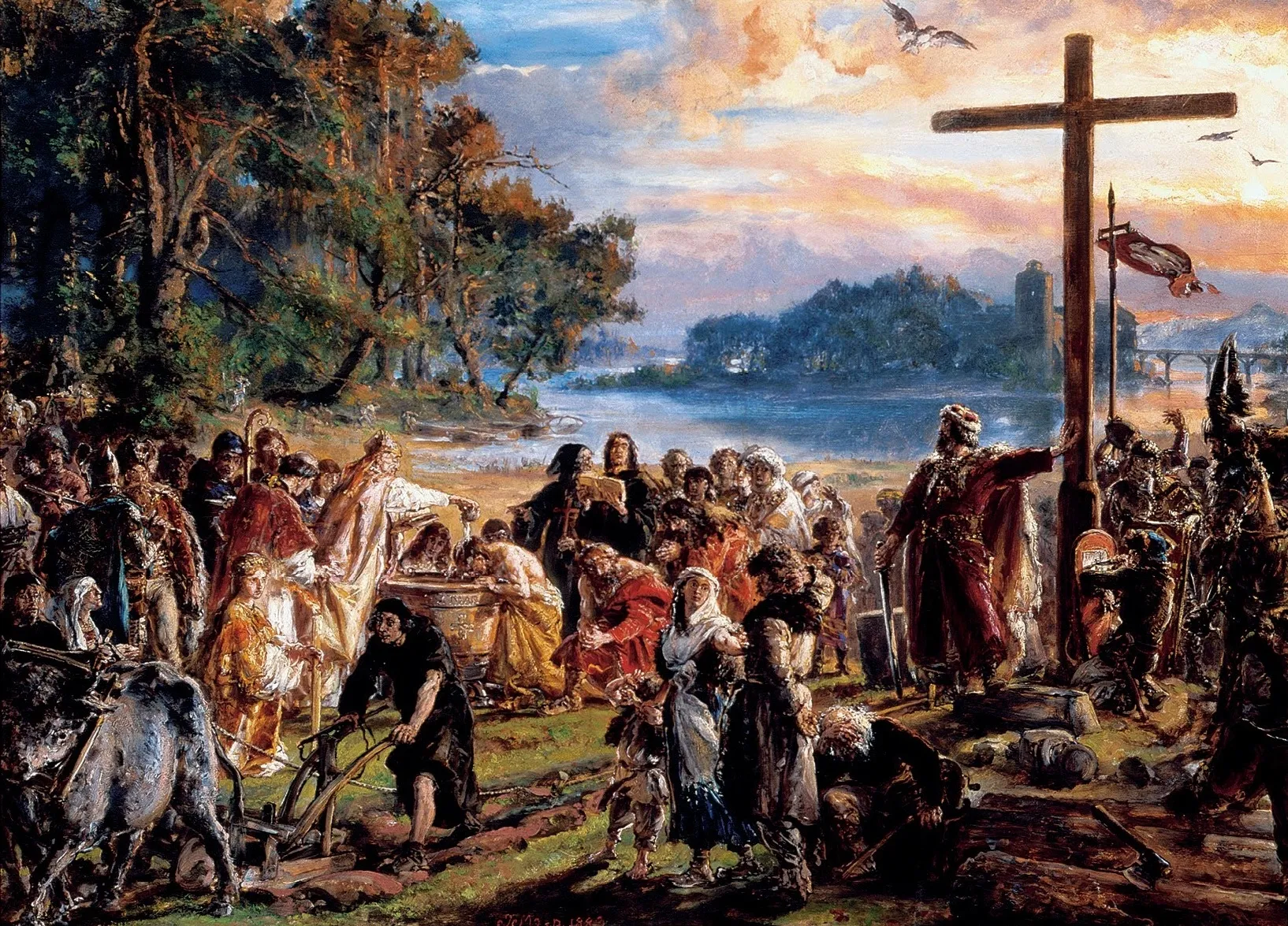
The Piast dynasty founded the Polish state, brought it into Latin Christendom and, after nearly two centuries of division, reunited it as a kingdom.
Mieszko I’s baptism in 966 tied the Polans to the Latin West, and his son Bolesław I the Brave expanded the realm and became Poland’s first crowned king. After 1138 the country fragmented into rival duchies, suffered the Mongol invasions and saw the Teutonic Knights establish themselves on its northern border. Władysław I the Elbow-high reunited the core lands, and his son Casimir III the Great codified the law, founded the Kraków Academy and, as the saying goes, found Poland a land of wood and left it one of brick.

Mieszko I, the first historically documented Piast, took power over a realm stretching over Greater Poland, Kuyavia and Masovia.
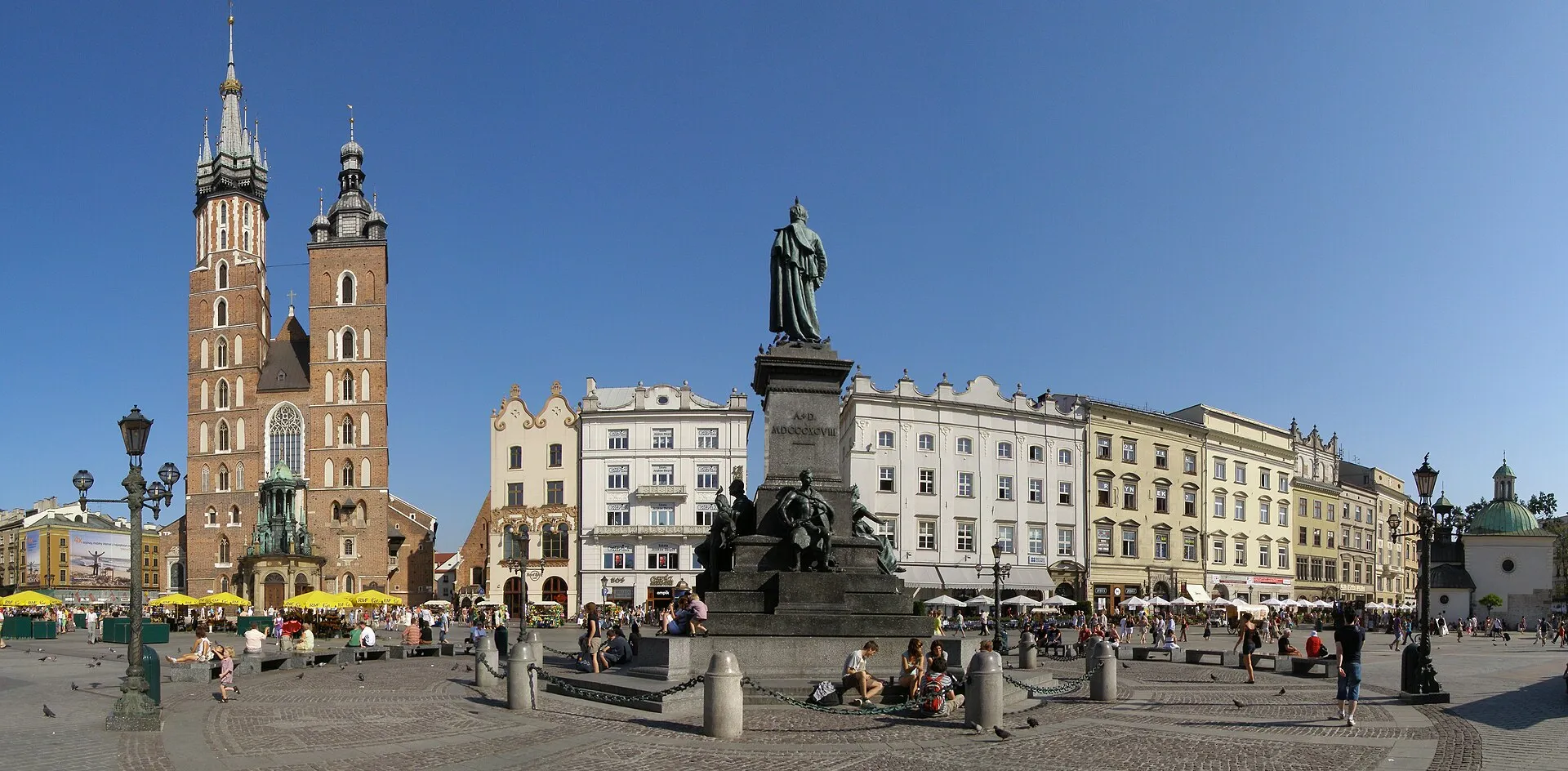
Casimir's eldest son Bolesław inherited the duchy and pursued an independent policy toward the Empire.

The hejnał played hourly from St Mary's Church breaks off mid-melody, according to legend commemorating a trumpeter shot by a Tatar arrow.

Casimir hosted emperors and kings in Kraków; legend tells of a feast given by the merchant Wierzynek.

1370 - 1572
Union with Lithuania made Poland a great power, while the Renaissance brought a flowering of learning, art and parliamentary government.
After a brief Angevin interlude, Queen Jadwiga’s marriage to Grand Duke Jogaila of Lithuania founded the Jagiellonian dynasty and one of Europe’s largest realms. Victory at Grunwald and the Thirteen Years’ War broke the power of the Teutonic Order and regained access to the Baltic. Under Sigismund I and Sigismund II Augustus, Kraków became a Renaissance capital, the nobility won a powerful voice through the Sejm, and the Union of Lublin in 1569 turned the dynastic partnership into a single Commonwealth.

Casimir III died without a son, ending the Piast royal line; his nephew Louis I of Hungary inherited the crown.

The Hungarian nobility elected the young Władysław III as their king to lead the defence against the Ottomans.

Sigismund I, the last surviving son of Casimir IV, succeeded to both Poland and Lithuania.

Sigismund II Augustus died without heirs, ending the male Jagiellon line and opening the era of free royal elections.

1573 - 1763
The nobility elected their kings and guarded their freedoms as the Commonwealth rose to great-power status, before wars and political paralysis took their toll.
With the Jagiellonian line extinct, the nobility introduced free royal elections and bound each new king to their privileges. Stephen Báthory and the Vasas fought Muscovy, Sweden and the Ottomans, and in 1610 Polish troops even entered Moscow. From 1648 the Khmelnytsky Uprising, the Swedish Deluge and Russian invasion ravaged the land, while the liberum veto increasingly paralysed the Sejm. John III Sobieski’s victory at Vienna in 1683 was a last great triumph before foreign influence grew under the Saxon kings.

In the first royal election, attended by tens of thousands of nobles, Henry of Valois was elected king.

The Ottomans defeated the Polish army in Moldavia; Hetman Żółkiewski was killed.
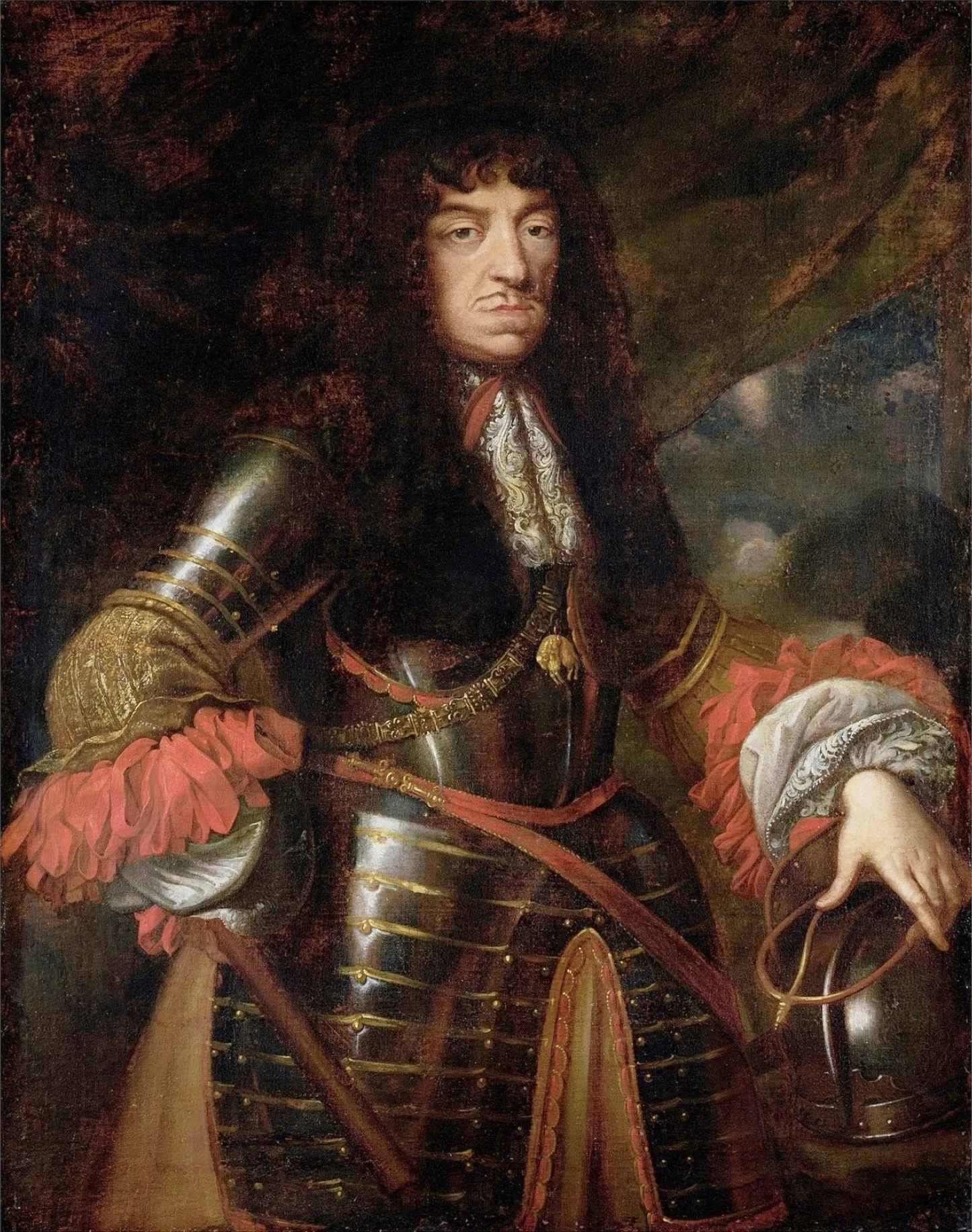
John Casimir abdicated and left for France, warning the Sejm that the Commonwealth risked partition.

Brothers Józef Andrzej and Andrzej Stanisław Załuski opened their vast collection to the public in Warsaw.

1764 - 1795
A reforming king and Enlightenment patriots tried to save the state, but Russia, Prussia and Austria carved it up in three partitions.
Stanisław August Poniatowski’s reign combined cultural revival with deepening foreign control. The Bar Confederation’s revolt against Russian interference was followed by the First Partition in 1772. Reformers responded with the Commission of National Education and, during the Great Sejm, the Constitution of 3 May 1791. Russia crushed the reforms with the help of the Targowica Confederation, and after Tadeusz Kościuszko’s uprising failed, the Third Partition of 1795 erased Poland from the map.

The king founded the Knights' School, which trained a generation including Tadeusz Kościuszko.
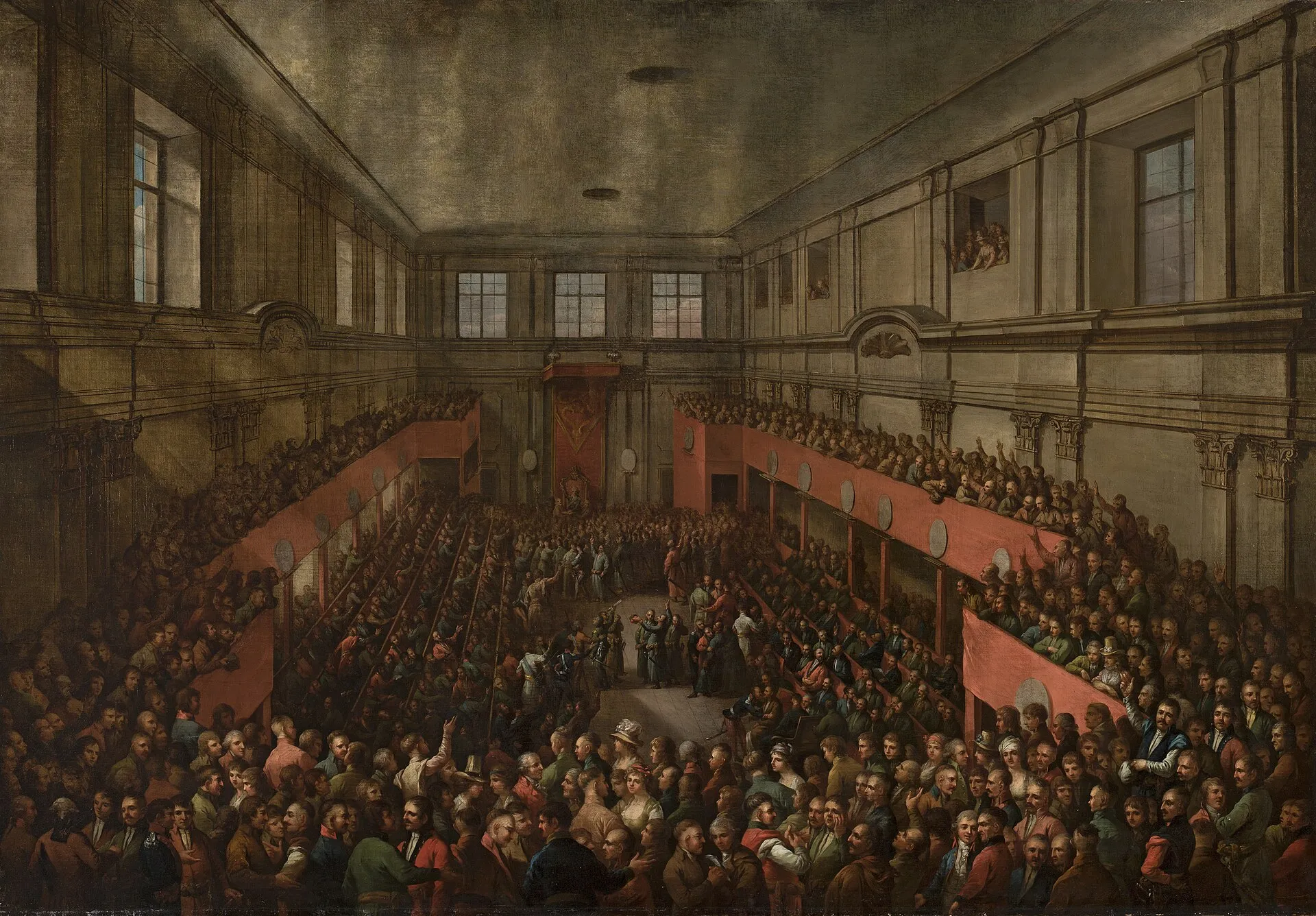
Taking advantage of Russia's war with the Ottomans, reformers in the Sejm formed a confederation so that decisions could be taken by majority vote.

Kościuszko's army, reinforced by peasant scythemen, defeated a Russian corps near Racławice.
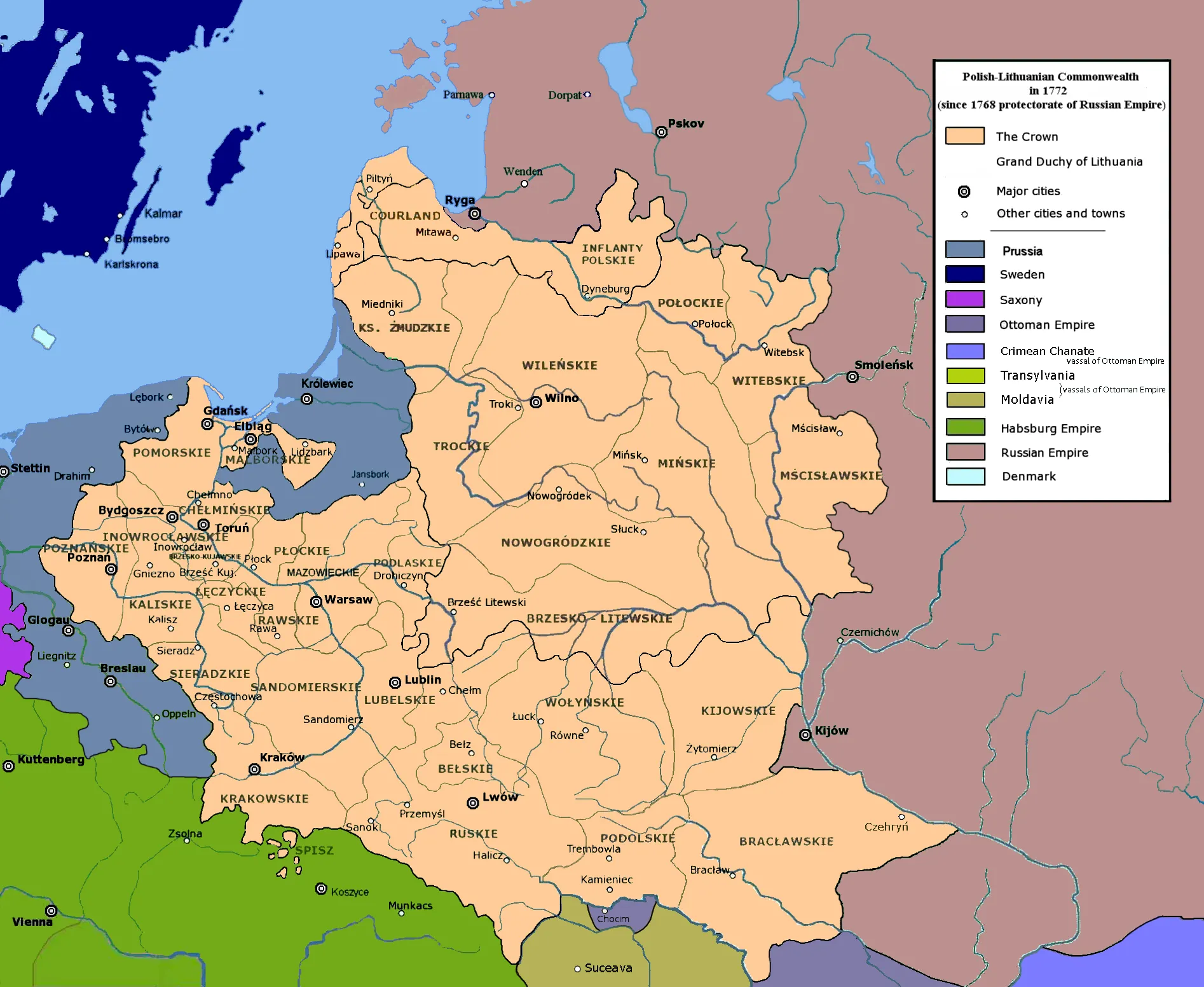
Partitioning powers became Prussia, Austria and Russia (1795–1807).
1795 - 1918
For 123 years Poland existed only as a nation, kept alive by uprisings, émigré politics, literature, music and science.
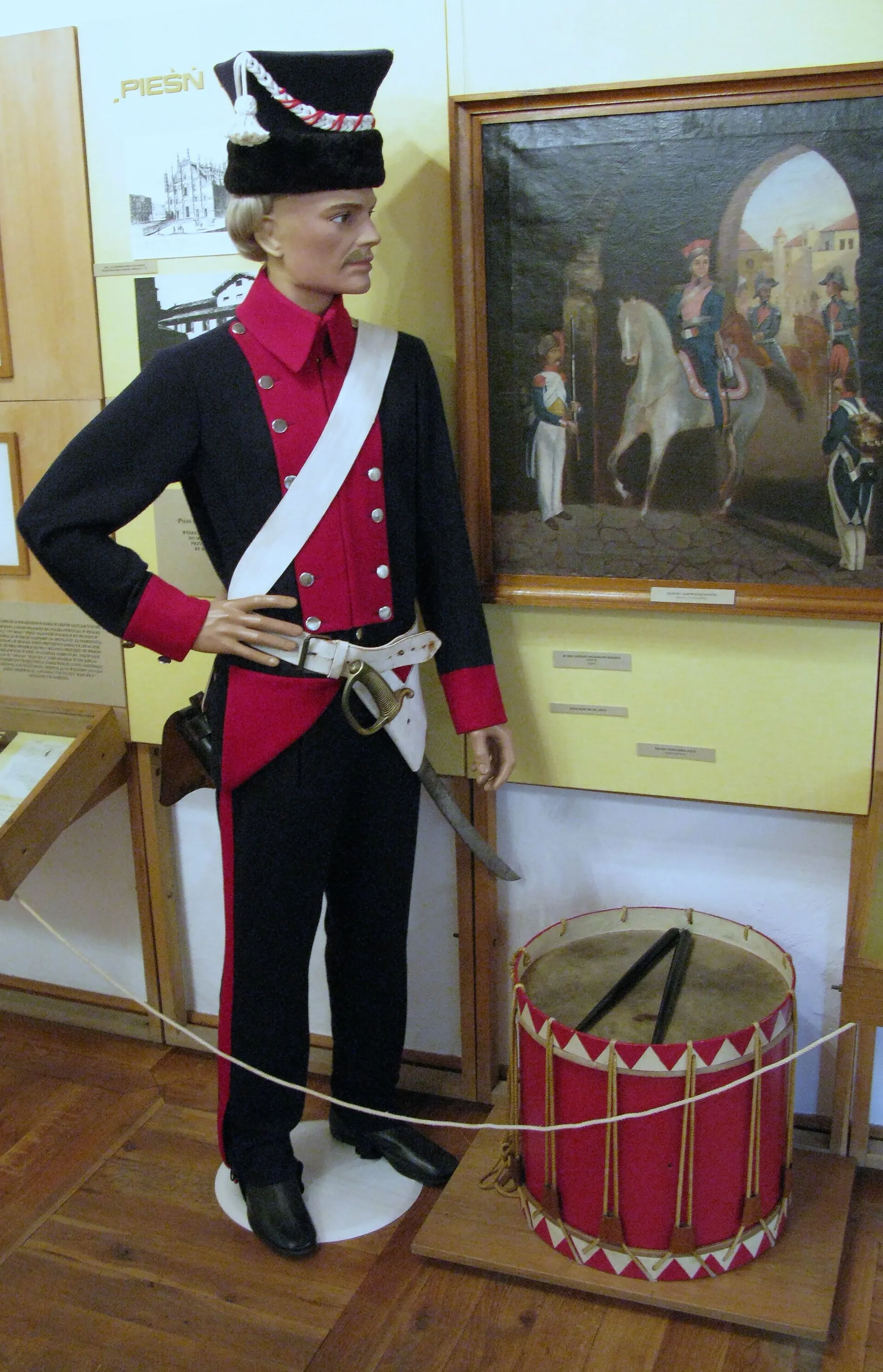
Polish Legions fought alongside Napoleon, who created the short-lived Duchy of Warsaw; the Congress of Vienna then replaced it with a Kingdom of Poland under the Russian tsar. The November and January Uprisings were crushed, bringing repression, confiscations and exile. Romantic poets and composers in Paris kept national identity alive, while at home “organic work” built schools, industry and cooperatives. Russification and Germanisation provoked resistance, and autonomy in Austrian Galicia allowed Polish universities and politics to flourish.

Józef Wybicki wrote a song for the legions opening with the words that Poland has not yet perished while Poles live.

Adam Mickiewicz published Pan Tadeusz in Paris, an epic poem about the Lithuanian gentry on the eve of Napoleon's campaign of 1812.

Émigrés meeting in Paris founded the Polish Socialist Party (PPS), which combined socialism with the goal of an independent Poland.

Regency Council became Regency Council of the Kingdom of Poland (1917–1918).

1918 - 1945
Reborn in 1918, Poland defended its independence in 1920, only to be invaded by Germany and the Soviet Union in 1939.
Józef Piłsudski led the reborn state through border wars and the victorious Polish-Soviet War. The Second Republic knitted together lands from three partitions, built the port of Gdynia and introduced the złoty, though after the 1926 May Coup it drifted toward authoritarian rule. In September 1939 Germany and the Soviet Union invaded and divided Poland. Occupation brought mass murder, the Holocaust of Polish Jews, Katyn and deportations, while the Polish Underground State, the Home Army and Polish forces abroad fought on, culminating in the tragic Warsaw Uprising of 1944.

President Woodrow Wilson's thirteenth point called for an independent Polish state with free and secure access to the sea, making Polish…

Prime Minister Władysław Grabski ended post-war hyperinflation with a currency reform that introduced the złoty and created the Bank Polski.

Władysław Raczkiewicz became President of Poland (in exile) (1939–1947).

Soviet troops reached the Majdanek camp near Lublin, the first major Nazi camp to be liberated.

1945 - Present
Moved westward and placed under Soviet domination, Poland won back its freedom through Solidarity and rejoined the West.
After 1945 Poland lost its eastern lands, gained former German territory in the west and came under a Soviet-backed communist regime. Protests in 1956, 1968, 1970 and 1976 challenged the system, and the election of John Paul II in 1978 inspired a national awakening. The Solidarity movement of 1980 survived martial law, and the Round Table negotiations of 1989 led to the first partly free elections in the Soviet bloc. The Third Republic undertook rapid market reforms and joined NATO and the European Union.

Soviet troops entered Auschwitz-Birkenau, where about 1.1 million people, most of them Jews, had been murdered.

Edward Gierek became First Secretary of the PZPR (1970–1980).

The złoty was redenominated at a rate of 10,000 old to 1 new złoty.
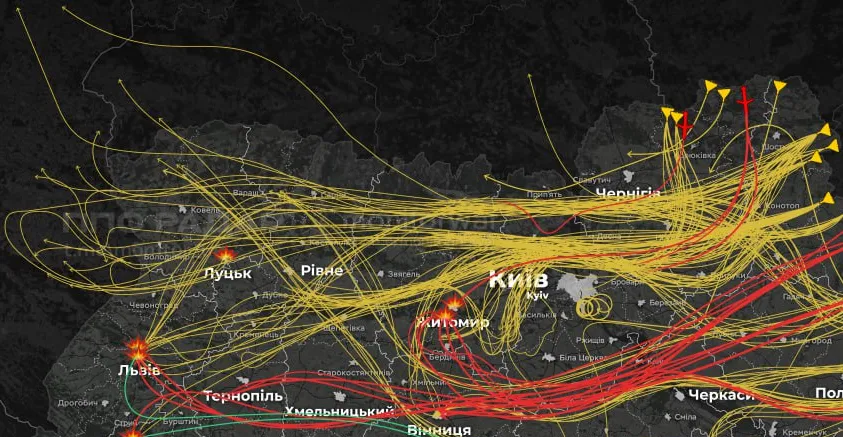
On the night of 9–10 September 2025 numerous Russian drones entered Polish airspace, and Polish and allied aircraft shot some of them down.
Polish Lands, c. 1000 BCE – Today
Three thousand years of borders between the Oder and the Dnieper: the Piast state, its break-up into duchies and reunion, the union with Lithuania from Krewo (1385) and the Commonwealth of Lublin (1569), the Partitions, and a Poland moved west in 1945. Move to any year, or through 39 narrated chapters.
Move the slider to any year: every polity recorded for that year is drawn. Polish states are gold. From the Union of Krewo (1385) Poland and the Grand Duchy of Lithuania shared a monarch, so Lithuania is shown in green beside the Crown; from the Union of Lublin (1569) to the Third Partition (1795) the two remained separate states within one Commonwealth, whose outer border is the light line. The same borders are drawn on the Lithuania Through Time map. Hover a territory for its name and dates; click it to open its Wikipedia article.
Boundaries are approximate reconstructions. The prehistoric cultures, the Polish tribes and the General Government are schematic outlines; between 1450 and 1795 the dataset draws Poland and Lithuania as one polygon, which is divided here along the Grand Duchy's border of the time. Congress Poland (1815–1915) is the part of the Duchy of Warsaw that went to Russia, and Poland in 1945–1952 is drawn with its 1953 border. The dashed line is Poland today, for orientation only.
Discover the royal dynasties and magnate families that shaped Poland: their heraldry, defining events, and remarkable members.
Founded the Polish state and secured its baptism into Latin Christendom in 966.
Greater Poland · Lesser Poland · Masovia · Silesia · Pomerania
Bridged the extinction of the senior Piast line and the rise of the Jagiellonian dynasty.
Lesser Poland · Hungary
Briefly united the Polish and Bohemian crowns under one ruler.
Lesser Poland · Bohemia · Greater Poland
Founded the Polish–Lithuanian union in 1386, uniting two of the largest states in Europe.
Lesser Poland · Greater Poland · Lithuania · Ruthenia · Prussia
The first king chosen under the Commonwealth's new system of free royal election by the assembled nobility.
Lesser Poland
Military and administrative reforms strengthened the Commonwealth's army and judiciary.
Lesser Poland · Transylvania · Livonia
Presided over the Commonwealth's greatest territorial extent in the early 17th century.
Lesser Poland · Sweden · Ukraine · Livonia
Elected as a compromise "Piast" (native-born) candidate amid factional deadlock among the magnates.
Ukraine · Lesser Poland · Volhynia
Led the relief of Vienna in 1683, halting the last major Ottoman advance into Central Europe.
Lesser Poland · Ruthenia · Podolia
Began nearly a century of Saxon–Polish personal union in 1697.
Lesser Poland · Saxony · Duchy of Warsaw
His two brief, foreign-sponsored reigns illustrate how deeply the Commonwealth's royal elections had become hostage to great-power rivalry.
Greater Poland · Lorraine
Founded the Commission of National Education, the first state education ministry in Europe.
Mazovia · Lesser Poland
The 'Familia' faction engineered the 1764 royal election and pushed early Enlightenment reform in the Commonwealth.
Volhynia · Lesser Poland · Lithuania
Among the wealthiest magnate families of the 18th-century Commonwealth, with private estates rivalling crown resources.
Ruthenia · Podolia · Galicia · Lesser Poland
Jan Zamoyski was the leading statesman of the Commonwealth's late 16th-century political system.
Lesser Poland · Ruthenia
Jerzy Sebastian Lubomirski's rebellion against John II Casimir (1665–1666) exemplified magnate power over the crown.
Lesser Poland · Ruthenia
Jerzy Ossoliński's 1633 embassy to Rome remains one of the most famous diplomatic missions in Polish history.
Sandomierz · Lesser Poland
The dominant magnate family of the Grand Duchy of Lithuania for over three centuries.
Lithuania · Belarus · Lesser Poland
Lew Sapieha's Third Statute of Lithuania (1588) was one of the most advanced legal codes in early modern Europe.
Lithuania · Belarus · Podlachia
Jan Amor Tarnowski was the leading Polish military theorist and commander of the early-to-mid 16th century.
Lesser Poland
Konstanty Ostrogski's victory at Orsha (1514) was among the greatest Lithuanian military triumphs of the era.
Volhynia · Ruthenia
Victory at Kircholm (1605) remains one of the most studied cavalry battles of the early modern era.
Lithuania · Livonia
Jan Klemens Branicki's Białystok palace remains one of the Commonwealth's most important Baroque residences.
Lesser Poland · Podlachia
One of the wealthiest Commonwealth magnate families after inheriting much of the Ostrogski fortune in the 17th century.
Volhynia · Lithuania · Galicia
No houses match your search. Try another name or clear the filters.
If the page stays blank, the site doesn't allow embedding — use “Open in new tab”.
Poland’s legacy is layered and hard-won: a tradition of noble self-government, religious coexistence and constitutional experiment endured through partition, occupation and dictatorship, and helped bring down communism across Central Europe.
Europe’s first modern codified constitution, and the world’s second after the United States, sought to reform the Commonwealth by separating powers and curbing the liberum veto. Although overturned within months, it became a lasting symbol of Polish statehood and civic ideals.
The Sejm, royal elections and the Henrician Articles gave the szlachta an unusually broad voice in government, limiting royal power by law. The same freedoms that protected citizens also paralysed the state, and serfdom kept most people outside this political nation.
The Warsaw Confederation of 1573 guaranteed peace between faiths at a time when much of Europe was at war over religion. For centuries Poland was home to one of the world’s largest Jewish communities, alongside Orthodox, Protestant, Armenian and Tatar Muslim neighbours.
From the Kraków Academy and Nicolaus Copernicus to the Commission of National Education, Europe’s first ministry of education, Poland invested in knowledge. Later figures such as Maria Skłodowska-Curie and the codebreakers who first cracked Enigma carried that tradition into the modern world.
The union with Lithuania, from Krewo in 1385 to Lublin in 1569, created one of Europe’s largest states, uniting Poles, Lithuanians, Ruthenians and many others. Its shared heritage still shapes the identities, borders and memory of Poland, Lithuania, Belarus and Ukraine.
Erased from the map by Russia, Prussia and Austria in 1795, Poland survived for 123 years through language, faith, literature and repeated uprisings. Independence in 1918 and the rebuilding of the country after 1945 made national resilience central to Polish identity.
The Second World War brought German and Soviet occupation, the Holocaust on Polish soil, the Warsaw Uprising and the loss of about a fifth of the population. Remembering these catastrophes, and their Jewish and Polish victims, remains a moral and political responsibility.
The Solidarity movement of 1980 united workers, intellectuals and the Church in non-violent resistance. The Round Table talks and the partly free elections of 1989 helped open the way for the peaceful fall of communism across Central and Eastern Europe.
History is connected. Explore the bigger picture.
AllHistories is an independent visual history project designed to make the past easier to understand, explore, and connect.
History is more than a collection of dates, rulers, and battles. Events rarely happen in isolation. Borders shift, civilizations influence one another, ideas spread, and decisions made centuries ago continue to shape the world today.
Through interactive timelines, historical maps, and visual storytelling, AllHistories helps uncover these connections and makes complex historical subjects more accessible and engaging.
Travel through centuries, discover turning points, and understand how historical events unfold and connect.
Explore how borders, civilizations, populations, trade routes, beliefs, and spheres of influence have changed over time.
Go beyond dates and discover the individuals, places, decisions, and circumstances behind historical developments.
Explore connections between countries, empires, civilizations, and historical themes to better understand cause and consequence.
Features vary depending on the historical subject.
AllHistories draws on historical research, published references, public archives, and available historical datasets. The information is organized and presented through interactive digital experiences.
History is not always certain or universally agreed upon. Dates, territorial boundaries, population figures, and interpretations may differ between sources. Some information is necessarily simplified or estimated for visual presentation.
The goal is to encourage curiosity and independent exploration, not to replace academic publications or specialist historical research.
When you visit AllHistories, the web server may process technical information such as your IP address, requested pages, browser details and access times to deliver pages and maintain the service.
Some pages load Google Analytics, Google Fonts, externally hosted images, maps or other third-party resources. Requests to these providers can transmit technical information, including your IP address. Contact forms may use Google reCAPTCHA to help prevent abuse. These providers apply their own privacy policies.
The website uses browser storage for preferences such as the selected theme. Country microsites also use a session cookie to support website functionality, including request protection. Analytics or other third-party services may use additional cookies or storage, depending on the page and your browser settings.
When you submit a correction or contact form, the information you provide, such as your name, email address and message, is processed to review and respond to your request. Please avoid including sensitive personal information.
You can manage cookies and site storage in your browser and control third-party requests through browser privacy settings. For privacy questions or requests concerning information you submitted, use the contact option on the microsite where you sent it.
Links to sources and other websites take you to services with their own privacy practices. Review their policies before providing personal information.
AllHistories provides historical information for general education and exploration. Its content is not professional, legal, financial or other specialist advice.
We aim to present useful, well-sourced summaries, but cannot guarantee that every date, statement, translation or interpretation is complete or accurate. Verify important claims against the cited sources and relevant scholarship. Content may be corrected or updated.
Maps are simplified historical illustrations. Borders, place names and territorial labels may vary by period and source. Their appearance does not express a position on sovereignty or present-day territorial disputes.
Images and source material may belong to their respective creators or rights holders. Consult the image credit, source page and license before reusing material. A link or credit does not grant additional reuse rights.
External links are provided for reference. AllHistories does not control the content, availability or policies of third-party websites.
To report an error or a concern about credited material, use the contact option on the relevant country microsite and identify the page, material and supporting details.