Key facts of the era
Key Events
Journey through the events, people, wars and ideas that shaped Aotearoa New Zealand, from the last large land on Earth to be settled by people to the present day.
Follow the East Polynesian voyagers and the rise of Māori iwi and hapū, the Moriori of Rēkohu, Tasman and Cook, the whalers, missionaries and musket wars, the Treaty of Waitangi and the New Zealand Wars, the gold rushes, votes for women, Gallipoli, the first Labour government's welfare state, the anti-nuclear stand and the long road of Treaty settlements.
Meet the governors and governors-general, the sovereigns, the Māori kings and queens of the Kīngitanga and the premiers and prime ministers, and see Crown authority and Māori land change region by region on the map.
From the independent Māori iwi and hapū to the governors and governors-general who represented the Crown in New Zealand, with the sovereigns in whose name the Treaty of Waitangi was signed and the monarchs of New Zealand, the Māori kings and queens of the Kīngitanga, and the premiers and prime ministers who governed the colony, the dominion and the realm.
A Journey Through the Ages
New Zealand was the last major landmass on Earth to be settled by people. Its islands are the highest parts of Zealandia, a largely sunken continent that broke away from Gondwana about 85 million years ago, and for millions of years they were a land of birds, of moa and Haast's eagle. East Polynesian voyagers reached Aotearoa around 1250–1300 in double-hulled canoes, and their descendants became Māori, living in iwi and hapū across both main islands; others settled Rēkohu, the Chatham Islands, and became Moriori.
Abel Tasman sighted the islands in 1642, but lasting contact began only with James Cook in 1769. Sealers, whalers, traders and missionaries followed, and muskets transformed Māori warfare. In 1840 rangatira and the British Crown signed the Treaty of Waitangi, whose Māori and English texts differ in meaning. Organised settlement followed, and through the New Zealand Wars, confiscation and the Native Land Court most Māori land passed out of Māori hands.
The colony became a pioneering democracy, with four Māori seats from 1867 and, in 1893, the first national vote for women in a self-governing country, followed by industrial arbitration, old-age pensions and, under the first Labour government, a welfare state. New Zealand became a dominion in 1907, fought at Gallipoli, on the Western Front, in North Africa, Italy and the Pacific, and adopted full legislative independence in 1947.
Since the 1970s Māori protest, the Waitangi Tribunal and Treaty settlements have reshaped the relationship between Māori and the Crown, while economic reform, a nuclear-free policy and proportional representation remade the country. Earthquakes, the Christchurch mosque attacks and the COVID-19 pandemic have marked the twenty-first century. Explore the twelve ages below through selected events from the timeline.

90,000,000 BCE – 1249
A sunken continent and a land of birds.
Long before people arrived, the continent of Zealandia split from Gondwana, largely sank beneath the sea, and was pushed up again along the Alpine Fault and the volcanic plateau. Isolated for millions of years, the islands were ruled by birds such as moa and Haast's eagle.
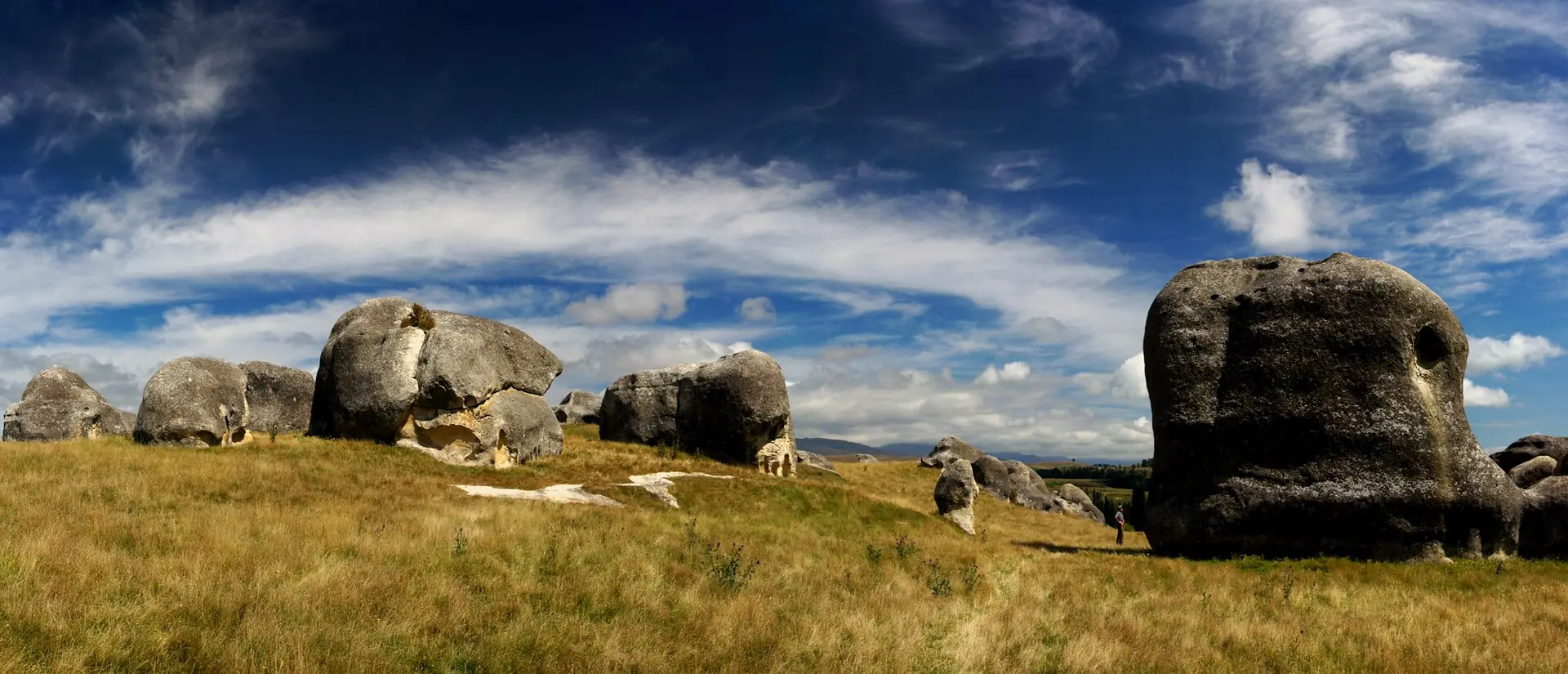
By about 25 million years ago most of Zealandia lay under the sea; whether any land survived is still debated.

The collision of the Pacific and Australian plates along the Alpine Fault has pushed up the Southern Alps over the last five million years.

Taupō's Oruanui eruption, about 25,500 years ago, ejected more than 1,000 cubic kilometres of material and left the basin of Lake Taupō.

With no land mammals to compete with, Haast's eagle grew into the largest eagle known, a hunter of moa.

1250 – 1499
The last land, found by voyagers.
East Polynesian voyagers reached Aotearoa around 1250–1300 and spread across both main islands. Within two centuries the moa were hunted to extinction, and the archaic settlers adapted their tropical way of life to a cooler land.

In many Māori traditions the navigator Kupe discovered the land while chasing the octopus Te Wheke-a-Muturangi from Hawaiki.

Burials of the first generation of settlers in Marlborough hold moa-bone necklaces and adzes like those of East Polynesia.

Hunting and forest burning wiped out all nine species of moa within about 150 years of settlement.

Voyagers, probably from mainland New Zealand, settled the Chatham Islands and developed the distinct culture of the Moriori.

1500 – 1768
Iwi, pā and pounamu, and a Dutch ship.
Classic Māori society took shape: iwi and hapū, fortified pā, kūmara gardens, carving and the pounamu trade. Moriori settled the Chatham Islands, and in 1642 Abel Tasman became the first European to sight the islands.

Thousands of pā, defended by ditches, banks, terraces and palisades, crowned headlands, ridges and volcanic cones.

Greenstone from West Coast rivers was worked into adzes, mere and hei-tiki and traded through both islands.

Moriori tradition tells how the chief Nunuku-whenua forbade warfare and killing on Rēkohu.
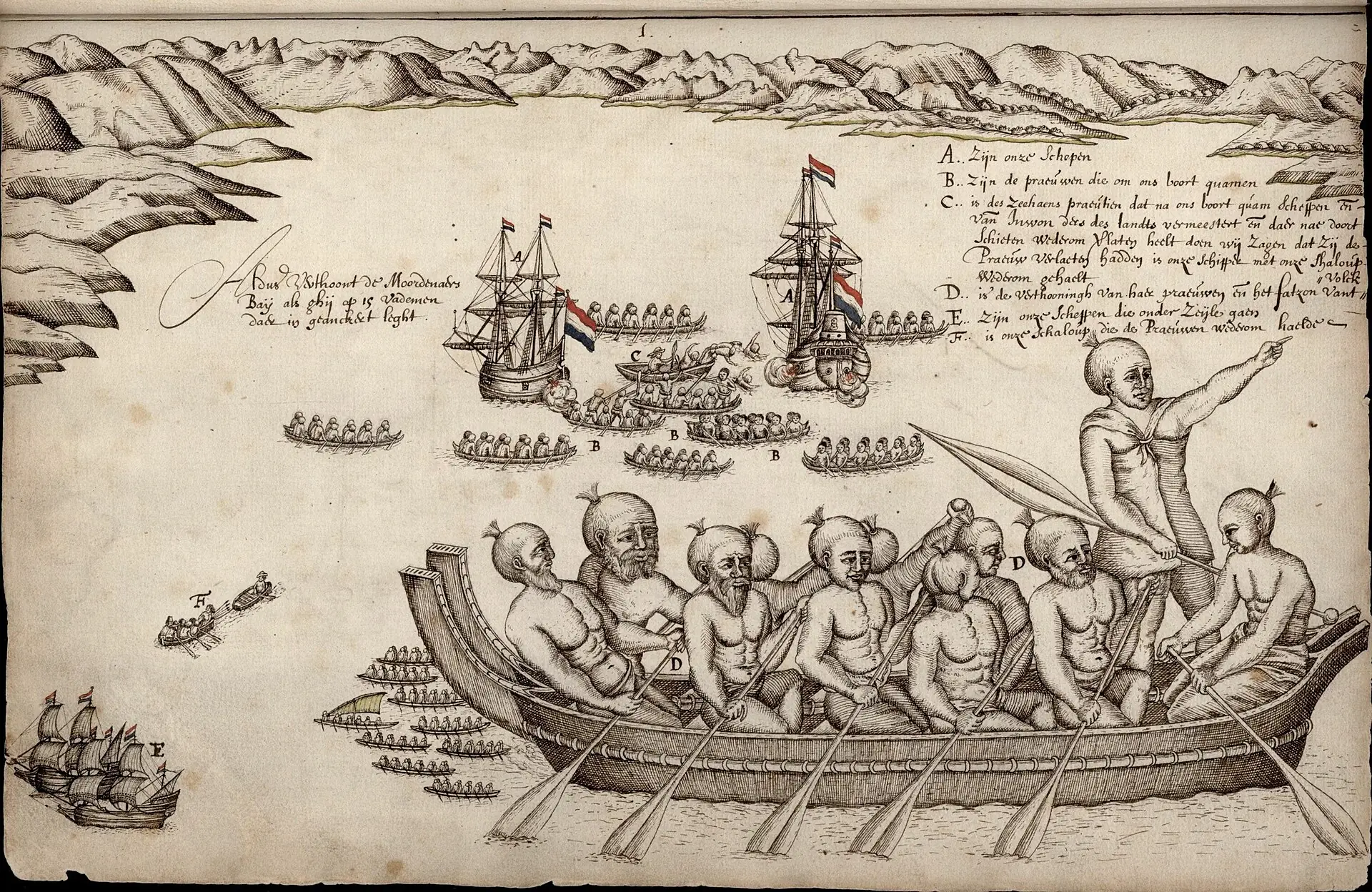
Four Dutch sailors were killed in Golden Bay in December 1642, and Tasman sailed on without landing.

1769 – 1839
Ships, muskets, missions and a declaration.
James Cook's voyages were followed by sealers, whalers, traders and missionaries. Muskets transformed Māori warfare in the Musket Wars, the northern chiefs declared independence in 1835, and Britain moved towards annexation.

Samuel Marsden preached on Christmas Day 1814, with Ruatara interpreting for several hundred Māori.

Muskets turned old rivalries into wars that killed perhaps 20,000 to more than 40,000 people and displaced whole iwi.

In 1835, 34 northern chiefs declared the independence of the United Tribes of New Zealand.

Ngāti Mutunga and Ngāti Tama invaded the Chatham Islands, killing hundreds of Moriori and enslaving the rest.

1840 – 1852
A treaty in two languages, and a colony.
The Treaty of Waitangi (1840) brought British sovereignty, organised settlement by the New Zealand Company and its offshoots, and the first conflicts over land in the north and around Wellington.

The Māori text promised the Crown kāwanatanga and the chiefs tino rangatiratanga; the English text spoke of sovereignty.

The New Zealand Company's first emigrants landed at Petone in January 1840, on land whose purchase was disputed.

Hōne Heke and Kawiti sacked Kororāreka in March 1845, and war in the north lasted until early 1846.

The Crown bought about 20 million acres of the eastern South Island from Ngāi Tahu for £2,000.

1853 – 1872
Parliament, the King movement and war.
Representative and responsible government, the provinces, the Kīngitanga and the gold rushes coincided with the New Zealand Wars in Taranaki, Waikato and the east, and with the confiscation of Māori land.
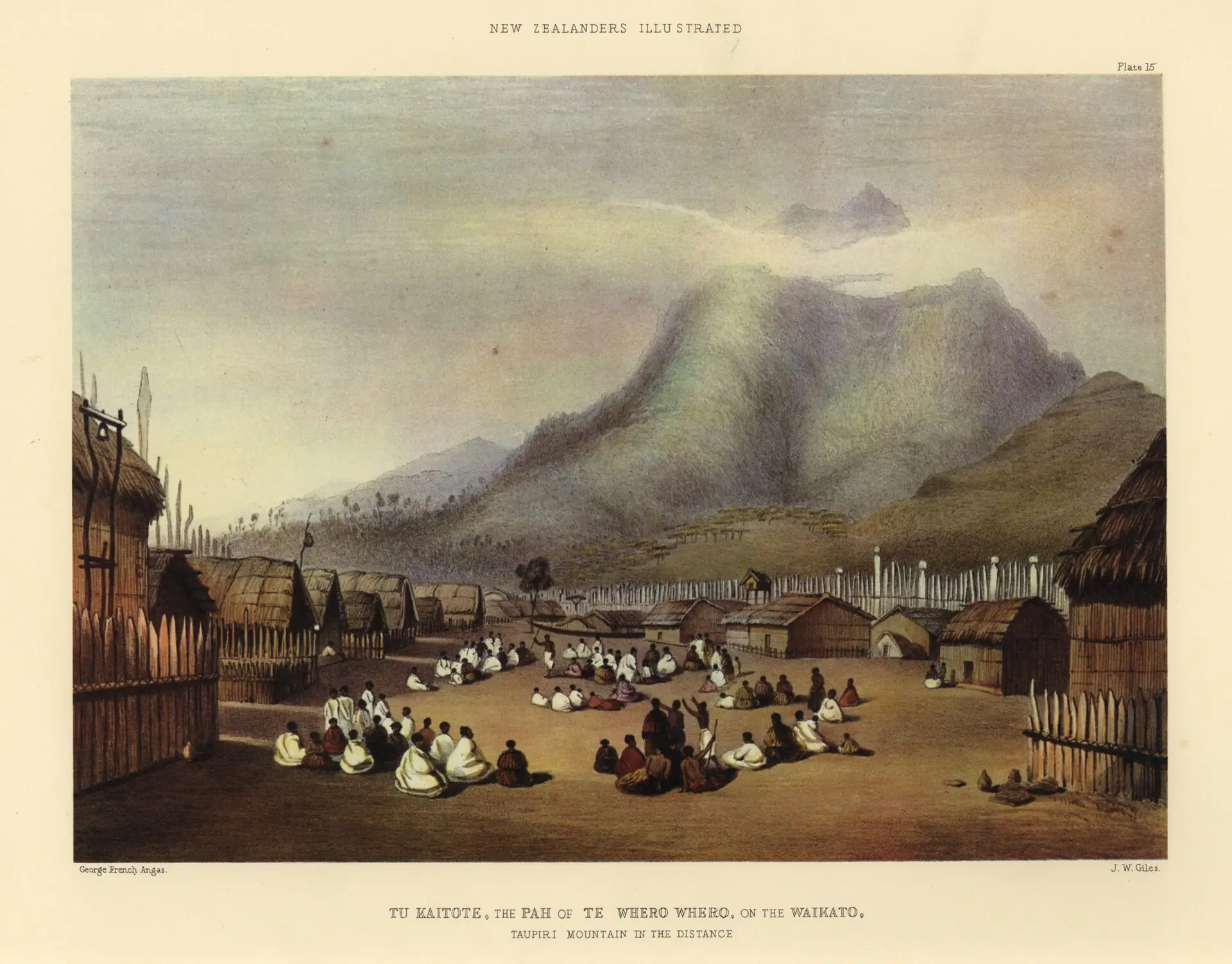
Iwi of the central North Island raised Pōtatau Te Wherowhero as king to unite the tribes and halt land sales.
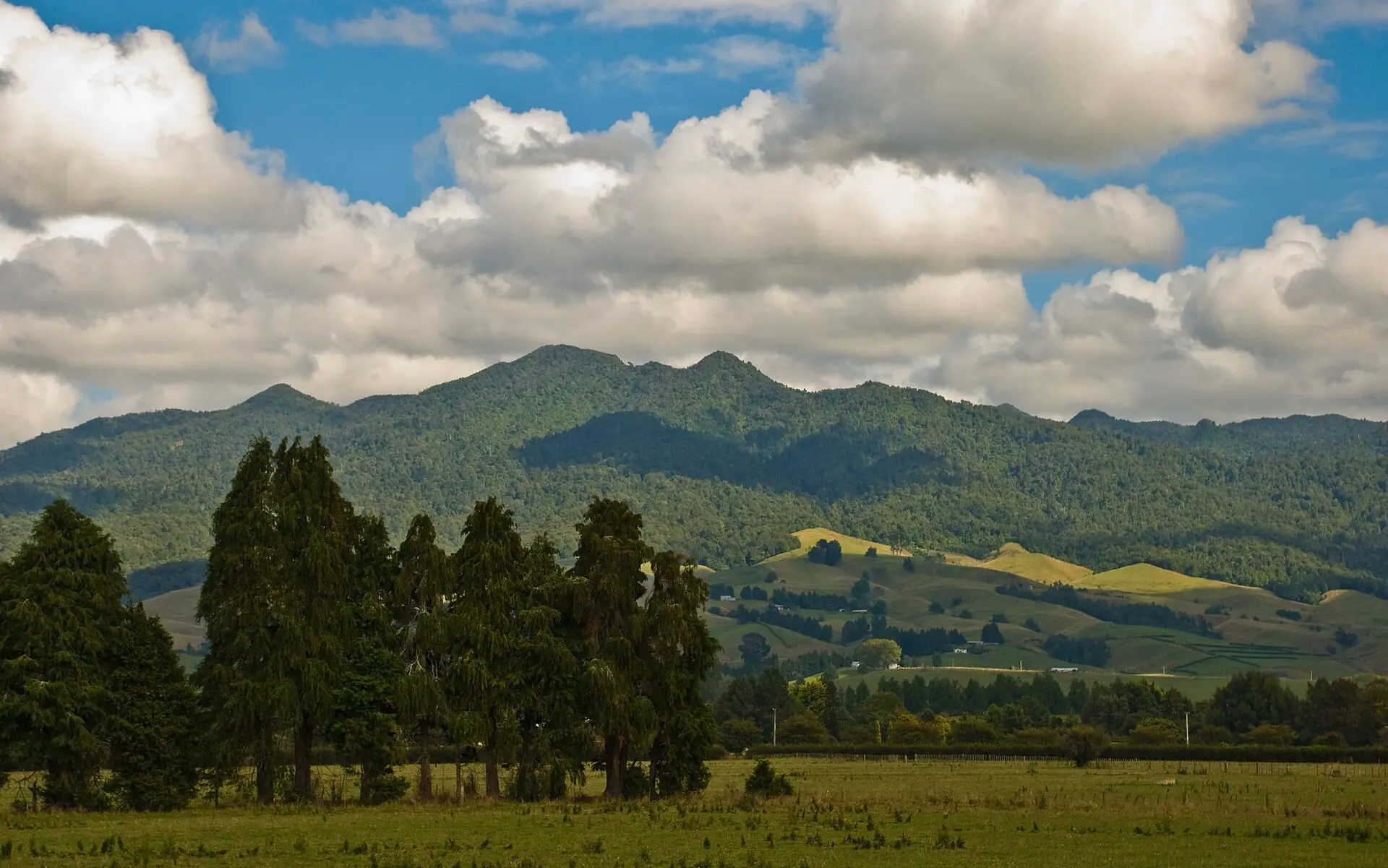
The New Zealand Settlements Act allowed the confiscation of about 1.2 million hectares of Māori land.

Gabriel Read's find in 1861 set off the Otago gold rush, which more than doubled the province's population within a year.

Four Māori electorates, created in 1867, gave every Māori man aged 21 and over the vote, twelve years before manhood suffrage for settlers.

1873 – 1890
Railways, frozen meat and the loss of land.
Vogel's borrowing for railways and immigration, the abolition of the provinces, Parihaka, refrigerated shipping and the Long Depression transformed the colony as the Native Land Court stripped Māori of most remaining land.

The provinces were abolished in 1876, leaving a single central government in Wellington.

The Native Land Act of 1873 let each listed owner sell a share, breaking up collective ownership.

The Dunedin carried frozen mutton to London in 1882, opening a trade that shaped farming for almost a century.

The eruption of 1886 killed about 120 people, most of them Māori, and destroyed the Pink and White Terraces.
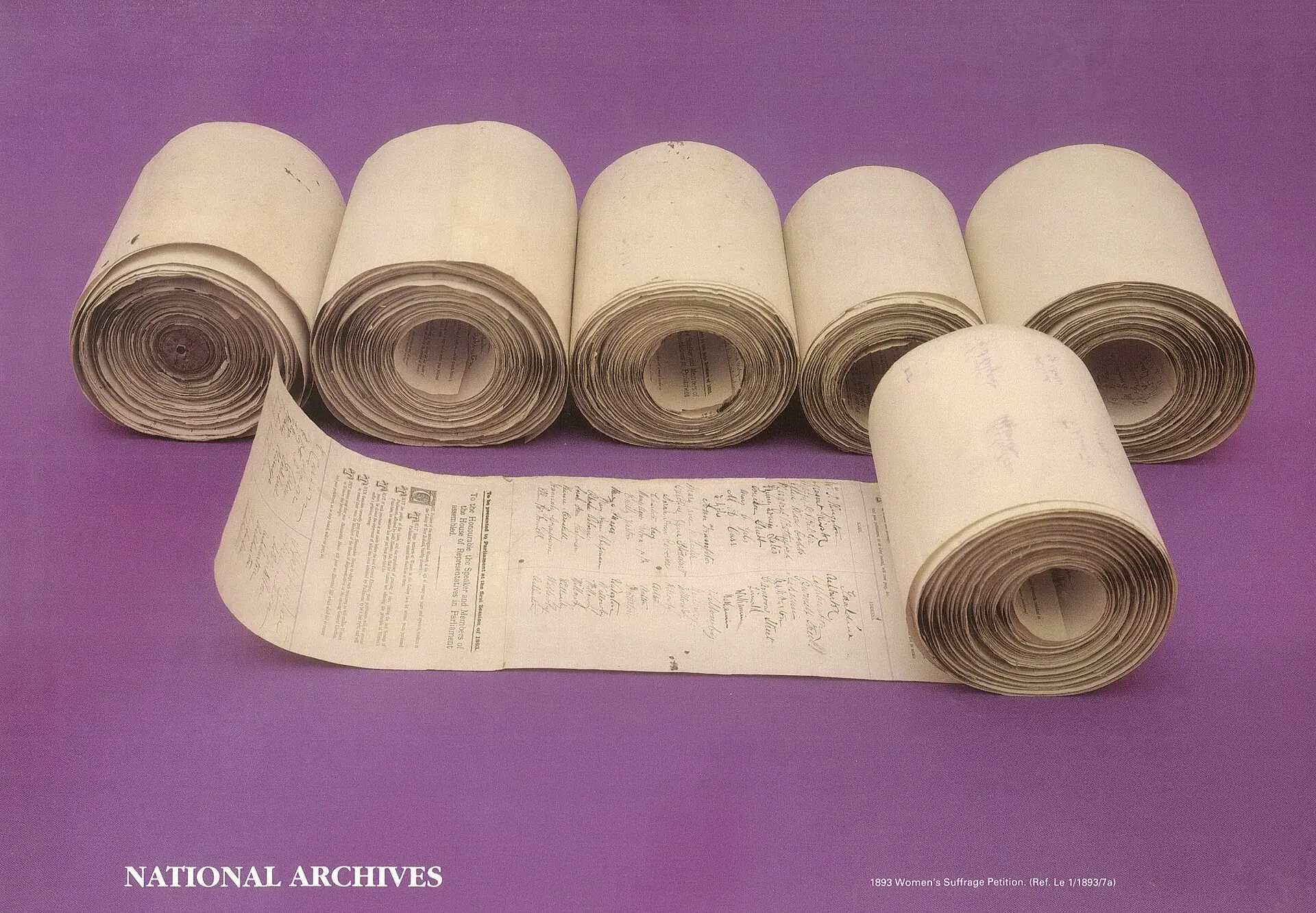
1891 – 1913
A social laboratory, and a dominion.
The Liberal governments of Ballance and Seddon introduced votes for women, industrial arbitration and old-age pensions, annexed the Cook Islands and Niue, and saw New Zealand become a dominion in 1907.
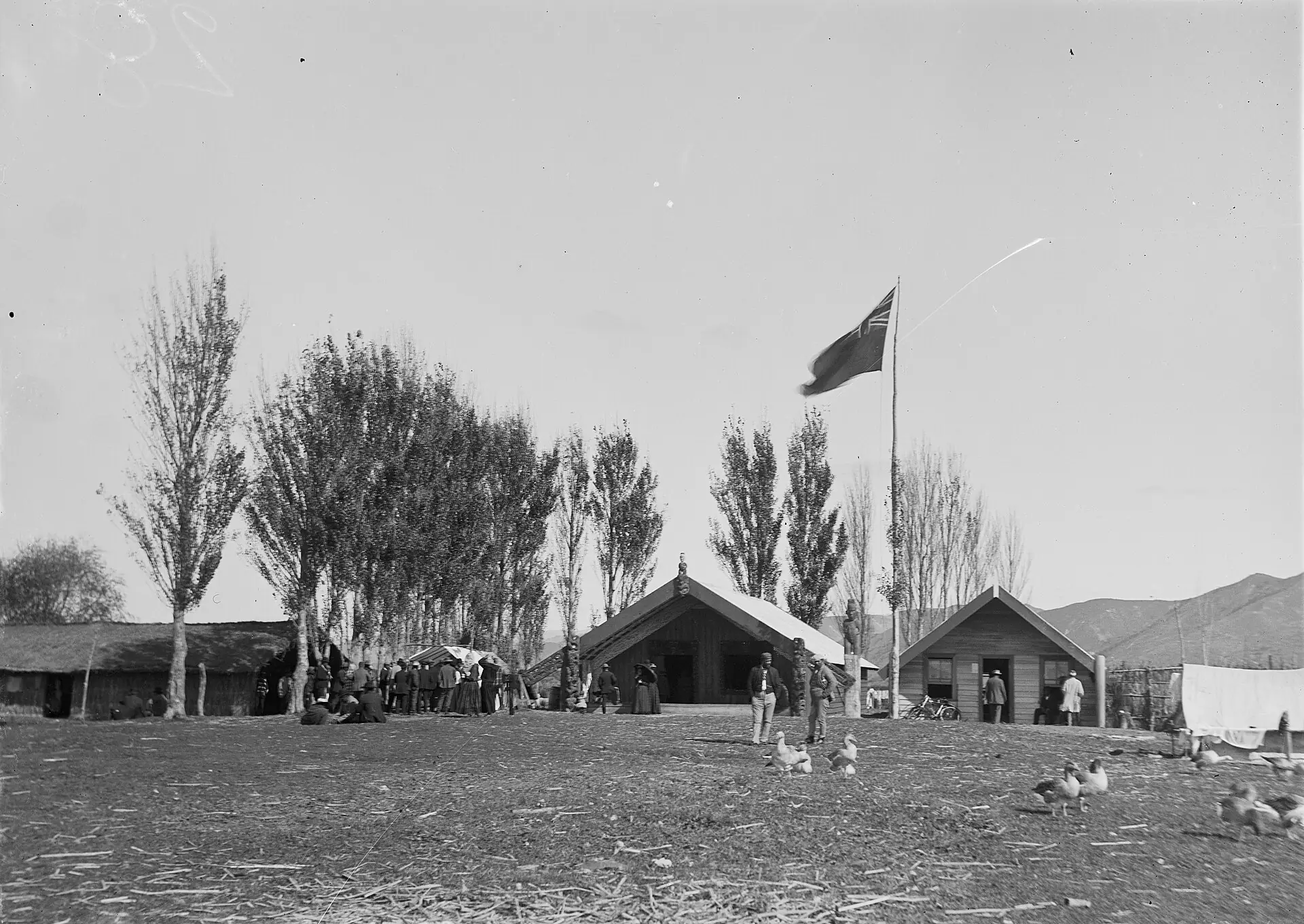
The Kotahitanga movement held its own Māori parliament each year from 1892 to 1902.

Reeves's Act of 1894 was the first law in the world to make arbitration of industrial disputes compulsory.

Seddon's means-tested pension of 1898 was among the first state pension schemes in the world.

A royal proclamation made the colony the Dominion of New Zealand in September 1907.

1914 – 1945
Anzac, influenza and the welfare state.
Gallipoli and the Western Front, the 1918 influenza, Samoa and the Mau, the Depression and the first Labour government's welfare state, then a second world war in Europe, North Africa and the Pacific.

On 12 October 1917 about 845 New Zealanders were killed or mortally wounded in a few hours, the country's darkest day.

About 9,000 people died in two months, and Māori died at about seven times the Pākehā rate.

The first Labour government's Social Security Act of 1938 made New Zealand a pioneer of the welfare state.

Moananui-a-Kiwa Ngārimu of the 28th (Māori) Battalion won a posthumous Victoria Cross in Tunisia in 1943.

1946 – 1983
Independence, prosperity and protest.
Full independence, ANZUS and long National governments brought prosperity on farm exports to Britain until Britain joined the EEC. Māori urbanised and protest grew, from the Land March and Bastion Point to the Springbok tour.

The 1951 treaty with Australia and the United States made Washington New Zealand's main security partner.

Edmund Hillary and Tenzing Norgay reached the summit of Everest on 29 May 1953.

Britain's entry into the EEC in 1973 ended guaranteed access to New Zealand's main market.

The 1981 South African rugby tour brought mass protests and divided the nation.

1984 – 2007
Reform, nuclear-free and the Treaty revived.
Rogernomics and the nuclear-free policy, MMP elections, the Waitangi Tribunal's historical claims and the first major Treaty settlements remade the economy, politics and race relations.

Labour's 1984 victory amid a currency crisis opened years of sweeping deregulation and free-market reform.
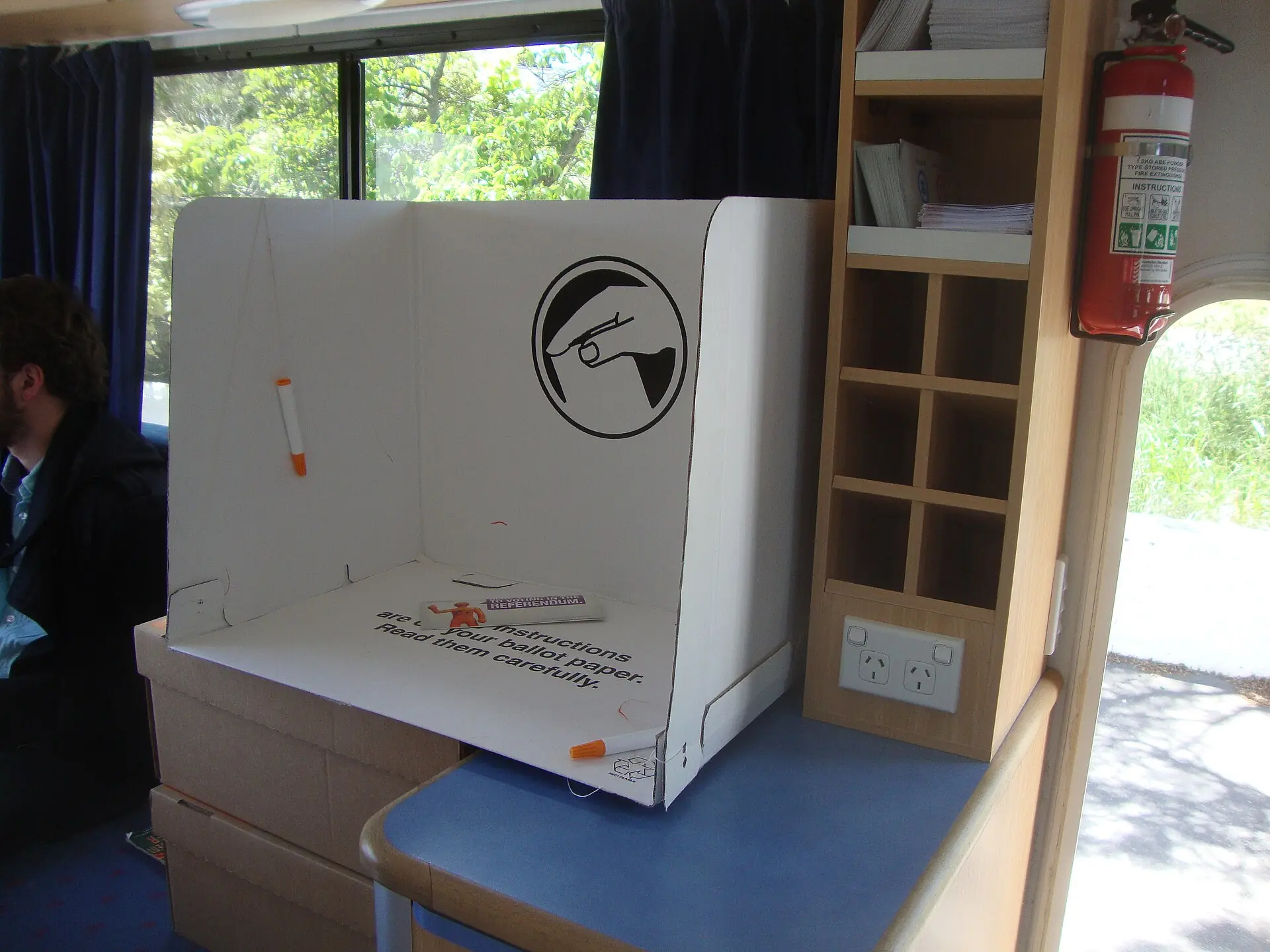
Voters chose mixed-member proportional representation in 1993, by 53.9 to 46.1 percent.
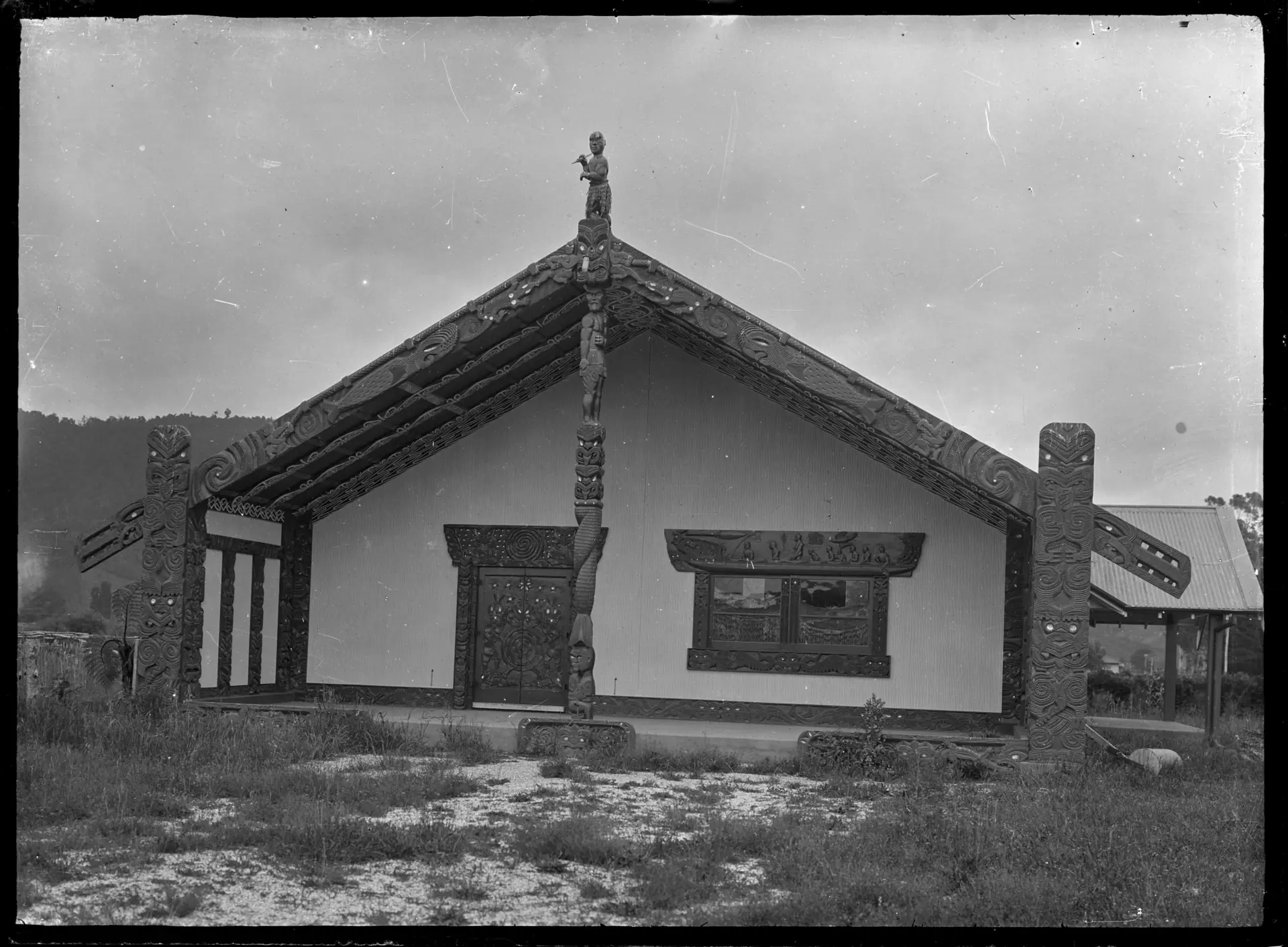
Waikato-Tainui received land and cash worth $170 million and a Crown apology for the confiscations of the 1860s.

A hīkoi of 15,000 to 50,000 people protested at Parliament in 2004 against Crown ownership of the foreshore and seabed.

2008 – present
Earthquakes, grief, pandemic and the Treaty.
The Canterbury earthquakes, the Christchurch mosque attacks, COVID-19, Cyclone Gabrielle and debates over the Treaty of Waitangi have defined the most recent years.

A gunman killed 51 worshippers at two Christchurch mosques in March 2019; within weeks Parliament banned most semi-automatic weapons.
In 2017 the Whanganui River became a legal person, three years after Te Urewera.

An elimination strategy and strict lockdowns gave New Zealand one of the world's lowest COVID-19 death rates.

About 42,000 people gathered at Parliament in November 2024 to oppose the Treaty Principles Bill.
From Polynesian Voyagers to the Realm of New Zealand, c. 1000 – Today
The last large land to be settled by people, Aotearoa was home to independent iwi until the Treaty of Waitangi. Follow British sovereignty, the provinces, the New Zealand Wars and land confiscation, the Kīngitanga and Te Urewera, and New Zealand’s own territories in the Pacific and Antarctica, region by region, in 33 narrated chapters.
If the page stays blank, the site doesn't allow embedding — use “Open in new tab”.
From the pā on the volcanic cones of Tāmaki to the Treaty Grounds at Waitangi and Parliament in Wellington, the history of New Zealand has left a living Māori culture and language, a founding treaty still debated and honoured, one of the first democracies to give women the vote, a national memory shaped by Anzac, an independent voice against nuclear weapons, and a Pacific nation still working out what partnership between Māori and the Crown should mean.
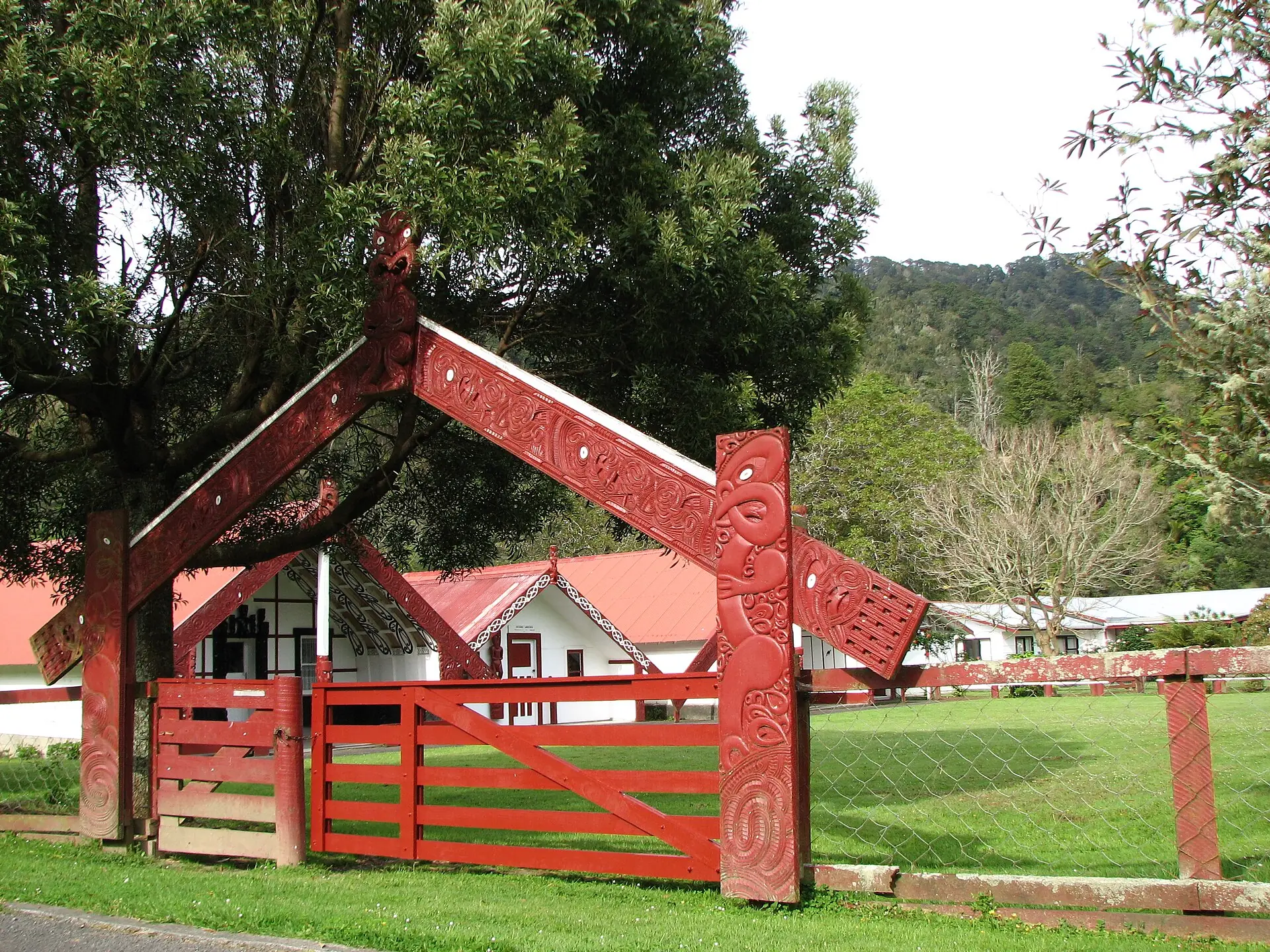
Māori language, carving, weaving, haka, marae and whakapapa have survived colonisation to become central to the identity of the whole country. After te reo Māori declined steeply in the twentieth century, the language petition of 1972, the first kōhanga reo in 1982 and the Māori Language Act of 1987 began a revival, and Māori is now an official language. The Te Māori exhibition of 1984 brought taonga to the world, and the Kīngitanga, founded in 1858, still gathers iwi at Tūrangawaewae.
Signed in 1840 by the Crown and about 540 rangatira, the Treaty of Waitangi is New Zealand's founding document, but its Māori and English texts differ on sovereignty, governance and chiefly authority. A judge called it "a simple nullity" in 1877; it was revived by the Waitangi Tribunal, created in 1975, which since 1985 has heard claims reaching back to 1840. Settlements with Waikato-Tainui, Ngāi Tahu and many other iwi have brought Crown apologies and redress, and Waitangi Day, 6 February, remains a focus of debate about what the Treaty means today.
New Zealand created four Māori seats in 1867, and in 1893 it became the first self-governing country in which women won the vote in national elections. The Liberals made it a "social laboratory" watched by reformers abroad, with compulsory industrial arbitration and old-age pensions, and the first Labour government's Social Security Act of 1938 built one of the world's first welfare states. Later reforms decriminalised homosexuality in 1986, brought proportional representation in 1996 and legalised same-sex marriage in 2013.
The landing at Gallipoli on 25 April 1915 gave New Zealand Anzac Day, its most important day of remembrance, and the memorial on Chunuk Bair. About 18,000 New Zealanders died in the First World War, from a population of just over a million, and some 11,900 in the Second, in which the 28th (Māori) Battalion won lasting fame. The New Zealand Wars, long half-forgotten, have been remembered since 2017 on a national day, Te Pūtake o te Riri, and since 2023 New Zealand's own histories have been taught in every school.
Once among the most loyal of Britain's dominions, New Zealand was the last to adopt the Statute of Westminster, in 1947. Its refusal of a possibly nuclear-armed American warship in 1985, the bombing of the Rainbow Warrior by French agents and the Nuclear Free Zone Act of 1987 led the United States to downgrade New Zealand from ally to friend, and made the anti-nuclear stance part of national identity. Protest against sporting contact with apartheid South Africa divided the country in 1981, and after the mosque attacks of 2019 the Christchurch Call took a New Zealand initiative against online extremism to the world.
New Zealand governed Samoa from 1914 to 1962 and still forms one realm with the self-governing Cook Islands and Niue, Tokelau and the Ross Dependency in Antarctica. The influenza of 1918 and the shootings in Apia in 1929 scarred relations with Samoa, for which New Zealand apologised in 2002, and the dawn raids of the 1970s, for which it apologised in 2021, targeted Pacific families. Migration from Samoa, Tonga, the Cook Islands, Niue and beyond has made Auckland a centre of Pacific life and culture.
People reached New Zealand later than almost anywhere else, and the loss of the moa, Haast's eagle and much of the forest followed swiftly; introduced predators later threatened the kiwi and many other birds. The rediscovery of the takahē in 1948, the Save Manapouri campaign and the Resource Management Act of 1991 marked a growing conservation movement, and Treaty settlements recognised Te Urewera and the Whanganui River as legal persons, drawing on Māori understandings of land and rivers as living ancestors. Life on the boundary of two tectonic plates has brought eruptions and earthquakes, from Tarawera to Napier and Christchurch.
Rugby is usually dated from a match in Nelson in 1870, and the Native team of 1888, the "Originals" of 1905 and the All Blacks' Rugby World Cup wins of 1987, 2011 and 2015 made it a national passion. Ernest Rutherford won the Nobel Prize in 1908 and went on to split the atom, Edmund Hillary climbed Everest, and Katherine Mansfield, Janet Frame and Keri Hulme, whose The Bone People won the Booker Prize in 1985, gave the country a literature of its own. Peter Jackson's films set Middle-earth in New Zealand's landscapes.
The timeline is built from the project's own research dossier and its event, leader, prime minister and map datasets, checked against Te Ara – the Encyclopedia of New Zealand, NZHistory, the Dictionary of New Zealand Biography, English Wikipedia, Encyclopaedia Britannica, Stats NZ and other national institutions. Linked articles are starting points for verification, not proof that every claim has been independently checked. Deep-time dates are approximate, the date of first Polynesian settlement (about 1250–1300) is still debated, and oral traditions such as Kupe's voyage and the founding waka are labelled as tradition. The Māori and English texts of the Treaty of Waitangi differ, and both are described; death tolls of the Musket Wars, the New Zealand Wars and several disasters are given as ranges where sources differ; population figures before 1858 are estimates; the most recent events rest on sources that are still changing; and the map shades whole modern regions, so the advance of Crown authority and land purchase within each is indicative.
Every event and every ruler has its own sources. See Sources & Further Reading in each timeline entry and ruler profile.
History is connected. Explore the bigger picture.
AllHistories is an independent visual history project designed to make the past easier to understand, explore, and connect.
History is more than a collection of dates, rulers, and battles. Events rarely happen in isolation. Borders shift, civilizations influence one another, ideas spread, and decisions made centuries ago continue to shape the world today.
Through interactive timelines, historical maps, and visual storytelling, AllHistories helps uncover these connections and makes complex historical subjects more accessible and engaging.
Travel through centuries, discover turning points, and understand how historical events unfold and connect.
Explore how borders, civilizations, populations, trade routes, beliefs, and spheres of influence have changed over time.
Go beyond dates and discover the individuals, places, decisions, and circumstances behind historical developments.
Explore connections between countries, empires, civilizations, and historical themes to better understand cause and consequence.
Features vary depending on the historical subject.
AllHistories draws on historical research, published references, public archives, and available historical datasets. The information is organized and presented through interactive digital experiences.
History is not always certain or universally agreed upon. Dates, territorial boundaries, population figures, and interpretations may differ between sources. Some information is necessarily simplified or estimated for visual presentation.
The goal is to encourage curiosity and independent exploration, not to replace academic publications or specialist historical research.
When you visit AllHistories, the web server may process technical information such as your IP address, requested pages, browser details and access times to deliver pages and maintain the service.
Some pages load Google Analytics, Google Fonts, externally hosted images, maps or other third-party resources. Requests to these providers can transmit technical information, including your IP address. Contact forms may use Google reCAPTCHA to help prevent abuse. These providers apply their own privacy policies.
The website uses browser storage for preferences such as the selected theme. Country microsites also use a session cookie to support website functionality, including request protection. Analytics or other third-party services may use additional cookies or storage, depending on the page and your browser settings.
When you submit a correction or contact form, the information you provide, such as your name, email address and message, is processed to review and respond to your request. Please avoid including sensitive personal information.
You can manage cookies and site storage in your browser and control third-party requests through browser privacy settings. For privacy questions or requests concerning information you submitted, use the contact option on the microsite where you sent it.
Links to sources and other websites take you to services with their own privacy practices. Review their policies before providing personal information.
AllHistories provides historical information for general education and exploration. Its content is not professional, legal, financial or other specialist advice.
We aim to present useful, well-sourced summaries, but cannot guarantee that every date, statement, translation or interpretation is complete or accurate. Verify important claims against the cited sources and relevant scholarship. Content may be corrected or updated.
Maps are simplified historical illustrations. Borders, place names and territorial labels may vary by period and source. Their appearance does not express a position on sovereignty or present-day territorial disputes.
Images and source material may belong to their respective creators or rights holders. Consult the image credit, source page and license before reusing material. A link or credit does not grant additional reuse rights.
External links are provided for reference. AllHistories does not control the content, availability or policies of third-party websites.
To report an error or a concern about credited material, use the contact option on the relevant country microsite and identify the page, material and supporting details.