Key facts of the era
Key Events
Journey through the events, people, wars and ideas that shaped Monaco, from the hunters of the Observatory Cave to the principality of today.
Follow the Ligurians, the Greeks of Heracles Monoikos and Rome's Portus Herculis Monoeci, Genoa's fortress on the Rock and the night in 1297 when François Grimaldi took it disguised as a friar, the Spanish and French protectorates, the Revolution, the revolt of Menton and Roquebrune, the casino and Monte Carlo, the Grand Prix, Grace Kelly and the land won from the sea.
Meet the lords and princes of the House of Grimaldi, the governors-general and the ministers of state who governed the principality.
From François Grimaldi, who took the Rock in 1297, and the lords of Monaco to the princes of the House of Grimaldi, with Genoa's interludes, the French annexation, and the governors-general and ministers of state who governed the principality.
A Journey Through the Ages
Monaco, a principality of about two square kilometres on the Mediterranean coast between Nice and the Italian border, has been inhabited since the Palaeolithic, when hunters sheltered in the cave beneath today's Exotic Garden and in the Balzi Rossi caves near Menton. Ligurian tribes held the coast when Greek seafarers named its harbour Monoikos after Heracles, and under Rome it was Portus Herculis Monoeci, overlooked by the Trophy of Augustus raised at La Turbie in 7–6 BCE.
After Rome the coast passed to Ostrogoths, Byzantines and Lombards and was ravaged by the Saracens of Fraxinetum. Emperor Henry VI granted the Rock to Genoa in 1191, and in 1215 the Genoese began the fortress that became the Prince's Palace. On 8 January 1297 François Grimaldi, an exiled Guelph disguised as a Franciscan friar, seized it; his family lost and regained Monaco several times, bought Menton and Roquebrune, and from 1419 held the Rock more or less continuously.
Under Spanish protection from 1524, Honoré II took the title of prince in 1612 and turned to France with the Treaty of Péronne in 1641. His successors became dukes of Valentinois and courtiers of Versailles, and in 1731 the throne passed through Louise-Hippolyte to the Goyon de Matignon. Revolutionary France annexed Monaco in 1793; restored in 1814 under Sardinian protection, it lost Menton and Roquebrune in 1848 and sold them to France in 1861.
Reduced to its present size but independent, Monaco found a new fortune in the casino of Charles III and François Blanc's Société des Bains de Mer, which created Monte Carlo and allowed direct taxes to be abolished in 1869. Albert I made it a centre of oceanography and gave it a constitution in 1911. Under Rainier III, who married Grace Kelly, it reclaimed land from the sea, joined the United Nations and became a modern financial and tourist centre, and Albert II has added environmental diplomacy and the Mareterra district. Explore the ten ages below through selected events from the timeline.

300,000 BCE – 476
Caves, Greeks and the Trophy of Augustus.
Palaeolithic caves, Ligurian tribes, the Greek harbour of Heracles Monoikos and the Roman Portus Herculis Monoeci beneath the Trophy of Augustus at La Turbie.

In the Balzi Rossi caves near Menton, Ice Age hunters buried a woman and a youth together, the find later called "Grimaldi Man".

Greek seafarers named the sheltered harbour beneath the Rock Monoikos, the origin of the name Monaco, and linked it to Heracles.

Augustus built the Via Julia Augusta along the Riviera, passing above Monaco at La Turbie.

Legend tells that a dove guided the boat carrying the martyr Devota to Monaco, which adopted her as patron saint.

477 – 1296
Raiders, emperors and a Genoese fortress.
After barbarian and Saracen raids, the emperor granted the coast to Genoa, which built a fortress on the Rock in 1215; Genoa's Guelph–Ghibelline feuds drove the Grimaldi family into exile.

Raiders based at Fraxinetum in Provence ravaged the Riviera from about 889 and left Monaco almost deserted.

In 1191 Emperor Henry VI granted the Rock and harbour of Monaco to Genoa in exchange for naval help against Sicily.

A parish church dedicated to Saint Nicholas was built on the Rock in 1252, on the site of today's cathedral.
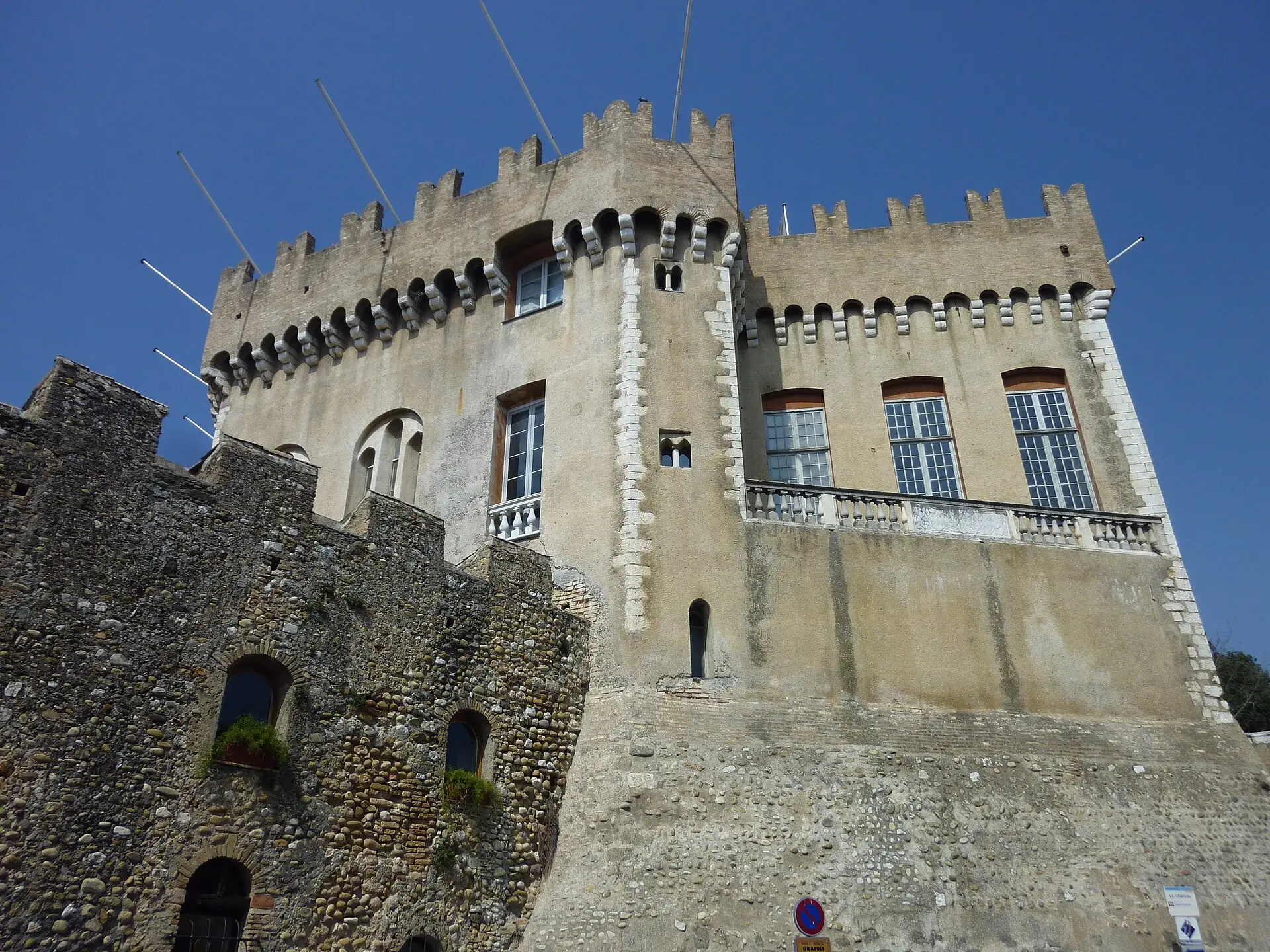
When the Ghibelline Doria and Spinola took power in Genoa, the Guelph Grimaldi were driven into exile on the Riviera.

1297 – 1523
A friar's ruse and a family's lordship.
François Grimaldi seized the Rock in 1297; his heirs lost and regained it several times, bought Menton and Roquebrune and turned Monaco into a Grimaldi lordship between Genoa, France and Savoy.

Rainier Grimaldi commanded the French royal galleys that defeated the Flemish fleet at Zierikzee in 1304.

Charles Grimaldi bought Menton in 1346 and took Roquebrune in 1355, forming the three-town territory of Monaco.

With Jean I a prisoner, his wife Pomellina Fregoso governed Monaco and beat off a siege by the Duke of Savoy.

In 1506–1507 Lucien Grimaldi's defenders drove off a Genoese army of some 14,000 men after five months.

1524 – 1640
Under Spain, and a new title of Prince.
From 1524 Monaco was under Spanish protection with a Spanish garrison; Honoré II took the title of Prince in 1612.

The treaty of Tordesillas put Monaco under Spanish protection while proclaiming it free of any superior power.

In August 1529 the Emperor Charles V stayed four nights in the palace on his way to be crowned in Bologna.

In 1536 the chapel of Sainte-Dévote passed from the Abbey of Saint-Pons to the Lord of Monaco.

After the murder of Hercule, Spanish troops occupied Monaco in 1605 and its people were forbidden to bear arms.

1641 – 1792
Princes of Monaco, dukes of France.
The Treaty of Péronne put Monaco under French protection; the princes became French dukes of Valentinois and courtiers at Versailles, and the line passed to the Goyon de Matignon family.

Louis XIII created the Duchy of Valentinois for Honoré II in 1642, making the princes peers of France.

Inspired by Fontainebleau, Louis I gave the palace its Baroque entrance and double horseshoe staircase.

In 1678 Louis I promulgated the statutes of the principality, a unified written body of law.

Antoine I's heiress Louise-Hippolyte married the Norman nobleman Jacques de Matignon, who took the Grimaldi name.

1793 – 1847
Annexed, restored and divided.
Revolutionary France annexed Monaco in 1793; restored in 1814, the principality was placed under the protection of the Kingdom of Sardinia, while Honoré V's monopolies bred unrest in Menton.

The palace was looted, its contents auctioned and the building turned into a military hospital and poorhouse.
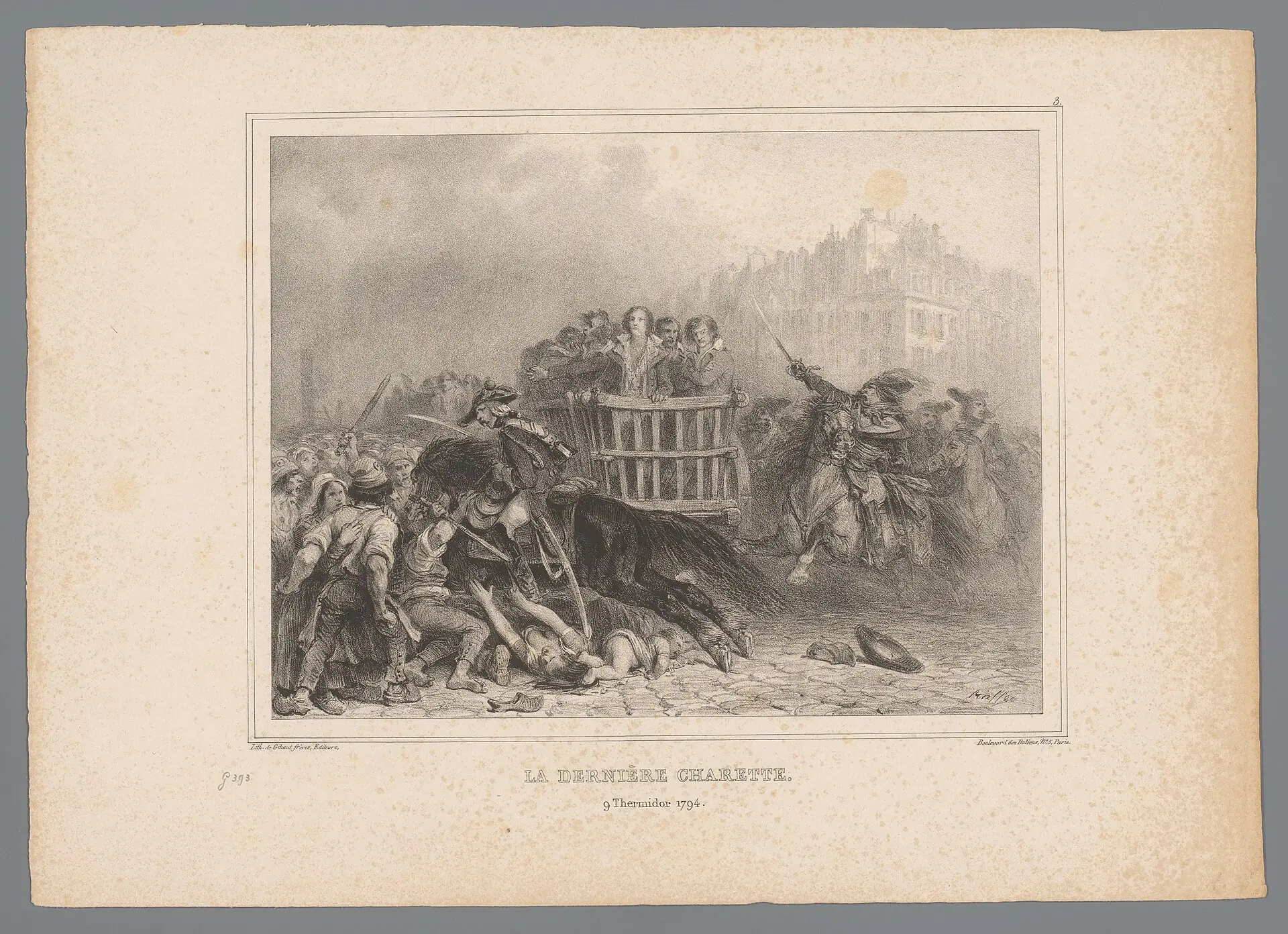
Marie Thérèse de Choiseul, wife of Prince Joseph of Monaco, was guillotined on the day Robespierre fell.

The first Treaty of Paris restored the principality to Honoré IV after Napoleon's abdication in 1814.

In 1815 the second Treaty of Paris transferred the protection of Monaco from France to the Kingdom of Sardinia.

1848 – 1910
Roulette, railways and the sea.
Menton and Roquebrune broke away in 1848 and were sold to France in 1861; Charles III's casino and François Blanc's Société des Bains de Mer created Monte Carlo, and Albert I made Monaco a centre of oceanography.

Charles III ceded Menton and Roquebrune to France for 4 million francs, and France recognised Monaco's independence.

In 1866 Charles III renamed the Spélugues plateau Monte Carlo, "Mount Charles", in his own honour.

With the casino paying for the state, Charles III abolished direct taxation in 1869.
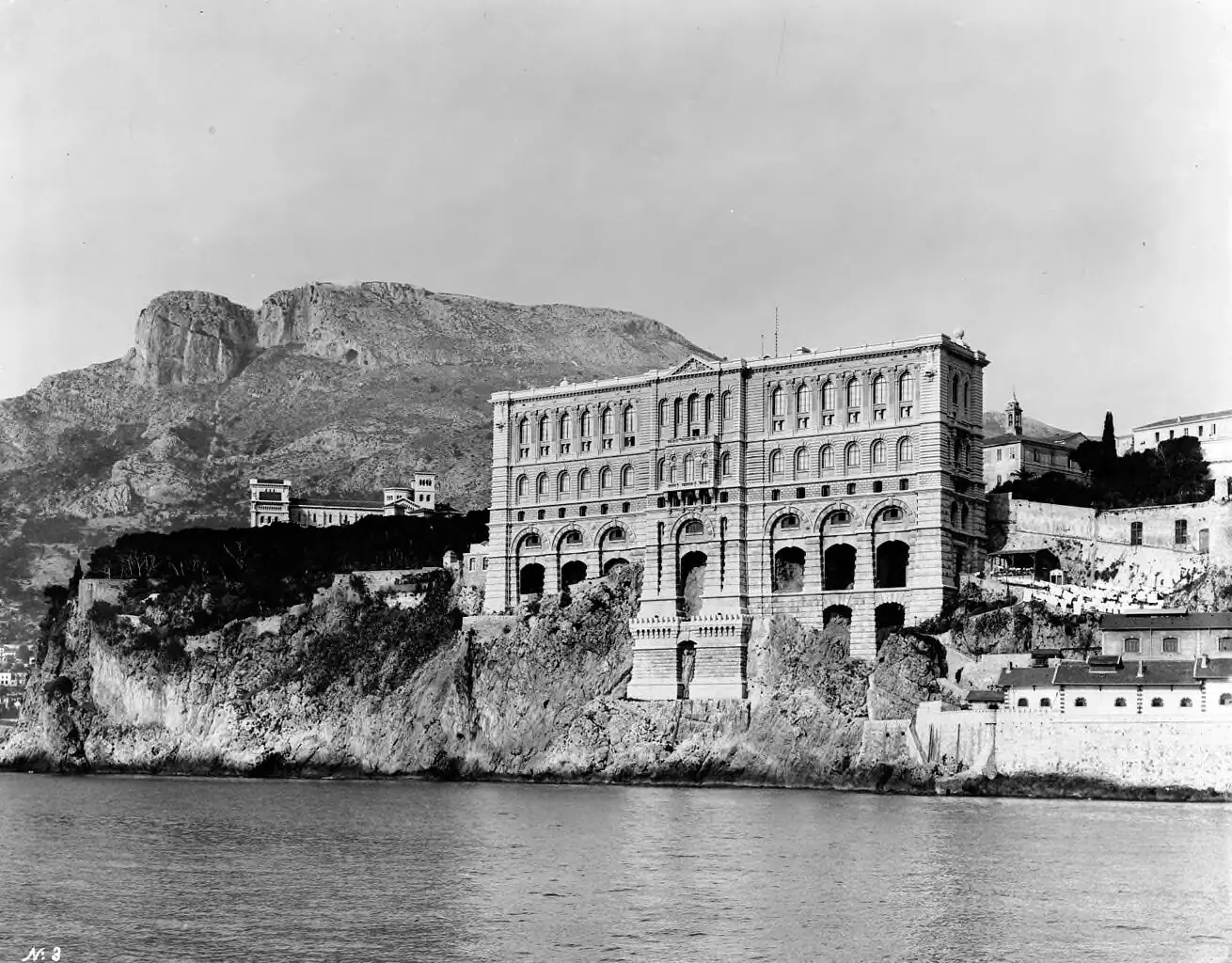
Albert I inaugurated the Oceanographic Museum, built into the cliff of the Rock, in 1910.

1911 – 1948
A constitution, ballet and motor racing.
The 1911 constitution, the 1918 treaty with France, the Ballets Russes and the first Grand Prix; Monaco was occupied by Italy and Germany in the Second World War.
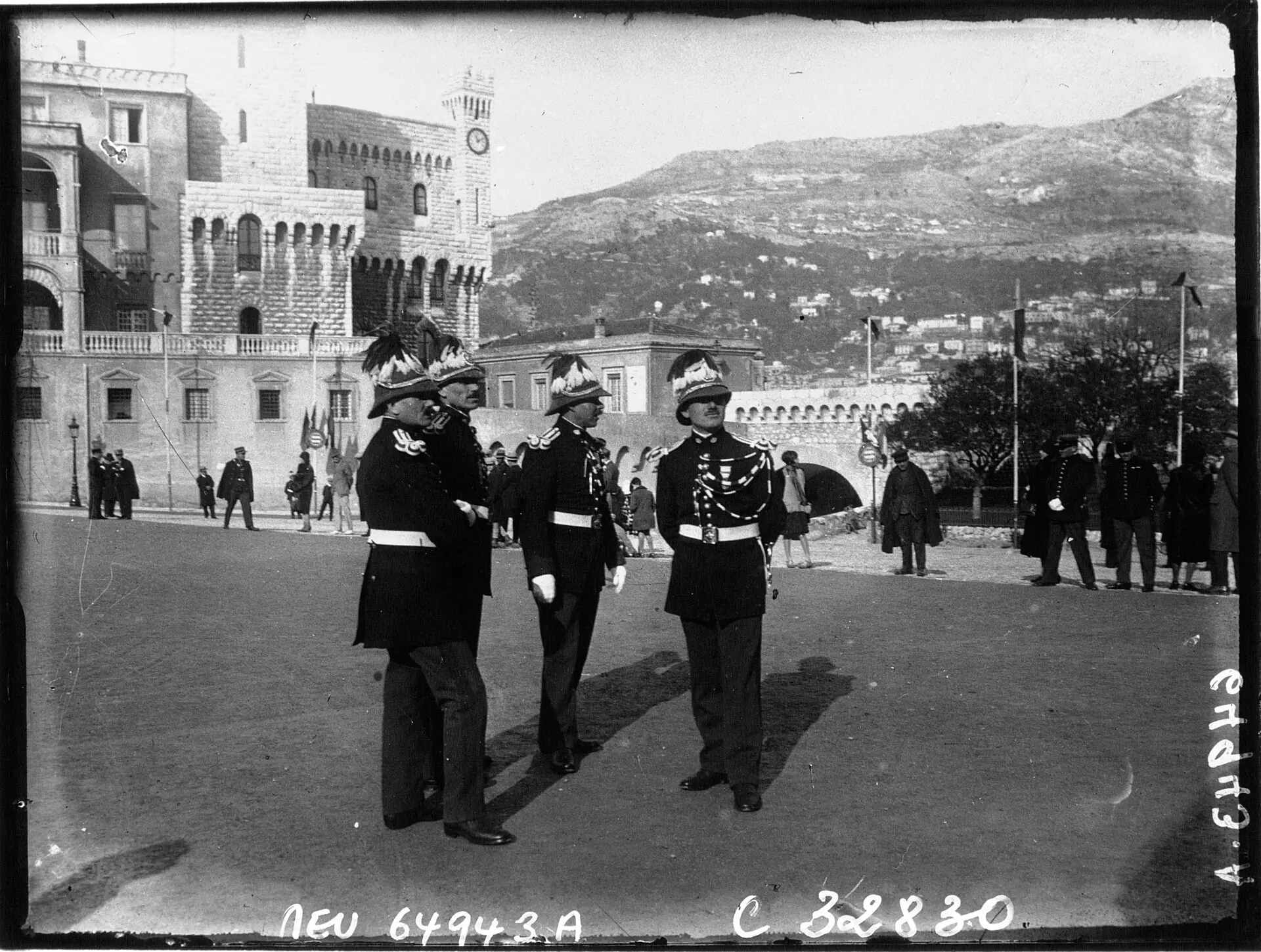
Albert I's constitution of 1911 ended absolute monarchy and created an elected National Council.

Diaghilev's company premiered Le Spectre de la rose at Monte Carlo in 1911, beginning a long association with Monaco.

The treaty of 1918 placed Monaco's foreign policy and succession under French oversight.

Occupied by Italy in 1942 and by Germany in 1943, Monaco was liberated by American troops and the resistance on 3 September 1944.

1949 – 2004
The builder prince and a Hollywood princess.
The 'builder prince' married Grace Kelly, gave Monaco the 1962 constitution, faced down de Gaulle's 1962 blockade, reclaimed land at Fontvieille and took Monaco into the UN and the Council of Europe.

In October 1962 French customs officers set up checkpoints on the roads into Monaco as the tax crisis came to a head.
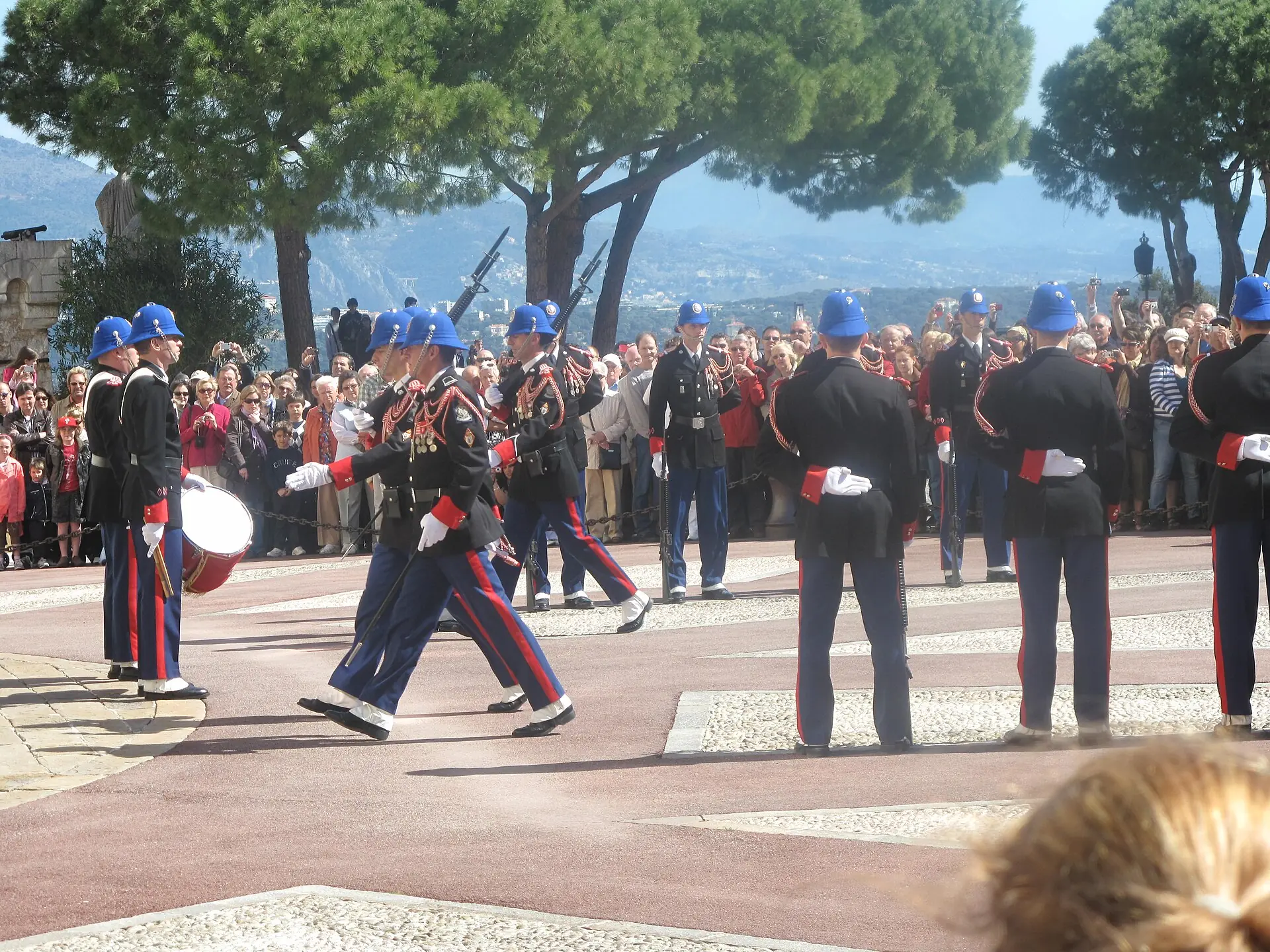
Rainier's new constitution introduced women's suffrage and abolished the death penalty; it is still in force.

The district of Fontvieille rose on more than twenty hectares reclaimed from the sea below the Rock.

Monaco was admitted as a full member of the United Nations on 28 May 1993.
Population: Linear interpolation between 2000 (Wikipedia, Demographics of Monaco: 2000, 32,020) and 2008 (Wikipedia, Demographics of Monaco: 2008, 35,352).

2005 – present
Ocean diplomacy, new land and new scrutiny.
Albert II's reign brought environmental diplomacy, financial transparency reforms and the Mareterra extension, along with debates on governance and the princely family.

In 2006 Albert II created a foundation devoted to climate change, biodiversity and access to water.

In 2011 Albert II married the former South African Olympic swimmer Charlene Wittstock.

In 2024 Charles Leclerc became the first Monegasque to win the Monaco Grand Prix since Louis Chiron in 1931.
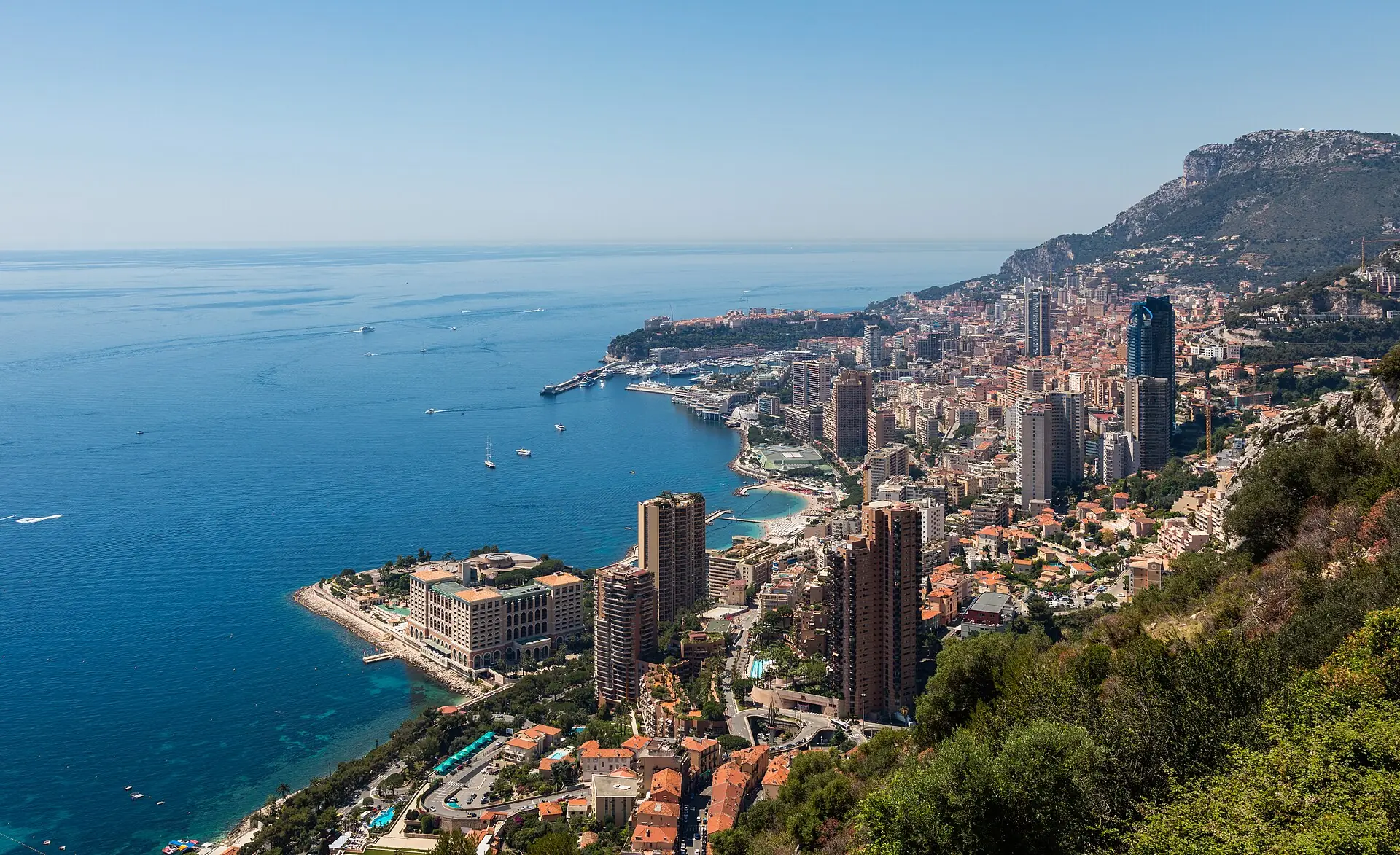
In 2024 the Financial Action Task Force placed Monaco under increased monitoring for money laundering.
Population: Wikipedia, Demographics of Monaco: 2024, 38,423.
From Portus Herculis Monoeci to the Principality, 14 BCE – Today
From the Roman Maritime Alps, Provence and Genoa to the Grimaldi lordship of Monaco, Menton and Roquebrune, from the Spanish and French protectorates, the Revolution and Sardinian protection to the free cities of 1848, the sale of Menton to France and today’s principality, commune by commune, in 18 narrated chapters.
If the page stays blank, the site doesn't allow embedding — use “Open in new tab”.
From the Ice Age caves of the Balzi Rossi to the new district of Mareterra, the history of Monaco has left Europe one of its oldest reigning dynasties, a sovereign state of about two square kilometres living in partnership with France, the casino resort of Monte Carlo and its Grand Prix, a scientific vocation for the study and protection of the sea, and the example of a tiny principality that has repeatedly enlarged itself by building on the water.
The Grimaldis date their rule from the night of 8 January 1297, when François Grimaldi, disguised as a Franciscan friar, seized the fortress on the Rock; two sword-wielding friars still support the shield of Monaco's coat of arms, and in 1997 the principality celebrated 700 years of Grimaldi rule. Absolute princes until 1911, they have since reigned under constitutions, and that of 1962 shares legislative power with an elected National Council.
Monaco has survived under the protection of greater neighbours. The Treaty of Péronne of 1641 exchanged Spanish for French protection; the treaty of 1861 sold Menton and Roquebrune to France in return for recognition of Monaco's independence; the treaty of 1918 placed its foreign policy and succession under French oversight; and the treaty of 2002 guaranteed its sovereignty whatever the succession, after Monaco had joined the United Nations in 1993.
Facing bankruptcy after the loss of Menton and Roquebrune, the Grimaldis turned to gambling. François Blanc's Société des Bains de Mer, founded in 1863, created Monte Carlo, and in 1869 Charles III abolished direct taxation; Monegasques still pay no personal income tax. The quarrel with de Gaulle's France in 1962 and later international pressure, from the OECD to the Financial Action Task Force, have reshaped this model of a tax-free financial centre.
Albert I, the navigator prince, helped found modern oceanography with his voyages from 1885 and opened the Oceanographic Museum in 1910; Monaco later became the seat of the International Hydrographic Bureau and of a marine laboratory of the International Atomic Energy Agency. Jacques-Yves Cousteau directed the museum from 1957 to 1988, and Albert II has made climate change and the oceans the cause of his reign through his foundation and his journeys to both poles.
Charles Garnier's concert hall at the casino opened in 1879, and under Raoul Gunsbourg the Opéra de Monte-Carlo staged world premieres by Massenet, Saint-Saëns, Puccini and Ravel. Diaghilev's Ballets Russes made Monte Carlo their home in the 1920s, and Les Ballets de Monte-Carlo revived the tradition in 1985. The wedding of Rainier III and the film star Grace Kelly in 1956 made Monaco a byword for glamour across the world.
The Monte Carlo Rally began in 1911 and the Monaco Grand Prix in 1929, raced through the streets of Monte Carlo and part of the Formula One World Championship from its first season in 1950; in 2024 Charles Leclerc became its first Monegasque winner since 1931. Monte Carlo has staged a tennis tournament since 1896, AS Monaco has been champion of France eight times, and world athletics has been governed from Monaco since 1993.
Reduced to about two square kilometres in 1861, Monaco has grown by building into the Mediterranean. Rainier III created the sandy beach of Larvotto and the district of Fontvieille on land reclaimed from the sea, with a new harbour, the heliport and the Stade Louis II, and put the railway underground. Under Albert II the six-hectare Mareterra district at the Anse du Portier, inaugurated in 2024, added about 3 per cent to the land area.
Saint Devota, whose body, legend says, was guided to Monaco by a dove about 304, is the patron saint of the principality; her feast on 27 January is a national holiday, and on its eve a boat is burned before her chapel. Roman Catholicism is the state religion and Monaco has had its own diocese since 1887, while the Monegasque language, which derives from the Ligurian dialect of the coast, recalls the Genoese settlers of the Rock.
The timeline is built from the project's own research dossier and its event, ruler, head-of-government and map datasets, checked against English Wikipedia, Encyclopaedia Britannica, the websites of the Prince's Palace, the Princely Government and the National Council, WorldStatesmen.org and other references. Linked articles are starting points for verification, not proof that every claim has been independently checked. Prehistoric dates are archaeological estimates, the story of François Grimaldi's disguise in 1297 is a tradition that some historians regard as largely anecdotal, and the governors-general before 1911 come from WorldStatesmen.org because no Wikipedia list exists. Population figures begin in 1960; Monaco's older censuses were not used. Where sources disagree, as on the dates of the French annexation, the site says so. The most recent events, from 2024 to 2026, rest on sources that are still changing; the shading of communes and neighbouring states on the map is indicative.
Every event and every ruler has its own sources. See Sources & Further Reading in each timeline entry and ruler profile.
History is connected. Explore the bigger picture.
AllHistories is an independent visual history project designed to make the past easier to understand, explore, and connect.
History is more than a collection of dates, rulers, and battles. Events rarely happen in isolation. Borders shift, civilizations influence one another, ideas spread, and decisions made centuries ago continue to shape the world today.
Through interactive timelines, historical maps, and visual storytelling, AllHistories helps uncover these connections and makes complex historical subjects more accessible and engaging.
Travel through centuries, discover turning points, and understand how historical events unfold and connect.
Explore how borders, civilizations, populations, trade routes, beliefs, and spheres of influence have changed over time.
Go beyond dates and discover the individuals, places, decisions, and circumstances behind historical developments.
Explore connections between countries, empires, civilizations, and historical themes to better understand cause and consequence.
Features vary depending on the historical subject.
AllHistories draws on historical research, published references, public archives, and available historical datasets. The information is organized and presented through interactive digital experiences.
History is not always certain or universally agreed upon. Dates, territorial boundaries, population figures, and interpretations may differ between sources. Some information is necessarily simplified or estimated for visual presentation.
The goal is to encourage curiosity and independent exploration, not to replace academic publications or specialist historical research.
When you visit AllHistories, the web server may process technical information such as your IP address, requested pages, browser details and access times to deliver pages and maintain the service.
Some pages load Google Analytics, Google Fonts, externally hosted images, maps or other third-party resources. Requests to these providers can transmit technical information, including your IP address. Contact forms may use Google reCAPTCHA to help prevent abuse. These providers apply their own privacy policies.
The website uses browser storage for preferences such as the selected theme. Country microsites also use a session cookie to support website functionality, including request protection. Analytics or other third-party services may use additional cookies or storage, depending on the page and your browser settings.
When you submit a correction or contact form, the information you provide, such as your name, email address and message, is processed to review and respond to your request. Please avoid including sensitive personal information.
You can manage cookies and site storage in your browser and control third-party requests through browser privacy settings. For privacy questions or requests concerning information you submitted, use the contact option on the microsite where you sent it.
Links to sources and other websites take you to services with their own privacy practices. Review their policies before providing personal information.
AllHistories provides historical information for general education and exploration. Its content is not professional, legal, financial or other specialist advice.
We aim to present useful, well-sourced summaries, but cannot guarantee that every date, statement, translation or interpretation is complete or accurate. Verify important claims against the cited sources and relevant scholarship. Content may be corrected or updated.
Maps are simplified historical illustrations. Borders, place names and territorial labels may vary by period and source. Their appearance does not express a position on sovereignty or present-day territorial disputes.
Images and source material may belong to their respective creators or rights holders. Consult the image credit, source page and license before reusing material. A link or credit does not grant additional reuse rights.
External links are provided for reference. AllHistories does not control the content, availability or policies of third-party websites.
To report an error or a concern about credited material, use the contact option on the relevant country microsite and identify the page, material and supporting details.