Key facts of the era
Key Events
Journey through the events, people, wars and ideas that shaped Luxembourg, the fortress on the rock of the Bock, from the Ice Age hunters of the Müllerthal to a grand duchy at the heart of Europe.
Follow the Celtic Treveri and Roman Trier, Willibrord's abbey at Echternach, Count Siegfried's castle of 963, the emperors of the House of Luxembourg, the Burgundian, Spanish and Austrian centuries and Vauban's fortress, the French Département des Forêts, the Grand Duchy of 1815 and the partitions of 1659, 1815 and 1839, the steel age, two German occupations, liberation, the Benelux and the European institutions, and Schengen.
Meet the counts, dukes, emperors and grand dukes who ruled the land, and the governors, prefects and prime ministers who administered it.
From the Roman emperors and Frankish kings to the counts and dukes of Luxembourg, the Burgundian, Habsburg, Spanish and Austrian rulers, Napoleon and the grand dukes, with the governors, prefects and prime ministers who administered the land.
A Journey Through the Ages
Luxembourg, a small landlocked state between Belgium, France and Germany, lies where the plateaux of the Ardennes meet the valley of the Moselle, and people have lived in its land since Ice Age hunters left flint tools there more than 35,000 years ago. A Mesolithic hunter was buried at Loschbour about 6000 BCE, Linear Pottery farmers settled the loess lands about 5300 BCE, and the Celtic Treveri built their great town on the Titelberg. Caesar's legate Labienus defeated them in 53 BCE, and for four centuries the country was part of the Roman province of Gallia Belgica, around Augusta Treverorum (Trier), a residence of emperors from 293. When Rome withdrew, the Franks came, and in 698 the Anglo-Saxon missionary Willibrord founded the abbey of Echternach.
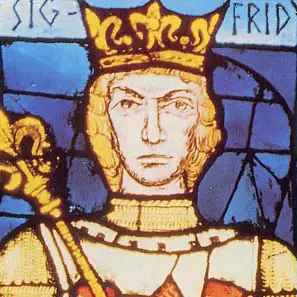
On 12 April 963 Count Siegfried exchanged lands with the abbey of St Maximin in Trier for the small fort of Lucilinburhuc on the rock of the Bock above the Alzette, and from this exchange the history of Luxembourg is dated. His house gave the empire a queen, Kunigunde, and the countess Ermesinde, who ruled for fifty years, granted charters of freedom to Echternach in 1236 and to the town of Luxembourg in 1244. Her descendant Henry VII was crowned emperor in 1312, John the Blind became King of Bohemia and died at Crécy in 1346, Charles IV was crowned emperor in 1355 and raised Luxembourg to a duchy in 1354, and Sigismund, the last of the line, ended the Western Schism at the Council of Constance. In the night of 21–22 November 1443 Burgundian troops took the city by surprise, and the duchy passed to the Habsburgs, who ruled it from Brussels as part of the Netherlands.
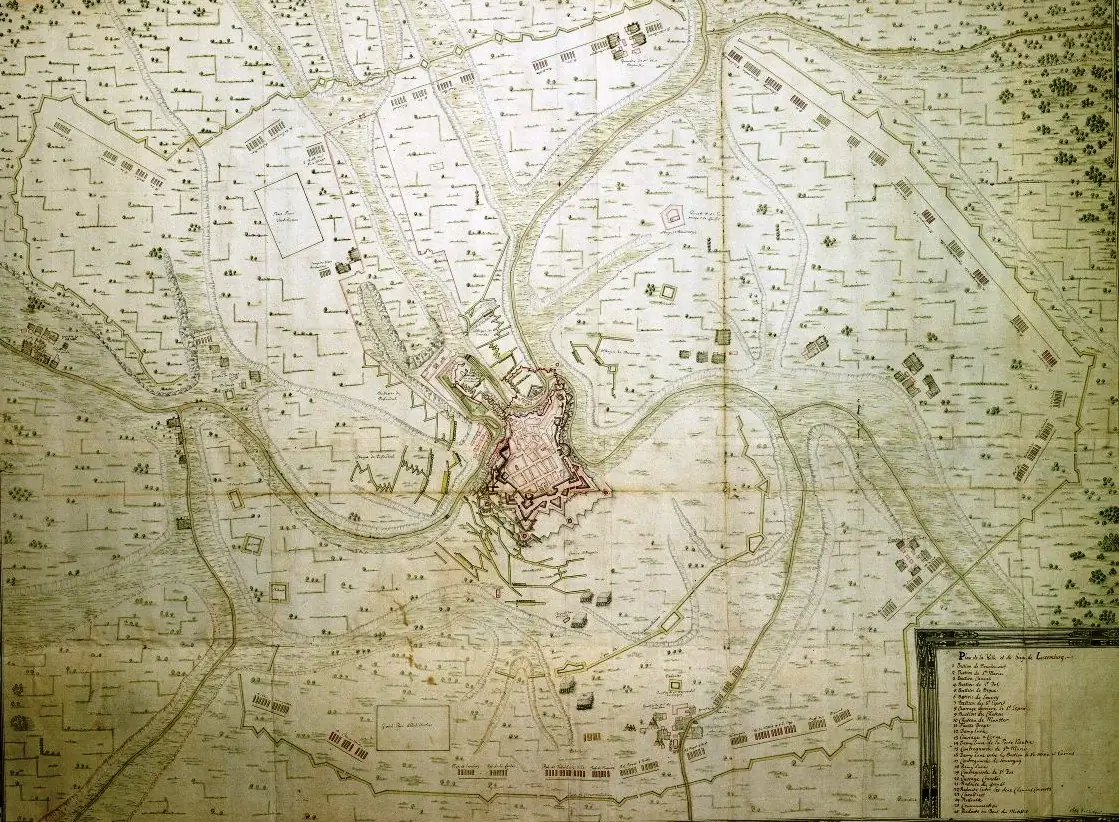
For three centuries Luxembourg was a Catholic frontier province, loyal to Spain in the Dutch Revolt and ravaged by plague and war, which lost Thionville and other southern districts to France in the Treaty of the Pyrenees of 1659. Louis XIV besieged the fortress in 1684, and Vauban rebuilt it as the “Gibraltar of the North”, which Spanish, French and Austrian engineers filled with the casemates below the Bock. After the French capitulation of 1795 the country became the Département des Forêts, rose in the Klëppelkrich of 1798 and received the Napoleonic Code. The Congress of Vienna made Luxembourg a grand duchy in 1815, held by the King of the Netherlands, a member of the German Confederation with a Prussian garrison in its federal fortress, and the Belgian Revolution cost it its western half in the Treaty of London of 1839. After the Luxembourg Crisis the powers guaranteed the perpetual neutrality of the country in the Second Treaty of London of 1867 and ordered the fortress dismantled; the Thomas process of 1879 gave the iron ore of the south a new use, and steel made a poor farming country industrial.
When William III died in 1890 the personal union with the Netherlands ended and the Nassau-Weilburg line took the throne with Grand Duke Adolphe. Germany occupied the neutral country in 1914–1918, and Grand Duchess Marie-Adélaïde gave way to her sister Charlotte in 1919, the year of universal suffrage and of a referendum that confirmed the monarchy. The Wehrmacht overran Luxembourg on 10 May 1940, the Gauleiter Gustav Simon tried to Germanise it, and the general strike of August 1942 answered forced conscription; the government and the grand duchess carried on in exile, the country was liberated in September 1944, and the Battle of the Bulge devastated the north that winter. After the war Luxembourg gave up neutrality, joined Benelux, NATO and the United Nations, and became a seat of European institutions from 1952, a financial centre, the home of RTL, SES and ArcelorMittal, and the place where the Schengen Agreement was signed in 1985. It adopted the euro in 1999, Jean-Claude Juncker led its government from 1995 to 2013, a new constitution entered into force in 2023, and Grand Duke Guillaume V succeeded his father Henri on 3 October 2025. Explore the ten ages below through selected events from the timeline.

40,000 BCE – 486
Ice Age hunters, the Celtic Treveri and four centuries of Roman Trier.
Ice Age hunters and Loschbour man, the first farmers, the Celtic Treveri and their oppidum on the Titelberg, and four centuries of Roman Gallia Belgica around Trier.

About 6000 BCE a Mesolithic hunter-gatherer was buried in a rock shelter near Heffingen; his genome later reshaped the study of European ancestry.

About 16 BCE the Romans founded Augusta Treverorum (Trier) on the Moselle as the new centre of the Treveri.
About 240 a villa owner at Vichten commissioned a magnificent floor mosaic of Homer and the nine Muses.

In 293, under the Tetrarchy, Trier became a residence of Roman emperors, from Constantius Chlorus to Constantine the Great.
487 – 1136
Franks, monks and the castle on the Bock.
Frankish rule, St Willibrord's abbey at Echternach (698), Lotharingia, Count Siegfried's acquisition of the Lucilinburhuc (963) and the first House of Luxembourg.

In 698 the Anglo-Saxon missionary Willibrord received an estate from Irmina of Oeren and founded a monastery at Echternach.

In August 843 Charlemagne's grandsons divided the Carolingian Empire at Verdun, and the Luxembourg lands fell within Lothair I's Middle Francia.

On 14 February 1014 Kunigunde, daughter of Count Siegfried, was crowned empress with Henry II in Rome.

About 1030–1050 the Echternach scriptorium produced the Codex Aureus, one of the masterpieces of Ottonian book painting.

1137 – 1443
From Countess Ermesinde to the emperors of the House of Luxembourg.
Countess Ermesinde's charters, the Luxembourg emperors Henry VII, Charles IV and Sigismund, John the Blind, the duchy of 1354, and the pledges that ended in Burgundian conquest (1443).

In August 1244 Countess Ermesinde granted the town of Luxembourg its charter of freedom, giving its burghers personal liberty and self-government.

On 26 August 1346 the blind King John of Bohemia, count of Luxembourg, was killed fighting for France at the battle of Crécy.

On 13 March 1354 Emperor Charles IV raised the county of Luxembourg to a duchy for his half-brother Wenceslaus.

In the night of 21–22 November 1443 Burgundian troops of Philip the Good took the city of Luxembourg by surprise.
1444 – 1794
A fortress province of the Burgundian and Habsburg Netherlands.
A province of the Burgundian and Habsburg Netherlands: Mansfeld's governorship, war and plague, the loss of Thionville (1659), Vauban's fortress after the French siege of 1684, and the Austrian Netherlands.
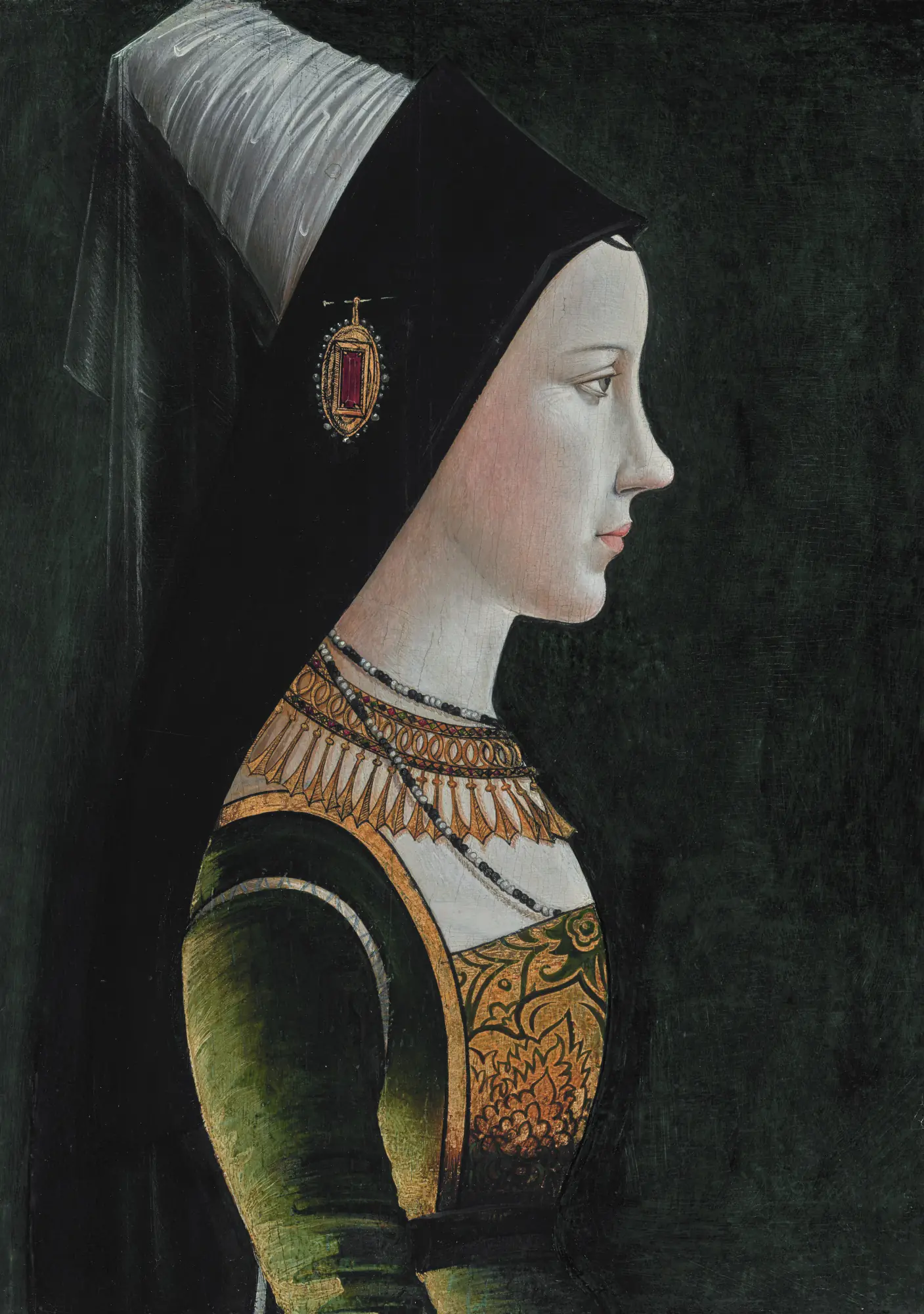
On 19 August 1477, after Charles the Bold fell at Nancy, his heiress Mary of Burgundy married Maximilian of Habsburg, bringing Luxembourg into the Habsburg orbit.

On 7 November 1659 the Treaty of the Pyrenees ceded Thionville, Montmédy and other southern districts of the duchy to France.

In 1684–1688 Vauban transformed Luxembourg into one of the strongest fortresses in Europe, and Louis XIV inspected the works.
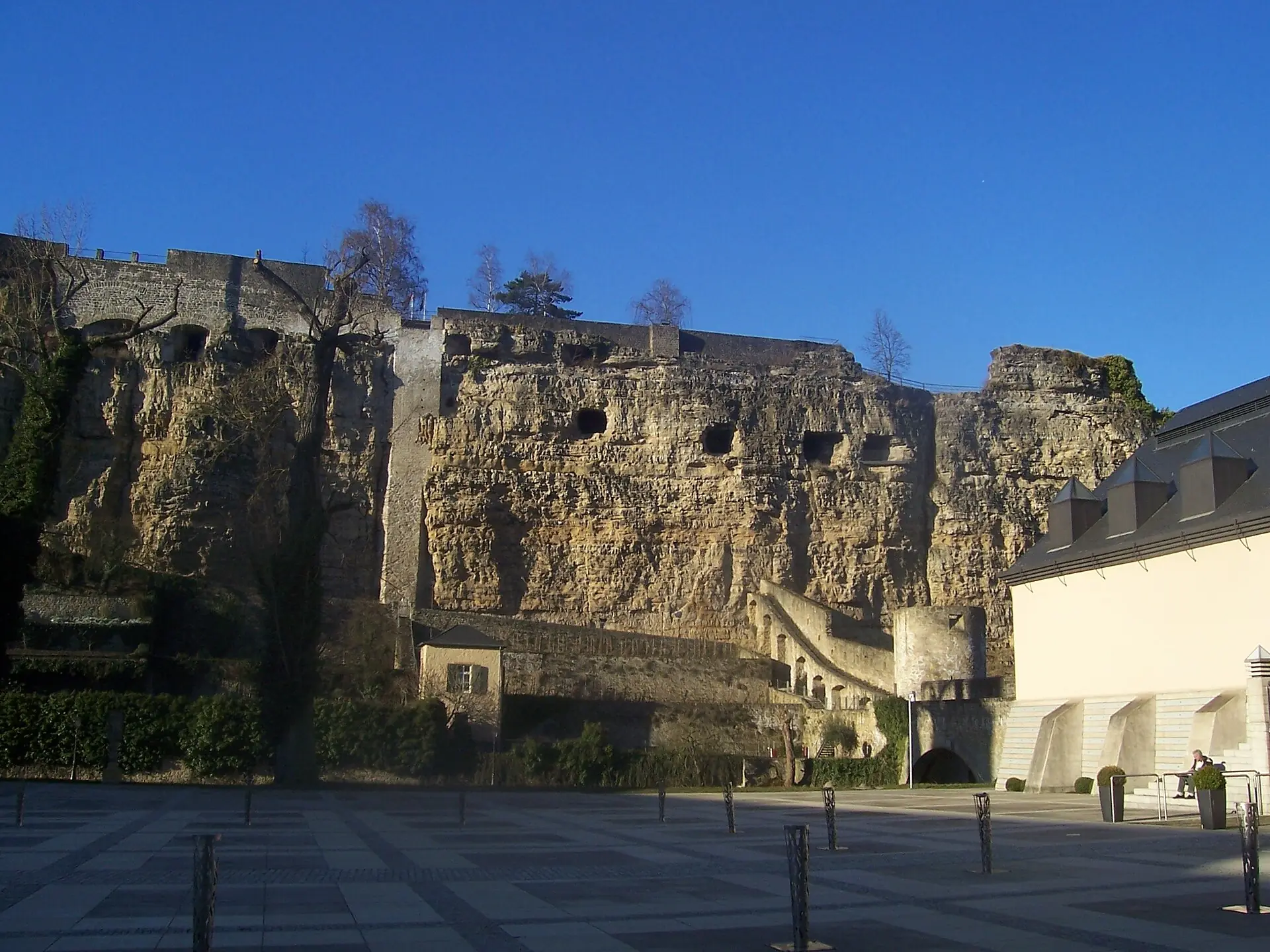
In 1744 the Austrians under General Neipperg greatly enlarged the Bock casemates, creating galleries for guns and up to 1,200 soldiers.

1795 – 1814
The Département des Forêts and the Napoleonic reforms.
The fortress capitulated in 1795; Luxembourg became the French Département des Forêts, saw the Klëppelkrich peasant revolt (1798) and lived under Napoleon until 1814.

In 1795 France annexed the Austrian Netherlands, and on 24 October the Duchy of Luxembourg became the Département des Forêts.

In October–November 1798 peasants of the Ösling and the Eifel rose against French conscription and anticlericalism in the Klëppelkrich, but were quickly crushed.

In 1796 French revolutionary laws dissolved the monasteries of the department, ending the abbeys of Echternach and Neumünster.

On 21 March 1804 the Code Napoléon came into force in the Forêts department and still underpins Luxembourg law.

1815 – 1890
A grand duchy, partition, neutrality and the rise of steel.
A grand duchy in personal union with the Netherlands and a federal fortress of the German Confederation: the cessions of 1815 and 1839, constitutions, the Zollverein, neutrality under the Treaty of London (1867) and the rise of steel.
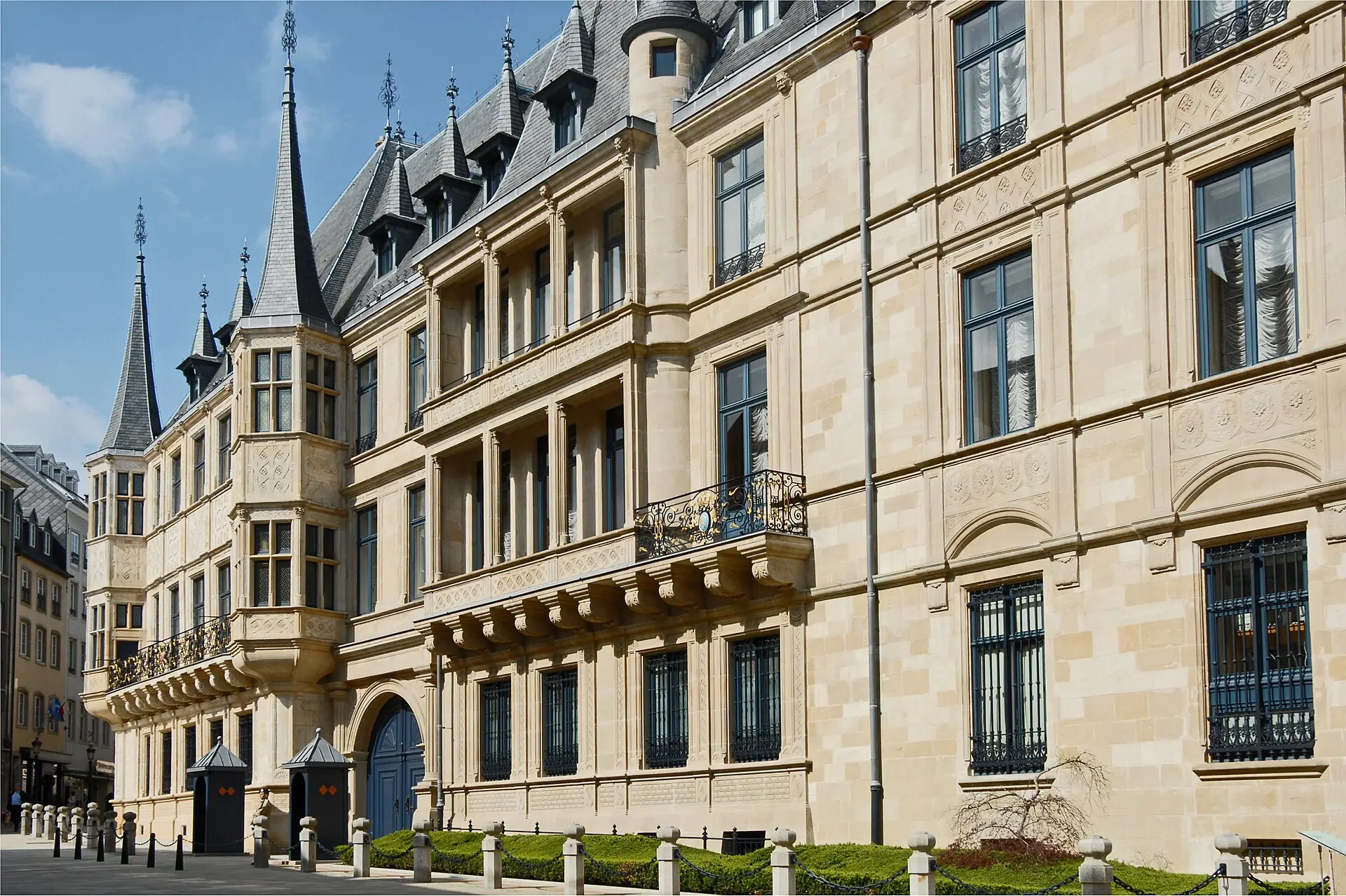
On 19 April 1839 the Treaty of London recognised Belgium and partitioned Luxembourg, leaving the eastern half as the grand duchy.
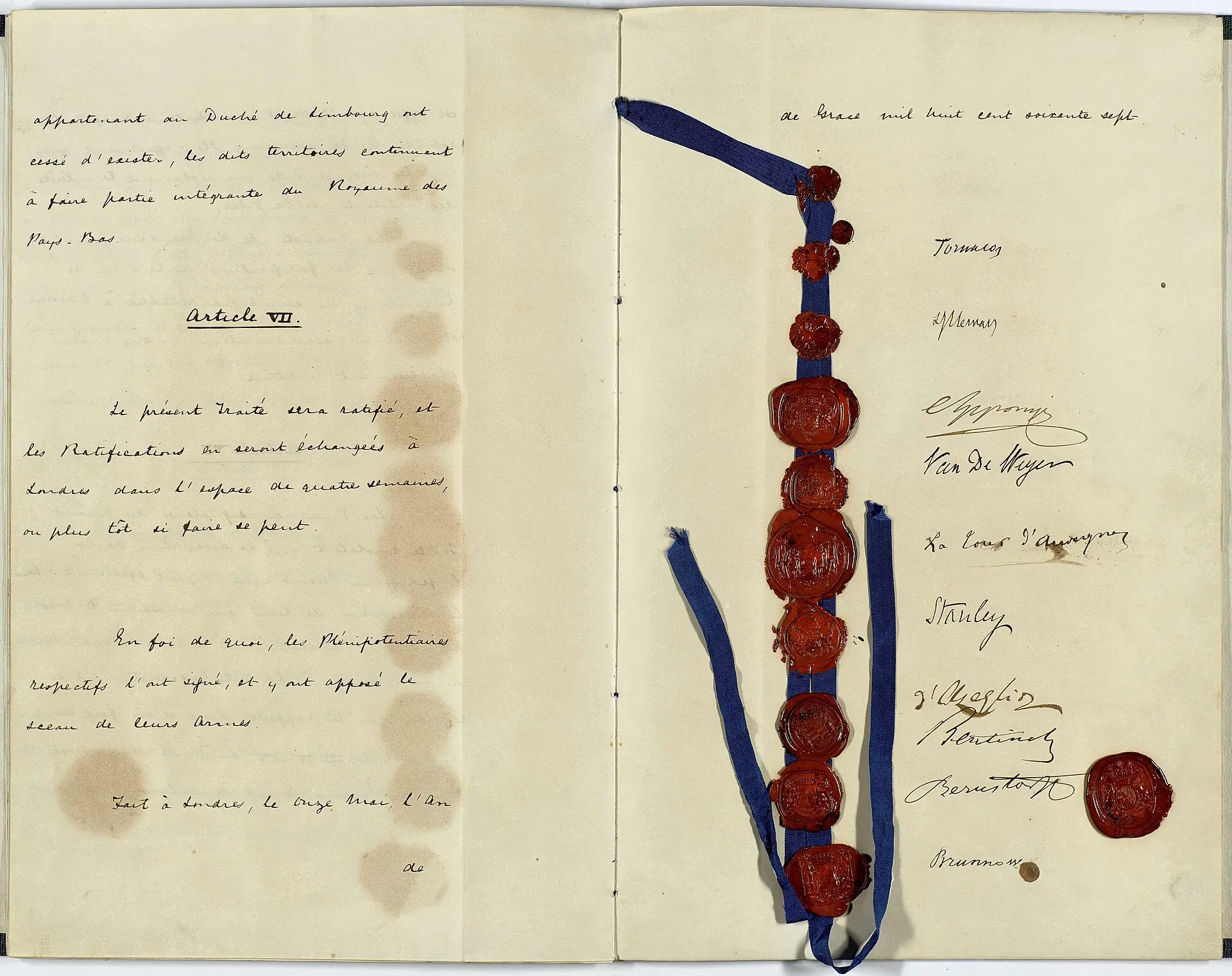
On 11 May 1867 the great powers guaranteed Luxembourg's perpetual neutrality and ordered the demolition of its fortress.

On 4 October 1859 Luxembourg's first railway line, from the capital to Thionville, was inaugurated.

In 1879 the Gilchrist–Thomas process made the phosphoric minette ore of Luxembourg usable for steel, launching the steel age of the grand duchy.
Population: Census 1890: 211,481 (Wikipedia, Demographics of Luxembourg).
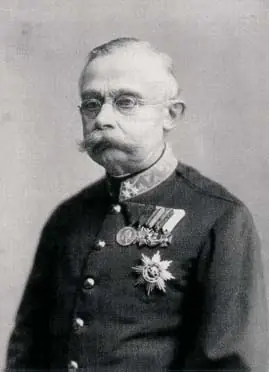
1891 – 1918
A new dynasty, ARBED and the German occupation.
The Nassau-Weilburg dynasty from 1890, Paul Eyschen's governments, ARBED, German occupation in 1914–18 and the crisis over Grand Duchess Marie-Adélaïde.
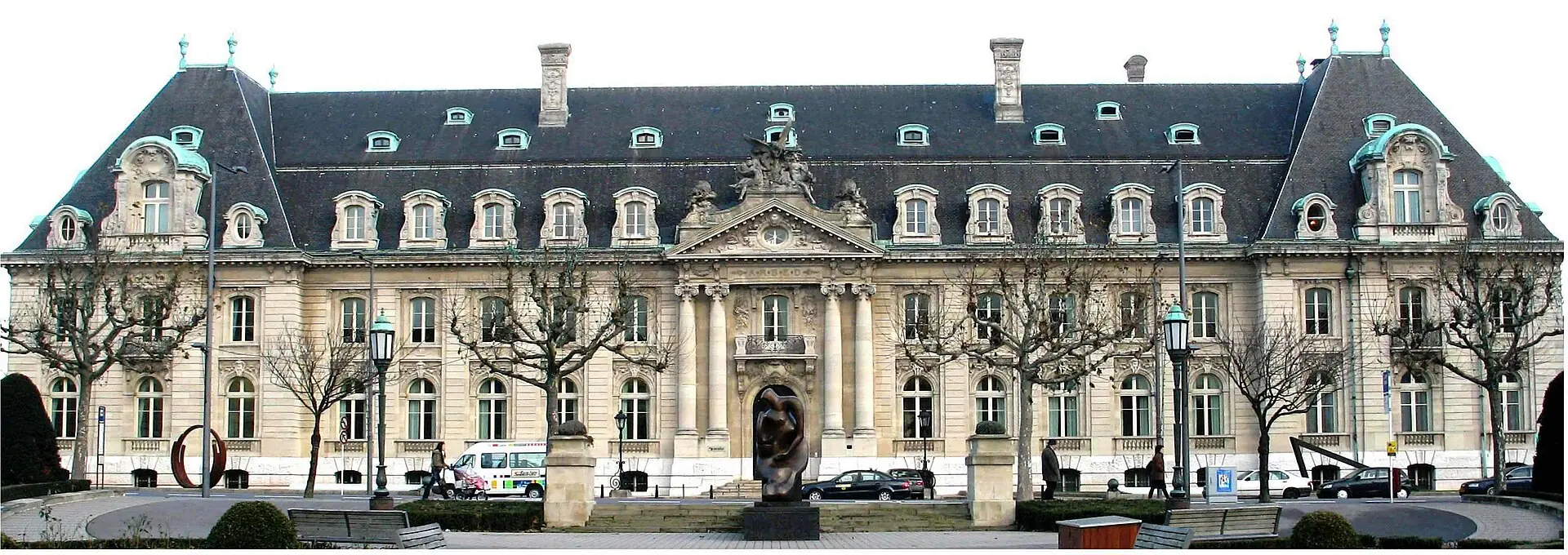
In 1911 three of Luxembourg's largest steel firms merged to form ARBED, which became the giant of Luxembourgish industry.
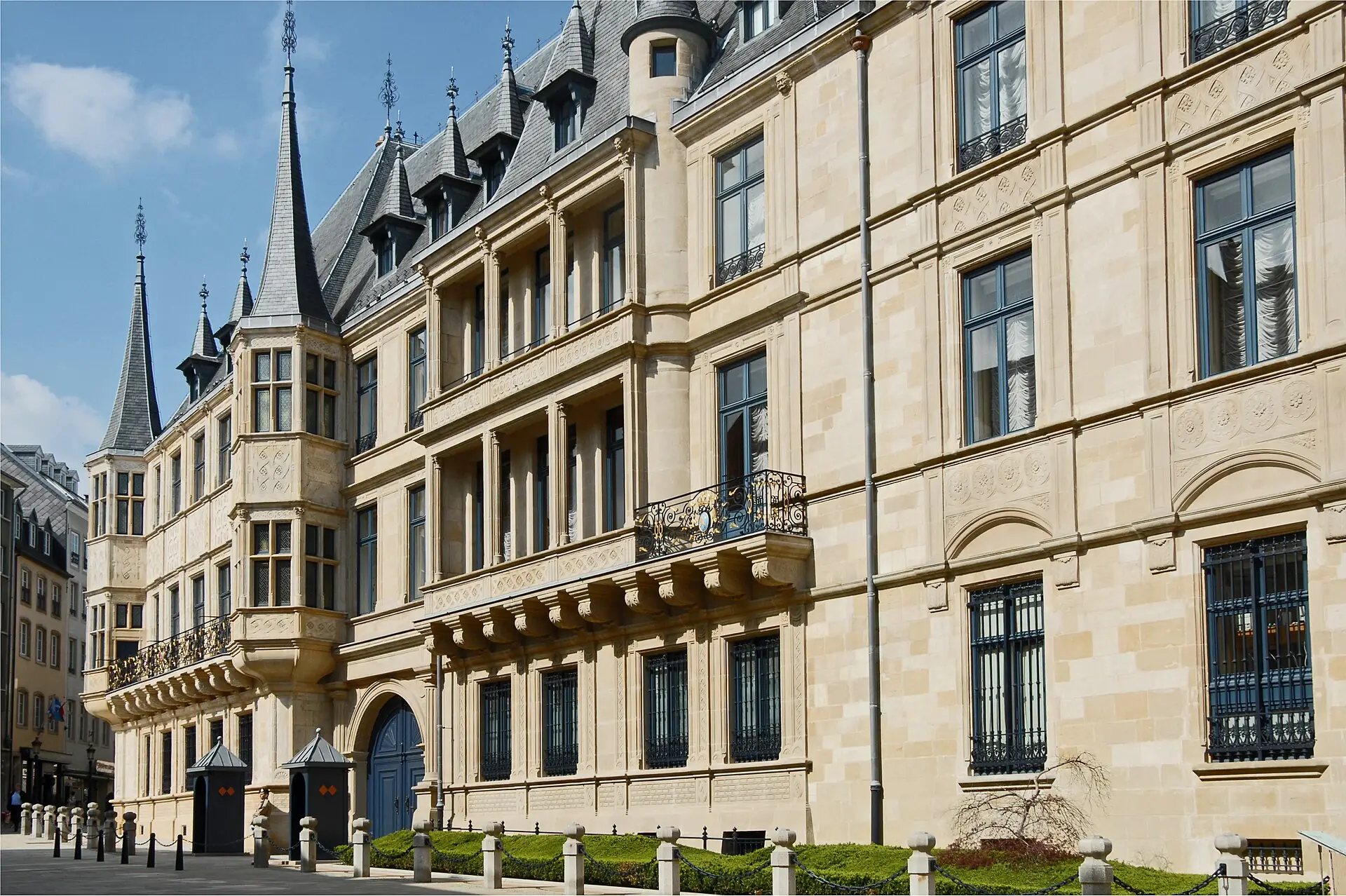
On 2 August 1914 German troops invaded neutral Luxembourg, beginning an occupation that lasted until November 1918.

On 31 May 1917 miners and steelworkers struck in the south; the German army crushed the strike and the Thorn government fell.

In November 1918 – January 1919 republican revolts and calls for abdication forced Marie-Adélaïde to give up the throne to her sister Charlotte.
Population: Linear interpolation between 1910 (Census 1910: 259,027 (Wikipedia, Demographics of Luxembourg)) and 1922 (Census 1922: 261,643 (Wikipedia, Demographics of Luxembourg)).

1919 – 1945
Charlotte's reign, occupation, resistance and liberation.
Grand Duchess Charlotte and universal suffrage, economic union with Belgium, German occupation and annexation (1940–44), the 1942 general strike, liberation and the Battle of the Bulge.
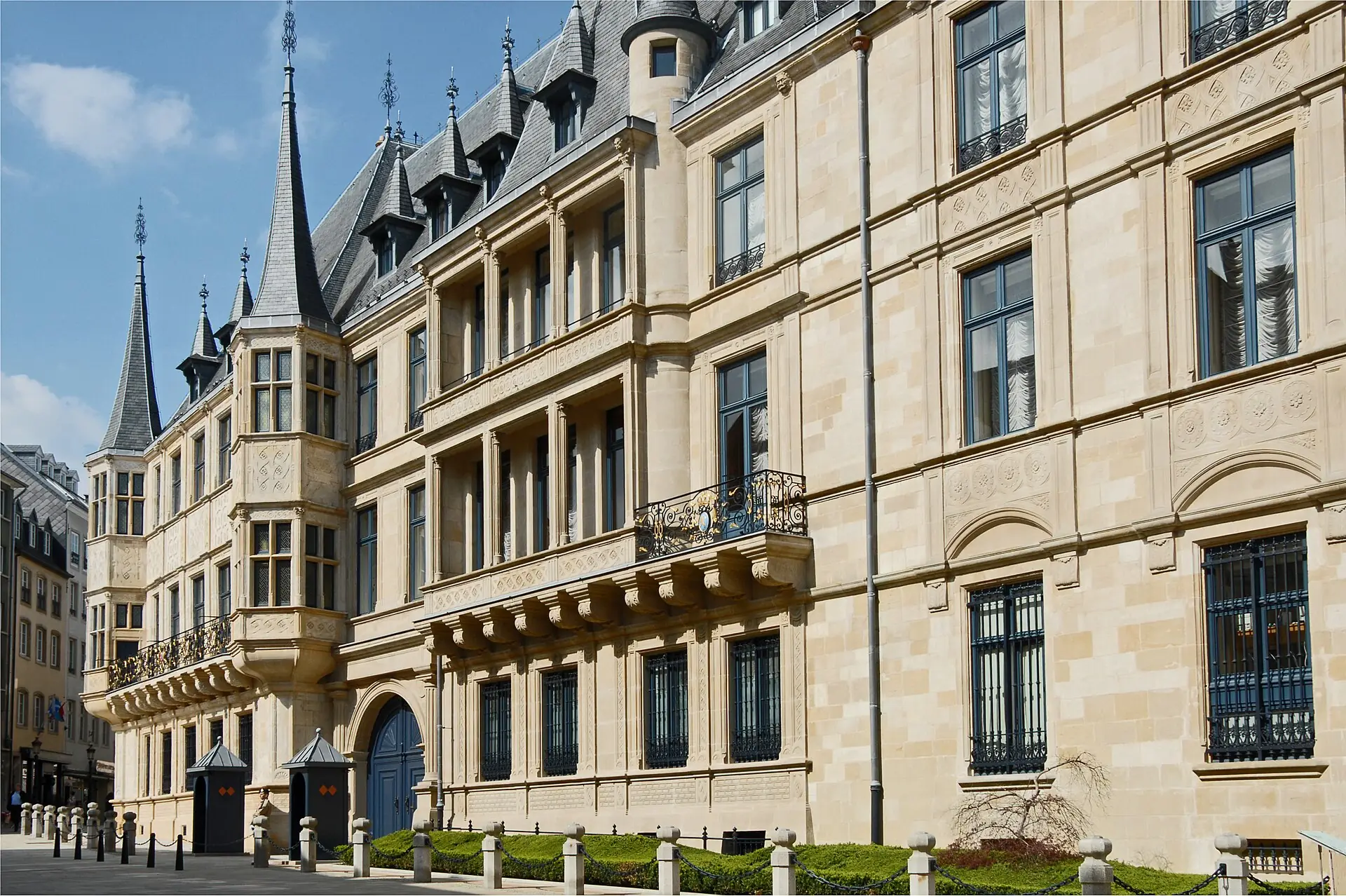
On 15 May 1919 a constitutional revision gave the vote to all adult men and women and transferred sovereignty to the nation.
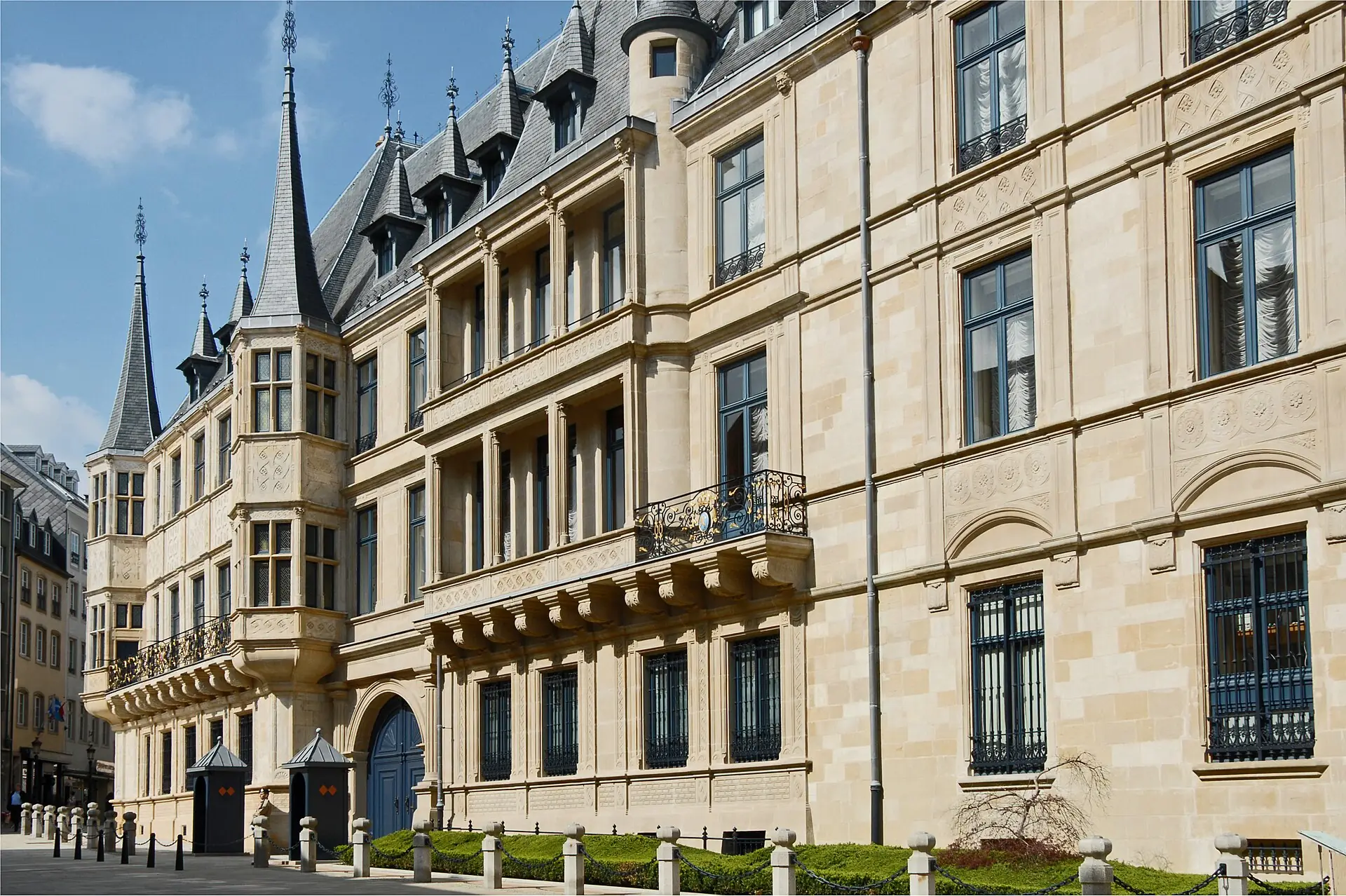
On 25 July 1921 Luxembourg signed a customs and monetary union with Belgium, replacing its old membership of the German Zollverein.

On 31 August 1942 a strike starting in Wiltz spread across the country in protest at forced conscription, and was crushed by executions.

On 10 September 1944 American troops liberated Luxembourg City, accompanied by Prince Jean.
Population: Linear interpolation between 1930 (Census 1930: 299,782 (Wikipedia, Demographics of Luxembourg)) and 1947 (Census 1947: 290,992 (Wikipedia, Demographics of Luxembourg)).

1946 – 1985
A founder of Europe, steel in crisis and the financial centre.
Benelux, NATO and the European Communities with institutions in Luxembourg, the steel crisis and the tripartite model, RTL, the financial centre and the Schengen Agreement (1985).

On 4 April 1949 Joseph Bech signed the North Atlantic Treaty in Washington, making Luxembourg one of NATO's twelve founders.

On 10 August 1952 the High Authority of the European Coal and Steel Community, led by Jean Monnet, began work in Luxembourg City.

From 1974 a collapse in world demand plunged Luxembourg's dominant steel industry into a long crisis.

On 24 February 1984 a language law declared Luxembourgish the national language and defined the roles of French and German.
Population: Linear interpolation between 1981 (Census 1981: 364,302 (Wikipedia, Demographics of Luxembourg)) and 1991 (Census 1991: 384,634 (Wikipedia, Demographics of Luxembourg)).

1986 – present
The euro, steel without furnaces, the financial centre and a new Grand Duke.
Satellites and finance, the euro, the Juncker, Bettel and Frieden governments, social reforms, the 2023 constitution and the accession of Grand Duke Guillaume V (2025).

In July 1997 the last blast furnace at Esch-Belval was shut down, ending more than a century of pig-iron production in Luxembourg.

On 25 June 2006, after a five-month battle, Arcelor's board accepted Mittal Steel's bid, creating ArcelorMittal with its headquarters in Luxembourg.

On 5 November 2014 journalists published hundreds of secret tax rulings granted by Luxembourg to multinational companies, provoking a Europe-wide scandal.

On 1 July 2023 a comprehensively revised constitution replaced the text of 1868, modernising the monarchy and recognising Luxembourgish as the national language.
Population: Linear interpolation between 2021 (Census 2021: 643,941 (Wikipedia, Demographics of Luxembourg)) and 2026 (STATEC, 1 January 2026: 690,959 (Wikipedia, Demographics of Luxembourg)).
Treveri, Counts, Emperors, Dukes and Grand Dukes – Prehistory to Today
From Loschbour man and the Celtic Treveri to Roman Trier, Willibrord’s Echternach, Siegfried’s castle of 963 and the Luxembourg emperors, Burgundian, Spanish, French and Austrian rule, the grand duchy of 1815, the partitions and neutrality, two German occupations and a founding member of Europe.
If the page stays blank, the site doesn't allow embedding — use “Open in new tab”.
From the rock of the Bock and the casemates beneath it to the abbey of Echternach and the villas of the Treveri, the history of Luxembourg has left the world a fortress that was called the Gibraltar of the North, a country of three languages, the steel of the Minett, a dynasty of grand dukes, a neutrality that two German invasions could not defend, and a small state that became a seat of European institutions, a financial centre and the place where the Schengen Agreement was signed, between France, Germany, Belgium and Brussels.
Count Siegfried built his castle on the rock promontory of the Bock above the Alzette in 963, and over the centuries successive rings of walls enclosed the growing town. Spanish engineers began digging the casemates in the 1640s, Vauban rebuilt the fortress after the French siege of 1684, and the Austrians dug the largest part of the underground network, enlarging the Bock casemates in 1744 until the whole network extended for some 23 kilometres. Burgundians, Habsburgs, Frenchmen and Prussians held the fortress in turn, and after the Second Treaty of London of 1867 it was dismantled over about sixteen years, although part of the casemates survived. The old quarters and fortifications of the City of Luxembourg were inscribed on the UNESCO World Heritage List in 1994, and the Bock casemates, the Passerelle viaduct, the Adolphe Bridge, Fort Thüngen and the Place d’Armes recall the many rulers of the city. Echternach, the Roman villa there, the Titelberg, the mosaic of Vichten and the castle of Vianden are part of the same story.
For centuries Luxembourgers spoke a Moselle Franconian dialect while using French and German as written languages for administration, law, education and the press. Antoine Meyer published the first book in Luxembourgish in 1829, Edmond de la Fontaine staged the first play in the language in 1855, and Michel Rodange’s satirical fox epic Renert of 1872 became the national epic of Luxembourgish literature. Michel Lentz wrote De Feierwon for the railway of 1859, whose refrain gave the country its motto, and the poem Ons Heemecht, set to music by Jean-Antoine Zinnen, was first performed in 1864. The German occupation strengthened attachment to the language, and in the census of 1941 about 95 per cent of Luxembourgers declared their nationality and language to be Luxembourgish. The law of 24 February 1984 declared Luxembourgish the national language, made French the language of legislation and allowed French, German and Luxembourgish in administrative and judicial matters, and the constitution of 2023 names Luxembourgish as the national language. The Napoleonic Civil Code of 1804 still underpins Luxembourg law.
Christianity spread from Trier into the Treveran countryside from the 4th century, and in 698 Willibrord founded the abbey of Echternach, where his tomb became a pilgrimage centre and the origin of the dancing procession, which Joseph II banned in 1786. The Echternach scriptorium produced the Codex Aureus, and Altmünster and Clairefontaine were among the abbeys that Luxembourg’s counts and countesses founded or favoured. The Jesuits opened a college in 1603, the origin of the Athénée de Luxembourg, and began the church that became Notre-Dame Cathedral in 1613; the devotion of the Octave to Our Lady, Comforter of the Afflicted, dates from 1624. The French Revolution dissolved the abbeys in 1796, the Concordat of 1801 restored Catholic worship, and the apostolic vicariate was raised to a diocese in 1870. The Jews of the duchy were expelled in 1391, and the remaining Jews were deported in 1941–1943. In 2015 the government and the religious communities signed agreements ending state funding of priests’ salaries and replacing religious education, and Pope Francis visited Luxembourg in September 2024.
The south of Luxembourg lies on a large deposit of minette, an iron ore that extends into French Lorraine. The Gilchrist–Thomas process of 1879 made it usable for steel, and the Minett region filled with blast furnaces, mines and workers’ towns, drawing thousands of German and Italian workers from about 1890. ARBED, founded in 1911, dominated the industry, and at its peak in the 1970s the sector employed over 25,000 people. After the steel crisis from 1974, in which government, employers and unions negotiated job cuts through the tripartite system formalised in 1977, the last blast furnace at Esch-Belval was extinguished in July 1997 and the site was redeveloped as the Cité des Sciences. ARBED became Arcelor in 2002 and ArcelorMittal in 2006. Before that, poverty and land shortage had driven tens of thousands of Luxembourgers to emigrate, chiefly to the American Midwest, in about 1845–1900. The population grew from 134,082 in 1821 to 643,941 in the census of 2021, and STATEC recorded 690,959 inhabitants on 1 January 2026, almost half of them foreign nationals, while the number of cross-border workers passed 200,000 in 2019, nearly half the salaried workforce. Luxembourg is also a land of Moselle vineyards, the sandstone of the Müllerthal and the forested Ösling of the Ardennes.
The Klëppelkrich of 1798, in which 42 of 94 insurgents tried in Luxembourg were executed, was remembered in the 19th century as a patriotic uprising, and a monument to the Klëppelmänner stands at Clervaux. Germany occupied the neutral country in 1914–1918 and again from 10 May 1940, when Gauleiter Gustav Simon tried to make it German; Hinzert concentration camp near Trier became the main place of imprisonment and execution for Luxembourgers. Small resistance groups formed, the general strike that began in Wiltz on 31 August 1942 protested against conscription into the Wehrmacht, and the families of resisters and deserters were deported. Estimates of Luxembourg’s Jewish victims vary between about 1,200 and nearly 2,000, and the Luxembourg conscripts are given as about 10,000 to 12,000 with nearly 3,000 dead. The Grand Duchess and the government carried on from London and Montreal, American troops liberated the capital on 10 September 1944, and the Battle of the Bulge brought fighting and devastation to Vianden, Clervaux and the north. General Patton is buried among his soldiers at Hamm. The Gëlle Fra memorial to the Luxembourgers who died in the First World War was unveiled in 1923, and Sanja Iveković’s Lady Rosa of 2001 caused a national uproar.
Loschbour man, buried about 6000 BCE, became important for the study of European ancestry, and the collections of the National Museum of Archaeology, History and Art in Luxembourg City preserve the finds of the Palaeolithic hunters, the Treveri and the Romans. Ausonius celebrated the Moselle in his Latin poem Mosella about 371, and the Igel Column near Trier records the wealth of the Treveran cloth merchants. The Schueberfouer, founded by John the Blind in 1340, is still held every year. François Boch opened a ceramics works at Septfontaines in 1766, and the University of Luxembourg was founded in 2003. Nicolas Frantz won the Tour de France in 1927 and 1928, Charly Gaul in 1958, and Josy Barthel won the 1,500 metres at the Helsinki Olympics in 1952, Luxembourg’s only Olympic gold in a sporting event. Luxembourg won the Eurovision Song Contest in 1972 and 1973, Luxembourg City was European Capital of Culture in 1995 and 2007, and Esch-sur-Alzette in 2022.
Luxembourg became a grand duchy at the Congress of Vienna in 1815, in personal union with the Netherlands, and lost its western half in the Treaty of London of 1839, which Luxembourg celebrated as the centenary of its independence in 1939. Its perpetual neutrality, guaranteed in 1867 and written into the constitution of 1868, was violated by Germany in both world wars and abandoned in 1948. When William III died in 1890 the throne passed to Adolphe of Nassau-Weilburg, and the dynasty continued with Marie-Adélaïde and Charlotte, who reigned for almost 46 years, and Jean, Henri and, since 3 October 2025, Guillaume V. Women and men were given the vote in 1919, the Chamber of Deputies and the Council of State shape the government, and in 2008 parliament removed the Grand Duke’s power to refuse to sanction laws. Ons Heemecht is the national anthem, the motto “Mir wëlle bleiwe” comes from De Feierwon, and the constitution of 2023 replaced the text of 1868 and modernised the monarchy. The death penalty was abolished for all crimes in 1979, same-sex marriage became legal in 2015, and a referendum of 2015 rejected votes for foreign residents in national elections by about 78 per cent.
Luxembourg lies where the Latin and Germanic worlds meet, and for centuries it passed between Lotharingia, the Holy Roman Empire, Burgundy, Spain, France, Austria, the Netherlands and the German Confederation. It joined the Zollverein in 1842, left it in 1918, and formed an economic union with Belgium in 1921; the exiled governments agreed the Benelux customs convention in London in 1944. After the war Luxembourg became a founding member of the United Nations, NATO and the Council of Europe, and the Luxembourg-born French foreign minister Robert Schuman proposed the pooling of coal and steel in 1950. The High Authority of the European Coal and Steel Community and the Court of Justice were seated in Luxembourg in 1952, followed by the secretariat of the European Parliament, the European Investment Bank in 1968 and the European Stability Mechanism in 2012, on the Kirchberg plateau. The first Eurobond was listed in 1963, the Werner Plan of 1970 set out a path to monetary union, and the financial centre grew until the tax revelations of LuxLeaks in 2014 and the end of banking secrecy that began in 2009. Satellites, through SES and Astra, the Luxembourg Space Agency, the space resources law of 2017, RTL, free public transport since 2020 and the Schengen Agreement, signed on a boat on the Moselle on 14 June 1985, show a small country at the centre of Europe.
The timeline is built from the project's own research dossier and its event, ruler, head-of-government and map datasets, checked against English Wikipedia, Encyclopaedia Britannica, UNESCO, the Government of Luxembourg, the Grand Ducal Court, the Chamber of Deputies, STATEC, Luxembourg.public.lu, the Luxembourg City History Museum, the National Museum of Archaeology, History and Art, WorldStatesmen.org, Chronicle.lu, the Luxembourg Times and other references. Linked articles are starting points for verification, not proof that every claim has been independently checked. Prehistoric and ancient dates are archaeological estimates; Siegfried's acquisition of the Lucilinburhuc is dated to 963 from the exchange charter with St Maximin's Abbey, although earlier settlement on the site is likely; the early counts used the title only occasionally, and the possession of the duchy between 1443 and 1467 was disputed by rival claimants. Estimates of Luxembourg's Jewish victims in the Holocaust vary between about 1,200 and nearly 2,000, Wikipedia's articles disagree on the pre-war Jewish population, and the Wehrmacht conscripts from Luxembourg are given as about 10,000–12,000 with nearly 3,000 dead. Luxembourg is a grand duchy and has never had a president: the heads of state are counts, dukes and grand dukes, and the heads of government are governors, prefects and, since 1848, presidents of the government, officially prime ministers since 1989. Population figures are censuses from 1851 to 2021, the figures of 1821 and 1839, and the STATEC figure for 1 January 2026; the most recent events, from 2024 to 2026, including the accession of Grand Duke Guillaume V on 3 October 2025, the pension reform of December 2025 and the population of 690,959, were checked in October 2026 against Wikipedia and Luxembourg news sources and may be revised. The shading of the map is indicative and approximates historical borders at the level of the cantons and neighbouring regions.
Every event and every ruler has its own sources. See Sources & Further Reading in each timeline entry and ruler profile.
History is connected. Explore the bigger picture.
AllHistories is an independent visual history project designed to make the past easier to understand, explore, and connect.
History is more than a collection of dates, rulers, and battles. Events rarely happen in isolation. Borders shift, civilizations influence one another, ideas spread, and decisions made centuries ago continue to shape the world today.
Through interactive timelines, historical maps, and visual storytelling, AllHistories helps uncover these connections and makes complex historical subjects more accessible and engaging.
Travel through centuries, discover turning points, and understand how historical events unfold and connect.
Explore how borders, civilizations, populations, trade routes, beliefs, and spheres of influence have changed over time.
Go beyond dates and discover the individuals, places, decisions, and circumstances behind historical developments.
Explore connections between countries, empires, civilizations, and historical themes to better understand cause and consequence.
Features vary depending on the historical subject.
AllHistories draws on historical research, published references, public archives, and available historical datasets. The information is organized and presented through interactive digital experiences.
History is not always certain or universally agreed upon. Dates, territorial boundaries, population figures, and interpretations may differ between sources. Some information is necessarily simplified or estimated for visual presentation.
The goal is to encourage curiosity and independent exploration, not to replace academic publications or specialist historical research.
When you visit AllHistories, the web server may process technical information such as your IP address, requested pages, browser details and access times to deliver pages and maintain the service.
Some pages load Google Analytics, Google Fonts, externally hosted images, maps or other third-party resources. Requests to these providers can transmit technical information, including your IP address. Contact forms may use Google reCAPTCHA to help prevent abuse. These providers apply their own privacy policies.
The website uses browser storage for preferences such as the selected theme. Country microsites also use a session cookie to support website functionality, including request protection. Analytics or other third-party services may use additional cookies or storage, depending on the page and your browser settings.
When you submit a correction or contact form, the information you provide, such as your name, email address and message, is processed to review and respond to your request. Please avoid including sensitive personal information.
You can manage cookies and site storage in your browser and control third-party requests through browser privacy settings. For privacy questions or requests concerning information you submitted, use the contact option on the microsite where you sent it.
Links to sources and other websites take you to services with their own privacy practices. Review their policies before providing personal information.
AllHistories provides historical information for general education and exploration. Its content is not professional, legal, financial or other specialist advice.
We aim to present useful, well-sourced summaries, but cannot guarantee that every date, statement, translation or interpretation is complete or accurate. Verify important claims against the cited sources and relevant scholarship. Content may be corrected or updated.
Maps are simplified historical illustrations. Borders, place names and territorial labels may vary by period and source. Their appearance does not express a position on sovereignty or present-day territorial disputes.
Images and source material may belong to their respective creators or rights holders. Consult the image credit, source page and license before reusing material. A link or credit does not grant additional reuse rights.
External links are provided for reference. AllHistories does not control the content, availability or policies of third-party websites.
To report an error or a concern about credited material, use the contact option on the relevant country microsite and identify the page, material and supporting details.