Key facts of the era
Key Events
Journey through the events, people, wars and ideas that shaped Iran, from the first farmers of the Zagros to the present day.
Follow Elam and the Medes, Cyrus the Great and the Achaemenid Empire of Persepolis, Alexander and the Seleucids, the Parthians and the Sasanians, the Arab conquest, the Iranian dynasties that revived Persian letters, the Seljuks and the Mongols, the Timurids, Safavid Isfahan, Nader Shah and Karim Khan, the Qajars and the Constitutional Revolution, the Pahlavi shahs, the revolution of 1979 and the Iran of today.
Meet the kings of kings, the caliphs, sultans and shahs, the Leaders of the Islamic Republic, every president and the prime ministers who served from 1907 to 1989.
From the kings of Elam and the Medes, the kings of kings of the Achaemenid, Parthian and Sasanian empires, the caliphs, emirs, sultans and khans, to the shahs and the Leaders of the Islamic Republic, with its presidents and prime ministers.
A Journey Through the Ages
Iran, long known to the outside world as Persia, lies on a high plateau between the Caspian Sea and the Persian Gulf, ringed by the Zagros and Alborz mountains and crossed by deserts and oases linked by caravan roads and qanats. Here people were herding goats and growing cereals in the villages of the Zagros some ten thousand years ago, Elam built Susa and invented the Proto-Elamite script, and the Medes and Persians, Iranian-speaking peoples who settled the plateau, went on to found the Achaemenid Empire of Cyrus and Darius, the first world empire, governed from Pasargadae, Susa and Persepolis.
After Alexander the Great, the Seleucids and the Parthian Arsacids ruled the plateau for six centuries, and the Sasanians, who fought Rome and Byzantium for four hundred years, revived Persian kingship until the Arab conquest of the seventh century. Under the caliphate Iranians shaped the language, learning and administration of the Islamic world, and from the ninth century New Persian poetry and science flourished under Samanids, Buyids, Seljuks and Ilkhans, even as Mongol invasions devastated Khorasan. In 1501 Ismail I founded the Safavid state and made Twelver Shi'ism its religion, and Shah Abbas made Isfahan one of the great cities of the world.
Nader Shah, the Zands and the Qajars followed, and under the Qajars Iran lost the Caucasus to Russia, granted foreign concessions and, in the Constitutional Revolution of 1905–1911, gained the first parliament in the Middle East. The Pahlavi shahs built a centralised state on oil revenue until the revolution of 1979 created the Islamic Republic, which fought the eight-year war with Iraq and has since lived under sanctions, protest and, in 2025–2026, war with Israel and the United States.
Explore the ten ages below through selected events from the timeline.

800,000 BCE – 901 BCE
Farmers, towns and the first writing on the Iranian plateau.
Hunter-gatherers lived in the Zagros and on the Iranian plateau for hundreds of thousands of years; after about 10,000 BCE villages in the Zagros and on the Susiana plain domesticated goats and grain and grew into the first towns. Elam, centred on Susa and Anshan, invented the Proto-Elamite script and rivalled the kingdoms of Mesopotamia for two millennia, while Bronze Age cultures flourished at Shahr-i Sokhta, Jiroft and Tepe Yahya.

At Ganj Dareh and other villages of the Zagros, people kept goats and grew cereals thousands of years before cities existed.

Founded around 4200 BCE on the plain of Khuzestan, Susa became one of the oldest continuously inhabited cities of the Near East.

The earliest writing on the Iranian plateau appeared around 3100 BCE and has still not been deciphered.

Excavations at Konar Sandal in Kerman have revealed a Bronze Age culture that traded in carved stone vessels.

900 BCE – 330 BCE
The first world empire, from the Aegean to the Indus.
Iranian-speaking Medes and Persians settled the plateau alongside the Mannaeans and the last Elamite kings; the Medes helped destroy Assyria from their capital Ecbatana. Cyrus the Great then founded the first world empire, which Darius and Xerxes governed through satraps and the Royal Road from Pasargadae, Susa and Persepolis, from Egypt and Thrace to the Indus, until Alexander destroyed it.

In 612 BCE the Medes, allied with Babylon, helped to destroy the Assyrian capital and became a power in the Near East.

The clay cylinder issued after the conquest of Babylon records Cyrus's own account of his rule and became a symbol of Persian kingship.

A road of relay stations carried the king's messengers across the empire, joining Sardis to Susa.

The defeat of Xerxes' fleet in 480 BCE ended the Persian attempt to conquer mainland Greece.

329 BCE – 223
Greek kings, Parthian horsemen and the rivalry with Rome.
After Alexander the Great conquered the Persian Empire, the Seleucids ruled Iran from Mesopotamia and founded Greek cities while Iranian traditions endured. The Arsacid dynasty of the Parni rose in Parthia, drove out the Seleucids and for nearly five centuries held the Iranian plateau and Mesopotamia against Rome, from Ctesiphon, Hecatompylos and Nisa.

Alexander the Great died in Babylon in June 323 BCE, leaving the former Persian Empire to his generals.

Seleucus I founded a new Greek capital on the Tigris, the centre of the Seleucid realm in Mesopotamia.

Mithridates I took Media from the Seleucids around 148 BCE and began the Parthian conquest of the plateau.

In 20 BCE Phraates IV returned the standards taken at Carrhae in a settlement with Augustus.

224 – 651
Persian kingship restored, from Fars to Ctesiphon.
The Sasanians, from Fars, revived Persian kingship under Ardashir I, made Zoroastrianism a state religion, fought Rome and Byzantium for four centuries and ruled from Ctesiphon over Iran, Mesopotamia and the Caucasus. Shapur I captured a Roman emperor and Khosrow I reformed taxation and the army; exhausted by the war with Byzantium and by civil war, the empire fell to the Arab Muslim conquest.

Ardashir I defeated the last Parthian king and was crowned King of Kings, founding the Sasanian dynasty.

Khosrow I reformed taxation and the army and ruled for nearly half a century.
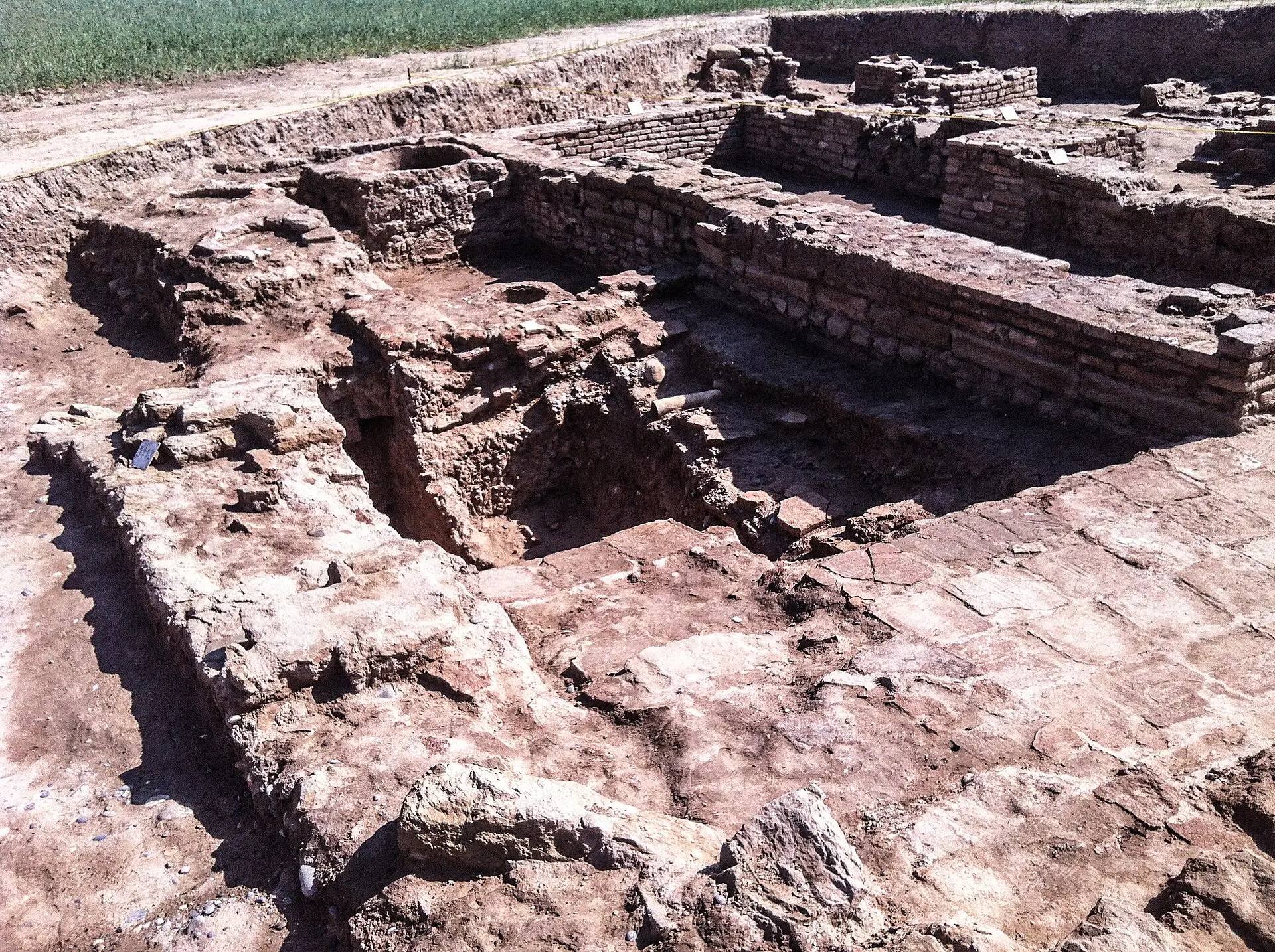
The city of Gundeshapur in Khuzestan became known as a centre of medicine and learning.

The Arab victory of 642 ended organised Sasanian resistance and opened the plateau to conquest.

652 – 1039
Iranians in the caliphate and the rebirth of Persian.
After the conquest Iran was ruled by the Umayyad and Abbasid caliphs; Khorasan launched the Abbasid Revolution, and Iranians shaped the culture and administration of the caliphate while revolts kept old traditions alive. Native Iranian dynasties — Tahirids, Saffarids, Samanids, Ziyarids and Buyids — then ruled under nominal caliphal authority, and New Persian literature and science flourished with Rudaki, Ferdowsi, Avicenna and al-Biruni.

In 747 Abu Muslim raised the Abbasid standards in Khorasan, beginning the revolution that overthrew the Umayyads.

The scholar al-Khwarizmi, of Khwarazmian origin, wrote at Baghdad the treatise on algebra from which the word comes.
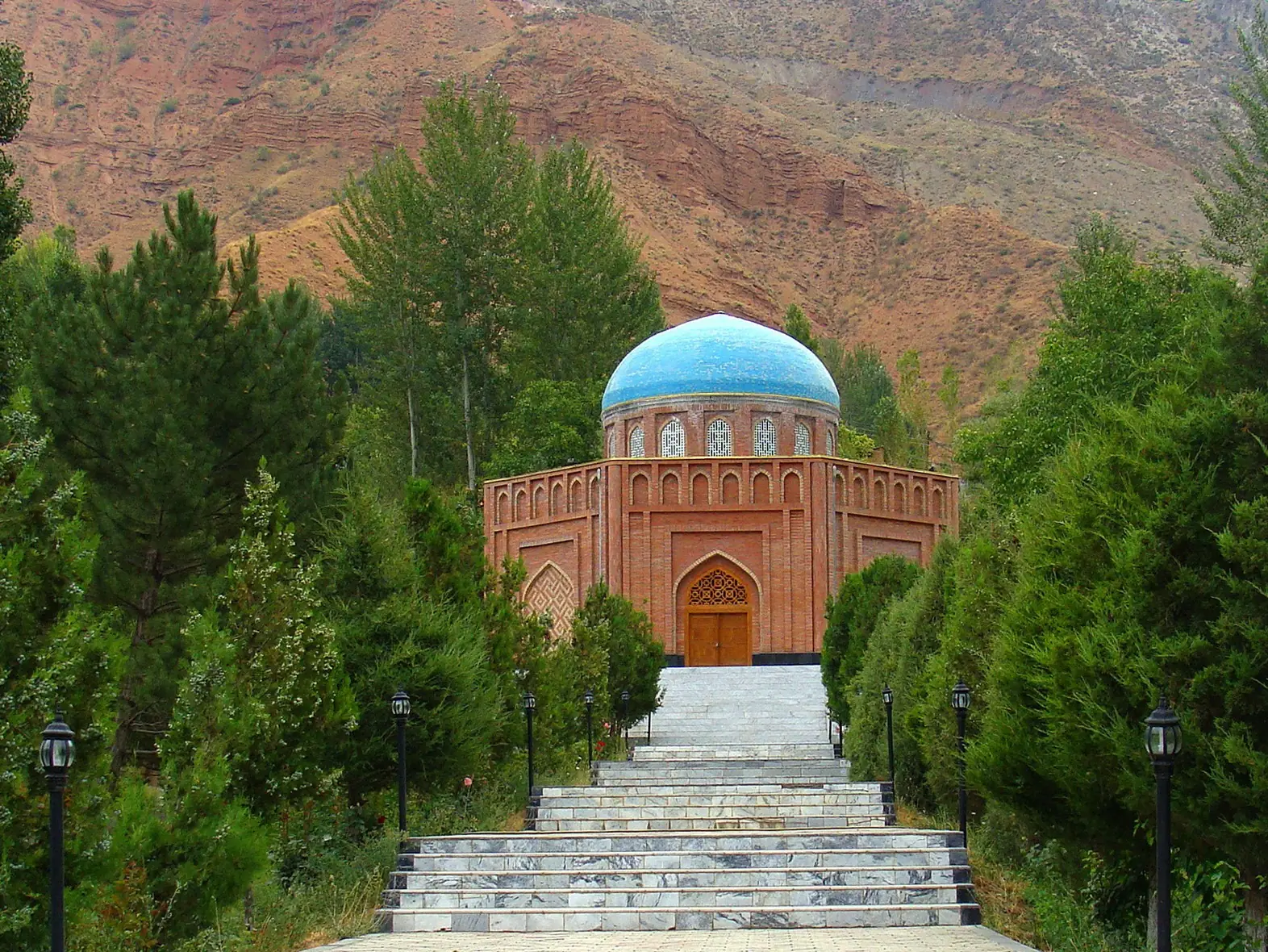
At the Samanid court in Bukhara, Rudaki is regarded as the first great poet of New Persian.

Avicenna's Canon of Medicine, completed in 1025, remained a standard text for centuries in the Islamic world and Europe.

1040 – 1335
Turkic sultans, Persian viziers and the Mongol storm.
Turkic dynasties — the Ghaznavids, the Great Seljuks and the Khwarazmshahs — ruled Iran with Persian viziers and bureaucrats, building madrasas and mosques while Persian became the language of high culture. The Mongol conquests then devastated Khorasan; Hulegu's Ilkhanate ruled from Maragheh, Tabriz and Soltaniyeh, converted to Islam and patronised astronomy and history writing.

The Seljuks defeated the Ghaznavid army in 1040 and opened Iran to centuries of Turkic rule.

Seljuk builders raised two brick domes over the congregational mosque of Isfahan in the late eleventh century.
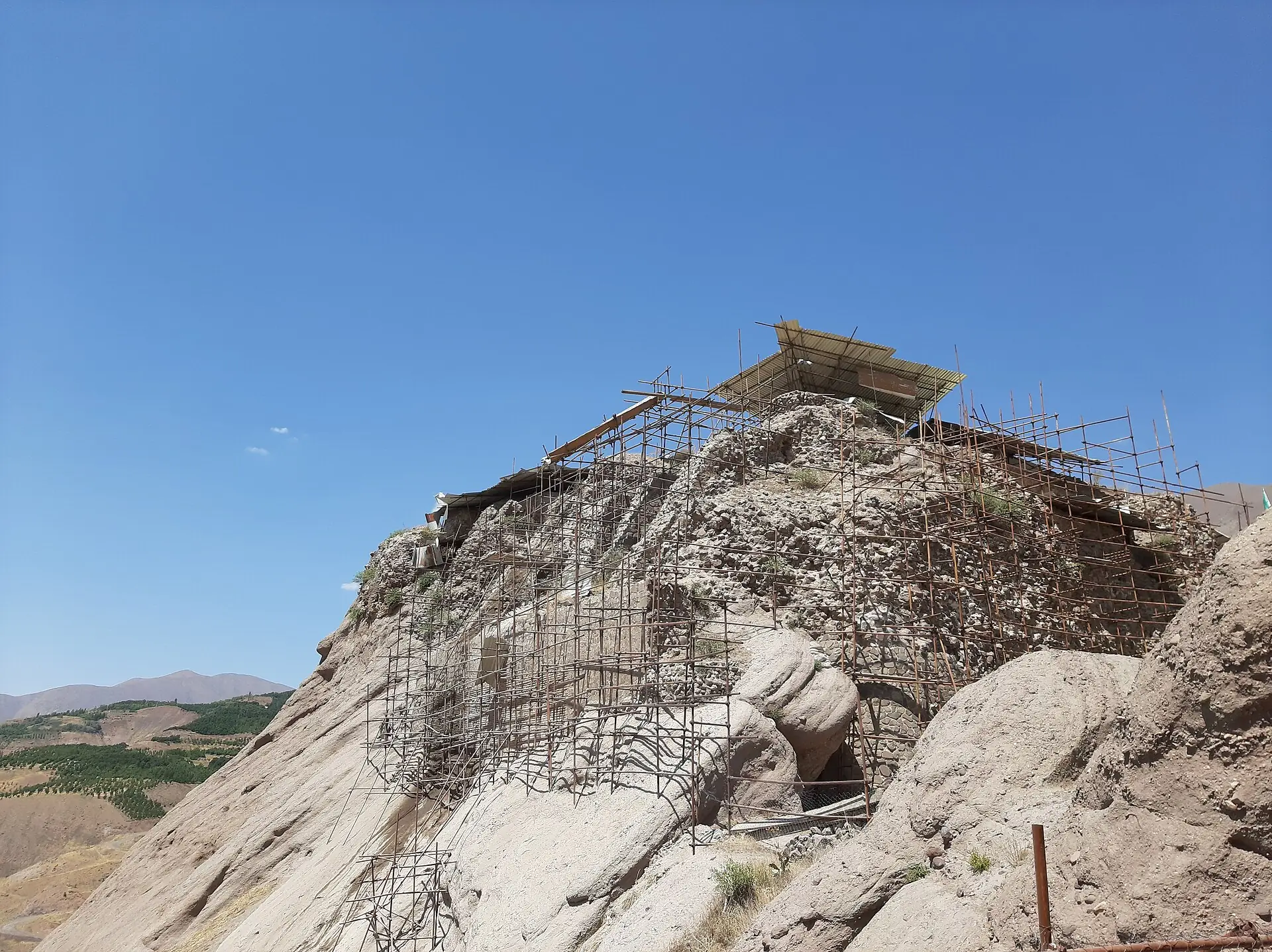
Hasan-i Sabbah seized the mountain fortress of Alamut in 1090 and founded the Nizari Ismaili state.
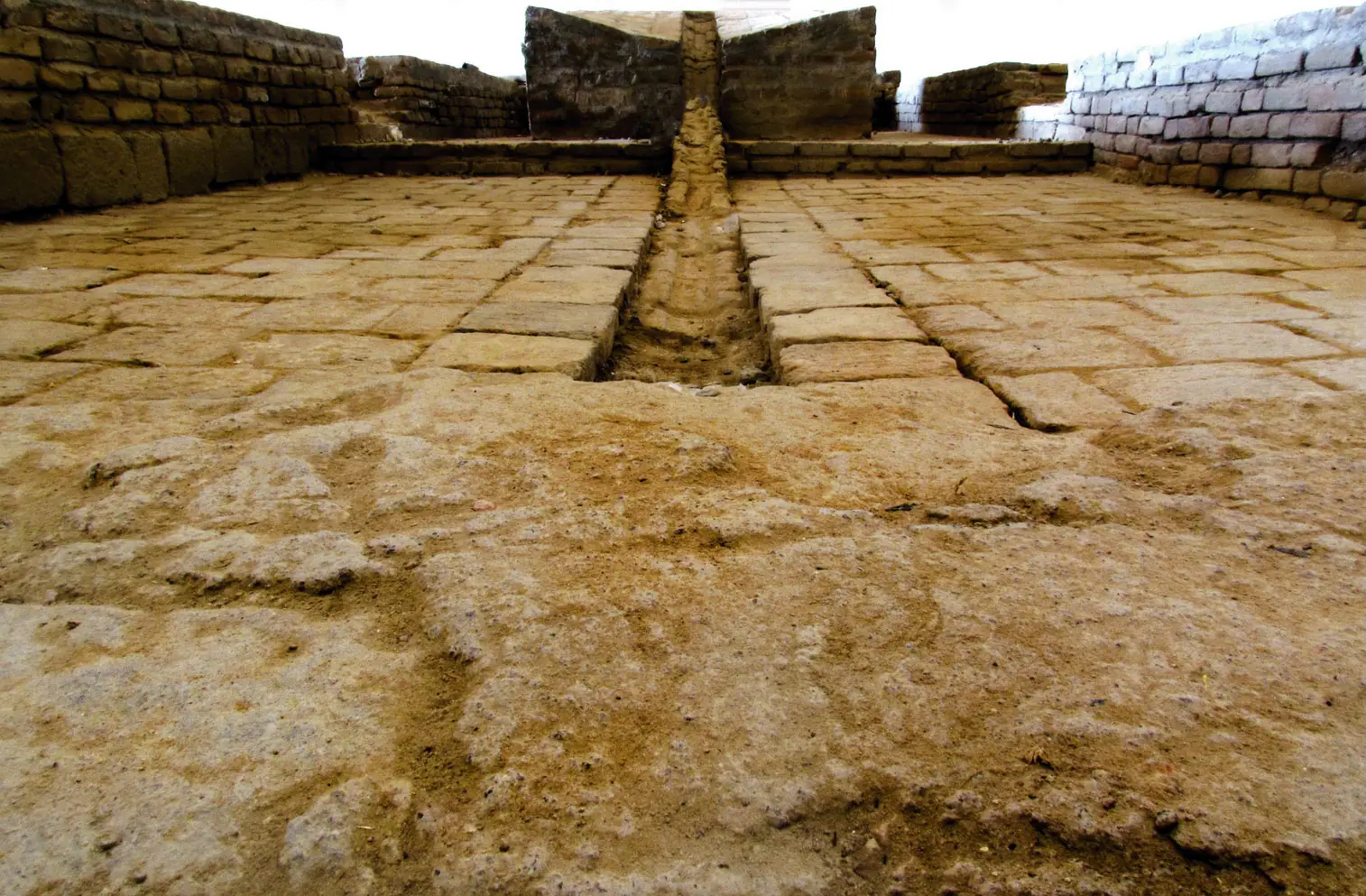
Hulegu founded an observatory at Maragheh in 1259 where the astronomer Nasir al-Din al-Tusi worked.

1336 – 1721
From Timur to Shah Abbas and the Safavid state.
After the Ilkhanate collapsed, local dynasties, Timur's conquests and the Timurid renaissance at Herat were followed by the Turkmen Qara Qoyunlu and Aq Qoyunlu confederations in the west. The Safavids then reunited Iran under Ismail I, made Twelver Shi'ism the state religion, fought the Ottomans and Uzbeks, and under Abbas I built Isfahan into one of the great cities of the world.

The conqueror who had taken Iran in the 1380s died in 1405 on his way to invade China.

In 1501 the young Ismail was crowned in Tabriz and founded the Safavid dynasty.

The Ottoman victory of 1514 ended Safavid expansion westward and set a lasting frontier zone.

The great carpet woven in 1539 for the shrine of Shaykh Safi is among the most celebrated of Persian carpets.

1722 – 1924
Conquerors, concessions and the first constitution.
The Afghan conquest of Isfahan ended Safavid power; Nader Shah drove out the Afghans and Ottomans and sacked Delhi, and Karim Khan Zand later ruled much of Iran in peace from Shiraz. The Qajars ruled from Tehran, lost the Caucasus to Russia and Herat to Britain, attempted reforms, granted foreign concessions and were challenged by the Constitutional Revolution of 1905–1911.

Nader, a soldier of humble origin, expelled the Afghans and Ottomans and was crowned shah in 1736.

Karim Khan ruled much of Iran in relative peace from Shiraz and rebuilt the city.

The treaty of 1828 ended the second war with Russia and cost Iran the khanates of Erivan and Nakhchivan.

A boycott of tobacco in 1891–1892 forced the shah to cancel a foreign monopoly.

1925 – 1978
A centralised state built on oil.
Reza Shah and Mohammad Reza Shah modernised and centralised Iran, built railways, universities and an oil economy, survived the occupation of 1941 and the oil crisis and coup of 1953, and ruled increasingly autocratically until the revolution of 1978–79.

Begun in 1927 under Reza Shah, the railway joined the Persian Gulf to the Caspian Sea.

In 1951 the Majlis nationalised the oil industry, which had been run by a British company.

A coup organised by American and British intelligence overthrew Prime Minister Mosaddegh and restored the Shah.

A referendum in 1963 approved the Shah's programme of land reform and other measures.

1979 – present
Revolution, war and an embattled republic.
The 1979 revolution created an Islamic Republic led by a Supreme Leader, which fought an eight-year war with Iraq, pursued a nuclear programme under sanctions, faced repeated protest waves and, in 2025–2026, war with Israel and the United States.

Iraq invaded in September 1980 and the war lasted until the ceasefire of August 1988.

The agreement of 2015 limited Iran's nuclear programme in return for the lifting of sanctions.

The death of Mahsa Amini in custody in 2022 set off months of protests across Iran.

On 28 February 2026 United States and Israeli strikes killed Supreme Leader Ali Khamenei.
From the Zagros Farmers to the Islamic Republic, 8000 BCE – Today
Elam and the Medes, the empires of Cyrus, the Parthians and the Sasanians, the Iranian dynasties under the caliphs, the Seljuk and Mongol conquests, Safavid Iran, Nader Shah, and the treaties that fixed Iran's borders.
If the page stays blank, the site doesn't allow embedding — use “Open in new tab”.
From the ziggurat of Chogha Zanbil to the squares of Isfahan, the history of Iran has given the world the Persian language and its poetry, one of the oldest living religious traditions, the model of the first world empire, the qanat and the Persian garden, carpets and tilework, the science of Avicenna and al-Khwarizmi, a celebrated cinema, the Shi'a tradition of Islam and a long and unfinished argument about constitution, revolution and rights.
Persian, an Indo-European language written in the Arabic script since the Islamic conquest, has been a language of literature for more than a thousand years. Rudaki and Ferdowsi, whose Shahnameh of about 1010 preserved the memory of ancient Iran, were followed by Nizami, Attar, Rumi, Saadi, Omar Khayyam and Hafez, whose poems are still recited and consulted in Iranian homes. Persian was the language of courts from Anatolia to Mughal India, and English owes to it words such as paradise, bazaar, caravan, pyjamas and checkmate. It is spoken today in Iran, Afghanistan and Tajikistan.
On the dry plateau, Iranians dug qanats, gently sloping underground channels that carry groundwater from the foothills to villages and fields, a technique that spread across Asia and North Africa and is still in use; the Persian Qanat is a World Heritage Site. The Persian garden, a walled quarter-divided enclosure with water, trees and pavilions, goes back to Pasargadae; the Greek word for such a park, paradeisos, comes from an Old Persian word, and the tradition of the chahar bagh passed to Spain, India and beyond.
Persian carpets, from the Ardabil Carpet of 1539 to the village weavings of Fars, Kerman and Kashan, are among the best known of Iranian arts, and miniature painting, calligraphy and lacquer flourished at the courts of Herat, Tabriz and Isfahan. Persian builders developed the iwan, the dome on squinches and glazed tilework, from the Seljuk mosque of Isfahan to the blue tiles of the Shah Mosque and Naqsh-e Jahan Square, a World Heritage Site. Persepolis, Pasargadae, Bisotun and Taq Kasra preserve the architecture of the ancient empires.
Zoroastrianism, associated with the prophet Zarathustra, taught the worship of Ahura Mazda and a struggle between truth and falsehood, and shaped the religious thought of ancient Iran; Parsi communities in India preserve the faith, and some scholars see its influence on later ideas of judgment and the afterlife. The Achaemenid kings built an empire that governed many peoples through satraps, a royal road and a postal system, and the Cyrus Cylinder, often cited as an early declaration of tolerance although historians read it as a conventional Babylonian royal text, remains a symbol of Persian kingship.
Iranian scholars were at the centre of the learning of the Islamic world. Al-Khwarizmi, of Khwarazmian origin, wrote the treatise on algebra and gave his name to the algorithm; al-Razi wrote on medicine, al-Biruni measured the earth and described India, and Avicenna's Canon of Medicine, completed in 1025, was a standard text for centuries in the Islamic world and in Europe. Omar Khayyam was a mathematician and astronomer who took part in the Jalali calendar reform, and is known abroad as the poet of the quatrains, and Nasir al-Din al-Tusi directed the observatory at Maragheh. In 2014 Maryam Mirzakhani became the first woman to win the Fields Medal.
Nowruz, the Persian New Year at the spring equinox, is observed in Iran and across a wide region of Central and South-West Asia, and is on UNESCO's list of intangible heritage; it is kept with the haft-sin table, house-cleaning, visits and the fire-jumping of the preceding Wednesday. Persian cuisine joins rice, herbs, saffron, pomegranates, walnuts, dried limes and lamb in dishes such as fesenjan and ghormeh sabzi, with tea and sweets at the centre of hospitality, and Yalda, the longest night of the year, is celebrated with poetry, pomegranates and watermelon.
Sadegh Hedayat's The Blind Owl (1937) is a landmark of modern Persian fiction, and Forugh Farrokhzad, Ahmad Shamlou and Simin Daneshvar renewed poetry and prose in the twentieth century. Iranian cinema, whose New Wave began with Dariush Mehrjui's The Cow (1969), won international acclaim: Abbas Kiarostami's Taste of Cherry shared the Palme d'Or at Cannes in 1997, and Asghar Farhadi's A Separation won the Academy Award for Best International Feature in 2012. Marjane Satrapi's graphic memoir Persepolis reached a wide public abroad.
The Safavids made Twelver Shi'ism the religion of the state in 1501, and Iran, with the shrines of Mashhad and Qom, remains the centre of the Shi'a world, while Sunni, Sufi and other Muslim communities, Zoroastrians, Jews, Christians and Baha'is have also lived in the country. Iranian lands lay on the Silk Road, and merchants, craftsmen and ideas travelled between Rome, India and China. Since 1979 millions of Iranians have settled abroad, and through scholarship, film and literature the diaspora and the country itself continue to debate the legacies of constitutional government, revolution and reform.
The timeline is built from the project's own research dossier and its event, ruler and map datasets, checked against English Wikipedia, Encyclopaedia Britannica, the Encyclopaedia Iranica, UNESCO and the Statistical Centre of Iran and, for 2025–2026, major news organisations. Linked articles are starting points for verification, not proof that every claim has been independently checked. Dates before about 550 BCE are approximate, the dates of Zoroaster and the extent of the Median kingdom are disputed, and the death tolls of 1988, 2019 and 2026 are given as the ranges reported. The most recent events rest on news reports that should be re-checked; historical frontiers on the map are approximate zones of control.
Every event and every ruler has its own sources. See Sources & Further Reading in each timeline entry and ruler profile.
History is connected. Explore the bigger picture.
AllHistories is an independent visual history project designed to make the past easier to understand, explore, and connect.
History is more than a collection of dates, rulers, and battles. Events rarely happen in isolation. Borders shift, civilizations influence one another, ideas spread, and decisions made centuries ago continue to shape the world today.
Through interactive timelines, historical maps, and visual storytelling, AllHistories helps uncover these connections and makes complex historical subjects more accessible and engaging.
Travel through centuries, discover turning points, and understand how historical events unfold and connect.
Explore how borders, civilizations, populations, trade routes, beliefs, and spheres of influence have changed over time.
Go beyond dates and discover the individuals, places, decisions, and circumstances behind historical developments.
Explore connections between countries, empires, civilizations, and historical themes to better understand cause and consequence.
Features vary depending on the historical subject.
AllHistories draws on historical research, published references, public archives, and available historical datasets. The information is organized and presented through interactive digital experiences.
History is not always certain or universally agreed upon. Dates, territorial boundaries, population figures, and interpretations may differ between sources. Some information is necessarily simplified or estimated for visual presentation.
The goal is to encourage curiosity and independent exploration, not to replace academic publications or specialist historical research.
When you visit AllHistories, the web server may process technical information such as your IP address, requested pages, browser details and access times to deliver pages and maintain the service.
Some pages load Google Analytics, Google Fonts, externally hosted images, maps or other third-party resources. Requests to these providers can transmit technical information, including your IP address. Contact forms may use Google reCAPTCHA to help prevent abuse. These providers apply their own privacy policies.
The website uses browser storage for preferences such as the selected theme. Country microsites also use a session cookie to support website functionality, including request protection. Analytics or other third-party services may use additional cookies or storage, depending on the page and your browser settings.
When you submit a correction or contact form, the information you provide, such as your name, email address and message, is processed to review and respond to your request. Please avoid including sensitive personal information.
You can manage cookies and site storage in your browser and control third-party requests through browser privacy settings. For privacy questions or requests concerning information you submitted, use the contact option on the microsite where you sent it.
Links to sources and other websites take you to services with their own privacy practices. Review their policies before providing personal information.
AllHistories provides historical information for general education and exploration. Its content is not professional, legal, financial or other specialist advice.
We aim to present useful, well-sourced summaries, but cannot guarantee that every date, statement, translation or interpretation is complete or accurate. Verify important claims against the cited sources and relevant scholarship. Content may be corrected or updated.
Maps are simplified historical illustrations. Borders, place names and territorial labels may vary by period and source. Their appearance does not express a position on sovereignty or present-day territorial disputes.
Images and source material may belong to their respective creators or rights holders. Consult the image credit, source page and license before reusing material. A link or credit does not grant additional reuse rights.
External links are provided for reference. AllHistories does not control the content, availability or policies of third-party websites.
To report an error or a concern about credited material, use the contact option on the relevant country microsite and identify the page, material and supporting details.