Key facts of the era
Key Events
Journey through the events, people, wars and ideas that shaped Chile, from the camp at Monte Verde to the present day.
Follow the Chinchorro mummy-makers of the Atacama coast, the Diaguita, the Mapuche and the Rapa Nui, the Inca frontier on the Maule, Valdivia and the founding of Santiago, Lautaro and the long Arauco War, the Captaincy General, O'Higgins, Carrera and the crossing of the Andes, the War of the Pacific and the nitrate boom, the Popular Front, Allende and the coup of 1973, the dictatorship, the plebiscite of 1988 and the return to democracy.
Meet the Sapa Incas, the kings of Spain, the governors of Chile and the viceroys of Peru, the juntas and Supreme Directors of independence, and every president of Chile.
From the Sapa Incas and the kings of Spain through the governors of Chile and the viceroys of Peru to the junta of 1810, Carrera, O'Higgins and every president of Chile.
A Journey Through the Ages
Chile stretches some 4,300 kilometres down the Pacific coast of South America, between the Andes and the sea. The Atacama, the driest desert on Earth, gives way to the fertile Central Valley around Santiago, the lakes, volcanoes and forests of the south and the fjords, glaciers and steppes of Patagonia and Tierra del Fuego; far out in the Pacific lies Rapa Nui, Easter Island. Hunter-gatherers camped at Monte Verde, near Puerto Montt, some 14,500 years ago, a date widely accepted though still debated; later the Chinchorro fishers of the Arica coast made the world's oldest artificial mummies, and Atacameño, Diaguita and Mapuche farmers, canoe peoples of the southern channels and Polynesian voyagers made the land their own.
Topa Inca's armies brought northern and central Chile into the Inca Empire in the 1470s, and in 1520 Magellan sailed through the strait that bears his name. Pedro de Valdivia founded Santiago in 1541, but the Mapuche resisted in the long Arauco War, killing Valdivia at Tucapel in 1553 and, after their victory at Curalaba in 1598, destroying every Spanish city south of the Biobío. For two centuries Chile was a frontier captaincy of haciendas, forts and parliaments with the Mapuche. On 18 September 1810 Santiago set up its own junta, and after the Spanish reconquest, San Martín and O'Higgins's victories at Chacabuco in 1817 and Maipú in 1818 secured independence.
Diego Portales and the Constitution of 1833 built an ordered republic that defeated the Peru-Bolivian Confederation and settled the far south. Liberal governments occupied Araucanía, won the nitrate provinces in the War of the Pacific and annexed Easter Island, until the civil war of 1891 ushered in a Parliamentary Republic. The Constitution of 1925 opened half a century of mass politics, industrialisation and reform that ended when the armed forces overthrew Salvador Allende on 11 September 1973. Augusto Pinochet's dictatorship, whose killings, disappearances and torture were documented by the Rettig and Valech reports, remade the economy until the No vote of 1988. Since 1990 democratic governments have combined growth with gradual reform; the social outburst of 2019 led to two rejected constitutional drafts, and in March 2026 José Antonio Kast took office as president.
Explore the ten ages below through selected events from the timeline.

14,500 BCE – 1470
Early hunters, mummy makers and the builders of the moai.
Monte Verde shows people in southern Chile some 14,500 years ago; the Chinchorro fishers of the Atacama coast made the world's oldest artificial mummies, and farming cultures such as El Molle and San Pedro grew in the north. Diaguita and Atacameño villages held the north, the Mapuche and related peoples the central and southern valleys, canoe peoples the fjords, and Polynesians settled Rapa Nui and raised the moai.

Fishers of the Arica coast mummified their dead from about 5000 BCE, roughly two thousand years before the Egyptians.
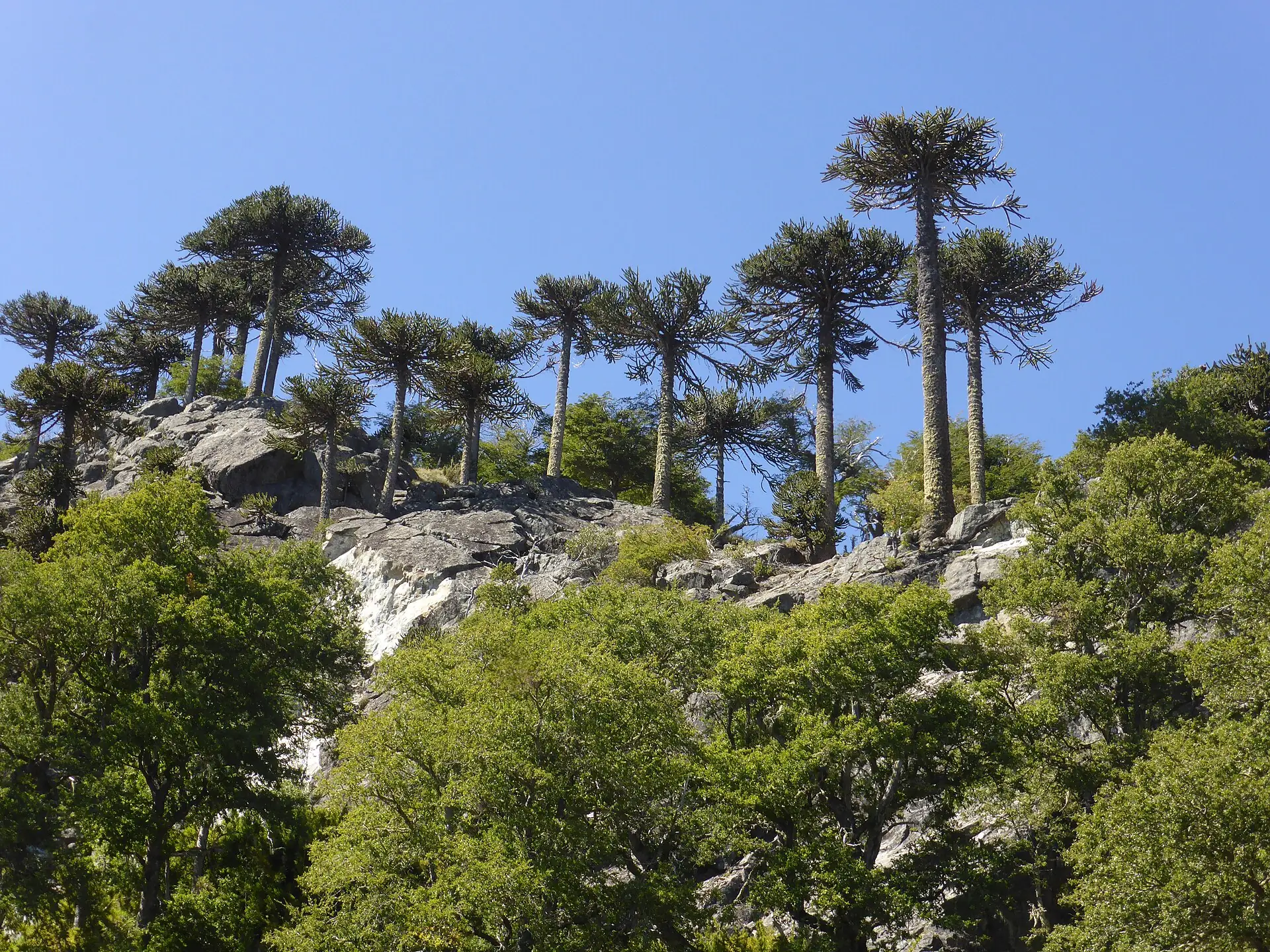
A culture identifiable as Mapuche appears in south-central Chile by about 600 to 500 BCE, though its origins are still debated.
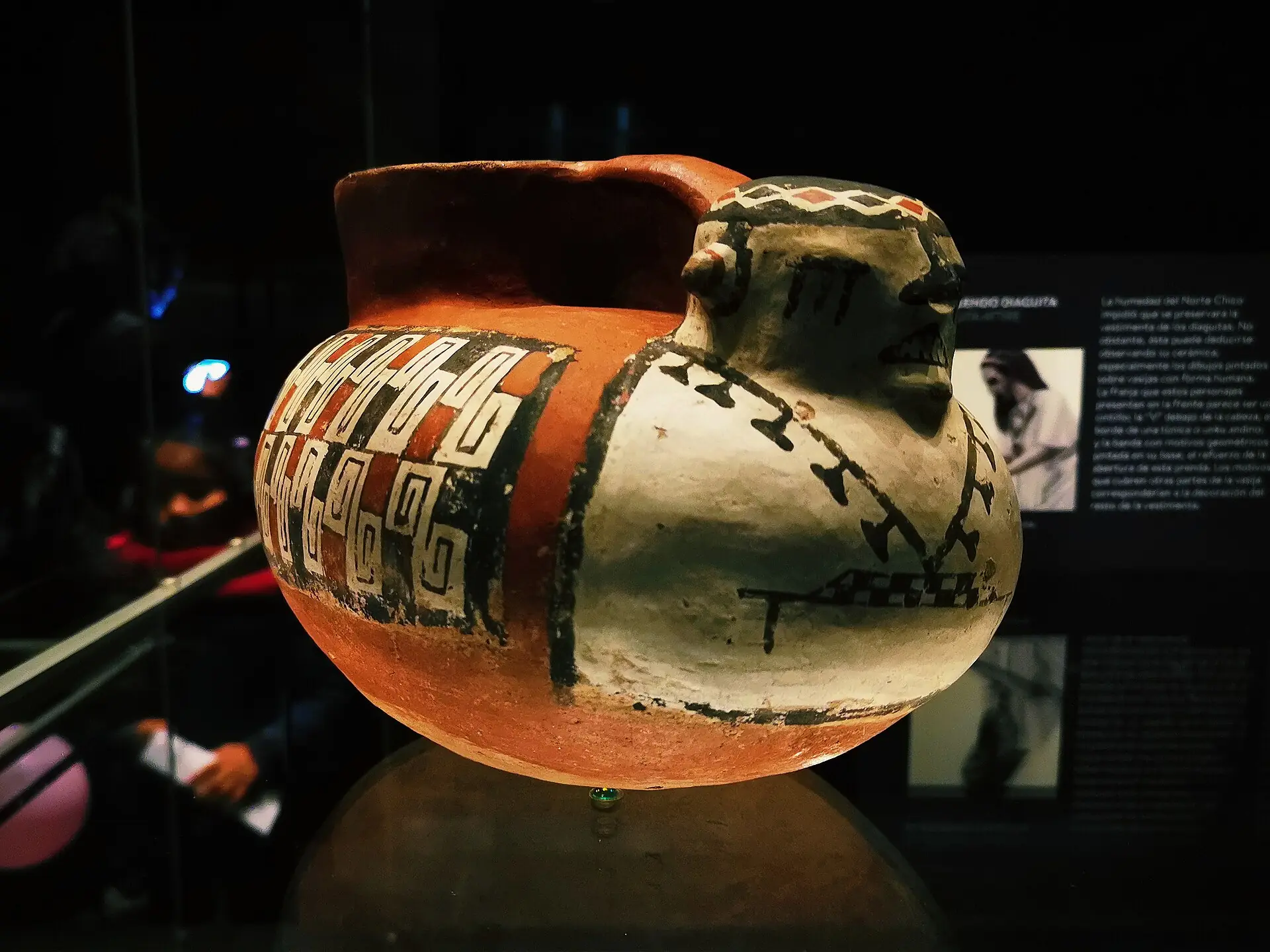
From about 1000 CE valley chiefdoms of the Norte Chico built irrigation systems and painted pottery in black, white and red.

Polynesian settlers of Easter Island carved nearly 900 moai, statues of deified ancestors, from the tuff of Rano Raraku.

1471 – 1650
Inca roads, conquistadors and the Arauco War.
Topa Inca brought northern and central Chile into Collasuyu; Magellan passed the southern strait in 1520 and Almagro's expedition (1536) opened the Spanish conquest. Pedro de Valdivia founded Santiago in 1541; the Mapuche resisted in the Arauco War, killing Valdivia (1553) and destroying the southern cities after Curalaba (1598), which fixed the frontier on the Biobío.

In the 1470s Topa Inca Yupanqui's armies brought the Atacameño, the Diaguita valleys and the Picunche farmers into the Inca Empire.

In October 1520 Magellan's fleet found the passage at the tip of the continent and sailed through to the ocean he named the Pacific.

Lautaro, once Valdivia's groom, destroyed the governor's column at Tucapel in 1553, and Valdivia was put to death.

Pelantaro's victory in 1598 led to the fall of all seven Spanish cities south of the Biobío, which became the frontier.

1651 – 1809
A frontier kingdom of haciendas, forts and parliaments.
The Captaincy General of Chile, under the Viceroyalty of Peru until 1798, was a frontier colony of haciendas and forts; parliaments with the Mapuche, Bourbon reforms and new towns shaped the eighteenth century.

At Negrete in 1726 Spanish officials and Mapuche leaders renewed Mapuche autonomy south of the Biobío and regulated trade through fairs.
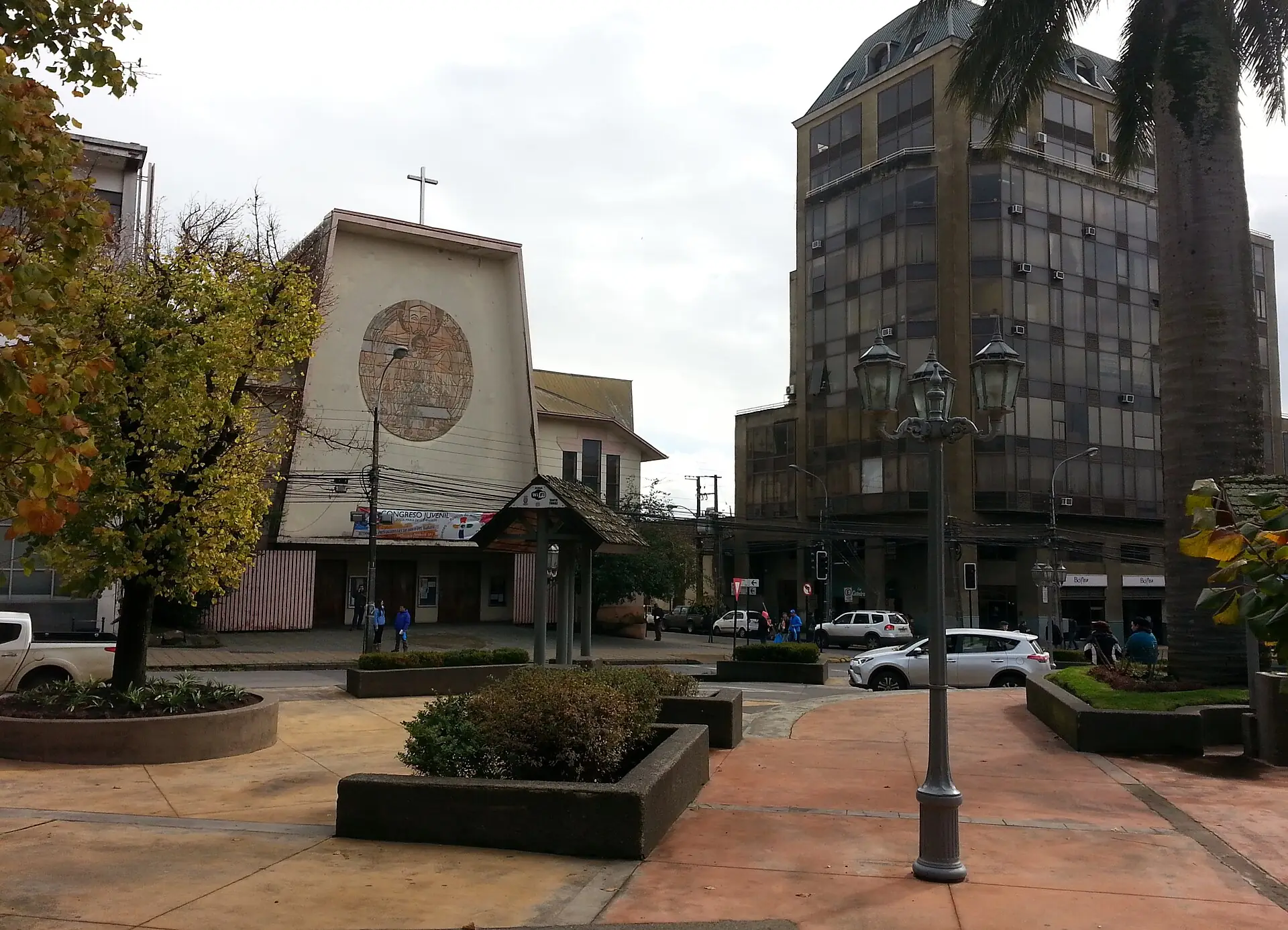
Governor Manso de Velasco gathered the scattered rural population into planned towns such as Los Ángeles, San Felipe, Talca and Copiapó.

The Italian architect Joaquín Toesca brought neoclassicism to Santiago; his mint, La Moneda, later became the seat of government.

The Irish-born governor built the road to Valparaíso, founded towns and abolished the encomienda in 1791.

1810 – 1830
From the junta of 1810 to Maipú and the first constitutions.
The junta of 18 September 1810, the Patria Vieja and the Spanish reconquest were followed by San Martín and O'Higgins's victories at Chacabuco (1817) and Maipú (1818) and a decade of constitutional experiments.

An open cabildo in Santiago elected a governing junta in 1810, the start of self-government still celebrated as the national holiday.

In January 1817 San Martín and O'Higgins led the Army of the Andes over the high passes from Mendoza, then won at Chacabuco.
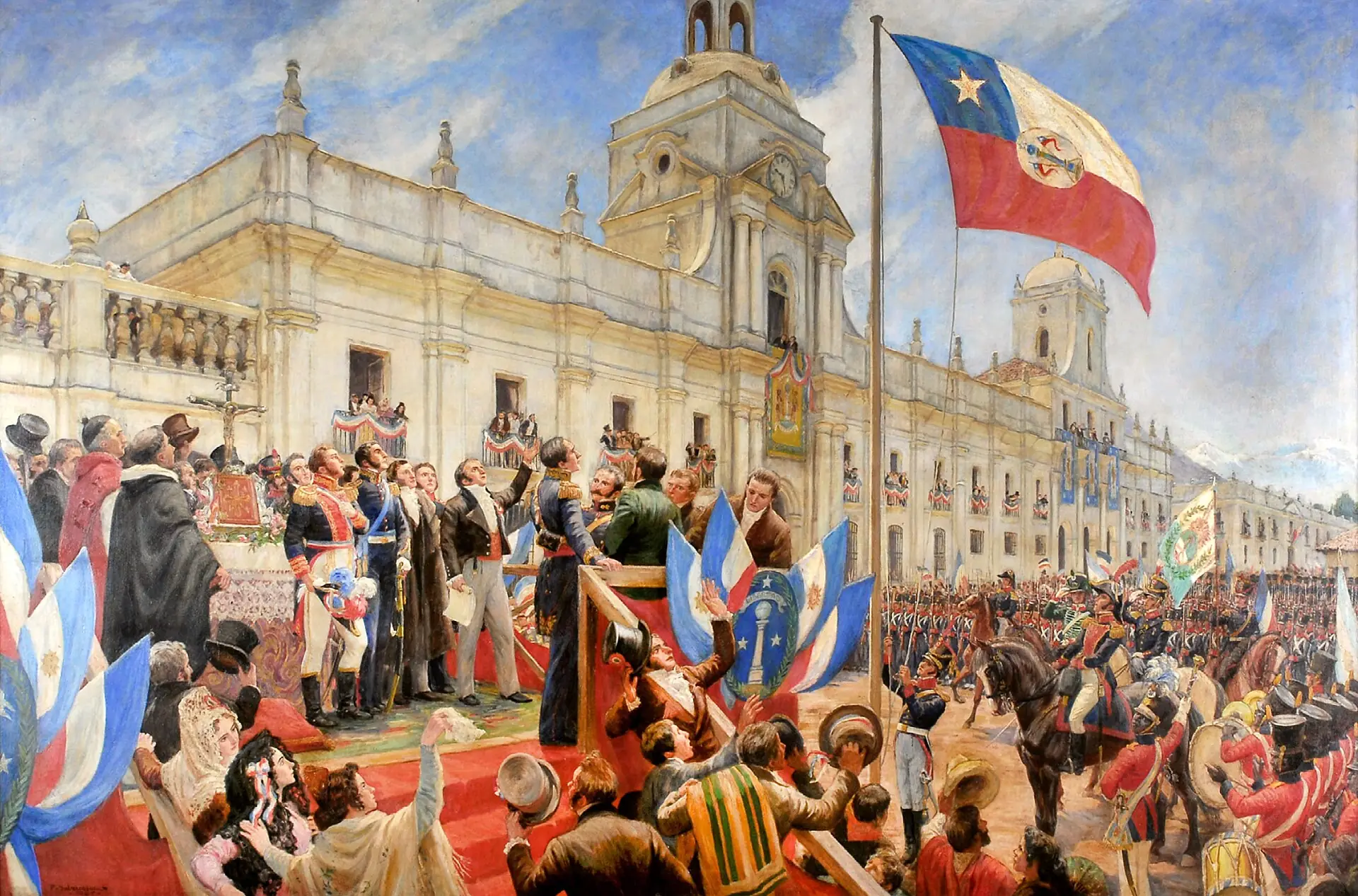
On the first anniversary of Chacabuco, 12 February 1818, Chile's independence from Spain was solemnly proclaimed and sworn.

Lord Cochrane took the forts of Valdivia in a bold night assault in 1820, and his squadron carried San Martín's army to Peru.

1831 – 1860
Portales, the Constitution of 1833 and an ordered republic.
Portales and the 1833 Constitution built an authoritarian, stable state that defeated the Peru–Bolivian Confederation and colonised the Strait of Magellan and Llanquihue.

Juan Godoy's find at Chañarcillo, near Copiapó, in 1832 began one of the richest silver booms of the Americas.

Manuel Bulnes's victory in northern Peru in 1839 destroyed the Peru-Bolivian Confederation of Andrés de Santa Cruz.
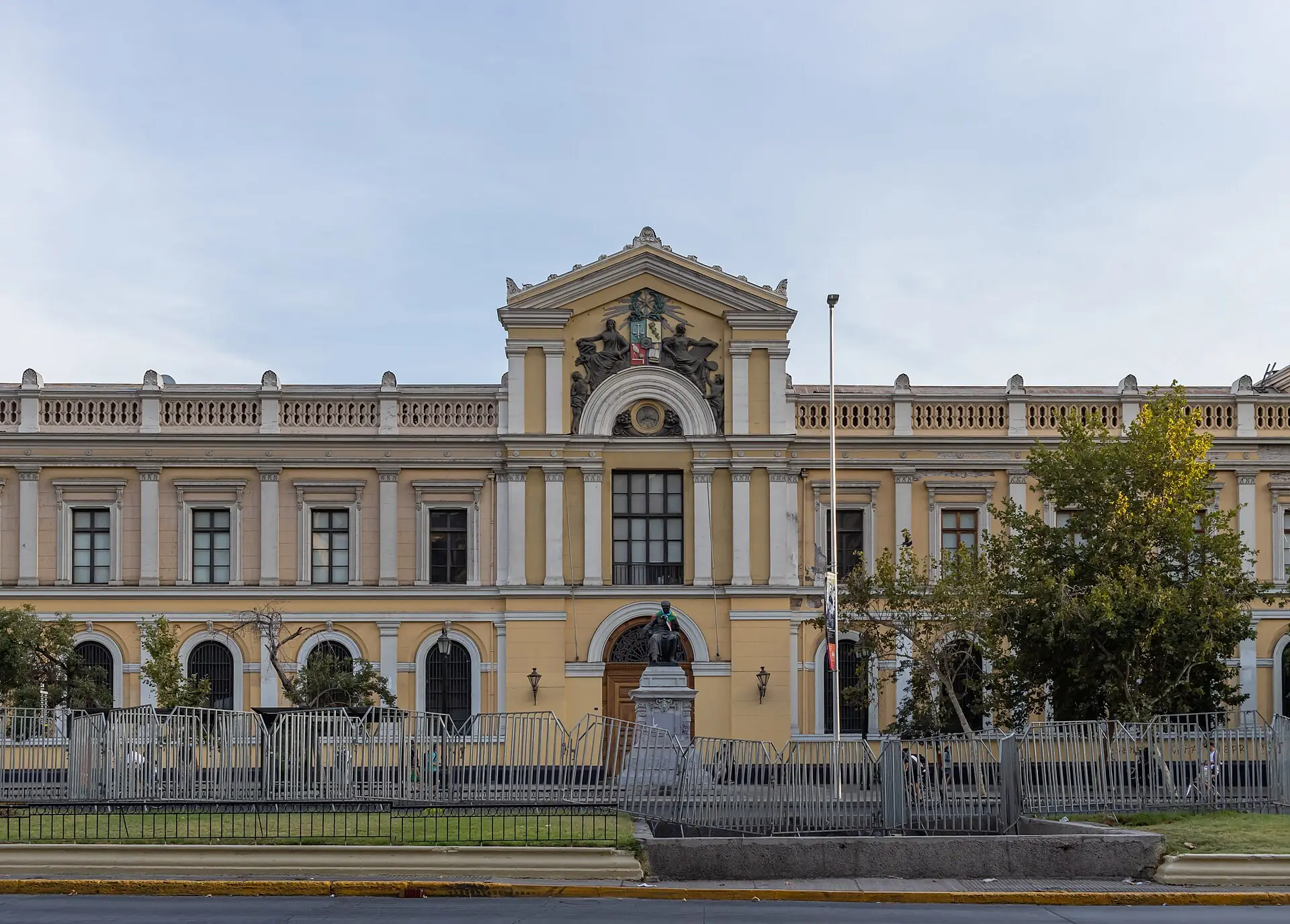
The University of Chile, founded in 1842 with Andrés Bello as its first rector, supervised public education across the country.

The schooner Ancud took possession of the Strait of Magellan in 1843, and Punta Arenas was founded five years later.

1861 – 1891
Araucanía, nitrate and the War of the Pacific.
Liberal governments occupied Araucanía, won the War of the Pacific (1879–84) and its nitrate provinces, annexed Easter Island (1888), and ended in the 1891 civil war.

From 1861 the army advanced south of the Biobío with forts and towns; by 1883 the Mapuche were confined to reservations and their lands auctioned.

The peace of 1883 gave Chile Tarapacá and its nitrate fields and placed Tacna and Arica under Chilean administration.

Policarpo Toro took possession of Rapa Nui in 1888 after an agreement with its leaders whose meaning is still disputed.

The clash between President Balmaceda and Congress became one of the bloodiest wars in Chilean history and ended with his suicide.
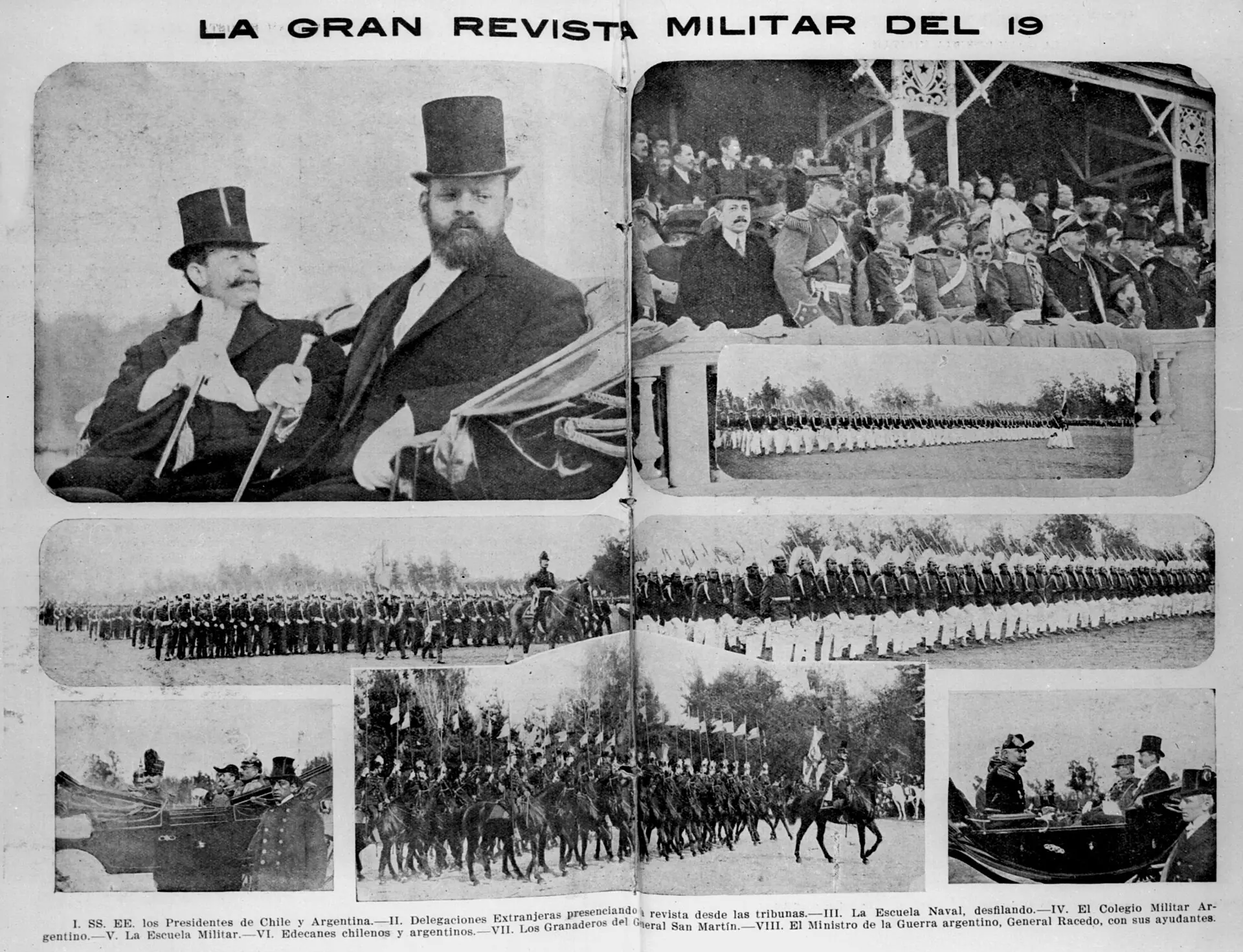
1892 – 1924
Nitrate wealth, a sovereign Congress and the social question.
Congress dominated weak presidents while nitrate wealth flowed; the 'social question' brought strikes and massacres such as Santa María de Iquique (1907).

In 1904 Bolivia recognised Chilean sovereignty over its former coast, and Chile promised to build the Arica–La Paz railway.

Troops fired on striking nitrate workers and their families in Iquique in 1907; estimates of the dead range from about 120 to more than 2,000.

American companies opened El Teniente and Chuquicamata, which grew into some of the largest copper mines in the world.

The rural schoolteacher from the Elqui Valley published Desolación, her first major collection of poems, in 1922.

1925 – 1972
Mass politics, industry, reform and the Chilean way to socialism.
The 1925 Constitution, Ibáñez, the Popular Front, industrialisation through CORFO, Frei's reforms and Allende's Popular Unity, which nationalised copper.

Created in 1939 to rebuild after the Chillán earthquake, the development corporation founded state companies in steel, oil and electricity.

Women, who had voted in municipal elections since 1935, won full voting rights in national elections in 1949.

The magnitude 9.4–9.6 earthquake of 22 May 1960, the most powerful ever recorded, sent tsunamis across the Pacific.

In 1971 Congress unanimously nationalised the large copper mines owned by the US companies Anaconda and Kennecott.

1973 – 1989
Coup, repression, free-market reform and the plebiscite.
The coup of 11 September 1973 brought Augusto Pinochet's military regime: repression, neoliberal reforms and the 1980 Constitution, until the 'No' won the 1988 plebiscite.

Manuel Contreras's secret police ran clandestine detention centres; the Rettig and Valech commissions later documented killings, disappearances and torture.

From 1975 economists trained in Chicago cut spending, privatised and opened trade, taming inflation at the cost of deep recessions.

Approved in a vote held without electoral registers, it gave Pinochet an eight-year term and, much amended, is still in force.

On 5 October 1988 about 56 per cent of voters rejected eight more years of Pinochet, opening the way to free elections.

1990 – present
Transition, growth, protest and the search for a new constitution.
Concertación and later governments combined growth with gradual reform; the 2019 social outburst led to two rejected constitutional drafts, and José Antonio Kast took office in 2026.
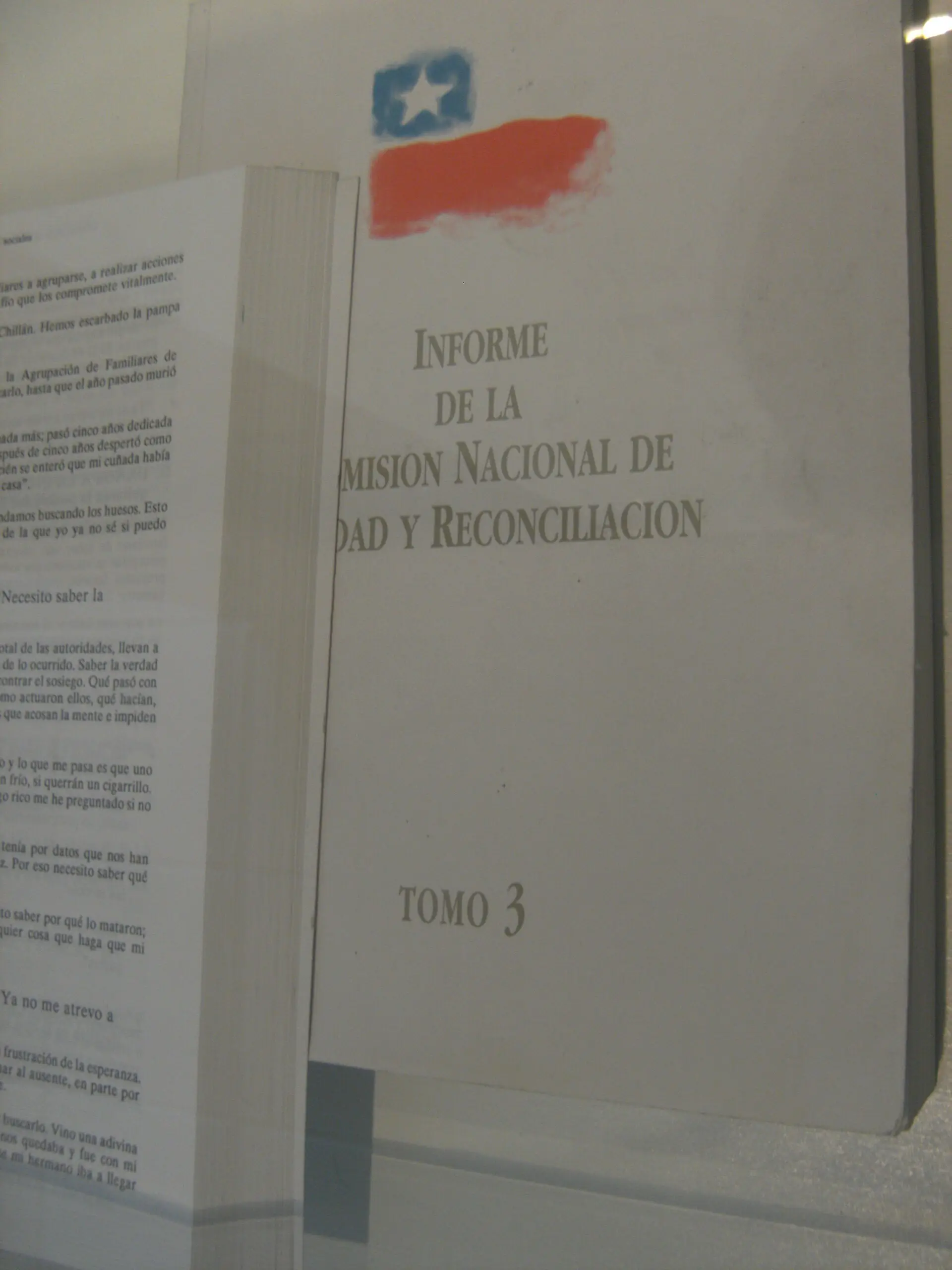
The Rettig Report of 1991 documented more than two thousand people killed or disappeared for political reasons under the dictatorship.

After 69 days trapped 700 metres underground, all 33 miners of the San José mine were lifted out in 2010 as the world watched.

Protests over a metro fare rise in 2019 grew into a national movement against inequality and opened a constitutional process.

José Antonio Kast won the runoff of December 2025 with about 58 per cent and took office in March 2026.
From the Chinchorro to Today, c. 3000 BCE – 2026
From the Chinchorro fishers, the peoples of the northern oases and the Mapuche to the Inca frontier and Valdivia's conquest, the Mapuche frontier on the Biobío, the Captaincy General and Cuyo, independence, the occupation of Araucanía, the War of the Pacific and the Patagonian boundaries. Follow who controlled each part of the land that is now Chile, and how its frontiers changed.
If the page stays blank, the site doesn't allow embedding — use “Open in new tab”.
From the hunters of Monte Verde to the democracy of today, the history of Chile has given the world the oldest artificial mummies of the Chinchorro and the moai of Rapa Nui, the long resistance and living culture of the Mapuche, two Nobel Prize-winning poets in Gabriela Mistral and Pablo Neruda, the songs of Violeta Parra and Víctor Jara, the silver, nitrate, copper and lithium of the north, the vineyards of the Central Valley, the great telescopes of the Atacama, a hard-won culture of memory and human rights, and some of the most dramatic landscapes on Earth, from the driest desert to the glaciers of Patagonia and the ice of Antarctica.
Chile entered world literature through an epic: Alonso de Ercilla's La Araucana (1569), which portrayed Lautaro and Caupolicán with admiration, answered by Arauco domado (1596) of Pedro de Oña, the first known poet born in Chile. Gabriela Mistral, born Lucila Godoy Alcayaga in the Elqui Valley and a rural schoolteacher for years, published Desolación in 1922 and in 1945 became the first Latin American writer to win the Nobel Prize in Literature. Pablo Neruda, born in Parral, won fame at nineteen with Twenty Love Poems and a Song of Despair (1924), retold the history of the Americas in Canto General (1950) and received the Nobel Prize in 1971. Nicanor Parra's colloquial, ironic "antipoetry" earned him the Cervantes Prize in 2011.
The Jesuit Alonso de Ovalle made Chile known in Europe with his Histórica relación del Reyno de Chile (1646), and the exiled Juan Ignacio Molina wrote its first systematic natural history (1782). After independence the scholar Andrés Bello, first rector of the University of Chile, gave the country its Civil Code of 1855, a model for much of Latin America. Alberto Blest Gana's Martín Rivas (1862) is still read in every school; Isabel Allende's The House of the Spirits (1982) became an international bestseller, and Roberto Bolaño's posthumous 2666 (2004) is hailed as one of the great novels of the century. In 2018 Sebastián Lelio's A Fantastic Woman, starring Daniela Vega, became the first Chilean film to win the Oscar for best foreign-language film.
The Mapuche, whose culture can be traced in south-central Chile to about 500 BCE and whose language, Mapudungun, is generally treated as an isolate, halted the Inca near the Maule and resisted Spain for three centuries. Leaders such as Lautaro, Caupolicán and Pelantaro became symbols of resistance for Chileans of every background, and from Quillín in 1641 the Spanish crown negotiated with them in formal parliaments. The Chilean occupation of Araucanía between 1861 and 1883 confined them to reservations and cost them most of their ancestral land. The Indigenous Law of 1993 recognised the Mapuche and other Indigenous peoples, and in 2021 the Mapuche linguist Elisa Loncón presided over the Constitutional Convention, but land claims and the conflict in Araucanía remain among the most contested issues in Chilean life.
Polynesian voyagers settled Rapa Nui, one of the most isolated inhabited places on Earth, probably around 1200, though the date is debated. Its clans carved nearly 900 moai, statues of deified ancestors, from the volcanic tuff of Rano Raraku and raised them on stone platforms such as Ahu Tongariki, which carries fifteen. The Dutch navigator Roggeveen named it Easter Island in 1722, and Chile annexed it in 1888 under an agreement with its leaders whose meaning is still disputed. Leased to a sheep company and ruled by the navy, the islanders rose with Angata in 1914 and won full citizenship with the Easter Law of 1966. Today the Rapa Nui language, dances and the moai make the island one of the world's most famous archaeological landscapes.
Mining has shaped Chile since the Inca worked the gold of Marga Marga. Juan Godoy's discovery of silver at Chañarcillo in 1832 paid for the first railway, and after the War of the Pacific the nitrate fields of Tarapacá and Antofagasta made the state rich, until synthetic nitrogen ruined the industry after the First World War; the abandoned nitrate works of Humberstone and Santa Laura and the copper town of Sewell are World Heritage Sites. American companies opened El Teniente, the world's largest underground copper mine, and the vast open pit of Chuquicamata. Copper was Chileanized in 1966 and nationalised by a unanimous Congress in 1971, laying the foundations of Codelco. Today Chile is also a lithium power: a national strategy of 2023 led Codelco and SQM to form NovaAndino Litio in the Salar de Atacama in 2025.
The cueca, a courtship dance of handkerchiefs, guitar and harp, is Chile's national dance and fills the fondas every September around the national holiday of the 18th. In the 1950s and 1960s Violeta Parra travelled the country collecting thousands of traditional songs, exhibited her tapestries at the Louvre in 1964 and wrote Gracias a la vida, released in 1966 shortly before her death. Her work inspired the Nueva Canción Chilena, the New Song movement of Víctor Jara, whose Preguntas por Puerto Montt denounced the killings of 1969 and who was murdered after the coup in the stadium that now bears his name. Under the dictatorship many musicians went into exile, and in 1988 the jingle Chile, la alegría ya viene became the anthem of the No campaign.
During the dictatorship the Catholic Church's Vicariate of Solidarity gave legal aid to victims, recorded testimony and supported the families of the disappeared, whose search led in 1978 to the bodies hidden in the lime kilns of Lonquén. After 1990 the Rettig Report documented more than two thousand people killed or disappeared for political reasons, and the Valech Report of 2004 recognised about 28,000 victims of political imprisonment and torture. Pinochet's arrest in London in 1998, when the House of Lords ruled that a former head of state had no immunity for torture, became a landmark of international law, and Chilean courts later convicted DINA chief Manuel Contreras and the killers of Víctor Jara. The Museum of Memory and Human Rights, opened in Santiago in 2010, keeps the record for future generations.
Chilean astronomy began in 1852, when the government bought the instruments of a United States naval expedition that had observed the southern sky from Santa Lucía Hill and founded the National Astronomical Observatory. The dry, stable air and dark skies of the north later drew the world's great observatories. The European Southern Observatory's Very Large Telescope saw first light on Cerro Paranal in 1998, and in 2013 ALMA, an international partnership with Chile of 66 antennas working as a single radio telescope on the Chajnantor plateau at about 5,000 metres, was inaugurated to study the birth of stars and planets. Long before them, the Atacameño and the llama caravans crossed the same desert, leaving geoglyphs such as the 119-metre Atacama Giant on its hillsides.
Spanish conquistadors and missionaries planted the first vines in Chile around 1554, and the País grape soon supplied wine for Mass and the table across the Central Valley; Drake found a ship laden with Chilean wine when he raided Valparaíso in 1578. In the nineteenth century landowners brought in French varieties, and Chile became one of the New World's leading wine exporters, famous for its Cabernet Sauvignon and for Carmenère, a Bordeaux grape rediscovered in its vineyards in the 1990s. The fertile valley between the Andes and the coastal range, the heart of the colonial hacienda and of Chilean rural tradition, also gave Europe the Chilean strawberry, which the French engineer Frézier carried home in 1714.
Chile's landscapes have fascinated travellers and scientists. Maria Graham described the uplift of the coast after the earthquake of 1822, and Charles Darwin, who witnessed the ruins of Concepción in 1835, used Chile's earthquakes to understand how mountains rise; the Valdivia earthquake of 1960, the most powerful ever recorded, advanced the science of subduction zones. Alexander Selkirk's years alone on Juan Fernández inspired the story of Robinson Crusoe, and the caves of Última Esperanza preserved the remains of the giant mylodon. In 1916 the Chilean tug Yelcho rescued Shackleton's men from Elephant Island, in 1940 Chile claimed a sector of Antarctica, and in 1948 González Videla became the first head of state to visit the frozen continent.
Only two years after the great earthquake, Chile hosted the 1962 FIFA World Cup and finished third, its best result ever, though its violent match against Italy went down in history as the Battle of Santiago. Half a century later the "golden generation" of Alexis Sánchez, Arturo Vidal and Claudio Bravo won the Copa América at home in 2015 and again in the United States in 2016, both times beating Lionel Messi's Argentina on penalties. At the Athens Olympics of 2004 the tennis players Nicolás Massú and Fernando González won the doubles, and Massú the singles, giving Chile its first Olympic gold medals, and in 2025 the country hosted the FIFA Under-20 World Cup.
The timeline is built from the project's own research dossier and its event, ruler and map datasets, checked against English and Spanish Wikipedia, Encyclopaedia Britannica, WorldStatesmen, Memoria Chilena of the National Library of Chile, the Library of the National Congress (BCN), census data from the National Institute of Statistics (INE), including the 2024 census, and, for 2025–2026, major news organisations such as AP, Reuters, the BBC, The Guardian and El País. Linked articles are starting points for verification, not proof that every claim has been independently checked. Dates before the Spanish conquest are approximate and given as circa; the age of Monte Verde is widely accepted but debated, its older layer is contested, and the settlement date of Rapa Nui is uncertain. The lists of colonial governors and the heads of state of 1810–1831 and 1891–1932 differ between sources, and such records are marked as disputed. The human-rights record of the military dictatorship follows the reports of the Rettig and Valech commissions, and death tolls such as those of Santa María de Iquique, the Chillán earthquake and the 1960 earthquake are given as ranges of estimates. The most recent events rest on news reports that should be re-checked; pre-Hispanic cultural areas and historical frontiers on the map are approximate, the annexed northern provinces are shown by modern regions, and the Chilean Antarctic Territory is shown as a claim.
Every event and every ruler has its own sources. See Sources & Further Reading in each timeline entry and ruler profile.
History is connected. Explore the bigger picture.
AllHistories is an independent visual history project designed to make the past easier to understand, explore, and connect.
History is more than a collection of dates, rulers, and battles. Events rarely happen in isolation. Borders shift, civilizations influence one another, ideas spread, and decisions made centuries ago continue to shape the world today.
Through interactive timelines, historical maps, and visual storytelling, AllHistories helps uncover these connections and makes complex historical subjects more accessible and engaging.
Travel through centuries, discover turning points, and understand how historical events unfold and connect.
Explore how borders, civilizations, populations, trade routes, beliefs, and spheres of influence have changed over time.
Go beyond dates and discover the individuals, places, decisions, and circumstances behind historical developments.
Explore connections between countries, empires, civilizations, and historical themes to better understand cause and consequence.
Features vary depending on the historical subject.
AllHistories draws on historical research, published references, public archives, and available historical datasets. The information is organized and presented through interactive digital experiences.
History is not always certain or universally agreed upon. Dates, territorial boundaries, population figures, and interpretations may differ between sources. Some information is necessarily simplified or estimated for visual presentation.
The goal is to encourage curiosity and independent exploration, not to replace academic publications or specialist historical research.
When you visit AllHistories, the web server may process technical information such as your IP address, requested pages, browser details and access times to deliver pages and maintain the service.
Some pages load Google Analytics, Google Fonts, externally hosted images, maps or other third-party resources. Requests to these providers can transmit technical information, including your IP address. Contact forms may use Google reCAPTCHA to help prevent abuse. These providers apply their own privacy policies.
The website uses browser storage for preferences such as the selected theme. Country microsites also use a session cookie to support website functionality, including request protection. Analytics or other third-party services may use additional cookies or storage, depending on the page and your browser settings.
When you submit a correction or contact form, the information you provide, such as your name, email address and message, is processed to review and respond to your request. Please avoid including sensitive personal information.
You can manage cookies and site storage in your browser and control third-party requests through browser privacy settings. For privacy questions or requests concerning information you submitted, use the contact option on the microsite where you sent it.
Links to sources and other websites take you to services with their own privacy practices. Review their policies before providing personal information.
AllHistories provides historical information for general education and exploration. Its content is not professional, legal, financial or other specialist advice.
We aim to present useful, well-sourced summaries, but cannot guarantee that every date, statement, translation or interpretation is complete or accurate. Verify important claims against the cited sources and relevant scholarship. Content may be corrected or updated.
Maps are simplified historical illustrations. Borders, place names and territorial labels may vary by period and source. Their appearance does not express a position on sovereignty or present-day territorial disputes.
Images and source material may belong to their respective creators or rights holders. Consult the image credit, source page and license before reusing material. A link or credit does not grant additional reuse rights.
External links are provided for reference. AllHistories does not control the content, availability or policies of third-party websites.
To report an error or a concern about credited material, use the contact option on the relevant country microsite and identify the page, material and supporting details.