Key facts of the era
Key Events
Journey through the events, people, wars and ideas that shaped Brazil, from the first hunters of the Ice Age to the present day.
Follow the Indigenous peoples of the coast and the Amazon, Cabral's landing and the captaincies, the sugar colony built on slavery, Dutch Brazil and Palmares, the bandeirantes and the gold of Minas Gerais, the Portuguese court in Rio and independence, the Empire of Pedro I and Pedro II, abolition, the Republic, Vargas, Brasília, the military dictatorship and the democracy restored in 1985.
Meet the kings of Portugal, the governors-general and viceroys, the emperors and regents, every president of Brazil and the presidents of the Council of Ministers.
From the kings of Portugal and the governors-general and viceroys of colonial Brazil through Emperors Pedro I and Pedro II and the regents of the Empire to the presidents of the Republic and the presidents of the Council of Ministers.
A Journey Through the Ages
Brazil covers almost half of South America, from the Guiana Highlands and the Amazon basin to the dry sertão of the northeast, the savannas of the central plateau, the Atlantic forest of the coast and the grasslands of Rio Grande do Sul. For thousands of years its lands belonged to hundreds of Indigenous peoples, from the hunters who painted the rock shelters of Serra da Capivara to the mound builders of Marajó and the Tupi and Guarani farmers of the coast.
Pedro Álvares Cabral claimed the land for Portugal in 1500. Sugar plantations worked by enslaved Africans made the colony rich, the Dutch held the northeast for a generation, and the gold of Minas Gerais drew settlers deep into the interior. In 1808 the Portuguese court fled Napoleon to Rio de Janeiro, and in 1822 Prince Pedro declared independence and became emperor.
The Empire lasted until 1889, a year after Brazil became the last country in the Americas to abolish slavery. The republic that followed passed through coffee oligarchies, the long rule of Getúlio Vargas, the building of Brasília and a military dictatorship from 1964 to 1985. Since the Constitution of 1988, democracy has survived hyperinflation, two presidential impeachments and the attack on the institutions in Brasília on 8 January 2023.
Explore the ten ages below through selected events from the timeline.

50,000 BCE – 1499
Thousands of years before the Portuguese.
For thousands of years before 1500 the lands of Brazil were home to hunter-gatherers who painted the rock shelters of the Serra da Capivara, to the shell-mound builders of the Atlantic coast and to the farming societies of the Amazon, where the Marajoara made elaborate painted pottery and Indigenous peoples enriched the soil into terra preta. By 1500 Tupi and Guarani peoples held most of the coast, and Jê, Arawak, Carib and many other peoples lived inland; estimates of their number range from one to several million.

The skeleton of Luzia, found at Lagoa Santa, is about 11,500 years old.

Fishing peoples of the southern coast piled up sambaquis of shells, some up to 30 metres high.

Peoples of Acre dug great geometric enclosures, revealed only by modern deforestation.

Tupi-Guarani farmers spread along the rivers and the Atlantic coast in the first millennium CE.

1500 – 1548
A Portuguese claim on the road to India.
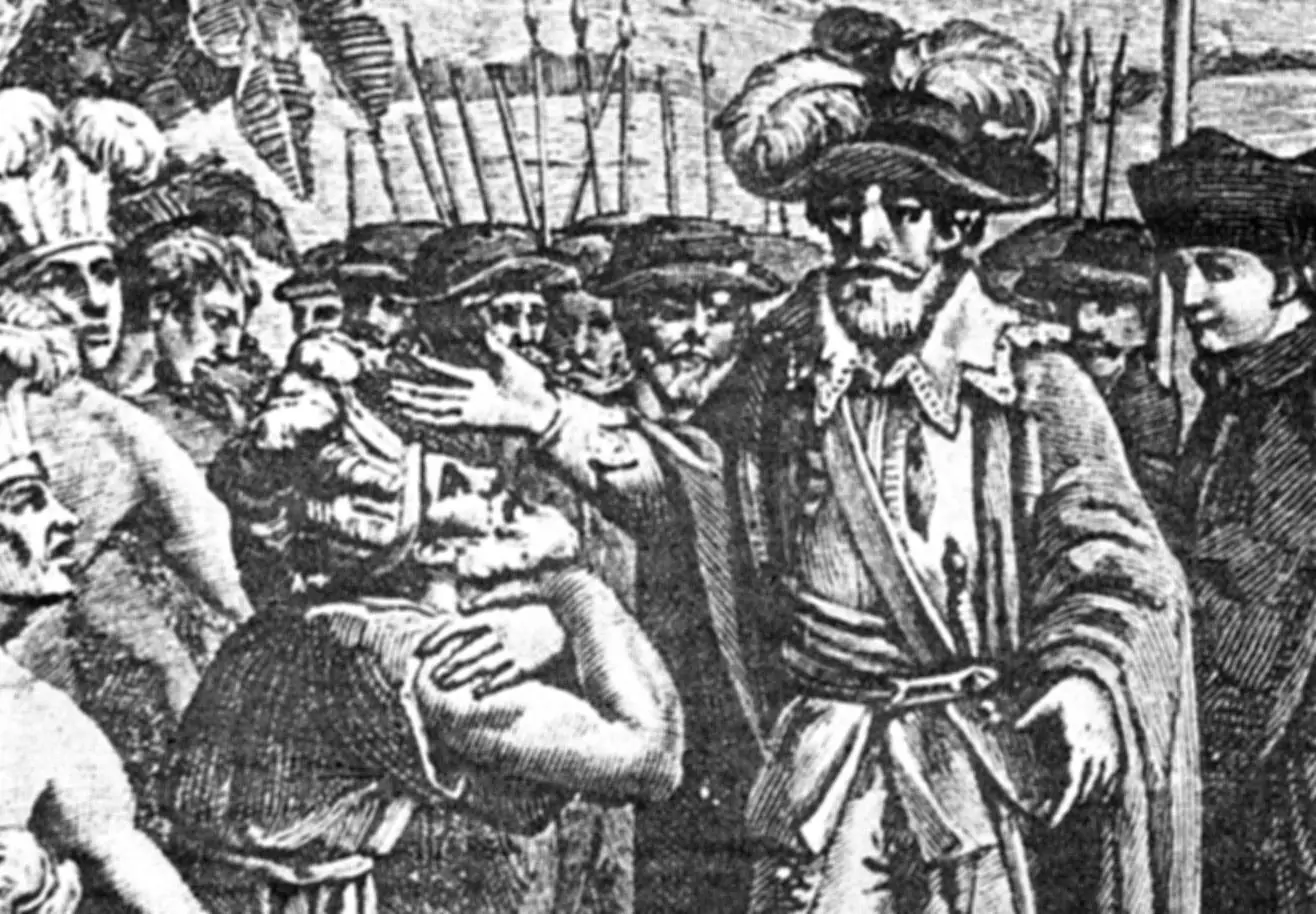
Pedro Álvares Cabral's fleet landed at Porto Seguro on 22 April 1500 and claimed the land for Portugal under the Treaty of Tordesillas. For three decades the Portuguese traded brazilwood with coastal Tupi peoples from trading posts, while French ships competed for the same trade. To secure the coast, João III divided it into hereditary captaincies in the 1530s; only São Vicente and Pernambuco, where the first sugar mills rose, prospered.

Pero Vaz de Caminha described the land and its people in a letter to King Manuel I.

The crown leased the trade in the red dyewood that gave the country its name.

Martim Afonso de Sousa founded São Vicente, the first permanent Portuguese town, in 1532.

João III divided the coast into hereditary captaincies; only Pernambuco and São Vicente prospered.
1549 – 1694
Sugar, slavery and rival empires.
Royal government arrived with Tomé de Sousa, who founded Salvador in 1549, and with the Jesuits, who gathered Indigenous people into missions. Sugar plantations worked by enslaved Africans made the northeast the world's leading sugar producer. The French were driven from Rio de Janeiro and São Luís, and the Dutch West India Company held Pernambuco from 1630 until 1654, while the quilombo of Palmares resisted colonial armies for most of the century.

Manuel da Nóbrega and the first Jesuits arrived with the governor-general in 1549.

By the 1580s Brazil was the world's leading sugar producer, its mills worked by enslaved Africans.
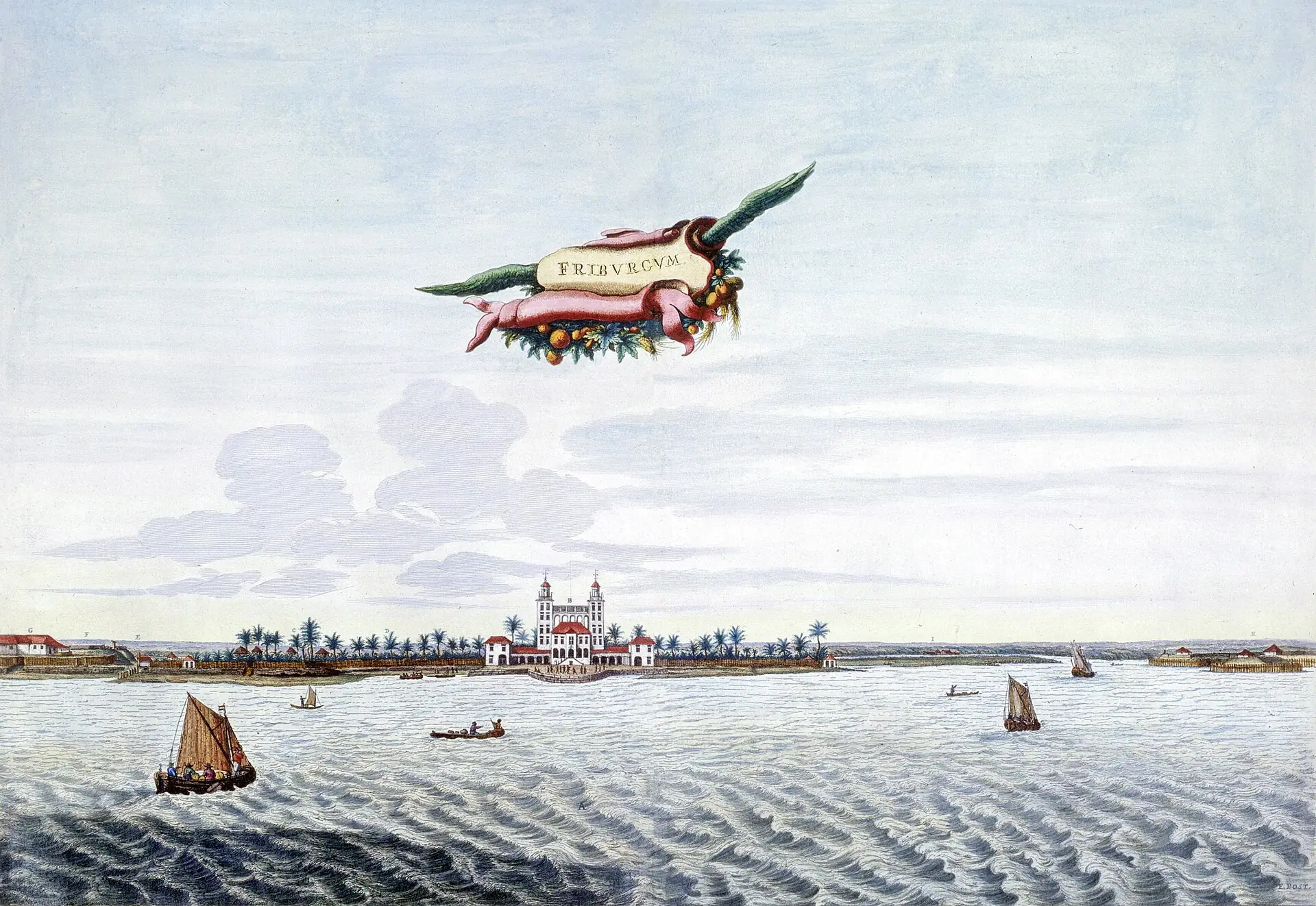
Johan Maurits of Nassau governed the Dutch colony from Recife between 1637 and 1644.
The great quilombo of escaped slaves resisted colonial armies for most of the century.
1695 – 1807
Gold, the interior and new frontiers.
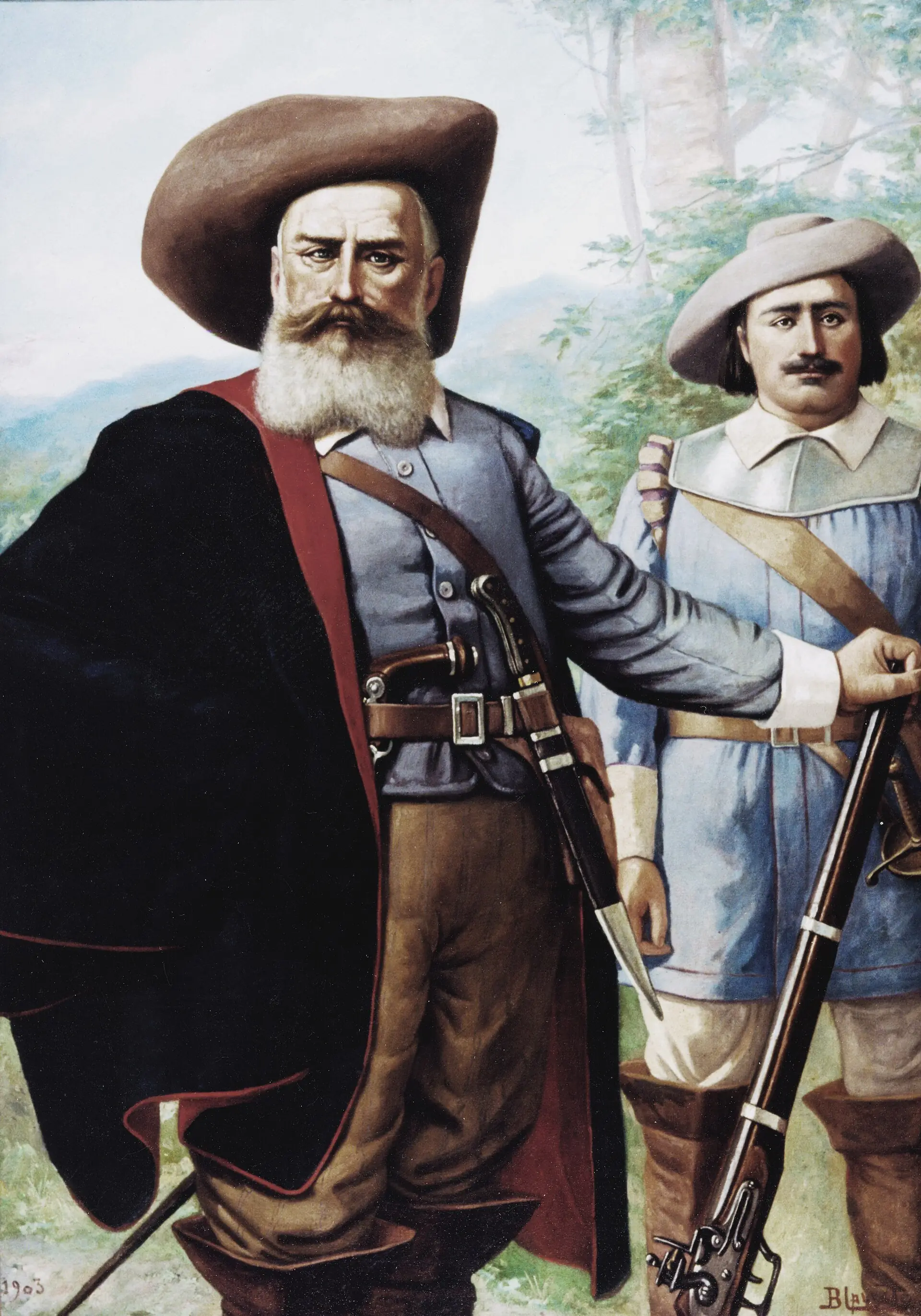
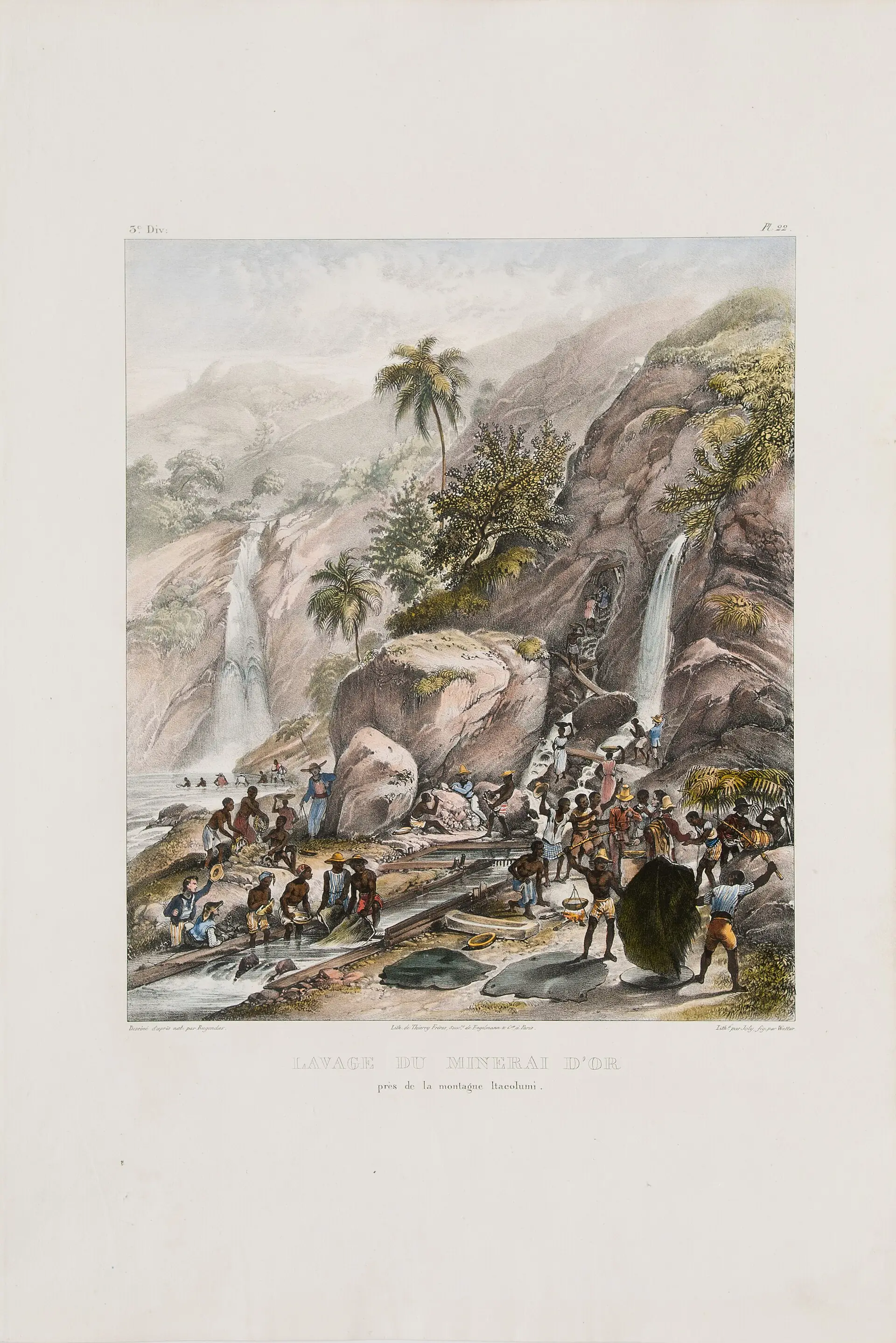
Bandeirantes from São Paulo, who raided the interior for captives, found gold in Minas Gerais in the 1690s, and later in Goiás and Mato Grosso. The gold rush drew hundreds of thousands of settlers and enslaved Africans inland, filled the baroque churches of Ouro Preto and moved the capital to Rio de Janeiro in 1763. The treaties of Madrid and San Ildefonso pushed the frontier far west of Tordesillas, and the Marquis of Pombal expelled the Jesuits. Conspiracies such as the Inconfidência Mineira of 1789 were crushed.
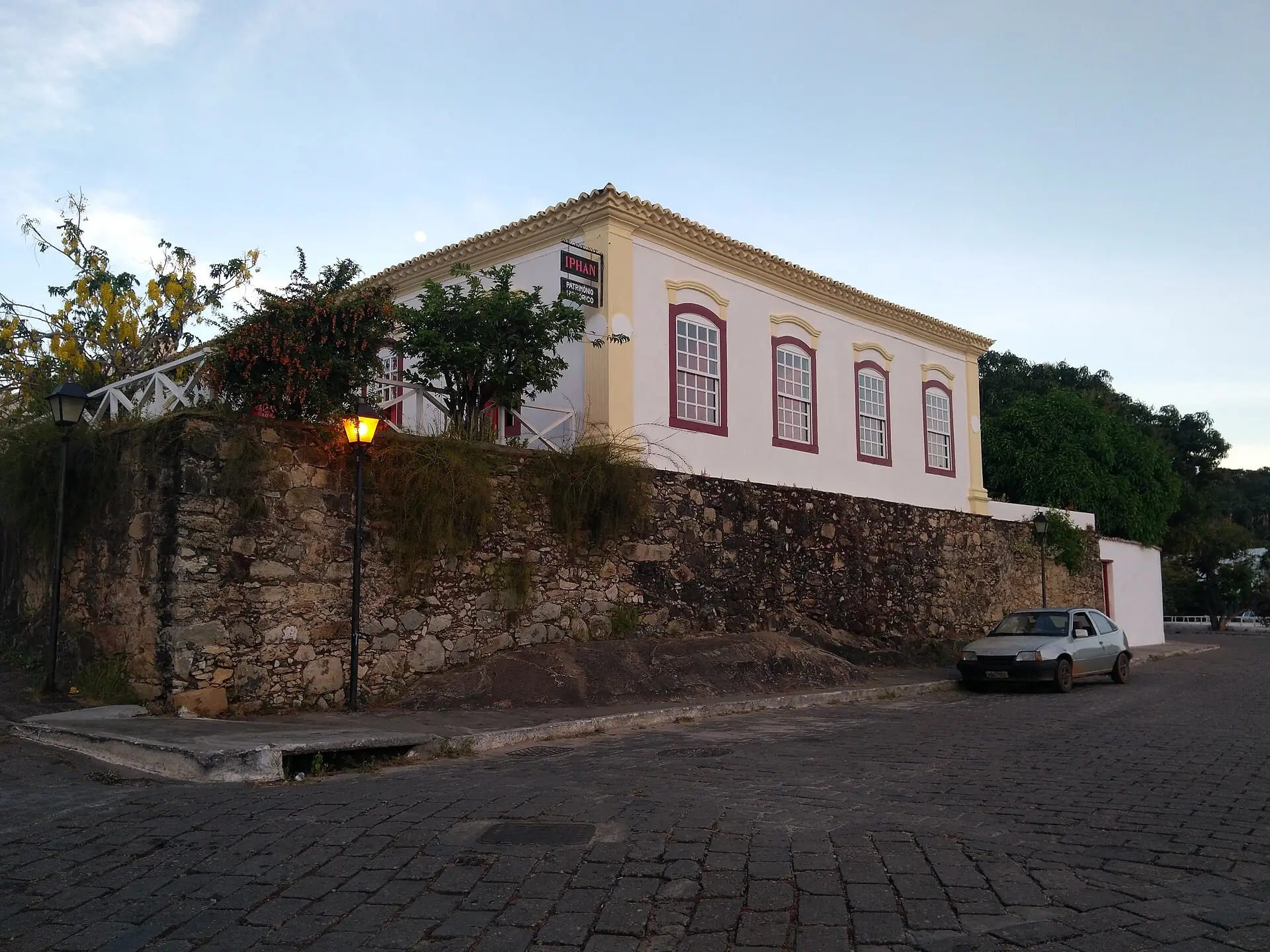
Expeditions from São Paulo found gold in Goiás and Mato Grosso, far west of the Tordesillas line.

The Treaty of Madrid of 1750 sketched the outline of modern Brazil.

Aleijadinho carved the twelve prophets of the sanctuary at Congonhas.

The only conspirator of the Inconfidência Mineira to be executed became a hero of the republic.

1808 – 1840
From the seat of an empire to an empire of its own.
Fleeing Napoleon, the Portuguese court arrived in Rio de Janeiro in 1808, opened Brazil's ports and raised it to a kingdom in 1815. When João VI returned to Lisbon, his son Pedro declared independence on 7 September 1822 and was crowned emperor. Pedro I gave the Empire its constitution of 1824, lost the Cisplatine War and abdicated in 1831, leaving a five-year-old heir. The regencies that followed faced the Cabanagem, the Malê revolt, the Sabinada, the Balaiada and the Ragamuffin War.

Prince Regent João opened Brazil's ports to friendly nations in 1808.

Pedro I's charter of 1824 gave the emperor a moderating power and lasted 65 years.

Pedro I abdicated in 1831 in favour of his five-year-old son.

Ranchers of Rio Grande do Sul fought the Empire for ten years in the Ragamuffin War.

1841 – 1888
Coffee, war and the end of slavery.
Declared of age at fourteen, Pedro II reigned for almost half a century over a stable parliamentary monarchy in which Liberals and Conservatives alternated in power. Coffee from the Paraíba valley and São Paulo made Brazil rich, railways and the telegraph spread, and Brazil won the Paraguayan War of 1864–1870 at a terrible cost. The slave trade ended in 1850, and after the Free Womb Law of 1871 Princess Isabel signed the Golden Law that abolished slavery on 13 May 1888 — the last in the Americas.

Crowned at fifteen, Pedro II reigned for almost half a century.

Coffee grown by enslaved workers in the Paraíba Valley became Brazil's leading export.

The Brazilian navy defeated the Paraguayan fleet at Riachuelo in 1865.

The Posthumous Memoirs of Brás Cubas opened a new era in Brazilian fiction.

1889 – 1929
Coffee oligarchs, rebels and modernists.
A military coup proclaimed the Republic on 15 November 1889 and sent the imperial family into exile. After the turbulent presidencies of Deodoro and Floriano, the coffee oligarchies of São Paulo and Minas Gerais ran the federal republic through the "politics of the governors", while the army crushed Canudos and the Contestado. Millions of European and Japanese immigrants arrived, Rio was rebuilt, and the Modern Art Week of 1922 and the lieutenants' revolts announced a new generation.

The army destroyed the backlands community of Antônio Conselheiro in 1897.

The Kasato Maru brought the first Japanese immigrants to Santos in 1908.

Alberto Santos-Dumont flew his 14-bis in Paris in 1906.

The Week of Modern Art in São Paulo launched Brazilian modernism in 1922.

1930 – 1963
Vargas, development and a new capital.
The Revolution of 1930 brought Getúlio Vargas to power. He centralised the state, gave women the vote, created labour laws and in 1937 imposed the authoritarian Estado Novo, before sending troops to fight in Italy in 1944. Deposed in 1945, he returned by election in 1951 and shot himself in 1954. Juscelino Kubitschek promised "fifty years in five" and built Brasília, but Jânio Quadros's resignation in 1961 opened a crisis that a brief parliamentary system could not resolve.

In 1937 Vargas closed Congress and ruled as dictator until 1945.

The Brazilian Expeditionary Force fought alongside the Allies in the Italian campaign.
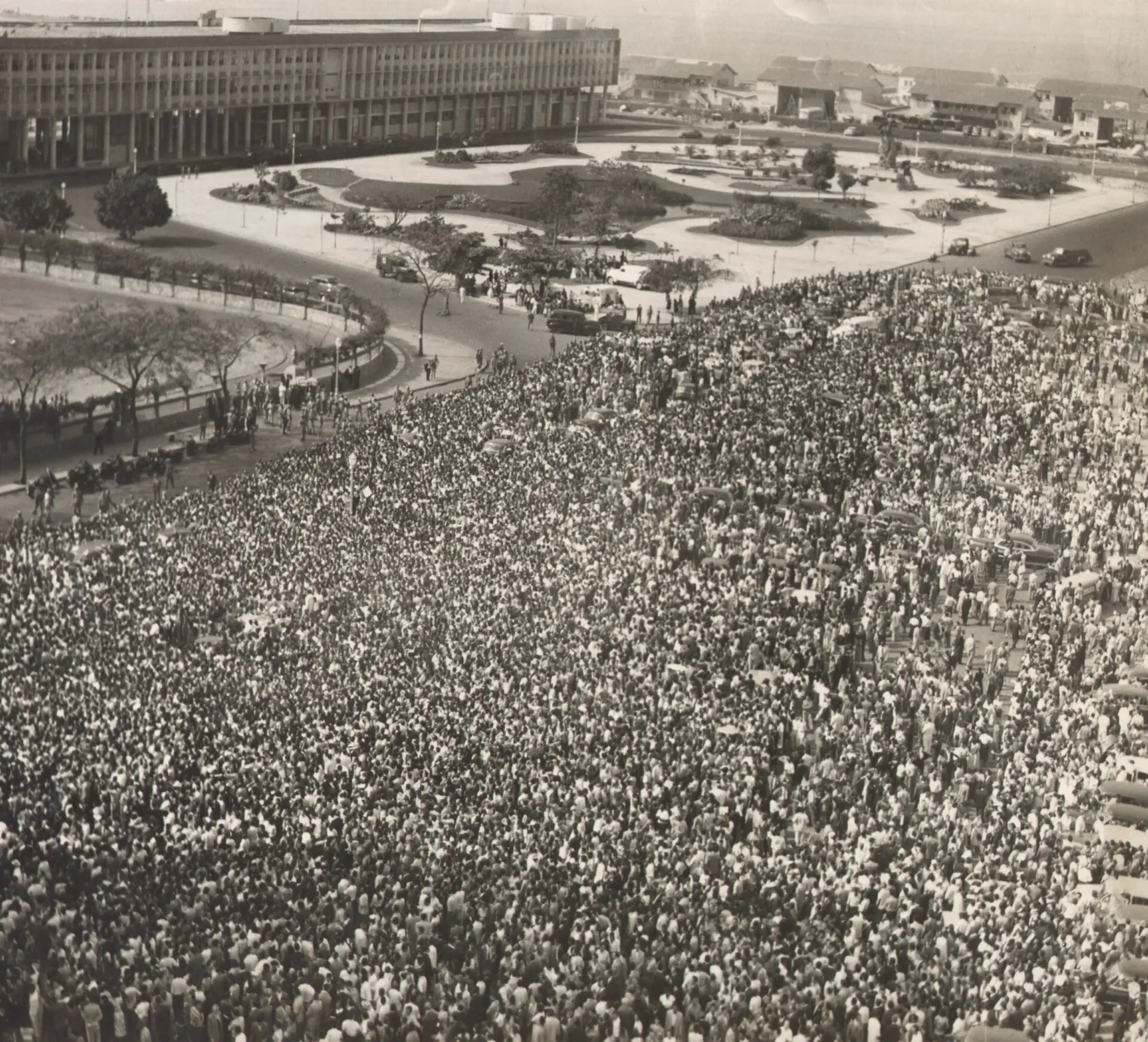
Facing a military ultimatum, Vargas shot himself in the presidential palace in 1954.

Kubitschek inaugurated the new capital on the central plateau in 1960.

1964 – 1984
Twenty-one years of military rule.
The coup of 1964 overthrew João Goulart and began twenty-one years of military rule. Institutional acts abolished parties and direct elections, and AI-5 in 1968 closed Congress and suspended habeas corpus; the National Truth Commission later documented 434 people killed or disappeared and widespread torture. The "economic miracle" of 1968–1973 gave way to debt and inflation, and Geisel and Figueiredo led a slow opening — amnesty in 1979, new parties, and the Diretas Já campaign of 1984.

AI-5 closed Congress, suspended habeas corpus and imposed censorship in 1968.

The economy grew by around ten per cent a year while inequality widened.

The death of journalist Vladimir Herzog in army custody in 1975 provoked national outrage.

Millions rallied for direct presidential elections in 1983 and 1984.

1985 – present
Democracy, stability and polarisation.
Tancredo Neves died before taking office, and José Sarney led the return to civilian rule and the Constitution of 1988. Fernando Collor was impeached in 1992; the Real Plan of 1994 ended hyperinflation and made Fernando Henrique Cardoso president. Lula's governments cut poverty with Bolsa Família, but the Car Wash investigations, recession and Dilma Rousseff's removal in 2016 polarised the country. Jair Bolsonaro governed from 2019; Lula returned in 2023, a week before the 8 January attacks in Brasília.
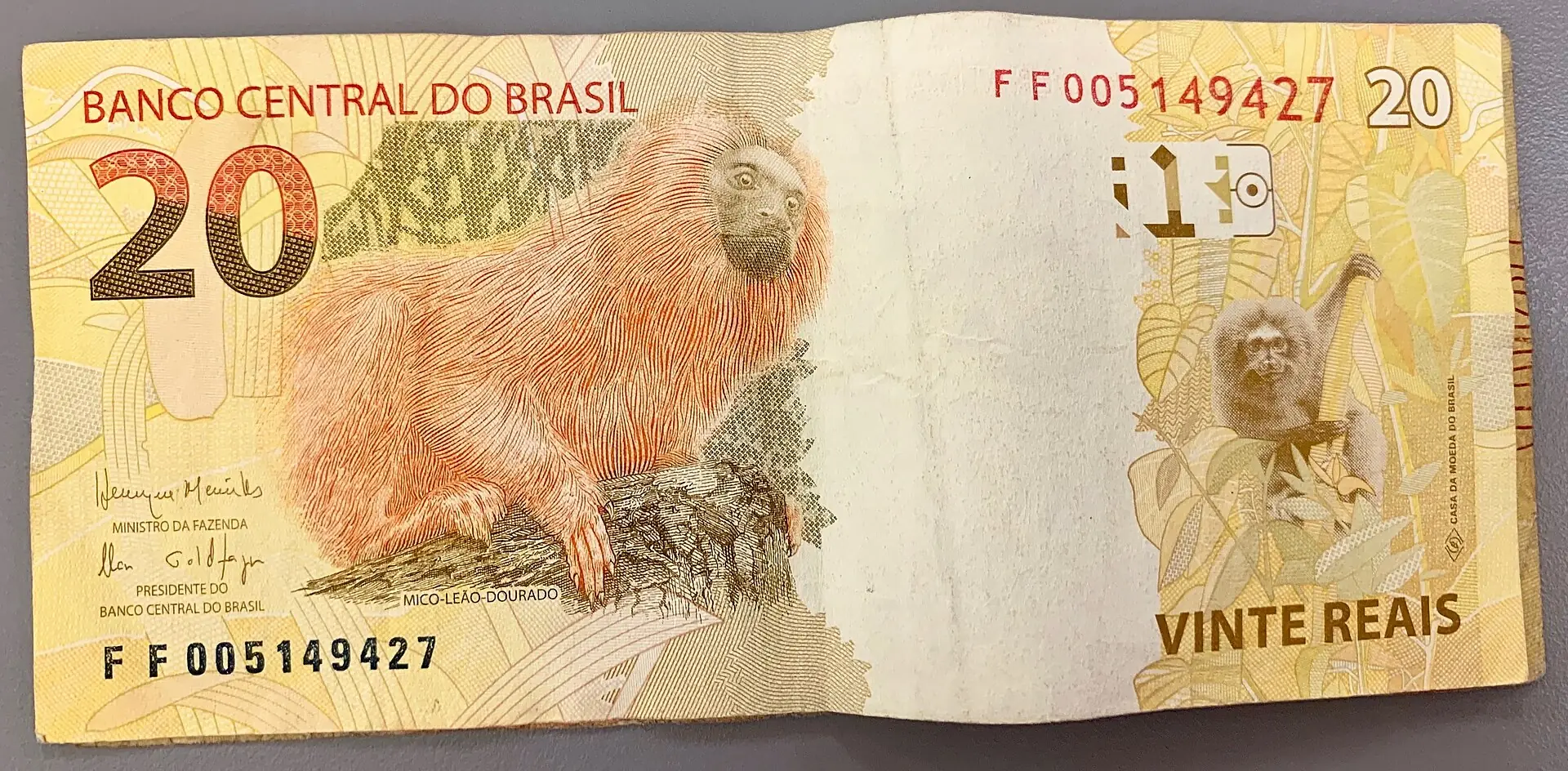
A new currency, the real, ended decades of high inflation in 1994.

Lula's cash-transfer programme reached millions of poor families.

The National Truth Commission documented 434 people killed or disappeared under military rule.

Supporters of Bolsonaro stormed Congress, the presidential palace and the Supreme Court in 2023.
From the First Peoples to Today, c. 9000 BCE – 2026
From Indigenous cultures and a strip of Portuguese coast to Dutch Brazil, the gold frontier, an empire and a federal republic of 26 states. Follow who controlled each part of the land that is now Brazil, and how its frontiers moved far west of the Tordesillas line.
If the page stays blank, the site doesn't allow embedding — use “Open in new tab”.
From the shell mounds of the coast to the domes of Brasília, the history of Brazil has given the world the largest Portuguese-speaking nation, the largest African diaspora in the Americas, samba, bossa nova and Carnival, a great literature and a modernist architecture, five World Cups, a central place in the fate of the Amazon and a democracy rebuilt after twenty-one years of military rule.
With more than 200 million speakers, Brazil is home to the great majority of the world's Portuguese speakers, and its own variety of the language, its music and its television reach every Lusophone country. Brazilian Portuguese absorbed many words from Tupi and from African languages; through it English took jaguar, piranha, tapioca and toucan. A Tupi-based língua geral was widely spoken until Pombal imposed Portuguese in the 1750s, and Brazil still counts more than 270 Indigenous languages.
Brazil received close to five million enslaved Africans, more than any other country, and was the last in the Americas to abolish slavery, in 1888, without land or schooling for the freed. Their descendants shaped its religion, food, music and the martial art of capoeira, now on UNESCO's list of intangible heritage. Most Brazilians identify as Black or mixed-race, yet racial inequality endures; the Constitution of 1988 made racism a crime, and university quotas and Black Consciousness Day on 20 November, Zumbi's death day, answer that history.
Samba grew from the Afro-Brazilian communities of Bahia and Rio de Janeiro; "Pelo Telefone" was registered as a samba in 1916, and the samba schools made Rio's Carnival one of the largest festivals in the world. Heitor Villa-Lobos joined Brazilian themes to concert music, Carmen Miranda took Brazilian song to Hollywood, and in 1958 João Gilberto, Tom Jobim and Vinicius de Moraes created bossa nova. Tropicália, Caetano Veloso and Gilberto Gil carried Brazilian popular music through the dictatorship.
Machado de Assis, the grandson of freed slaves, wrote The Posthumous Memoirs of Brás Cubas and became the first president of the Brazilian Academy of Letters. Euclides da Cunha's Os Sertões told the tragedy of Canudos, and the Week of Modern Art of 1922 and Oswald de Andrade's call to "cannibalise" foreign culture launched a modernism of its own. Mário de Andrade, Graciliano Ramos, Jorge Amado, Carlos Drummond de Andrade, João Guimarães Rosa and Clarice Lispector followed.
After the gold-rush baroque of Ouro Preto and Aleijadinho, Brazil became a centre of modern architecture. Oscar Niemeyer's curves at Pampulha and Lúcio Costa's plan for Brasília, built in under four years and inaugurated in 1960, are both World Heritage Sites, as is the garden of the landscape designer Roberto Burle Marx. Niemeyer, who worked until his death at 104, and Paulo Mendes da Rocha both won the Pritzker Prize.
About sixty per cent of the Amazon rainforest lies in Brazil, which makes its policies decisive for the climate and for biodiversity. Chico Mendes, killed in 1988, defended the forest peoples, Rio hosted the Earth Summit of 1992, and deforestation fell by more than three-quarters between 2004 and 2012 before rising again. Indigenous territories cover more than a tenth of the country, and in 2025 Belém hosted COP30, the first UN climate conference in the Amazon.
The Citizen Constitution of 1988 restored direct elections and created a universal public health system, and Brazil adopted electronic voting for one of the world's largest electorates. Its democracy has survived hyperinflation, two presidential impeachments and the attack of 8 January 2023. The National Truth Commission documented the crimes of the dictatorship, though the Amnesty Law still shields their authors, and in 2025 a former president was convicted of plotting a coup.
Football arrived with Charles Miller in 1894 and became a national passion. Brazil has won the World Cup a record five times, in 1958, 1962, 1970, 1994 and 2002, and Pelé is the only player to have won it three times; Garrincha, Ronaldo and Marta, six times the world's best woman player, are also legends. Emerson Fittipaldi, Nelson Piquet and Ayrton Senna won eight Formula One titles between them, and Rio de Janeiro hosted South America's first Olympic Games in 2016.
The timeline is built from the project's own research dossier and its event, ruler and map datasets, checked against English and Portuguese Wikipedia, Encyclopaedia Britannica, official Brazilian sources such as IBGE census data and the Presidency of the Republic, the report of the National Truth Commission, UNESCO and, for 2025–2026, major news organisations. Linked articles are starting points for verification, not proof that every claim has been independently checked. Prehistoric dates are approximate, the earliest dates claimed for human presence are contested, and the Indigenous population of 1500 and colonial population figures are given as estimates. The most recent events rest on news reports that should be re-checked; historical frontiers on the map are approximate.
Every event and every ruler has its own sources. See Sources & Further Reading in each timeline entry and ruler profile.
History is connected. Explore the bigger picture.
AllHistories is an independent visual history project designed to make the past easier to understand, explore, and connect.
History is more than a collection of dates, rulers, and battles. Events rarely happen in isolation. Borders shift, civilizations influence one another, ideas spread, and decisions made centuries ago continue to shape the world today.
Through interactive timelines, historical maps, and visual storytelling, AllHistories helps uncover these connections and makes complex historical subjects more accessible and engaging.
Travel through centuries, discover turning points, and understand how historical events unfold and connect.
Explore how borders, civilizations, populations, trade routes, beliefs, and spheres of influence have changed over time.
Go beyond dates and discover the individuals, places, decisions, and circumstances behind historical developments.
Explore connections between countries, empires, civilizations, and historical themes to better understand cause and consequence.
Features vary depending on the historical subject.
AllHistories draws on historical research, published references, public archives, and available historical datasets. The information is organized and presented through interactive digital experiences.
History is not always certain or universally agreed upon. Dates, territorial boundaries, population figures, and interpretations may differ between sources. Some information is necessarily simplified or estimated for visual presentation.
The goal is to encourage curiosity and independent exploration, not to replace academic publications or specialist historical research.
When you visit AllHistories, the web server may process technical information such as your IP address, requested pages, browser details and access times to deliver pages and maintain the service.
Some pages load Google Analytics, Google Fonts, externally hosted images, maps or other third-party resources. Requests to these providers can transmit technical information, including your IP address. Contact forms may use Google reCAPTCHA to help prevent abuse. These providers apply their own privacy policies.
The website uses browser storage for preferences such as the selected theme. Country microsites also use a session cookie to support website functionality, including request protection. Analytics or other third-party services may use additional cookies or storage, depending on the page and your browser settings.
When you submit a correction or contact form, the information you provide, such as your name, email address and message, is processed to review and respond to your request. Please avoid including sensitive personal information.
You can manage cookies and site storage in your browser and control third-party requests through browser privacy settings. For privacy questions or requests concerning information you submitted, use the contact option on the microsite where you sent it.
Links to sources and other websites take you to services with their own privacy practices. Review their policies before providing personal information.
AllHistories provides historical information for general education and exploration. Its content is not professional, legal, financial or other specialist advice.
We aim to present useful, well-sourced summaries, but cannot guarantee that every date, statement, translation or interpretation is complete or accurate. Verify important claims against the cited sources and relevant scholarship. Content may be corrected or updated.
Maps are simplified historical illustrations. Borders, place names and territorial labels may vary by period and source. Their appearance does not express a position on sovereignty or present-day territorial disputes.
Images and source material may belong to their respective creators or rights holders. Consult the image credit, source page and license before reusing material. A link or credit does not grant additional reuse rights.
External links are provided for reference. AllHistories does not control the content, availability or policies of third-party websites.
To report an error or a concern about credited material, use the contact option on the relevant country microsite and identify the page, material and supporting details.