Key facts of the era
Key Events
Journey through the events, people, wars and ideas that shaped Belgium, from the first humans in the Meuse caves to the present day.
Follow the Belgae and Roman Gaul, the Franks of Tournai and Charlemagne, the cloth towns of Flanders and the prince-bishops of Liège, the Burgundian court and Charles V, the Dutch Revolt and the Spanish Netherlands, Austrian, French and Dutch rule, the revolution of 1830, Leopold II's Congo, the Yser and the occupation, and the long road to a federal state.
Meet the counts, dukes, emperors and kings who ruled the Belgian lands, and the chefs de cabinet and prime ministers who governed the kingdom.
From the Belgic chieftains, the Roman emperors and the Frankish kings through the counts of Flanders, the dukes of Brabant and Burgundy, the prince-bishops of Liège, the Habsburg sovereigns and their governors, French and Dutch rule to the Kings of the Belgians, with the chefs de cabinet and prime ministers who governed the kingdom.
A Journey Through the Ages
Belgium, between the North Sea, the Scheldt and the Ardennes, has been a crossroads of Europe since early humans left stone tools at La Belle-Roche about half a million years ago. The caves of the Meuse gave the world its first Neanderthal fossils, Neolithic miners dug flint at Spiennes, and in the Iron Age the Belgae, whom Caesar called the bravest of the Gauls, gave the country its name.
Rome ruled the province of Gallia Belgica for four centuries, the Frankish kings Childeric and Clovis ruled from Tournai, and the Carolingians rose from the Meuse valley. After 843 the land was divided along the Scheldt into Flanders, Brabant, Hainaut, Liège and other principalities, whose cloth towns grew rich and won their liberties. The dukes of Burgundy and the Habsburgs united the Low Countries, and Antwerp became the trading capital of Europe.
The Dutch Revolt split the Netherlands, leaving the south under Spain, then under Austria from 1714, France from 1795 and the Dutch king from 1815. The revolution of 1830 created an independent kingdom with a liberal constitution, the first railway on the continent and a great industrial economy, while Leopold II ruled the Congo Free State as his personal possession, with forced labour and great brutality. Germany invaded and occupied Belgium in both world wars.
After 1945 Belgium helped found Benelux, NATO and the European Communities, gave up its African colonies and, through six state reforms, became a federal state of communities and regions, with Brussels as the main seat of the European Union. Explore the ten ages below through selected events from the timeline.

500,000 BCE – 58 BCE
Neanderthals, flint miners and the Belgic tribes.
Early humans left stone tools at La Belle-Roche half a million years ago, and the caves of the Meuse valley gave the world its first Neanderthal finds at Engis and Spy. Farmers of the Linear Pottery culture cleared the loess plateaux, Neolithic miners dug the flint of Spiennes, and in the Iron Age the Belgae, a confederation of Gallic and Germanic tribes, built oppida and struck coins between the Seine and the Rhine.

The first Neanderthal fossil ever found came from a cave at Engis, explored in 1829–30.

Linear Pottery farmers settled the fertile loess of Hesbaye about 5300 BCE.

Neolithic miners dug thousands of shafts for flint near Mons over some two thousand years.

Caesar wrote that of all the peoples of Gaul the Belgae were the bravest.

57 BCE – 430
Conquest and four centuries of Roman rule.
Julius Caesar conquered the Belgae in 57 BCE and crushed the revolt of Ambiorix. Under Roman rule Tongeren, Tournai and Arlon grew into towns, villas and roads covered the province of Gallia Belgica, and the frontier army on the Rhine drew on its farms. From the third century Frankish raids, the Gallic Empire of Postumus and a new line of fortified roads announced the end of Roman power.

The Nervii nearly destroyed Caesar's army on the Sabis in 57 BCE before they were crushed.

Founded about 10 BCE as the capital of the Tungri, Tongeren is Belgium's oldest town.

The road from Boulogne to Cologne and rich country villas brought prosperity to the province.

In 358 Julian allowed the Salian Franks to stay in Toxandria, the sandy Campine.

431 – 842
Merovingian kings and the Carolingian heartland.
The Salian Franks settled the Scheldt and Meuse lands and made Tournai a royal seat: Childeric I was buried there and his son Clovis built the Frankish kingdom. Missionaries such as Amand and Lambert founded abbeys and bishoprics, the Pippinid family from the Meuse valley rose to rule the Franks, and Charlemagne, whose heartland lay around Herstal, Jupille and Aachen, made it the core of a new empire.

Clovis succeeded his father at Tournai in 481 and went on to conquer most of Gaul.

Itta and her daughter Gertrude founded the double monastery of Nivelles about 640.

The bishop of Tongeren-Maastricht was murdered at Liège about 705, and the see later moved there.

In 768 Charlemagne inherited a kingdom whose heartland lay around Herstal, Jupille and Aachen.

843 – 1383
Counts, prince-bishops and cloth towns.
The Treaty of Verdun (843) split the Belgian lands along the Scheldt: Flanders went to France, the rest to Lotharingia and the Empire. Counts of Flanders, dukes of Brabant, counts of Hainaut and the prince-bishops of Liège built their principalities, while the cloth towns of Bruges, Ghent and Ypres grew rich on English wool and won charters of liberty. The Flemish militias defeated the French knights at the Golden Spurs in 1302.

Baldwin Iron Arm eloped with a Carolingian princess and founded the line of the counts of Flanders.

Between 980 and 985 Bishop Notger became a territorial prince of the Empire.

Godfrey of Bouillon led a Lotharingian army to the East in 1096.

In 1356 Duchess Joanna and Wenceslaus swore to respect the liberties of Brabant.
1384 – 1554
Burgundian splendour and Habsburg empire.
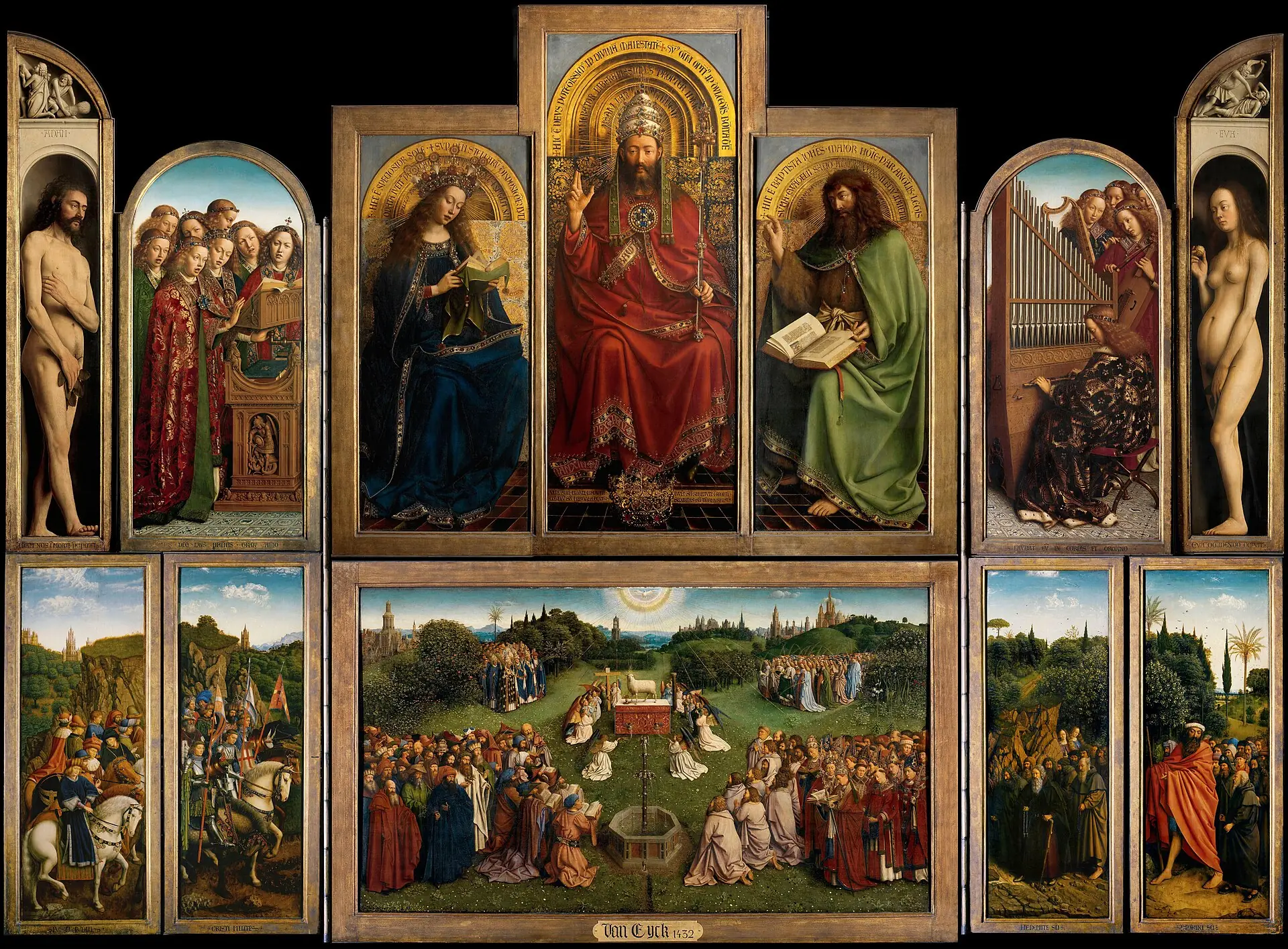
The Valois dukes of Burgundy gathered Flanders, Brabant, Hainaut and their neighbours into one state, called the first States General and made Bruges and Brussels centres of a brilliant court where Jan van Eyck and Rogier van der Weyden painted. Through Mary of Burgundy the inheritance passed to the Habsburgs; Charles V, born at Ghent, made the Seventeen Provinces one indivisible whole and abdicated in Brussels in 1555, while Antwerp became the trading capital of Europe.

Philip the Good founded his order of knights at his wedding in Bruges in 1430.
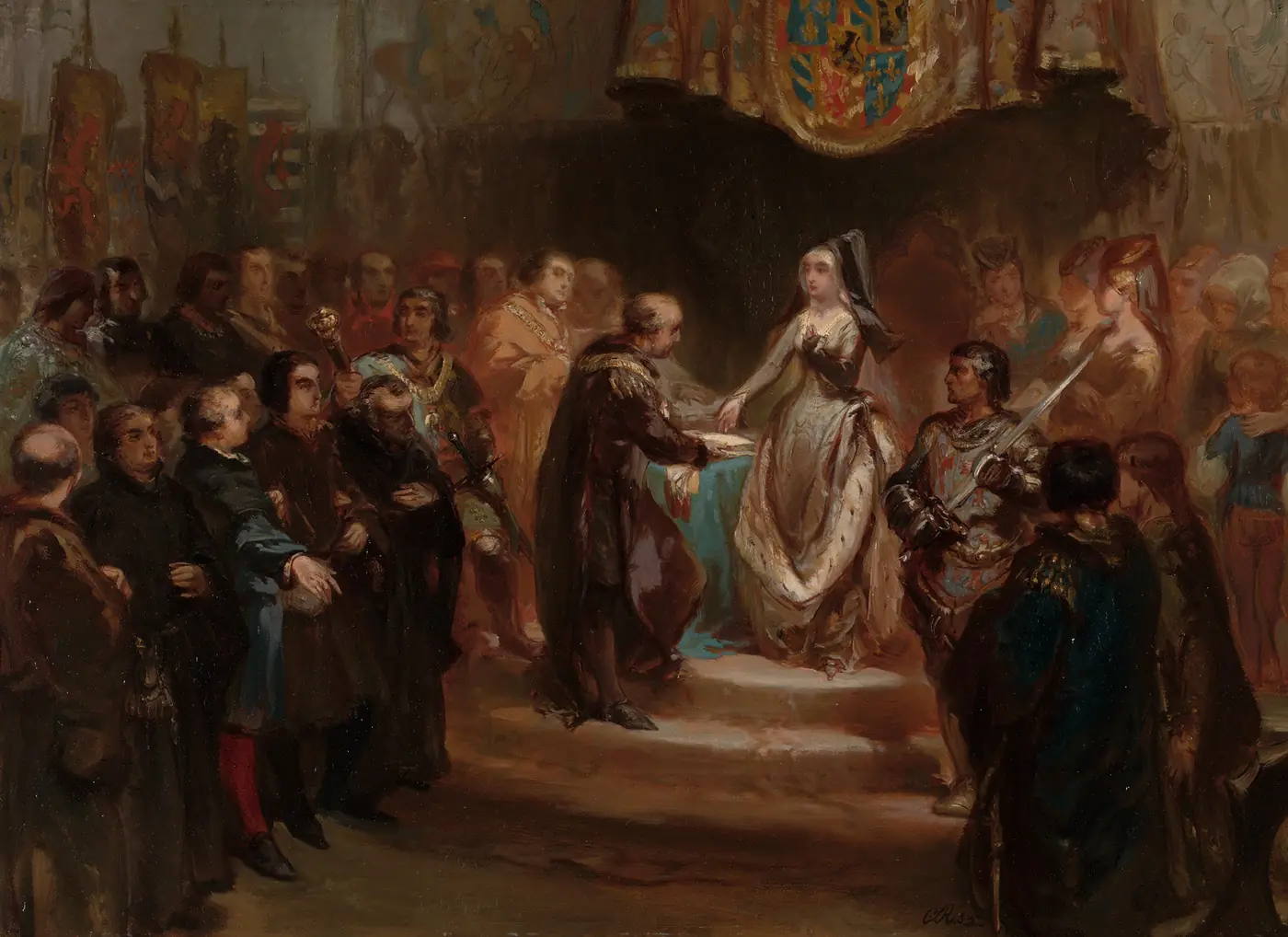
After Charles the Bold's death Mary of Burgundy confirmed the rights of the States General and the provinces.
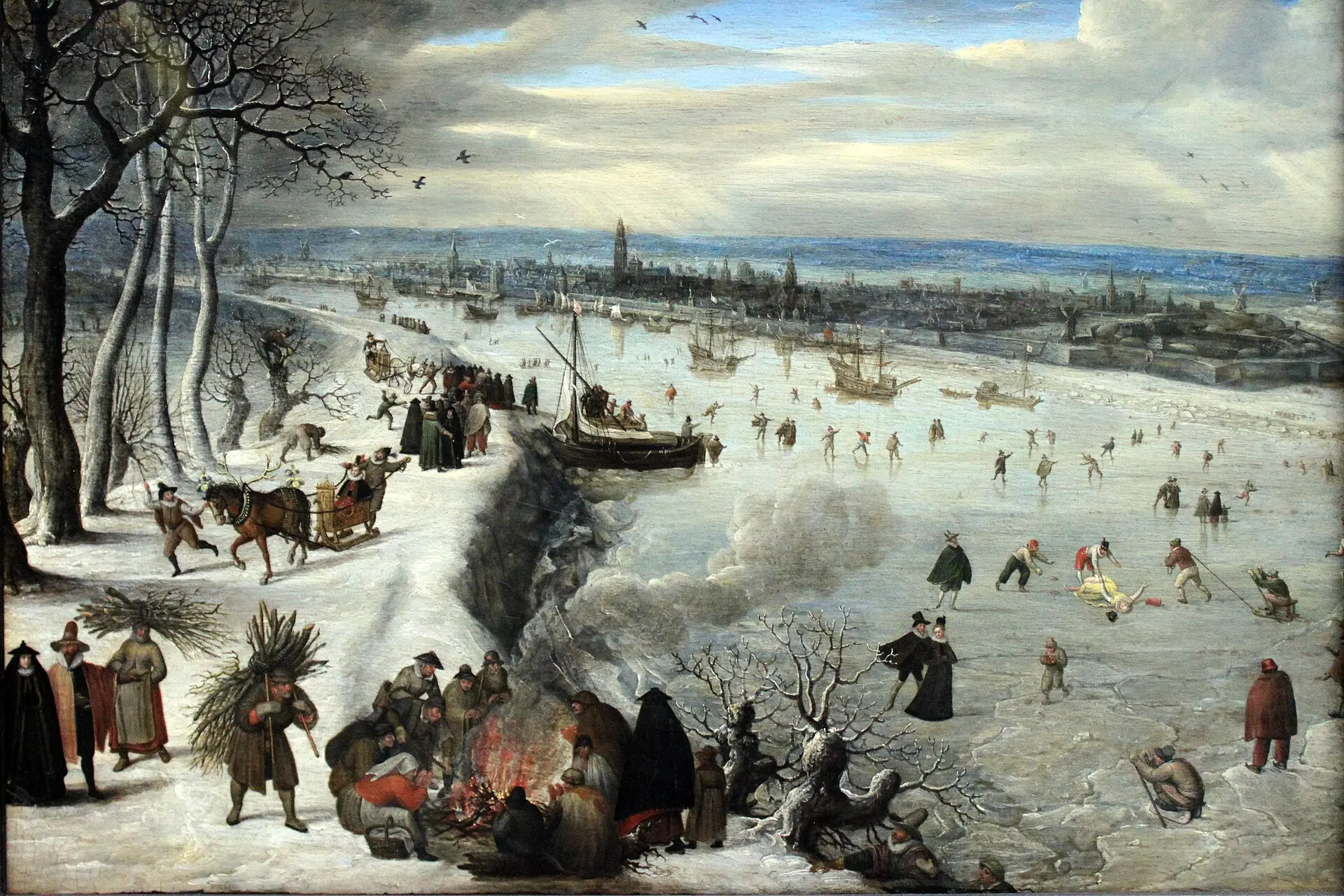
Around 1500 Antwerp replaced Bruges as the chief market of north-western Europe.

The future emperor was born at the Prinsenhof in Ghent on 24 February 1500.

1555 – 1713
Revolt, division and the Baroque south.
Philip II's persecution of Protestants and heavy taxes provoked the iconoclastic fury of 1566, the Duke of Alba's Council of Troubles and the Dutch Revolt. Alexander Farnese reconquered the south and took Antwerp in 1585, splitting the Low Countries for good. Under the Archdukes Albert and Isabella the Southern Netherlands knew a Catholic and Baroque golden age with Rubens, but in the later seventeenth century they became the battlefield of Louis XIV's wars.
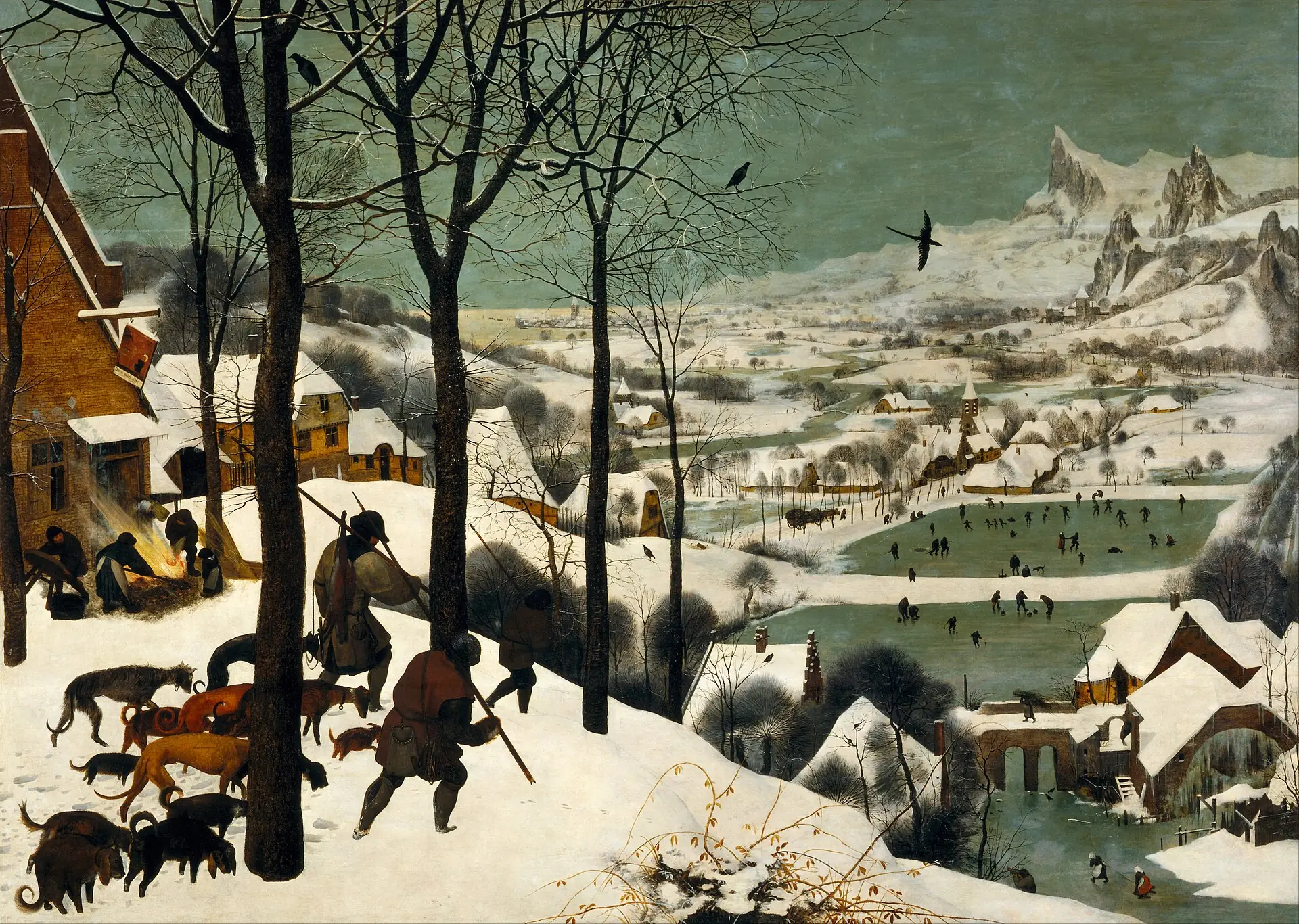
Pieter Bruegel the Elder painted The Hunters in the Snow in 1565.

In August 1566 Calvinist crowds stripped the images from hundreds of churches.

Two great nobles were beheaded on the Grand Place in Brussels in 1568.
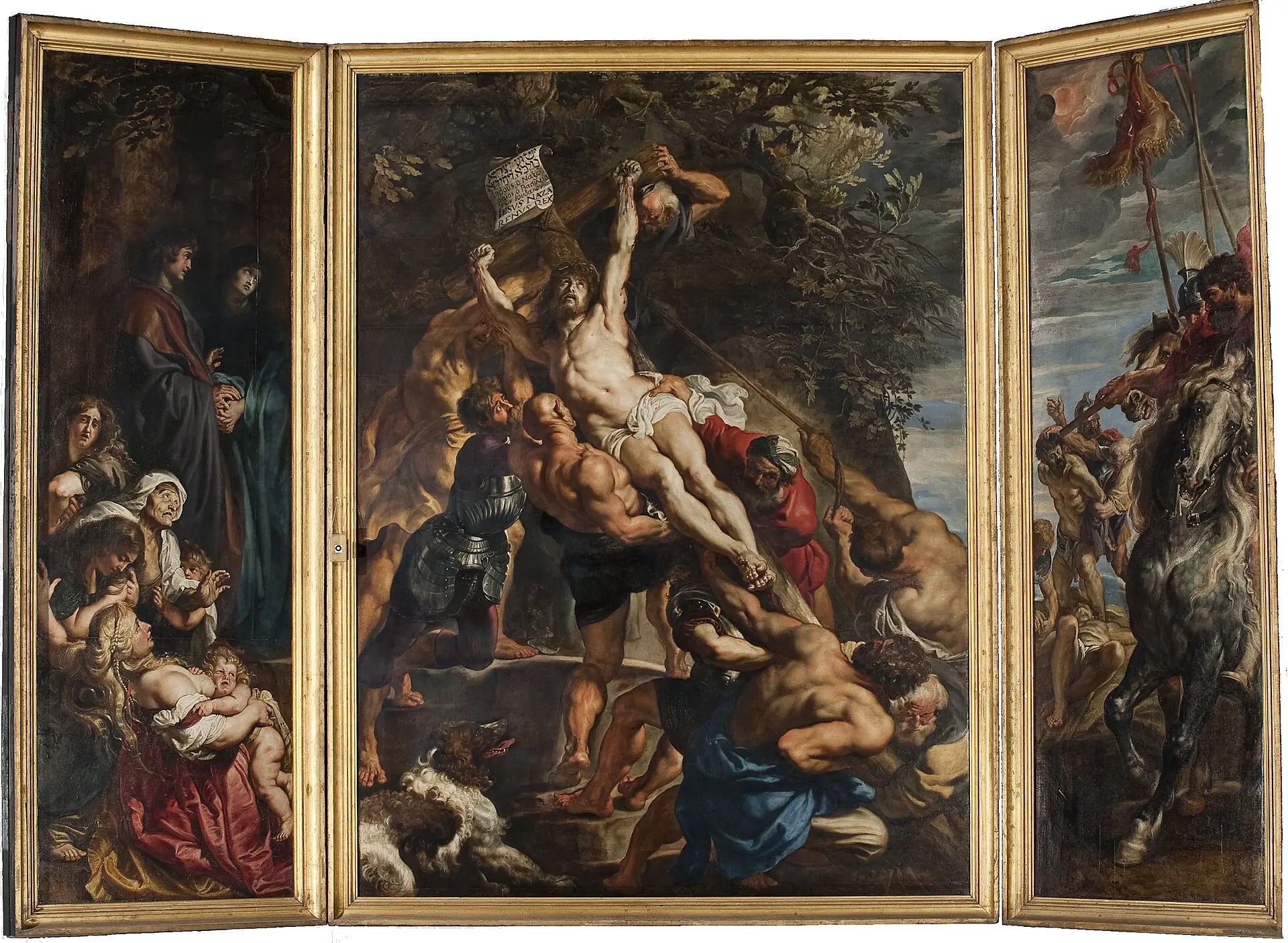
In 1609 Rubens became court painter to the Archdukes Albert and Isabella.

1714 – 1829
Empresses, revolutions and Napoleon.
The Treaty of Utrecht handed the Southern Netherlands to Austria. Governor Charles of Lorraine presided over a calm and prosperous age, but Joseph II's reforms set off the Brabant Revolution and the short-lived United Belgian States of 1790. France annexed the country and Liège in 1795, abolished the old principalities and brought industry and the Napoleonic codes. After Waterloo the Congress of Vienna joined Belgium to the Netherlands under William I.

Charles VI chartered a Flemish East India company in 1722 and suspended it in 1727.

In January 1790 the rebel provinces proclaimed the United Belgian States.

A rural uprising against French conscription and anticlerical laws was crushed in 1798.
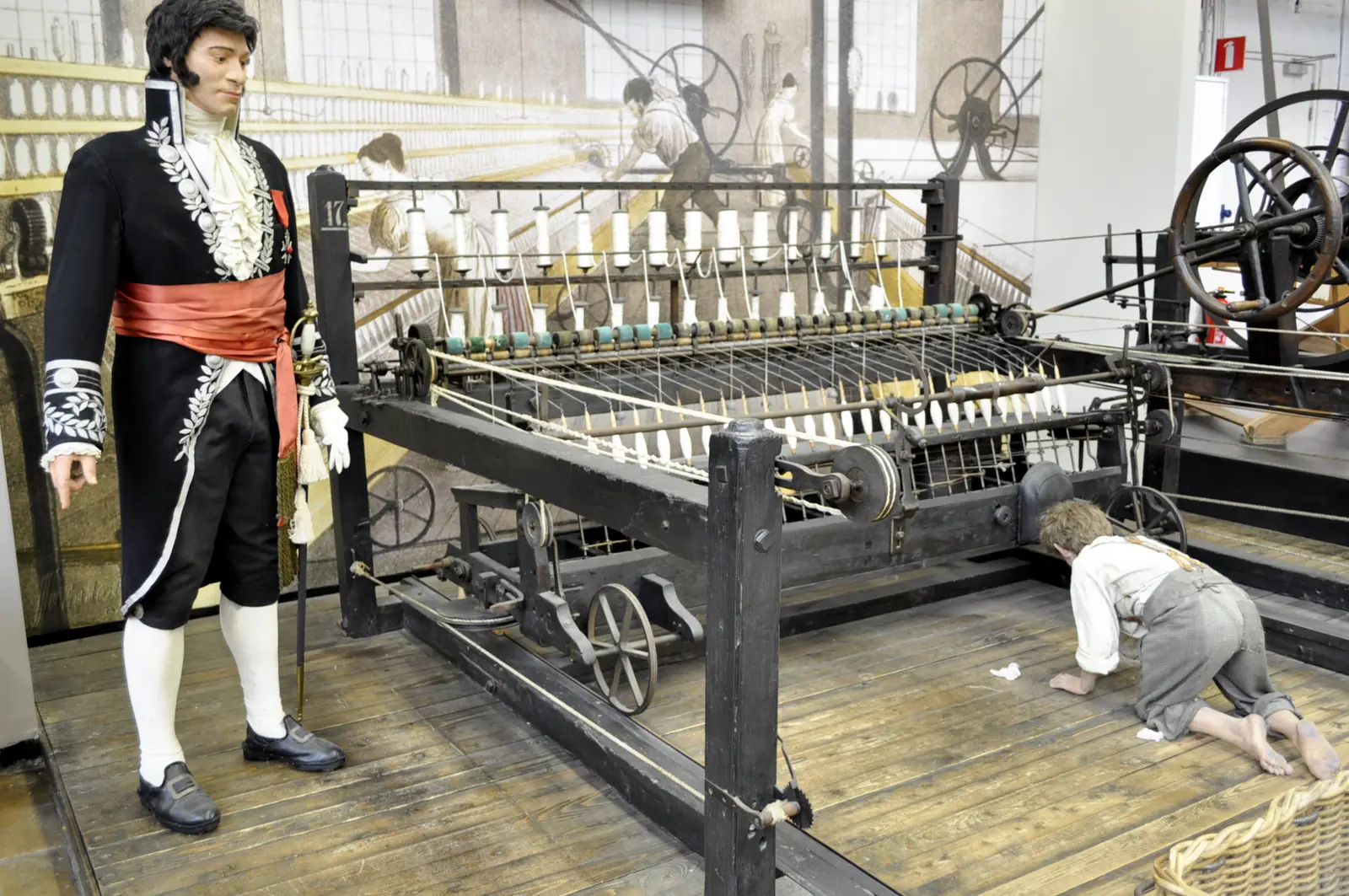
Lieven Bauwens brought smuggled British spinning machines to Ghent around 1799.

1830 – 1908
A new kingdom and an industrial power.
The revolution of 1830 made Belgium an independent kingdom under Leopold I with one of the most liberal constitutions of its age. The young country built the first railway on the continent, became an industrial power of coal, steel and glass, and saw Catholics and Liberals fight over schools. Leopold II ruled the Congo Free State as his personal possession, with forced labour and great brutality, until Belgium annexed it in 1908.
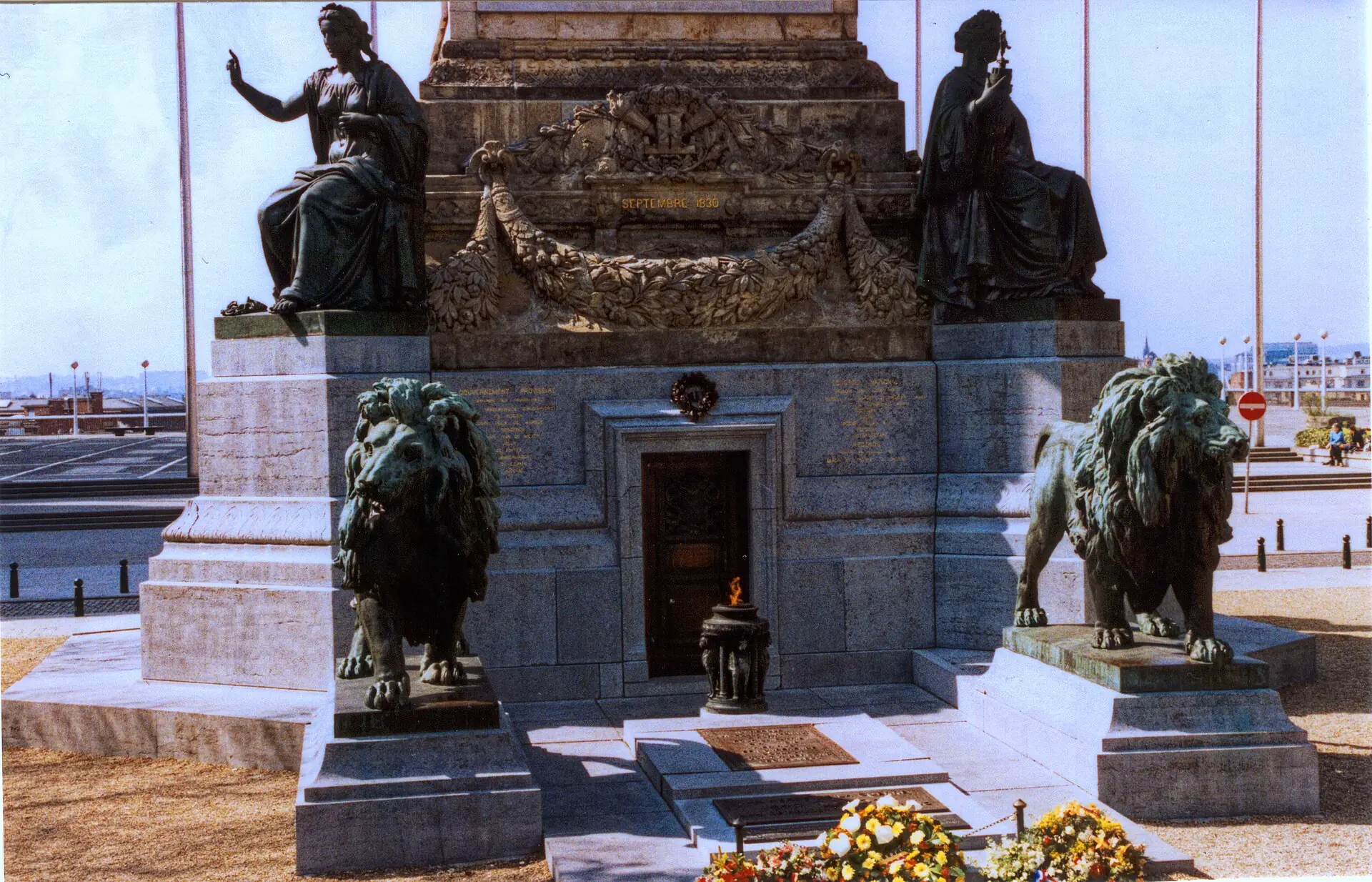
In February 1831 the National Congress adopted one of the most liberal constitutions of its age.

Trains ran between Brussels and Mechelen in 1835, on continental Europe's first public steam railway.

Hendrik Conscience's novel of 1838 gave the Flemish Movement its epic.

From 1891 rubber quotas enforced by hostage-taking, flogging and killing devastated Leopold II's Congo.

1909 – 1950
Two invasions, occupation and the Royal Question.
Germany invaded neutral Belgium in 1914; King Albert I held a strip of Flanders behind the Yser for four years while Ypres was destroyed. Universal male suffrage, social reforms and the language laws followed the war. In 1940 Belgium was overrun again: Leopold III surrendered and stayed in the country while the government went to London. Occupation, deportations and the Holocaust ended with liberation in 1944, and the king's conduct divided the nation in the Royal Question.
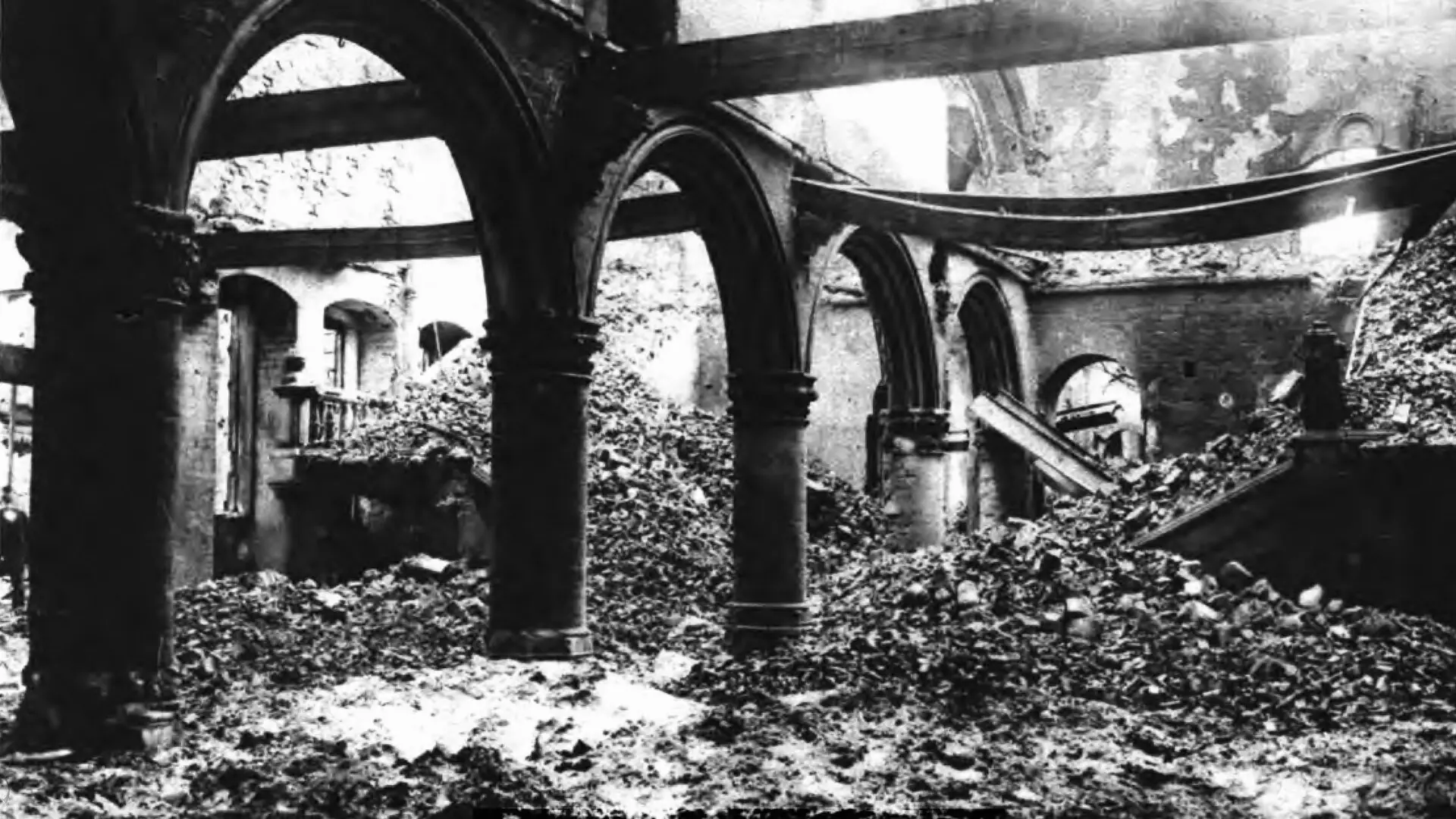
German troops sacked the university town and burned its library in August 1914.
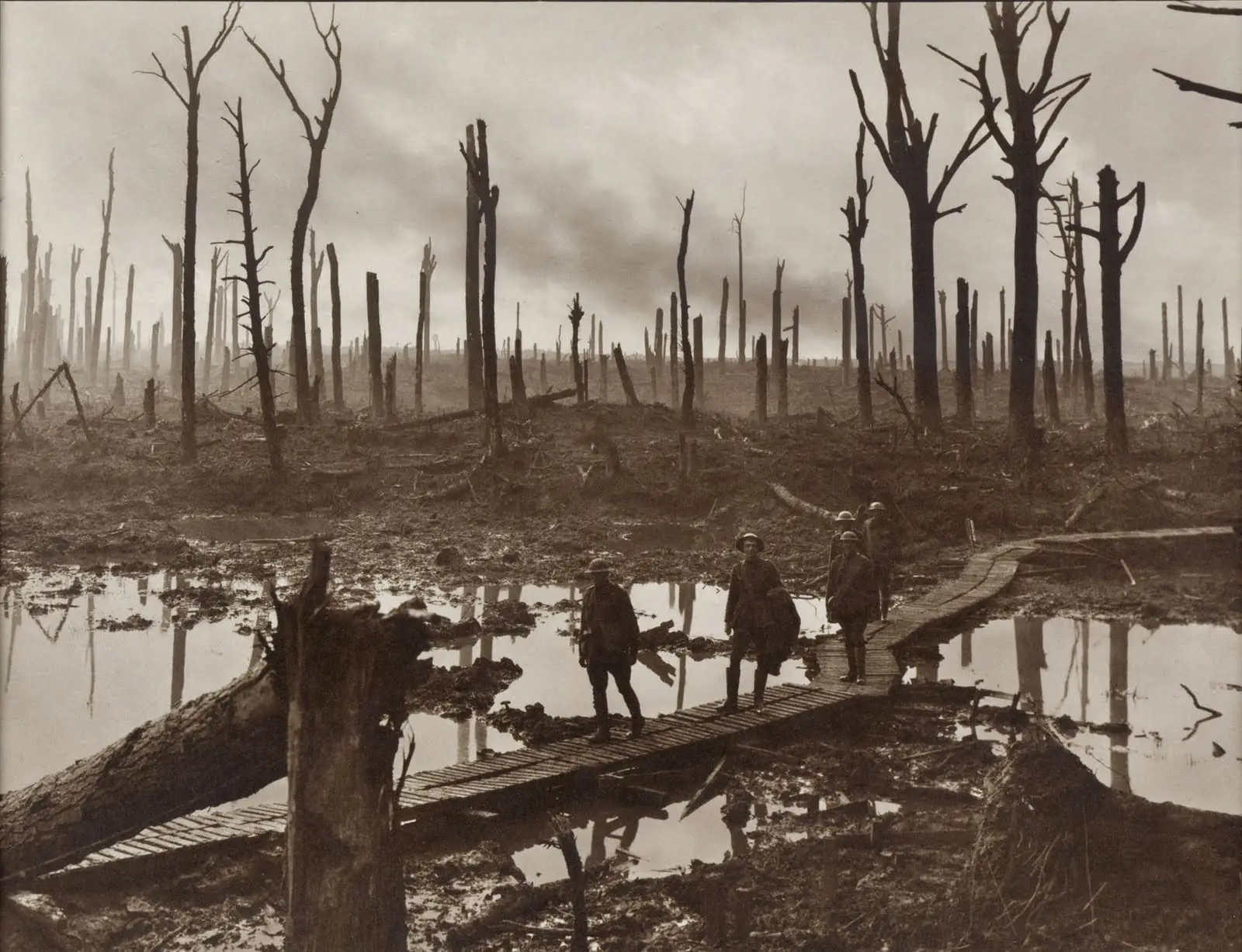
The Third Battle of Ypres of 1917 bogged down in the Flemish mud for a gain of about eight kilometres.

From 1942 to 1944, 28 convoys from Mechelen deported about 25,500 Jews and some 350 Roma; only about 1,200 survived.
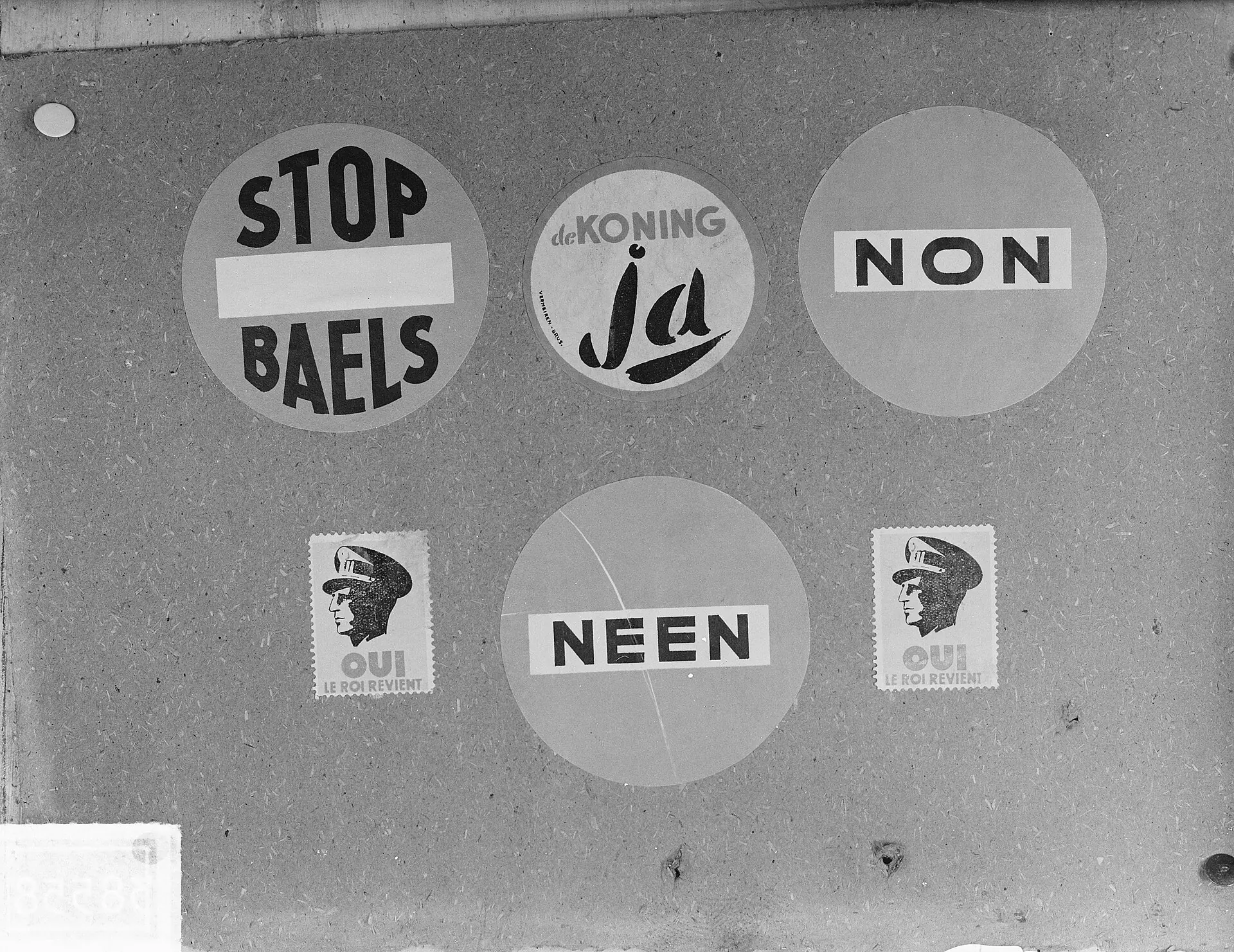
In 1950, 58 per cent voted for Leopold III's return, with Flanders in favour and Wallonia against.

1951 – present
From unitary kingdom to federal state.
Under King Baudouin Belgium became a founder of NATO and the European Communities, settled the schools war, granted independence to the Congo in 1960 and to Rwanda and Burundi in 1962, and saw its coal and steel industries decline. The language border of 1962 and six state reforms turned the unitary kingdom into a federal state of communities and regions. Brussels became the capital of the European Union, and Belgium lived through the Dutroux affair, the 2016 terrorist attacks and a record 541-day government formation.

On 30 June 1960 Patrice Lumumba answered King Baudouin by recalling the violence of colonial rule.
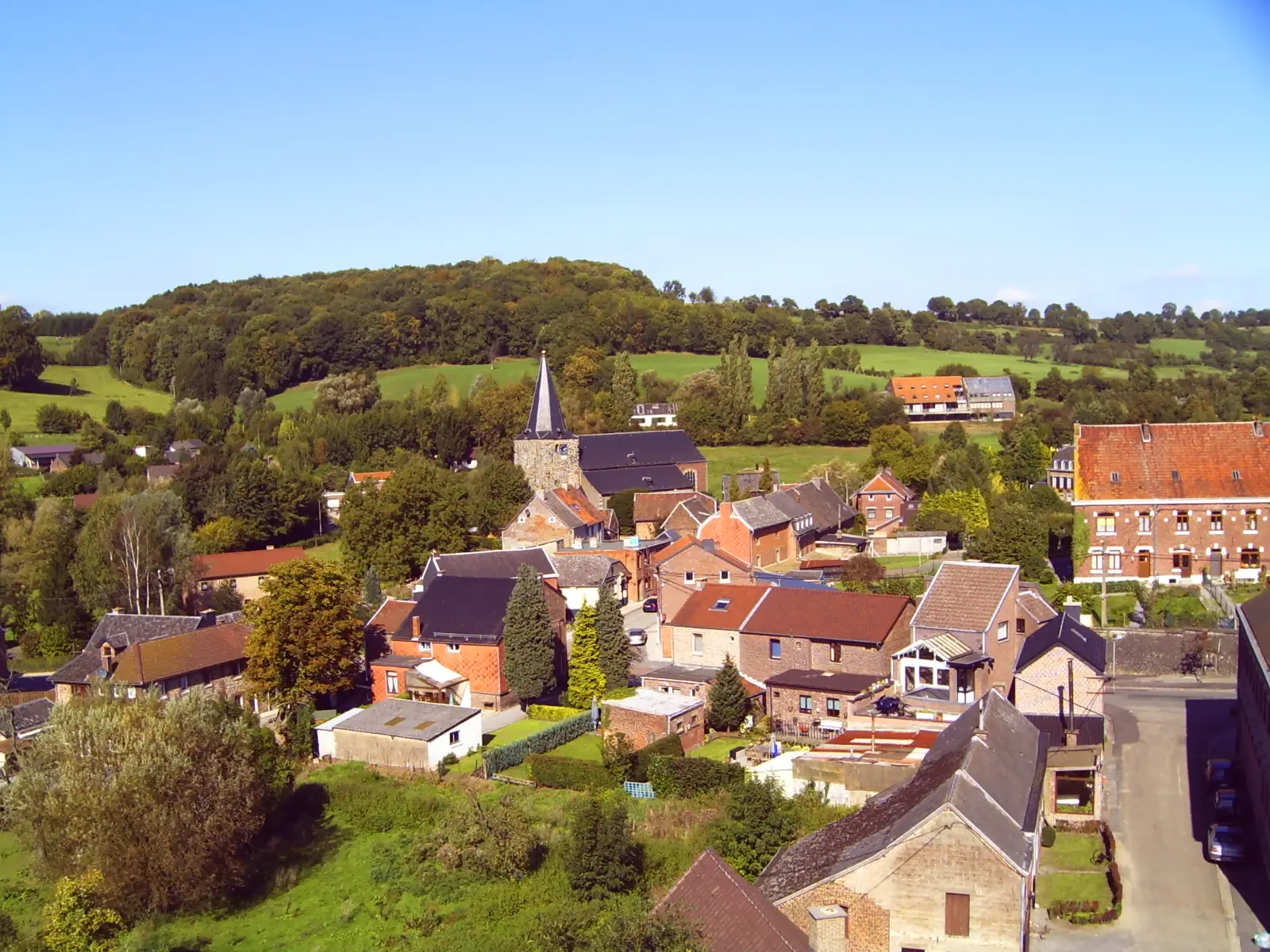
The Gilson laws of 1962–63 assigned every municipality to a single language area.
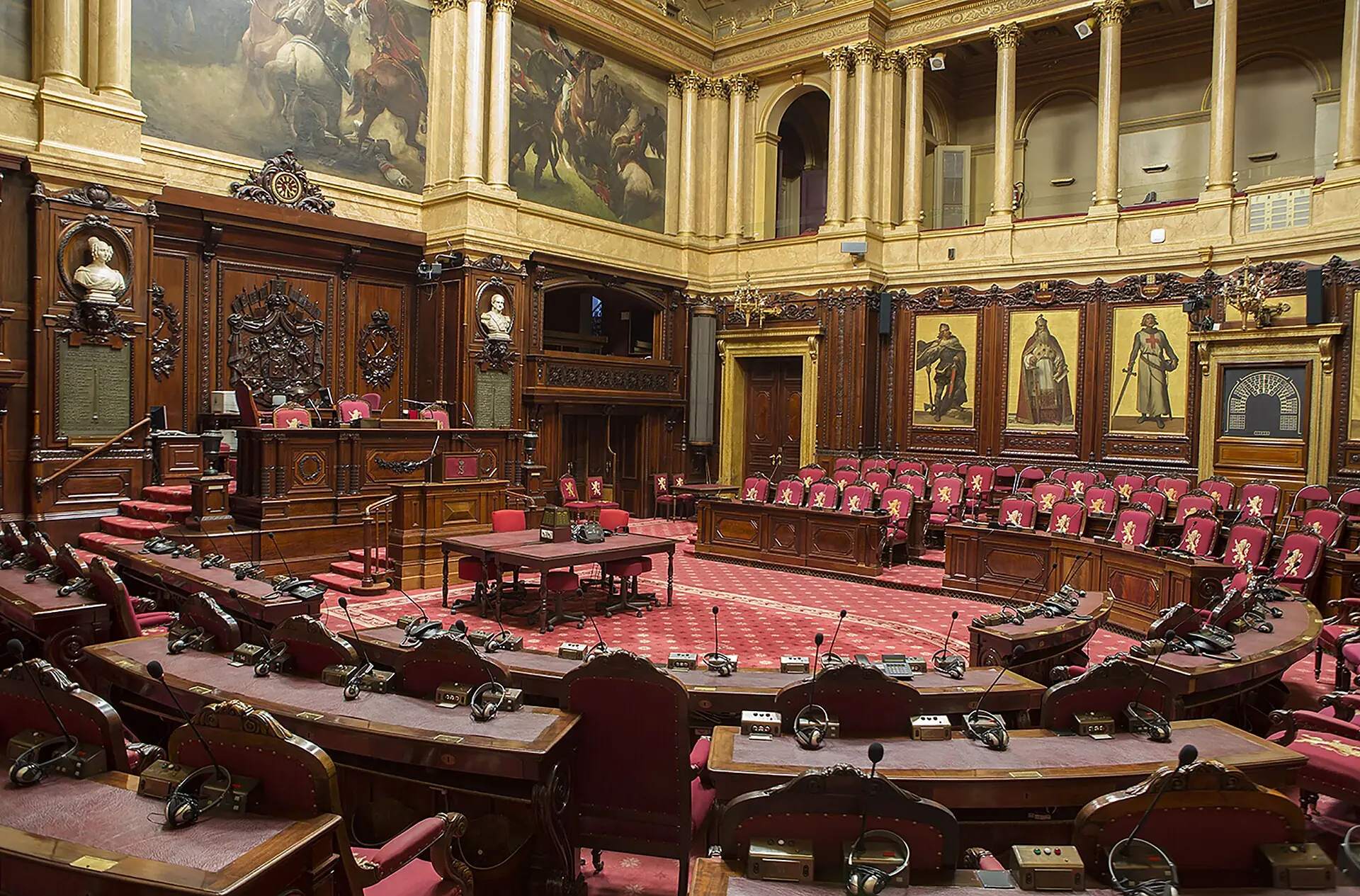
In 1993 a new first article declared Belgium a federal state of communities and regions.
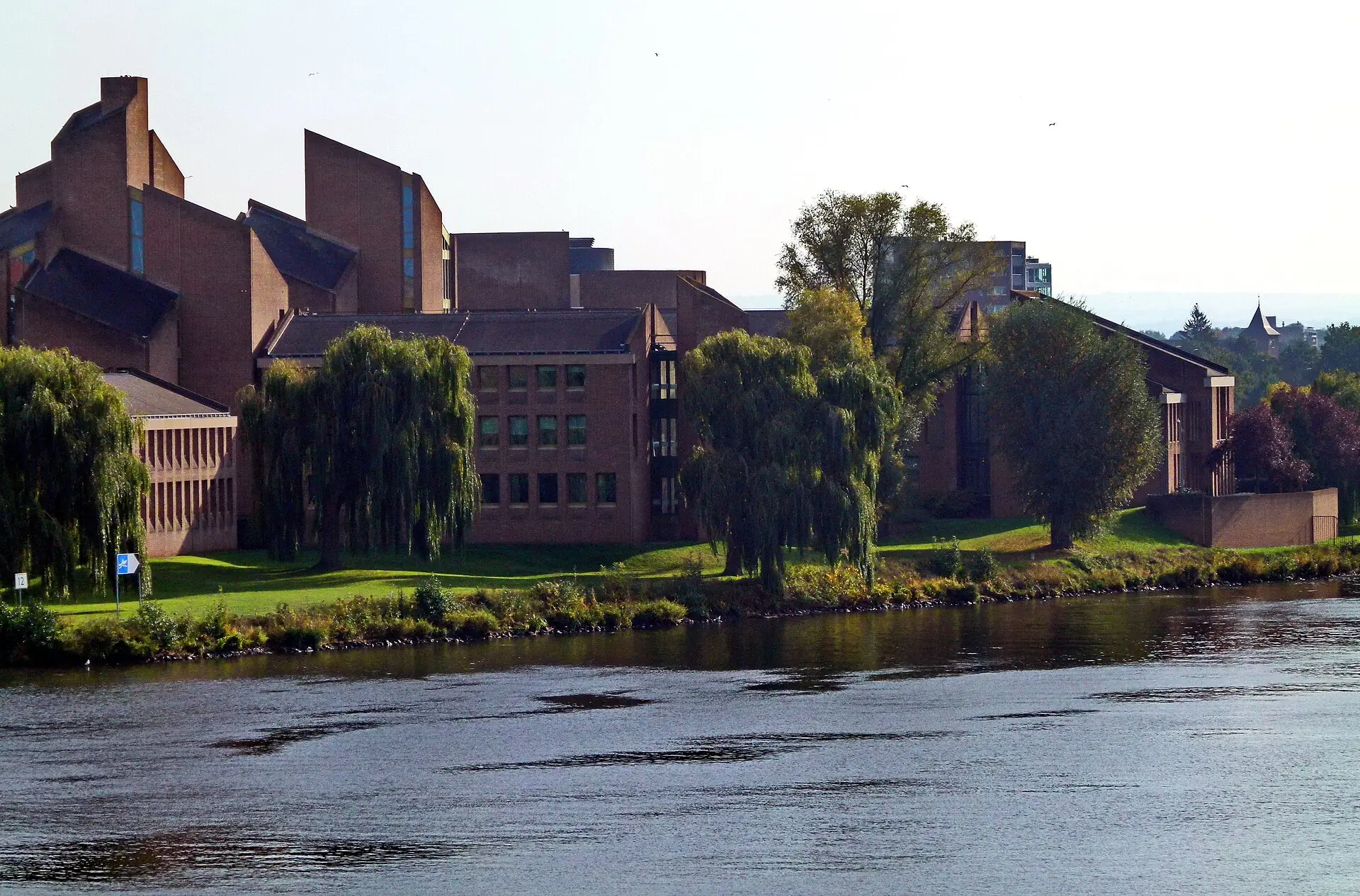
The Maastricht Treaty of 1992 founded the European Union, with Brussels as its main seat.
Tribes, Principalities, Empires & the Kingdom, 57 BCE – Today
From the Belgic tribes and Roman Gaul through Lotharingia, Flanders, Brabant and Liège, the Burgundian, Spanish and Austrian Netherlands, French departments and the United Kingdom of the Netherlands to the Kingdom of Belgium and its Congo colony. 28 dated snapshots of who held the Belgian lands; the dashed line is modern Belgium.
If the page stays blank, the site doesn't allow embedding — use “Open in new tab”.
From the Neanderthals of the Meuse caves to the capital of Europe, the history of Belgium has left the art of the Flemish masters, the belfries and town halls of proud cities, a constitution of 1831 that is still in force, a hard-won settlement between its language communities, one of the earliest industrial revolutions, the painful memory of colonial rule and of two world wars, and a capital that hosts the European Union and NATO.
The Ghent Altarpiece of Hubert and Jan van Eyck, the paintings of Rogier van der Weyden and Hans Memling, Pieter Bruegel's scenes of peasant life and the Baroque of Rubens and Van Dyck made the Belgian lands one of the great centres of European art. The tradition continued in James Ensor's Christ's Entry into Brussels, in Victor Horta's Hôtel Tassel, which launched Art Nouveau architecture in 1893, and in Hergé's Tintin, who first appeared in 1929.
From around 1200 the cloth towns of Flanders raised great halls, belfries and town halls as symbols of civic pride, and the Brussels guilds rebuilt the Grand Place in Baroque splendour after the bombardment of 1695. Townspeople won charters of liberty, from Huy's in 1066, the oldest in Belgium, to that of Brussels in 1229, and the beguinages gave women living a religious life without vows communities of their own. The belfries and the Flemish beguinages are UNESCO World Heritage Sites.
The Charter of Kortenberg (1312), the Peace of Fexhe (1316) and the Joyous Entry of Brabant (1356) bound princes to govern with the consent of their subjects. The Constitution of 1831, among the most liberal of its age, guaranteed freedom of worship, of the press, of association and of education, and made every act of the king depend on a minister's signature; it inspired others in Europe and, much amended, still underpins the Belgian state. The vote, at first limited to about one per cent of the people, was extended to all men in 1893, made equal in 1919 and given to women in 1948.
Belgium lies across the old boundary between Germanic and Romance languages. French dominated public life after 1830, and the Flemish Movement, which found its epic in Conscience's Lion of Flanders, won step by step Dutch in the courts (1873), legal equality (1898), a Dutch-language university at Ghent (1930) and monolingual regions (1932). Walloons and French speakers in turn sought economic self-government. The language border of 1962 and six state reforms from 1970 turned the unitary kingdom into a federal state of three communities and three regions, held together by negotiated compromise and, at times, long political crises.
Belgium was the second country, after Britain, to industrialise. Lieven Bauwens brought the spinning mule to Ghent, the Cockerills built machines and ironworks around Liège, the coal of the Borinage fed the Grand-Hornu, and in 1835 trains ran between Brussels and Mechelen on continental Europe's first public railway. Belgians gave the world Adolphe Sax's saxophone, Ernest Solvay's soda process and Zénobe Gramme's dynamo; Georges Lemaître proposed the expanding universe in 1927, and François Englert won the Nobel Prize in Physics in 2013. The mining disaster at Marcinelle, where 262 men died in 1956, recalls the human cost of coal.
From Ramillies and Waterloo to the Yser and the Ardennes, many of Europe's decisive battles were fought on Belgian soil. The cemeteries around Ypres, among them Tyne Cot, the largest Commonwealth war cemetery in the world, make West Flanders one of the great landscapes of remembrance of the First World War, and Bastogne recalls the Battle of the Bulge. The civilian massacres of 1914, the deportations of both wars and the Holocaust, remembered at Kazerne Dossin in Mechelen, are part of national memory, as are the long and bitter debates over wartime collaboration and its punishment.
Belgium ruled the Congo for 75 years, first as Leopold II's Congo Free State and from 1908 as a colony, and governed Ruanda-Urundi from 1916 to 1962. The violence of the rubber regime, forced labour, colonial racism and the murder of Patrice Lumumba in 1961 long sat uneasily beside the official story of a civilising mission. In 2001 a parliamentary inquiry found that Belgium bore moral responsibility for Lumumba's death; in 2020 King Philippe expressed his deepest regrets for the colonial past, repeating them before the Congolese parliament in 2022, the year Belgium returned Lumumba's only remains to his family.
After two invasions Belgium traded neutrality for integration. It formed Benelux with the Netherlands and Luxembourg, was a founding member of NATO in 1949 and of the European Coal and Steel Community, and its foreign minister Paul-Henri Spaak did much to shape the Treaties of Rome. The European Commission settled in Brussels in 1958, NATO moved its headquarters to Brussels and its military command to near Mons in 1967, and since the Maastricht Treaty Brussels has been the main seat of the European Union. In 2009 the Belgian prime minister Herman Van Rompuy became the first permanent President of the European Council.
The timeline is built from the project's own research dossier and its event, ruler, prime minister and map datasets, checked against English Wikipedia, Encyclopaedia Britannica, official Belgian sources, UNESCO, the Canon van Vlaanderen, 1914-1918-Online and, for recent events, VRT and The Brussels Times. Linked articles are starting points for verification, not proof that every claim has been independently checked. Prehistoric dates are approximate and some, such as the age of the La Belle-Roche finds, are disputed; early medieval dates such as Chlodio's capture of Tournai or the baptism of Clovis are uncertain, and the founding of Brussels in 979 is a tradition doubted by modern research. Victim figures for the Congo Free State, the world wars and the post-war repression are published estimates given as ranges where scholarship disagrees, the most recent events rest on sources that are still changing, and medieval boundaries on the map are reconstructions.
Every event and every ruler has its own sources. See Sources & Further Reading in each timeline entry and ruler profile.
History is connected. Explore the bigger picture.
AllHistories is an independent visual history project designed to make the past easier to understand, explore, and connect.
History is more than a collection of dates, rulers, and battles. Events rarely happen in isolation. Borders shift, civilizations influence one another, ideas spread, and decisions made centuries ago continue to shape the world today.
Through interactive timelines, historical maps, and visual storytelling, AllHistories helps uncover these connections and makes complex historical subjects more accessible and engaging.
Travel through centuries, discover turning points, and understand how historical events unfold and connect.
Explore how borders, civilizations, populations, trade routes, beliefs, and spheres of influence have changed over time.
Go beyond dates and discover the individuals, places, decisions, and circumstances behind historical developments.
Explore connections between countries, empires, civilizations, and historical themes to better understand cause and consequence.
Features vary depending on the historical subject.
AllHistories draws on historical research, published references, public archives, and available historical datasets. The information is organized and presented through interactive digital experiences.
History is not always certain or universally agreed upon. Dates, territorial boundaries, population figures, and interpretations may differ between sources. Some information is necessarily simplified or estimated for visual presentation.
The goal is to encourage curiosity and independent exploration, not to replace academic publications or specialist historical research.
When you visit AllHistories, the web server may process technical information such as your IP address, requested pages, browser details and access times to deliver pages and maintain the service.
Some pages load Google Analytics, Google Fonts, externally hosted images, maps or other third-party resources. Requests to these providers can transmit technical information, including your IP address. Contact forms may use Google reCAPTCHA to help prevent abuse. These providers apply their own privacy policies.
The website uses browser storage for preferences such as the selected theme. Country microsites also use a session cookie to support website functionality, including request protection. Analytics or other third-party services may use additional cookies or storage, depending on the page and your browser settings.
When you submit a correction or contact form, the information you provide, such as your name, email address and message, is processed to review and respond to your request. Please avoid including sensitive personal information.
You can manage cookies and site storage in your browser and control third-party requests through browser privacy settings. For privacy questions or requests concerning information you submitted, use the contact option on the microsite where you sent it.
Links to sources and other websites take you to services with their own privacy practices. Review their policies before providing personal information.
AllHistories provides historical information for general education and exploration. Its content is not professional, legal, financial or other specialist advice.
We aim to present useful, well-sourced summaries, but cannot guarantee that every date, statement, translation or interpretation is complete or accurate. Verify important claims against the cited sources and relevant scholarship. Content may be corrected or updated.
Maps are simplified historical illustrations. Borders, place names and territorial labels may vary by period and source. Their appearance does not express a position on sovereignty or present-day territorial disputes.
Images and source material may belong to their respective creators or rights holders. Consult the image credit, source page and license before reusing material. A link or credit does not grant additional reuse rights.
External links are provided for reference. AllHistories does not control the content, availability or policies of third-party websites.
To report an error or a concern about credited material, use the contact option on the relevant country microsite and identify the page, material and supporting details.