Key facts of the era
Key Events
Journey through the events, people, wars and ideas that shaped Austria, from the first humans on the Danube to the present day.
Follow Hallstatt and Celtic Noricum, Roman Carnuntum and Vindobona, the Babenberg margraves and dukes, the rise of the Habsburgs, the Turkish sieges of Vienna, the Baroque great power of Maria Theresa and Joseph II, Napoleon and Metternich, Franz Joseph and Austria-Hungary, the First Republic, the Anschluss and the long road from occupation and neutrality to the European Union.
Meet the margraves, dukes, archdukes, emperors and presidents who ruled Austria, and the minister-presidents and chancellors who led its governments.
From the Roman emperors and Charlemagne through the Babenberg margraves and dukes, the Habsburg archdukes and emperors, Maria Theresa and Franz Joseph to the federal presidents of the republic.
A Journey Through the Ages
Austria lies in the eastern Alps and along the Danube, where the river leaves the mountains for the Pannonian plain and old trade routes between the Baltic, Italy and the Balkans cross. Neanderthals used the Gudenus Cave, Ice Age hunters carved the Venus of Willendorf, and the salt mines of Hallstatt gave their name to the Early Iron Age of central Europe.
Rome made the Alpine lands the provinces of Noricum, Raetia and Pannonia, with legionary fortresses at Carnuntum and Vindobona on the Danube. After the migrations Bavarians and Slavs settled the land, and the Frankish march on the Danube passed to the Babenbergs, whose land is first recorded as Ostarrîchi in 996. Raised to a duchy in 1156, Austria fell to the Habsburgs after the Battle on the Marchfeld in 1278.
For more than six centuries the Habsburgs ruled Austria. They held the imperial crown almost without a break from 1438 to 1806, won Bohemia and Hungary, withstood two Ottoman sieges of Vienna and built a multinational monarchy, the Austrian Empire from 1804 and Austria-Hungary from 1867. After its collapse in 1918 came the First Republic, dictatorship, annexation to Nazi Germany and four-power occupation. The State Treaty and permanent neutrality of 1955 opened the Second Republic, a member of the European Union since 1995.
Explore the ten ages below through selected events from the timeline.

70,000 BCE – 16 BCE
From Ice Age hunters to the salt miners of Hallstatt and Celtic Noricum.
Neanderthal hunters used the Gudenus Cave some 70,000 years ago, and modern humans of the last Ice Age carved the Venus figurines of Galgenberg and Willendorf in the Wachau. Farmers reached the Danube lands around 5500 BCE, built circular ditched enclosures and pile dwellings on the Alpine lakes, and Ötzi the Iceman died high in the Ötztal Alps. The salt mines of Hallstatt gave their name to the Early Iron Age, and from about 200 BCE the Celtic kingdom of Noricum, rich in iron and salt, traded with Rome.

Linear Pottery farmers reached the Danube lands around 5500 BCE, and their successors built great circular ditched enclosures.

Ötzi died high in the Ötztal Alps around 3300–3200 BCE; the ice preserved his body, clothing and copper axe.

Salt mined at Hallstatt from about 800 BCE gave its name to the Early Iron Age culture of central Europe.

By the second century BCE the Celtic tribes of the eastern Alps had formed the Kingdom of Noricum, an ally of Rome.
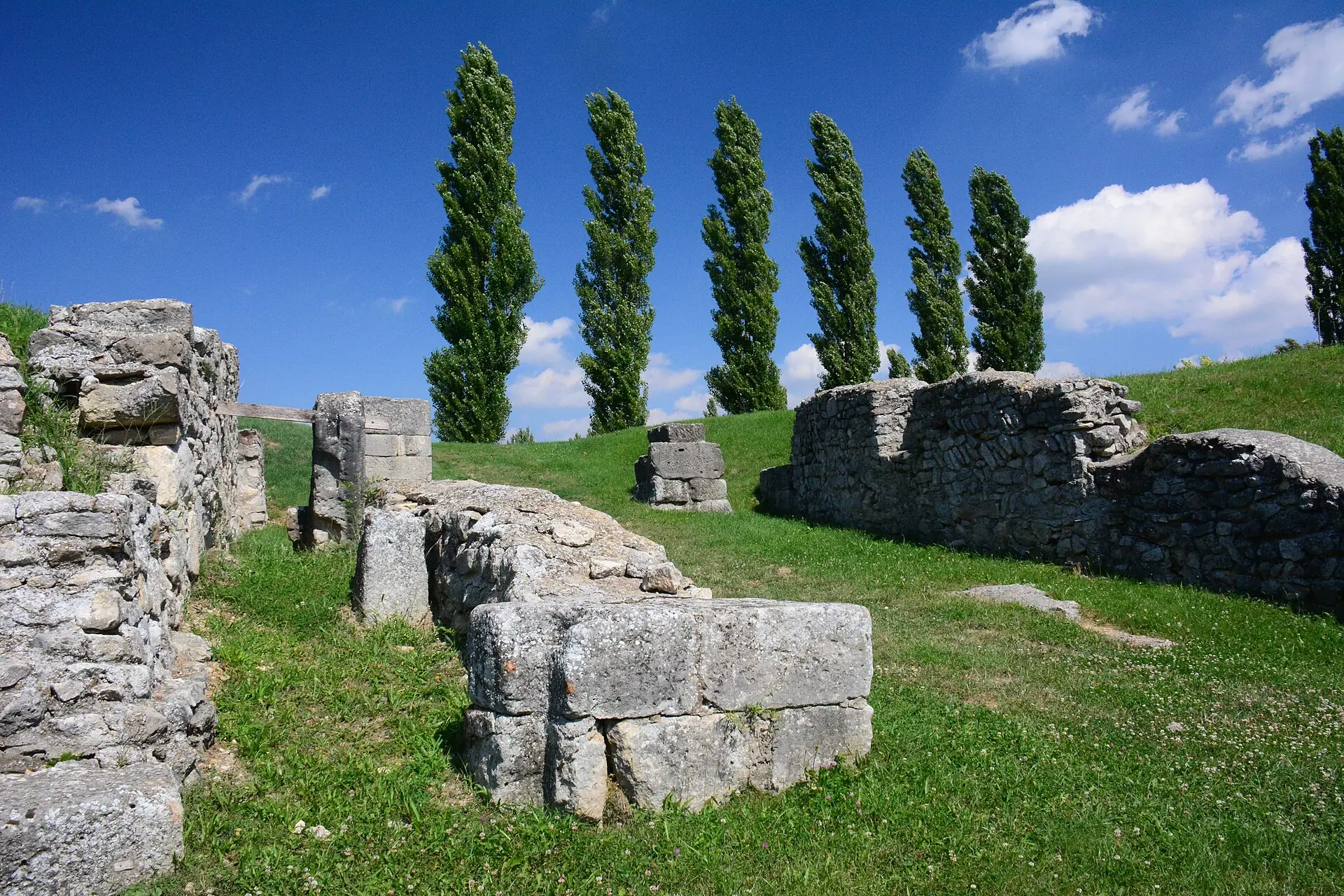
15 BCE – 787
Roman provinces on the Danube frontier and the peoples who followed.
Rome took over Noricum and conquered the Alpine tribes in 16–15 BCE. Most of today's Austria became the province of Noricum, with Raetia to the west and Pannonia in the east, where the legionary fortresses of Carnuntum and Vindobona guarded the Danube. Marcus Aurelius fought the Marcomanni from there, Septimius Severus was proclaimed emperor at Carnuntum, and Christianity spread with martyrs such as Saint Florian. After Severinus's death Odoacer withdrew the Romans to Italy in 488; Rugii, Lombards, Avars, Bavarians and the Slavs of Carantania followed.

Around 100 the Romans built the legionary camp of Vindobona, whose walls can still be traced in the streets of Vienna's old town.

The philosopher-emperor fought the Marcomanni on the Danube and died on campaign in 180, perhaps at Vindobona.

The monk Severinus guided the Romans of Noricum through the collapse of the fifth century; six years after his death Odoacer withdrew them to Italy.
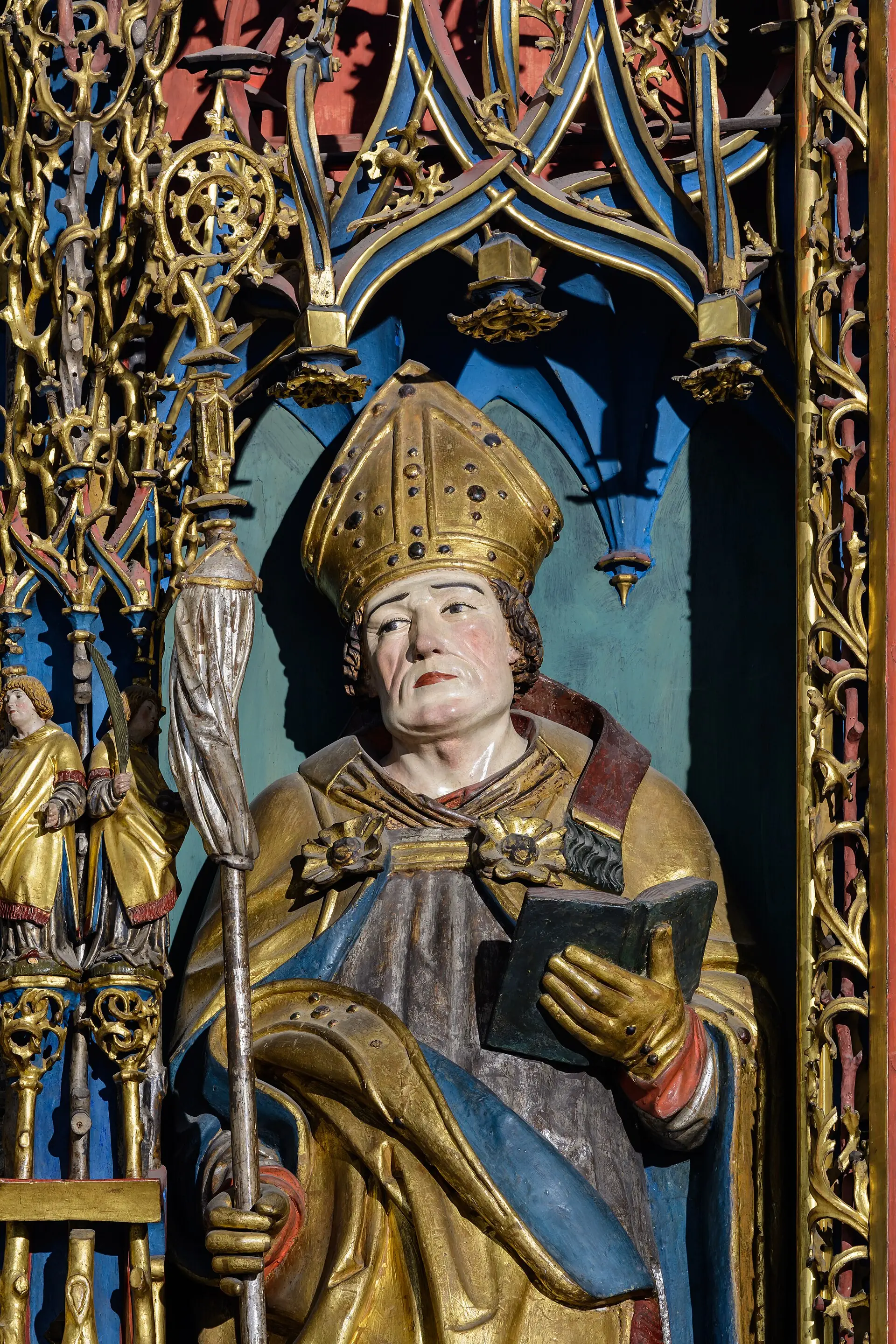
Around 696 Bishop Rupert settled in the ruins of Roman Juvavum, and Salzburg became the base of the Christian mission to the eastern Alps.
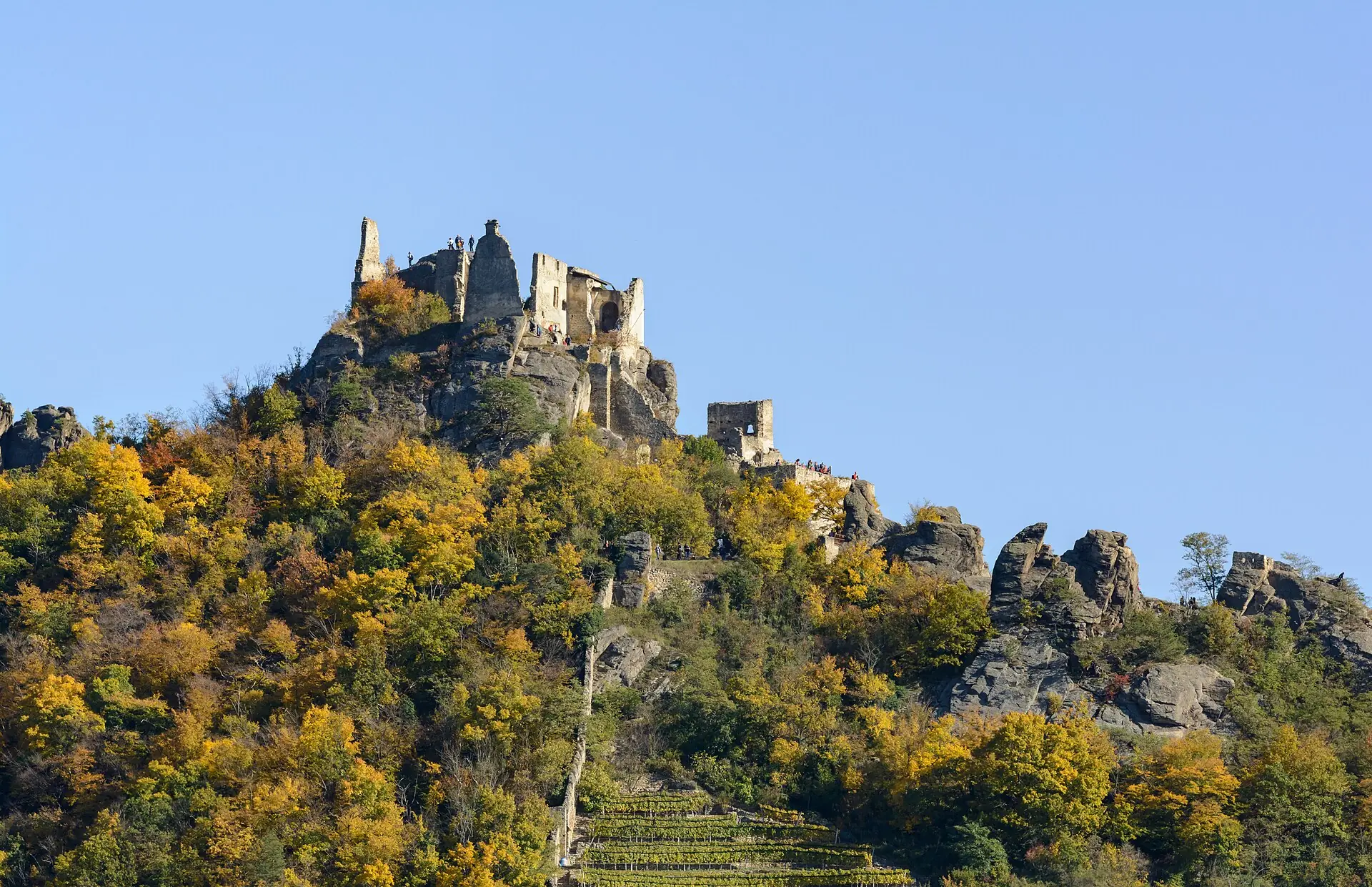
788 – 1245
From a frontier march on the Danube to the Duchy of Austria.
Charlemagne deposed the last Agilolfing duke of Bavaria in 788 and destroyed the Avars, creating a march on the Danube. After the Magyar raids and Otto I's victory on the Lechfeld, the Babenberg Leopold I became margrave in 976, and "Ostarrîchi" appears in a charter of 996. The Babenbergs moved their seat from Melk to Vienna, founded Klosterneuburg and Heiligenkreuz, won the status of a duchy in the Privilegium Minus of 1156 and inherited Styria; Leopold V held Richard the Lionheart prisoner at Dürnstein.

Otto I's victory over the Magyars in 955 ended their raids and opened the Danube valley to a new eastern march.
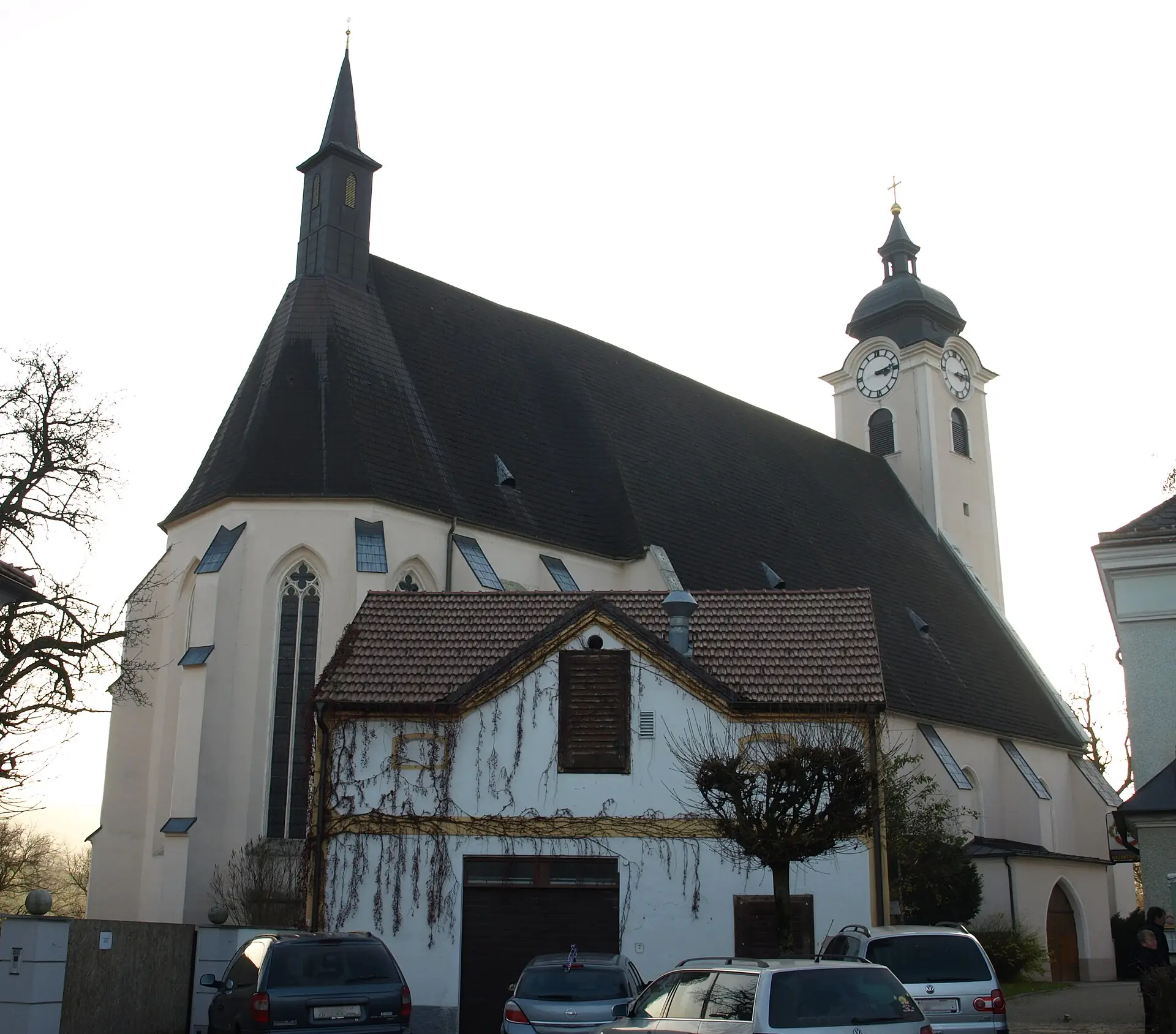
A charter of Otto III from 996 records the name Ostarrîchi, from which the German Österreich derives.
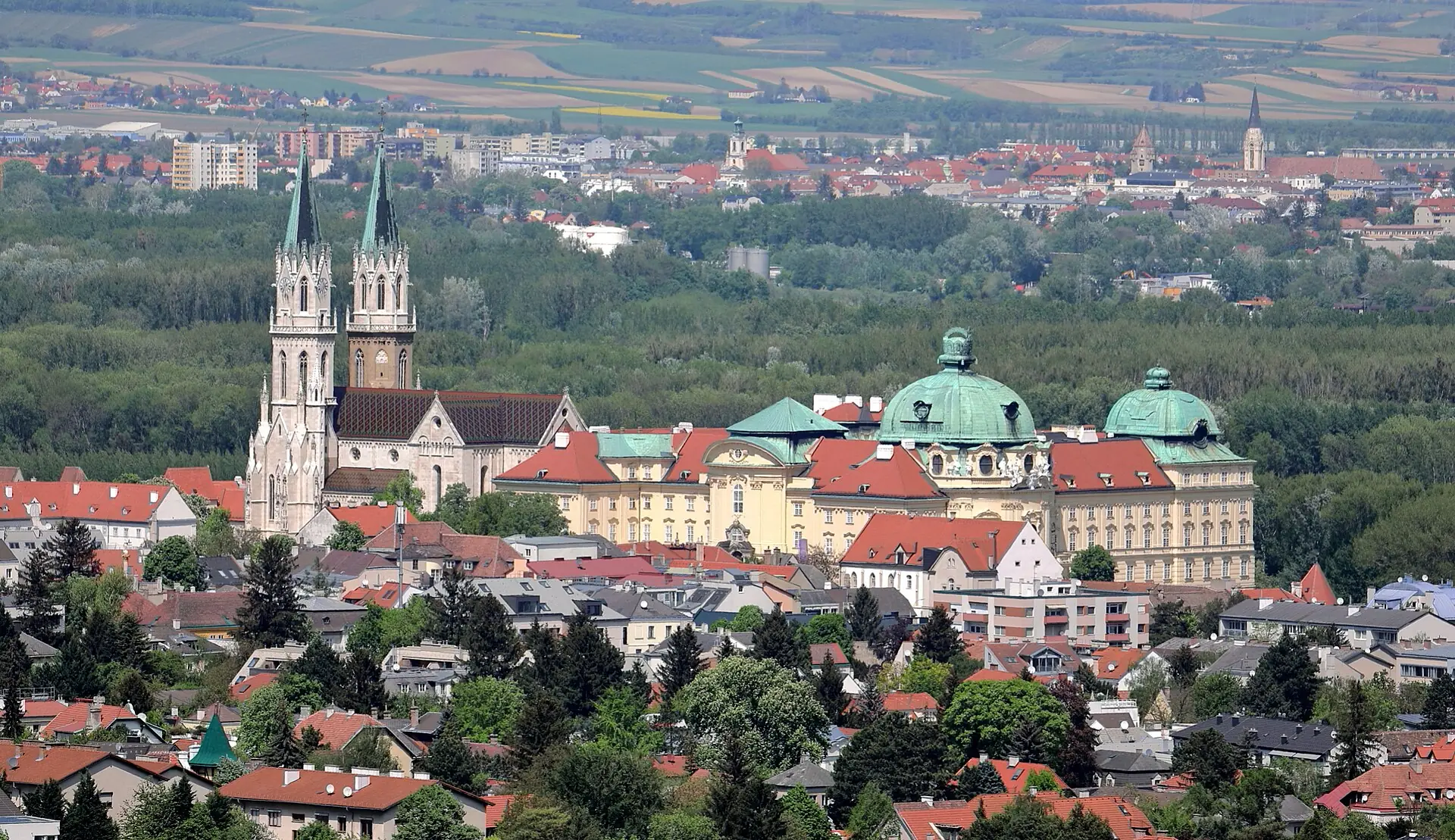
Margrave Leopold III, later Austria's patron saint, founded Klosterneuburg beside his residence and Heiligenkreuz in the Vienna Woods.
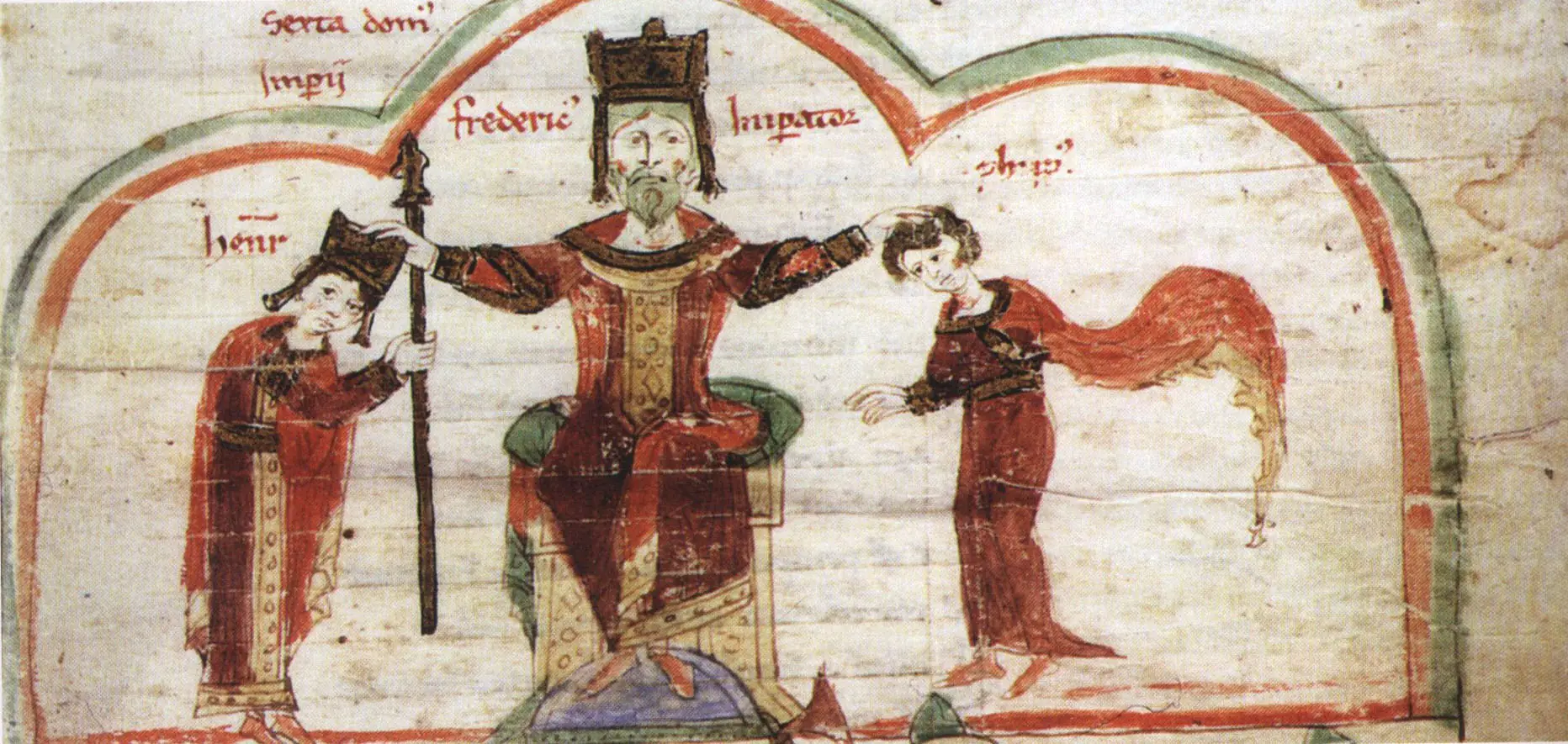
The Privilegium Minus of 1156 separated Austria from Bavaria and made it a hereditary duchy.

1246 – 1518
The Habsburgs win Austria and build a dynastic empire.
After the last Babenberg fell in 1246, Ottokar II of Bohemia took Austria until Rudolf of Habsburg defeated him on the Marchfeld in 1278. The Habsburgs added Carinthia, Carniola and Tyrol, Rudolf IV founded the University of Vienna and forged the Privilegium Maius, and the dynasty split into rival lines. Frederick III became emperor in 1452, lost Vienna to Matthias Corvinus, and his son Maximilian I built the Habsburg world empire through the marriages with Burgundy, Spain and Hungary.

Rudolf IV began the Gothic rebuilding of St Stephen's in 1359; its south tower rises 136 metres over Vienna.

Rudolf IV and his brothers founded the University of Vienna in 1365, modelled on Paris and meant to rival Prague.

Margaret of Tyrol handed her county to the Habsburgs in 1363, giving them the Alpine passes between Germany and Italy.

Maximilian's marriage to Mary of Burgundy in 1477 began the matches that brought the Habsburgs the Netherlands, Spain, Bohemia and Hungary.

1519 – 1682
Ottoman sieges, Protestant estates and the Catholic victory.
Charles V left the Austrian lands to his brother Ferdinand I, who won Bohemia and Hungary after Mohács in 1526 and held Vienna against Suleiman in 1529. Most of the nobility turned Protestant, while the Habsburgs fought the Ottomans along a military frontier. Under Ferdinand II the Counter-Reformation was enforced, the Bohemian revolt was crushed and the Thirty Years' War ravaged central Europe, and the Peace of Westphalia confirmed the Catholic hereditary lands. Plague struck Vienna in 1679.

The death of King Louis II at Mohács in 1526 made Ferdinand I King of Bohemia and, contested by John Zápolya, of Hungary.

From 1598 Archduke Ferdinand expelled the Protestant preachers of Inner Austria and forced his lands back to Catholicism.

The defeat of the Bohemian estates outside Prague in 1620 decided the first phase of the Thirty Years' War.

Salzburg Cathedral, consecrated in 1628, was the first great Baroque church north of the Alps.

1683 – 1791
Victory over the Ottomans, Baroque splendour and enlightened reform.
The relief of Vienna in 1683 opened the reconquest of Hungary under Prince Eugene, and Austria became a Baroque great power whose palaces, monasteries and the Karlskirche still shape the land. Charles VI's Pragmatic Sanction let Maria Theresa inherit in 1740; she lost Silesia to Prussia but reformed the army, the administration and the schools. Joseph II abolished serfdom, granted toleration and closed monasteries, while Haydn and Mozart made Vienna the capital of music.

Eugene of Savoy destroyed the Ottoman army at Zenta in 1697, and the Treaty of Karlowitz gave the Habsburgs Hungary.

From 1702 Jakob Prandtauer rebuilt Melk Abbey on its rock above the Danube.

Maria Theresa made Schönbrunn the summer residence of a court that reformed the army, the administration and the schools.
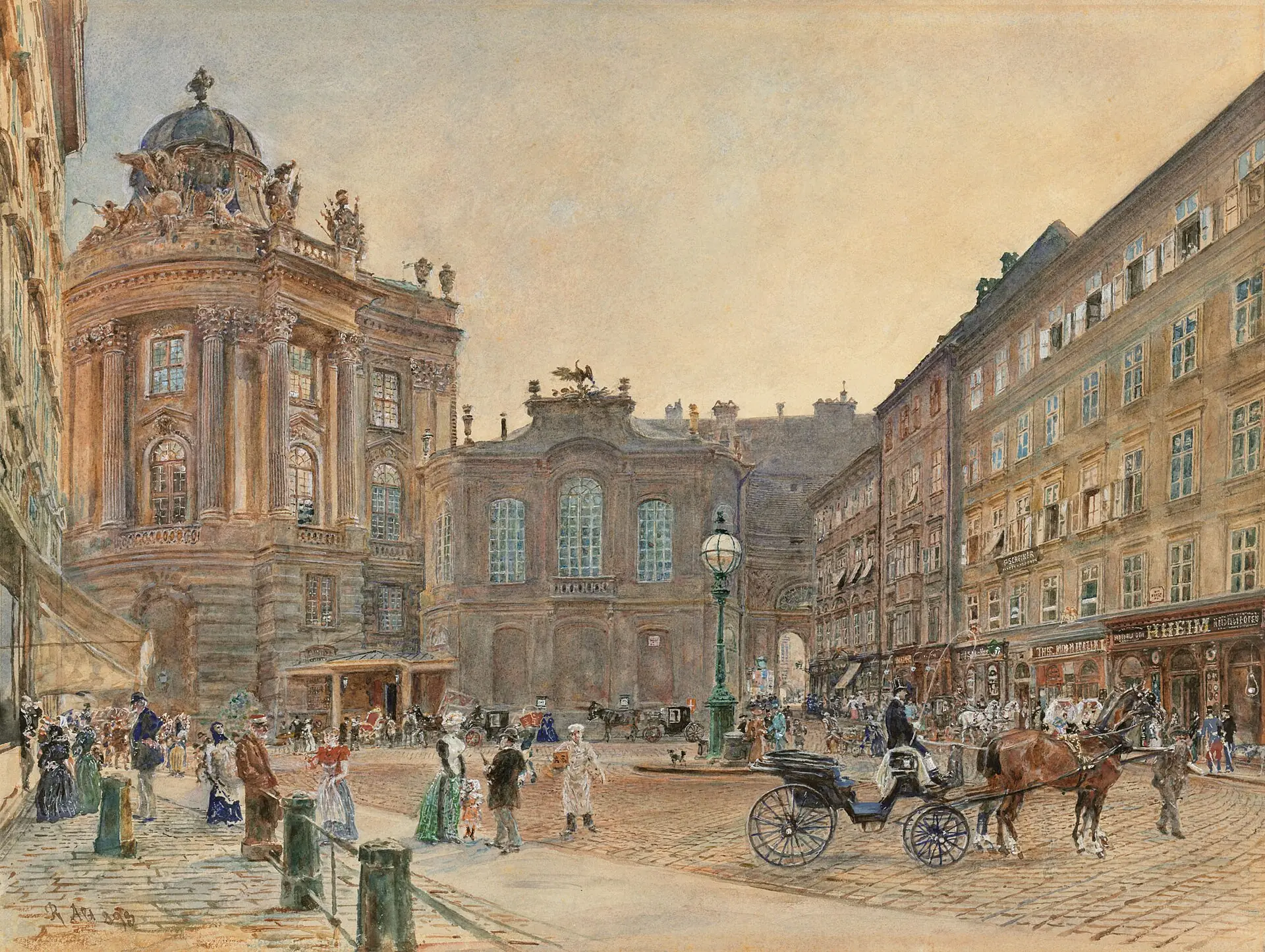
Mozart's The Marriage of Figaro, written with Lorenzo Da Ponte, was first performed at the Burgtheater in 1786.

1792 – 1866
Napoleon, Metternich's Europe, revolution and the loss of Germany.
Francis II proclaimed the Austrian Empire in 1804 and laid down the Holy Roman crown in 1806. Napoleon twice took Vienna, defeated Austria at Austerlitz and Wagram and married the emperor's daughter, but the Congress of Vienna made Metternich the arbiter of Europe. A police state and the private culture of the Biedermeier followed, until the revolution of 1848 swept Metternich away. The young Franz Joseph ruled with neo-absolutism, lost Lombardy in 1859 and, at Königgrätz in 1866, Austria's place in Germany.

At Aspern-Essling in May 1809 Archduke Charles inflicted on Napoleon his first personal defeat in a major battle.

Beethoven's Ninth Symphony, with its Ode to Joy, was first performed at the Kärntnertor theatre in Vienna in 1824.

Revolution in Vienna toppled Metternich in March 1848, and the peasants were freed from their lords that September.

Franz Joseph ordered the city walls demolished in 1857, making room for Vienna's great boulevard.
1867 – 1918
The Dual Monarchy, Vienna 1900 and the war that ended the empire.
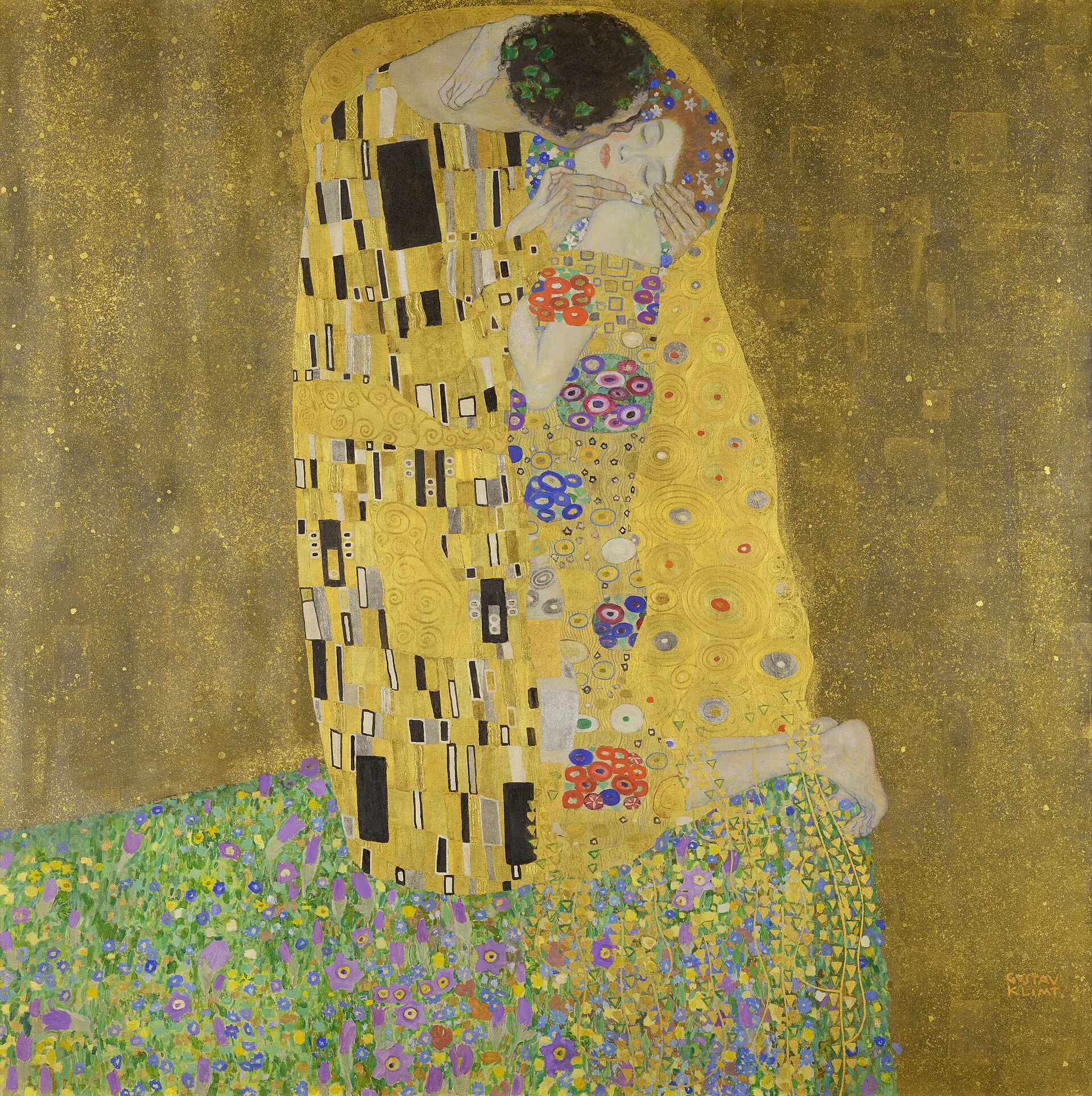
The Compromise of 1867 created the Dual Monarchy of Austria-Hungary, with a liberal constitution for the Austrian half. Vienna built the Ringstrasse and became the city of Freud, Klimt, Mahler and Schnitzler, while nationalist conflicts paralysed parliament and Karl Lueger's Christian Socials ruled the capital. The assassination of Franz Ferdinand in Sarajevo in 1914 led to the First World War, which destroyed the monarchy in 1918.

Franz Joseph was crowned King of Hungary in 1867, and the empire became the Dual Monarchy of Austria-Hungary.

Sigmund Freud's The Interpretation of Dreams of 1899 made Vienna the birthplace of psychoanalysis.

The murder of Archduke Franz Ferdinand on 28 June 1914 led within a month to war with Serbia.

From 1915 Austro-Hungarian soldiers fought Italy on the Isonzo and in the ice and rock of the high Alps.

1918 – 1955
A fragile republic, dictatorship, Nazi rule and occupation.
German-Austria was proclaimed a republic in November 1918; the Treaty of Saint-Germain forbade union with Germany. Hyperinflation, the burning of the Palace of Justice and armed party militias marked the First Republic, until Dollfuss shut parliament in 1933 and crushed the Social Democrats in 1934. Hitler's troops marched in on 12 March 1938; Austria's Jews were expelled or murdered and Mauthausen became a place of mass death. Restored in 1945, Austria was occupied by the four Allies until the State Treaty of 1955.
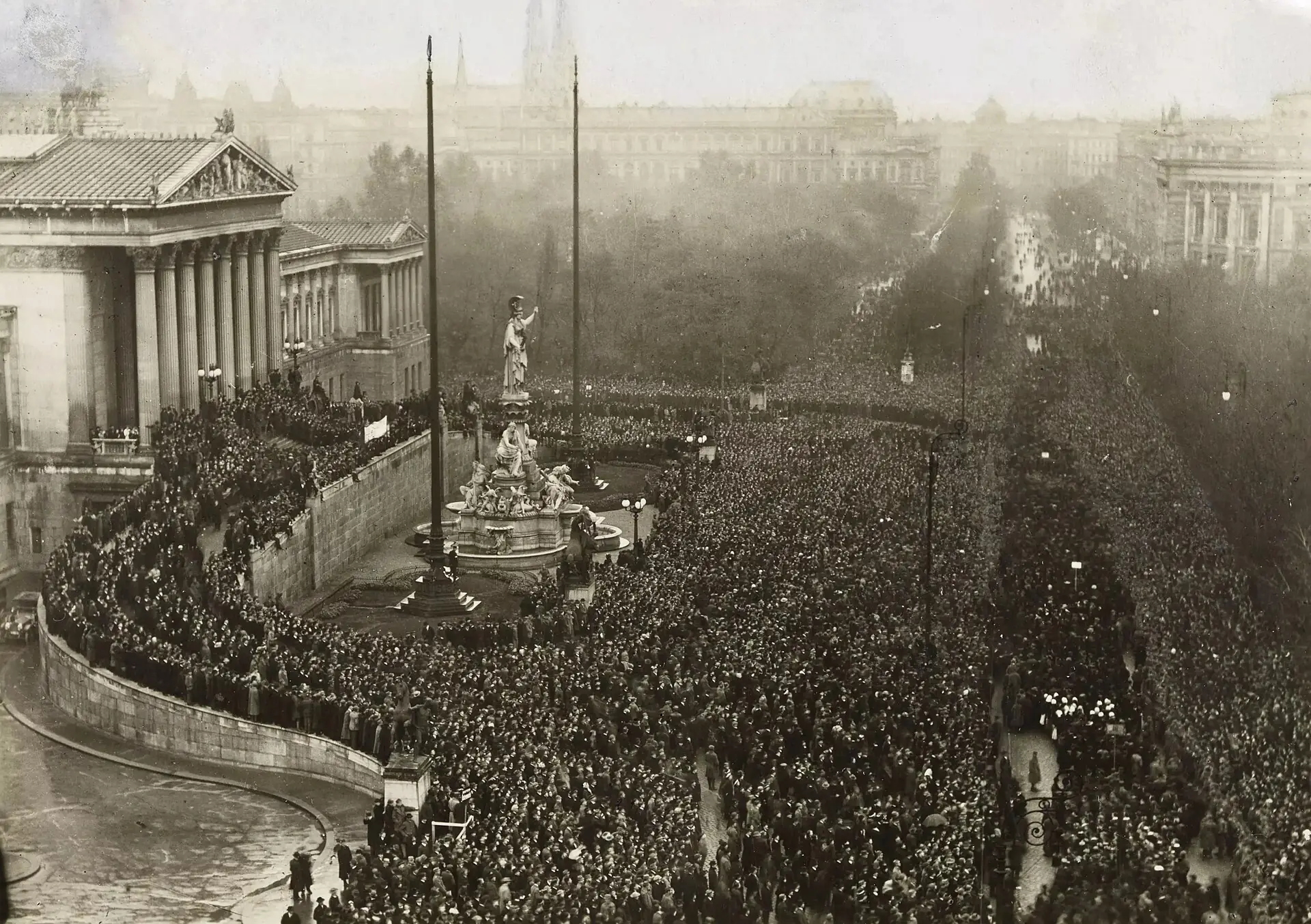
On 12 November 1918 German-Austria was proclaimed a democratic republic outside the Parliament in Vienna.
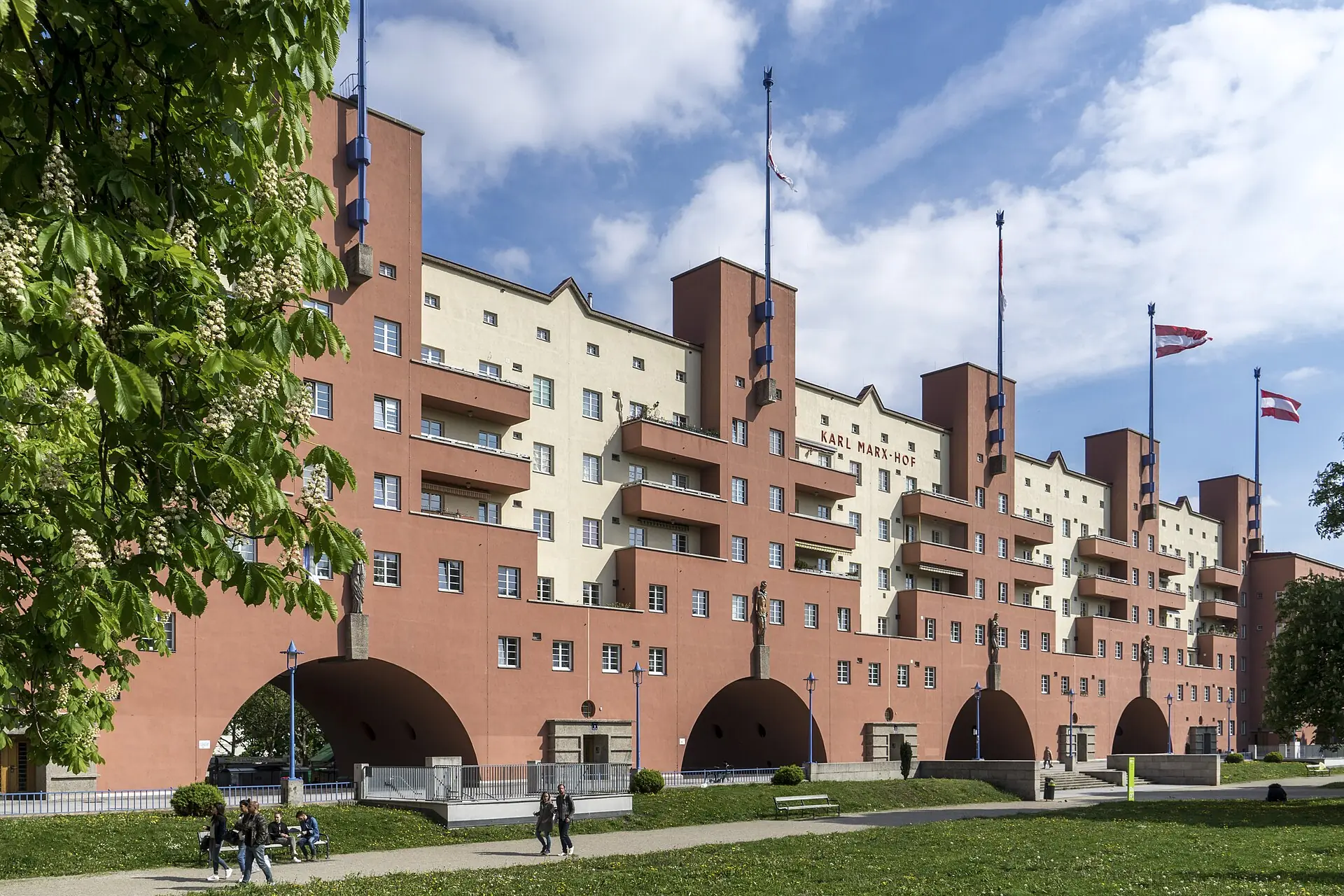
In February 1934 the army shelled socialist strongholds such as the Karl-Marx-Hof, and the Social Democratic Party was banned.

German troops crossed the border on 12 March 1938, and Austria was annexed to Nazi Germany.

Of the roughly 190,000 people held in the Mauthausen camp complex, around 90,000 died or were murdered.
1955 – present
Neutral Austria, the European Union and the present day.
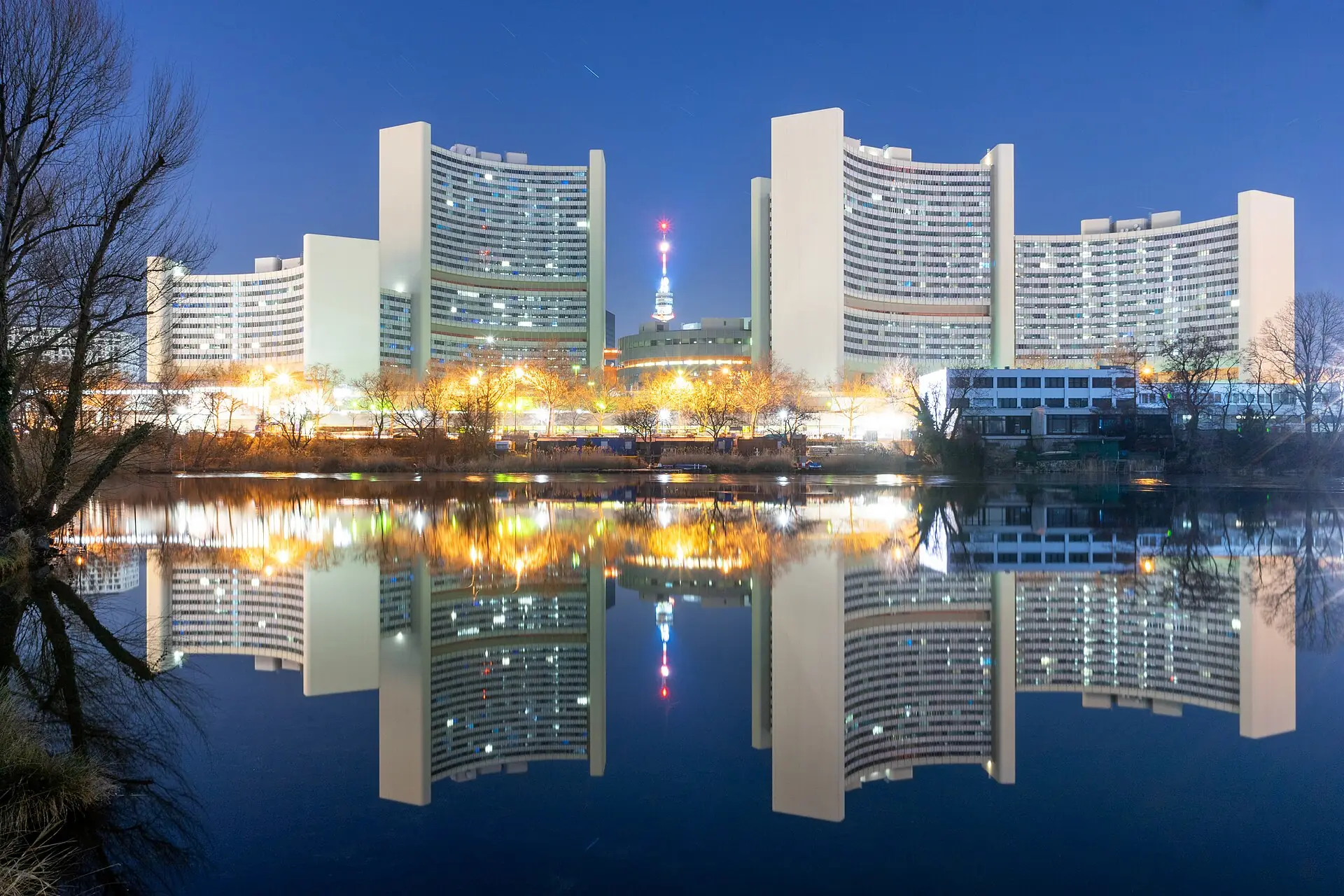
The State Treaty and the declaration of permanent neutrality of 1955 opened decades of grand coalitions, social partnership and economic growth. Austria took in refugees from Hungary in 1956 and Czechoslovakia in 1968, Kreisky's governments modernised the country and Vienna became a seat of the United Nations. The Waldheim affair forced a reckoning with the Nazi past; Austria joined the European Union in 1995 and the euro in 1999, and has since been shaped by migration, the rise of the Freedom Party and changing coalitions.
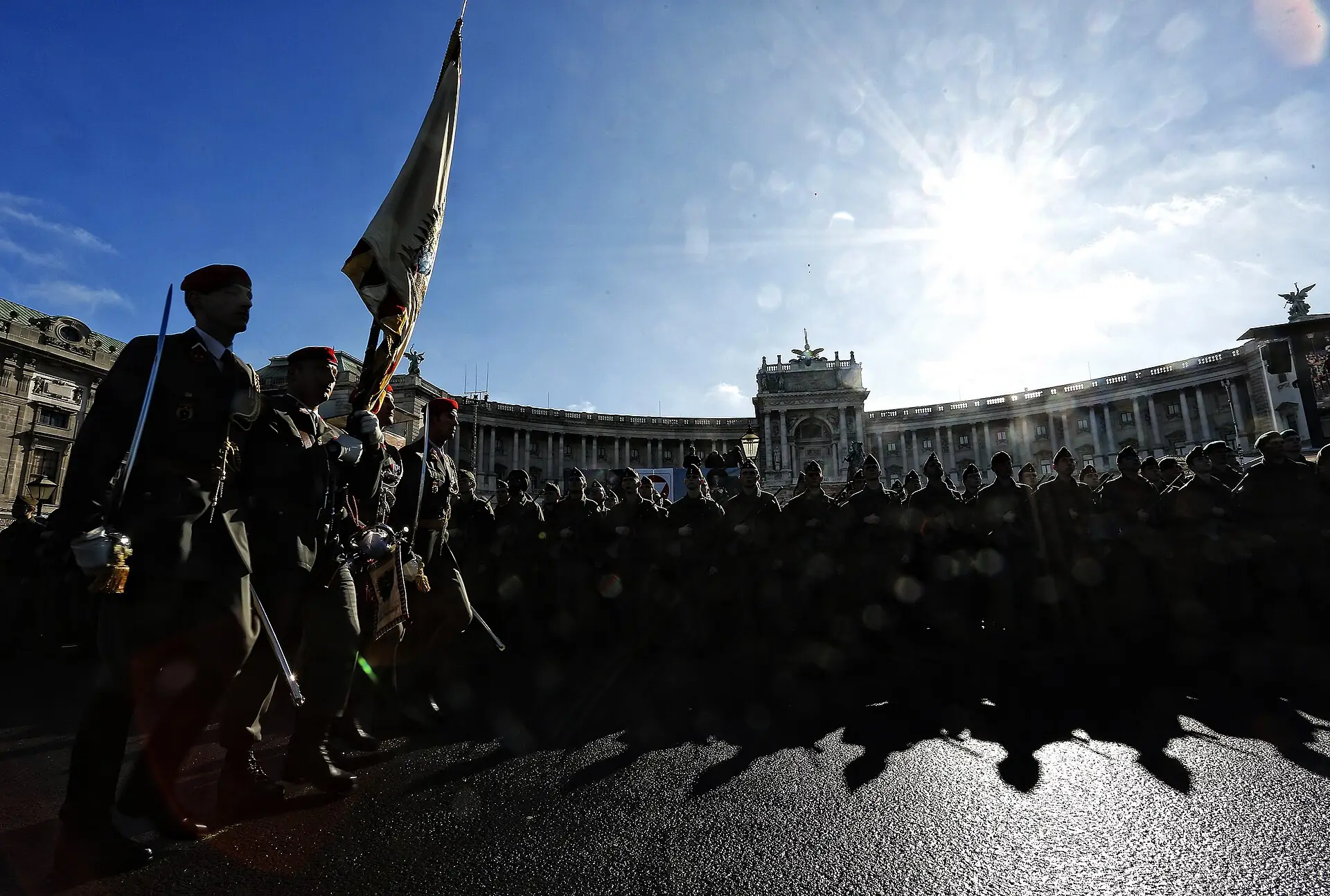
On 26 October 1955, now National Day, parliament declared Austria's permanent neutrality.
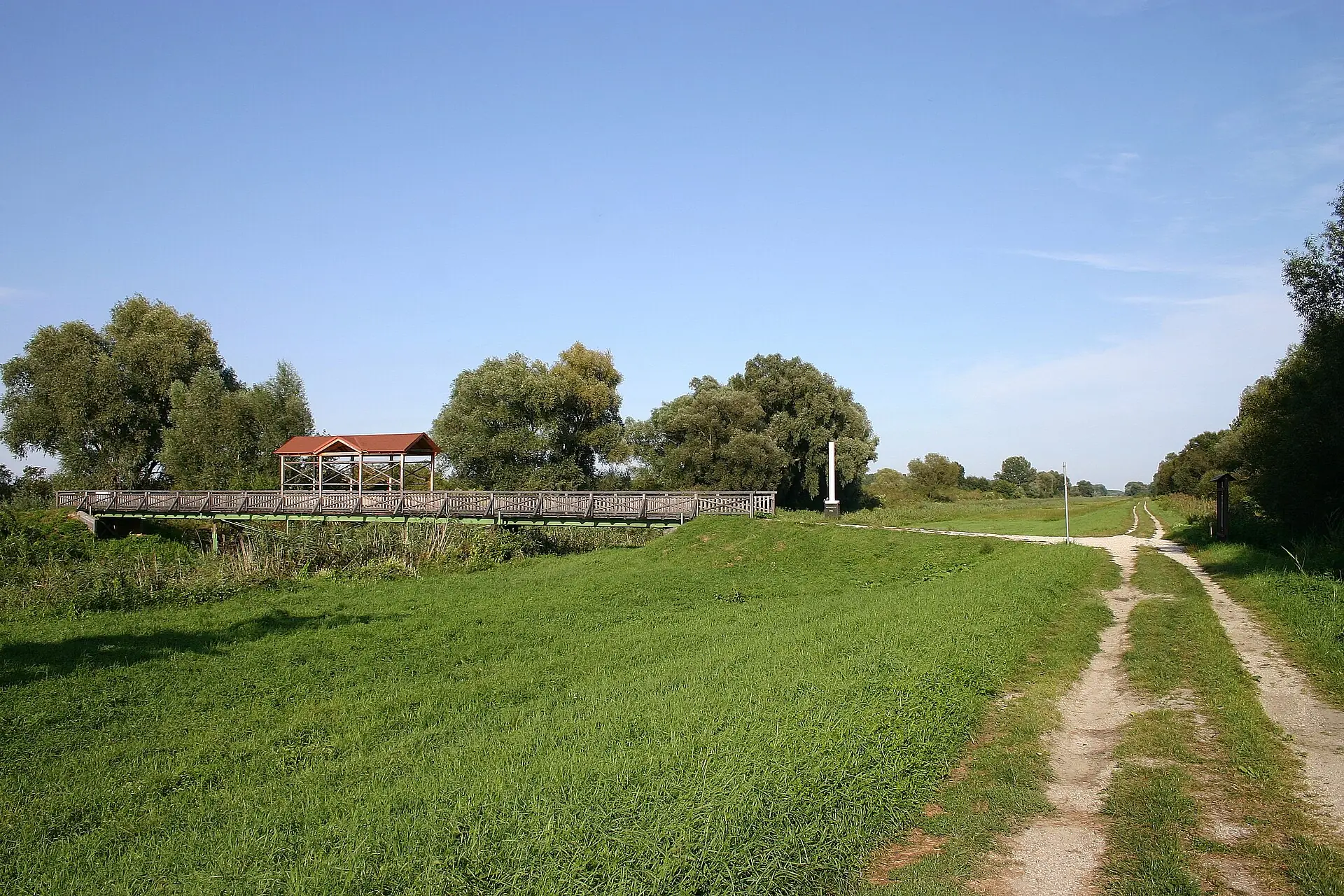
Around 200,000 Hungarians fled after the revolution of 1956, most of them across the border into Austria.
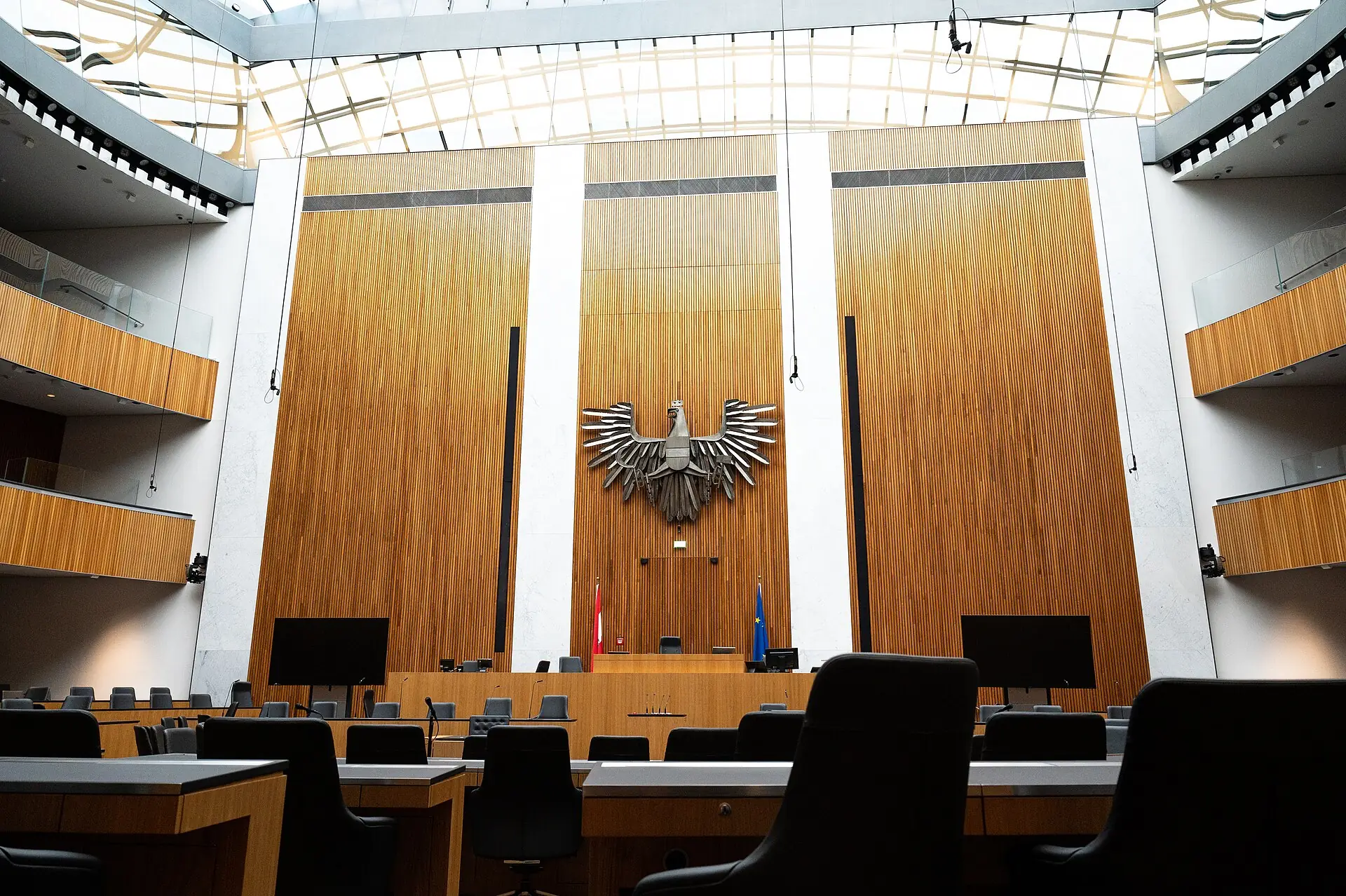
In 1991 Chancellor Vranitzky acknowledged that Austrians shared responsibility for the crimes of Nazi Germany.

Austria joined the European Union on 1 January 1995, together with Finland and Sweden.
Austria and Its Neighbours, 700 BCE – Today
From the Hallstatt salt lords and Celtic Noricum to Roman provinces on the Danube, Charlemagne's march, the Babenberg duchy, the Habsburg lands that grew into an empire stretching from Spain to Transylvania, Austria-Hungary, the small republic of 1918, the Anschluss, the four occupation zones and the neutral Austria of today. Move to any year, or through 40 narrated chapters, and watch Austria grow from a frontier march into a great power and back into an Alpine republic.
Move the slider to any year: every polity recorded for that year is drawn. The powers featured in the current chapter are gold, other Austrian and Habsburg lands green, the four Allied occupation zones of 1945–55 in their own colours, and everything else grey; 40 chapters carry the story. Borders change only where the dataset records a change, and they fade rather than morph between dated polygons. The slider is stretched so that the dense modern centuries get more room than the long ancient ones. Stars mark capitals and dots mark towns and sites, each shown in its own years. Hover a territory for its name and dates; click it to open its Wikipedia article.
Borders from 1250 onwards and the neighbouring states come from the Cliopatria dataset. The Hallstatt, Celtic, Roman, Carolingian and Babenberg territories and the occupation zones are approximate reconstructions drawn for this map from Austria’s present federal-state boundaries and published descriptions, and ancient and early medieval dates are approximate. Cliopatria’s “(Habsburg Monarchy)” is shown as the Habsburg Monarchy with its dependencies, and its personal union of Spain and Austria under Charles V as the Empire of Charles V. The dashed line is Austria today, for orientation only.
If the page stays blank, the site doesn't allow embedding — use “Open in new tab”.
From the Venus of Willendorf and the salt mines of Hallstatt to the Second Republic, Austrian history has left the world the music of Haydn, Mozart, Beethoven and Strauss, the Baroque abbeys and palaces of the Habsburgs, the experience of a great multinational monarchy, the ideas of Vienna 1900, and a modern history shaped by dictatorship, Nazi crimes, neutrality and Europe.
Haydn, Mozart and Beethoven made Vienna the centre of Classical music, Schubert and the Strauss family followed, and Mahler and Schoenberg opened the way to modern music. The Vienna Philharmonic dates from 1842, the Vienna Boys' Choir traces its roots to Maximilian I's court chapel of 1498, and Silent Night was first sung at Oberndorf near Salzburg in 1818. Haydn's Emperor's Hymn survives as the melody of Germany's national anthem, and the Salzburg Festival has staged Jedermann since 1920.
After the Ottoman danger passed in 1683, Austria was rebuilt in the Baroque: Melk Abbey above the Danube, Fischer von Erlach's Karlskirche, Hildebrandt's Belvedere for Prince Eugene and Maria Theresa's Schönbrunn. Salzburg Cathedral had led the way in 1628. The historic centres of Vienna and Salzburg and the palace and gardens of Schönbrunn are UNESCO World Heritage sites, and the Spanish Riding School, first recorded in 1565, still trains its Lipizzaner horses at the Hofburg.
Through war and above all through marriage ("let others wage war; you, happy Austria, marry") the Habsburgs gathered Austria, Bohemia, Hungary and lands from Lombardy to Galicia into one monarchy. The Compromise of 1867 turned it into Austria-Hungary, and the December Constitution of the same year promised the peoples of the Austrian half equal rights. The General Civil Code of 1811 is still in force, and the monarchy's legacy lives on in the cities, railways and cultures of central Europe.
Around 1900 Vienna was the city of Sigmund Freud and psychoanalysis, of Klimt and the Secession, Otto Wagner and Adolf Loos, Gustav Mahler, Theodor Herzl and Karl Kraus. Ludwig Wittgenstein and the Vienna Circle changed philosophy, and Austrian scientists such as Ludwig Boltzmann, Lise Meitner and Erwin Schrödinger shaped modern physics. Earlier, Kepler had published his third law in Linz, and Joseph II's General Hospital of 1784 grew into a centre of modern medicine.
The Venus of Willendorf is one of the best-known works of Ice Age art, Ötzi the Iceman is Europe's oldest known natural human mummy, and Hallstatt gave its name to the Early Iron Age of central Europe. The pile dwellings of the Mondsee and Attersee are part of a UNESCO World Heritage site, and the ruins of Carnuntum and the street plan of Roman Vindobona recall the Danube frontier of the Roman Empire.
Mountains cover most of Austria, and the Danube has been its main road since Roman times. The Hallstatt-Dachstein Salzkammergut, the Wachau and the Semmering Railway are UNESCO World Heritage sites; Innsbruck hosted the Winter Olympics in 1964 and 1976. The occupation of the Hainburger Au in 1984, which saved the Danube wetlands from a power station, and the Zwentendorf referendum of 1978 against nuclear power made the environment a lasting force in Austrian politics.
The State Treaty of 1955 ended the occupation, and the declaration of permanent neutrality on 26 October, now National Day, became part of Austrian identity. Neutral Austria took in refugees from Hungary in 1956 and hosted East and West in Vienna, which became a seat of the United Nations, the IAEA and OPEC. Grand coalitions and social partnership made the country one of the most prosperous in Europe, and it joined the European Union in 1995.
About 65,000 Austrian Jews were murdered in the Holocaust, and some 90,000 people died at Mauthausen and its subcamps. For decades the Second Republic described Austria as Nazi Germany's "first victim", following the Moscow Declaration of 1943. The Waldheim affair of 1986 broke that consensus; in 1991 Chancellor Vranitzky acknowledged Austrian responsibility, and a National Fund for the victims of National Socialism and restitution agreements followed.
The timeline is built from the project's own research dossier and its event, ruler, head-of-government and map datasets, checked against English Wikipedia, Encyclopaedia Britannica, the Wien Geschichte Wiki, Austria-Forum, Die Welt der Habsburger, the Austrian Parliament and Federal Chancellery, the Documentation Centre of Austrian Resistance (DÖW), the United States Holocaust Memorial Museum and the Mauthausen Memorial. Linked articles are starting points for verification, not proof that every claim has been independently checked. Prehistoric, ancient and early medieval dates are approximate; the Nazi period and the Holocaust follow mainstream scholarship and the memorial institutions; historical borders are reconstructions.
Every event and every ruler has its own sources. See Sources & Further Reading in each timeline entry and ruler profile.
History is connected. Explore the bigger picture.
AllHistories is an independent visual history project designed to make the past easier to understand, explore, and connect.
History is more than a collection of dates, rulers, and battles. Events rarely happen in isolation. Borders shift, civilizations influence one another, ideas spread, and decisions made centuries ago continue to shape the world today.
Through interactive timelines, historical maps, and visual storytelling, AllHistories helps uncover these connections and makes complex historical subjects more accessible and engaging.
Travel through centuries, discover turning points, and understand how historical events unfold and connect.
Explore how borders, civilizations, populations, trade routes, beliefs, and spheres of influence have changed over time.
Go beyond dates and discover the individuals, places, decisions, and circumstances behind historical developments.
Explore connections between countries, empires, civilizations, and historical themes to better understand cause and consequence.
Features vary depending on the historical subject.
AllHistories draws on historical research, published references, public archives, and available historical datasets. The information is organized and presented through interactive digital experiences.
History is not always certain or universally agreed upon. Dates, territorial boundaries, population figures, and interpretations may differ between sources. Some information is necessarily simplified or estimated for visual presentation.
The goal is to encourage curiosity and independent exploration, not to replace academic publications or specialist historical research.
When you visit AllHistories, the web server may process technical information such as your IP address, requested pages, browser details and access times to deliver pages and maintain the service.
Some pages load Google Analytics, Google Fonts, externally hosted images, maps or other third-party resources. Requests to these providers can transmit technical information, including your IP address. Contact forms may use Google reCAPTCHA to help prevent abuse. These providers apply their own privacy policies.
The website uses browser storage for preferences such as the selected theme. Country microsites also use a session cookie to support website functionality, including request protection. Analytics or other third-party services may use additional cookies or storage, depending on the page and your browser settings.
When you submit a correction or contact form, the information you provide, such as your name, email address and message, is processed to review and respond to your request. Please avoid including sensitive personal information.
You can manage cookies and site storage in your browser and control third-party requests through browser privacy settings. For privacy questions or requests concerning information you submitted, use the contact option on the microsite where you sent it.
Links to sources and other websites take you to services with their own privacy practices. Review their policies before providing personal information.
AllHistories provides historical information for general education and exploration. Its content is not professional, legal, financial or other specialist advice.
We aim to present useful, well-sourced summaries, but cannot guarantee that every date, statement, translation or interpretation is complete or accurate. Verify important claims against the cited sources and relevant scholarship. Content may be corrected or updated.
Maps are simplified historical illustrations. Borders, place names and territorial labels may vary by period and source. Their appearance does not express a position on sovereignty or present-day territorial disputes.
Images and source material may belong to their respective creators or rights holders. Consult the image credit, source page and license before reusing material. A link or credit does not grant additional reuse rights.
External links are provided for reference. AllHistories does not control the content, availability or policies of third-party websites.
To report an error or a concern about credited material, use the contact option on the relevant country microsite and identify the page, material and supporting details.