Key facts of the era
Key Events
Journey through the events, people, wars and ideas that shaped Albania, from the Palaeolithic hunters of Xarë to the republic of today.
Follow the Illyrians and the Greek colonies of Epidamnos and Apollonia, Roman and Byzantine rule, the Principality of Arbanon and the Angevin Kingdom of Albania, Skanderbeg's League of Lezhë, four centuries under the Ottomans, the Bushati pashas and Ali Pasha, the National Awakening and independence at Vlorë, King Zog and the Italian invasion, the partisan war, Enver Hoxha's Albania and its bunkers, the fall of communism, the pyramid crisis of 1997 and the road to NATO and the European Union.
Meet the Illyrian kings, the lords of Arbanon, Skanderbeg, the sultans, the heads of state of independent Albania, King Zog, the communist leaders and the presidents, and the pashas, prime ministers and Party leaders who governed.
From the Illyrian kings, the lords of Arbanon and Skanderbeg to the Ottoman sultans, King Zog, the communist leaders and the presidents of Albania, with the pashas, prime ministers and Party leaders who governed the country.
A Journey Through the Ages
Albania, a small mountainous country of the western Balkans between Montenegro, Kosovo, North Macedonia, Greece and the Adriatic and Ionian seas, has been inhabited since Palaeolithic hunters left their flint tools near Xarë about 40,000 years ago. Neolithic farmers settled at Vashtëmi about 6600 BCE and the Maliq culture flourished beside the lake of the Korçë basin, Bronze Age communities raised burial tumuli, and in the Iron Age the Illyrian peoples built hill-forts such as Gajtan above Shkodër. Greek colonists founded Epidamnos in 627 BCE, followed by Apollonia, Butrint and Oricum, the Illyrian kings Bardylis, Glaukias, Agron and Genthius and Queen Teuta ruled the interior and the northern coast, and Rome ended the Illyrian kingdom in 168 BCE, built the Via Egnatia from Dyrrachium and Apollonia and made the country part of its Balkan provinces.
The Byzantine town of Dyrrachium was fought over by Goths, Slavs, Bulgarians and Normans, the Albanoi are first named in 1043, and about 1190 Progon founded the Principality of Arbanon around Krujë. Charles of Anjou proclaimed a Kingdom of Albania in 1272, Stefan Dušan conquered the country in 1343–1346, and after his empire fell the Thopia, Balšić, Muzaka and Dukagjini ruled their own lands while Venice held Durrës and Shkodër. The Ottomans took the interior in the early 15th century, and in 1443 Gjergj Kastrioti, called Skanderbeg, seized Krujë and in 1444 united the Albanian lords in the League of Lezhë. For a quarter of a century he defeated Ottoman armies, and after his death in 1468 Krujë fell in 1478 and Shkodër in 1479.
For four centuries Albania was Ottoman. Most Albanians became Muslims, the Bektashi order spread, Albanian communities in Italy and Greece, the Arbëreshë and the Arvanites, preserved the old language abroad, the Bushati pashas of Shkodër and Ali Pasha of Yanina ruled almost independently in the late 18th century, and the towns of Berat and Gjirokastër grew rich. In the 19th century the Tanzimat revolts, the League of Prizren of 1878, the Frashëri brothers, the first Albanian schools and the Latin alphabet adopted at the Congress of Manastir in 1908 built the national movement, and on 28 November 1912 Ismail Qemali proclaimed independence at Vlorë. After the principality of Wilhelm of Wied and the First World War, the Congress of Lushnjë of 1920 made Tirana the capital, Fan Noli's revolution of 1924 was overthrown by Ahmet Zogu, and Zogu ruled as president and from 1928 as King Zog I until Italy invaded on 7 April 1939.
Occupied by Italy and then by Germany, Albania was liberated by its own partisans in November 1944, and Enver Hoxha built a Stalinist state that broke with Yugoslavia in 1948, with the Soviet Union in 1961 and with China in 1978, banned religion in 1967, covered the country with concrete bunkers and imprisoned tens of thousands before the students of December 1990 and the fall of Hoxha's statue in February 1991 ended one-party rule. Democratic Albania has lived through mass emigration, the collapse of the pyramid schemes in 1997, the Kosovo refugee crisis of 1999 and the earthquake of 2019; it joined NATO in 2009, became a candidate for the European Union in 2014 and opened accession negotiations in 2022. Its population is now about 2.4 million. Explore the ten ages below through selected events from the timeline.

40,000 BCE – 701 BCE
Ice Age hunters, the first farmers and the builders of hill-forts.
Palaeolithic Xarë and Gajtan, Neolithic Vashtëmi and the Maliq culture, Bronze Age tumuli and the first Illyrian hill-forts.

From about 24,700 BCE hunter-gatherers used the cave of Konispol in the far south, one of the longest-occupied prehistoric sites in Albania.

About 6600 BCE the settlement of Vashtëmi near Korçë became one of the earliest farming communities in Europe.

About 5000 BCE villages around Lake Maliq and Dunavec gave rise to the most prominent Neolithic culture of Albania.

From about 800 BCE fortified hilltop settlements such as Gajtan near Shkodër and Rosujë in the Valbona valley appeared across the north.

700 BCE – 395
Greek colonies, Illyrian kings and Roman provinces.
Greek Epidamnos, Apollonia and Butrint beside Illyrian peoples and kingdoms (Bardylis, Glaukias, Agron, Teuta, Genthius); the Illyrian Wars, Roman conquest (168 BCE), the Via Egnatia and Roman Epirus Nova.

In 627 BCE colonists from Corcyra and Corinth founded Epidamnos, the later Dyrrachium and modern Durrës, on the coast of the Taulantii.

In 230 BCE the regent Teuta launched naval raids, sacked Phoenice and defied the Roman envoys, and Rome went to war the following year.

From about 146 BCE Rome built a military road from Dyrrachium and Apollonia across the Balkans, up the Shkumbin valley to Lake Ohrid and on to the east.
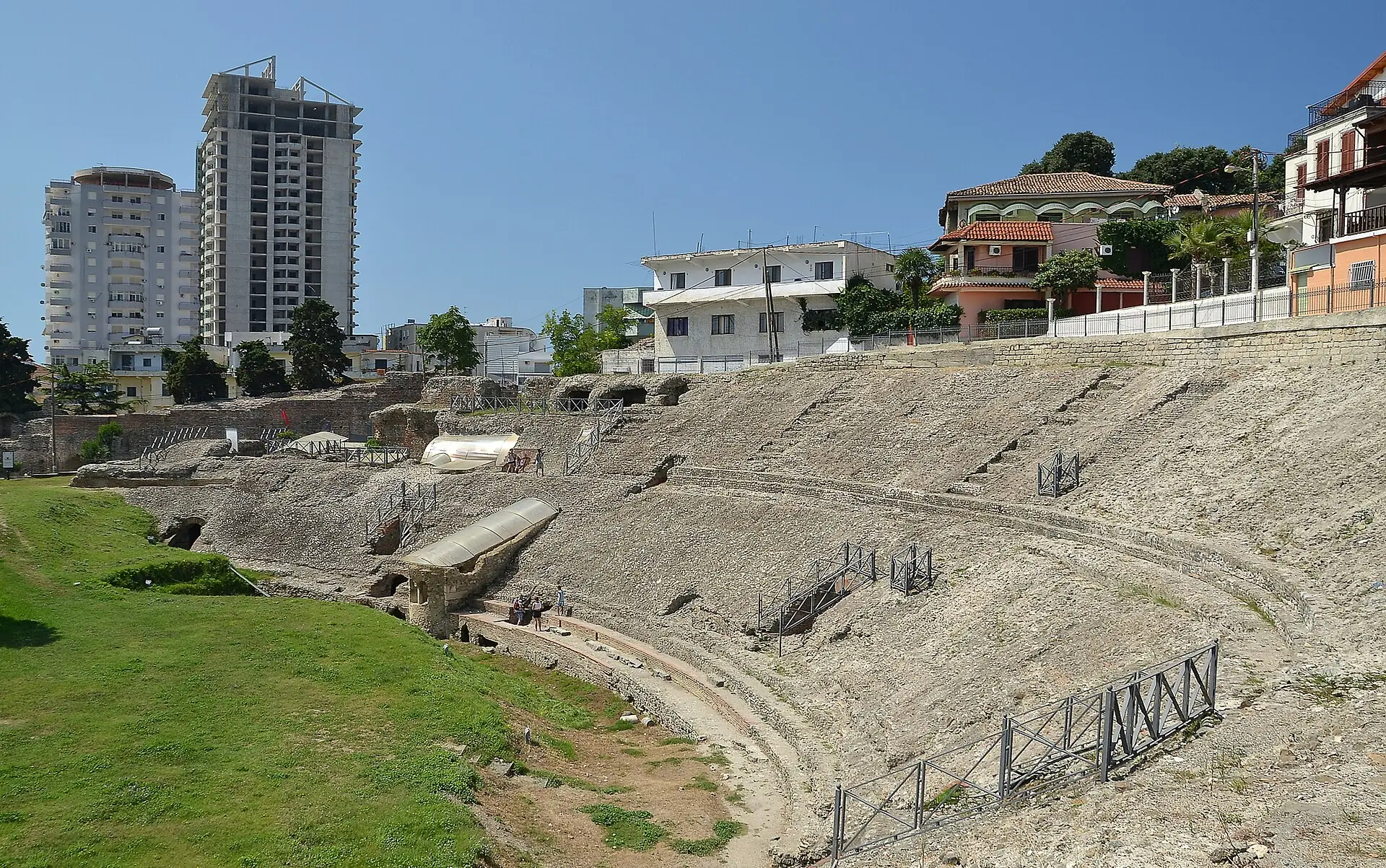
About 110 CE, under Trajan, Dyrrachium built an amphitheatre for around 20,000 spectators, the largest in the Balkans.

396 – 1442
From Byzantine Dyrrachium to the first Albanian states.
Byzantine Dyrrachium, Bulgarian and Norman wars, the Principality of Arbanon (1190), the Angevin Kingdom of Albania (1272), Serbian and Venetian rule, and the Albanian principalities of the Thopia, Balsha, Kastrioti and Dukagjini.

In 1043 the historian Michael Attaleiates named the Albanoi among the forces of George Maniakes, the first secure medieval mention of the Albanians.

On 21 February 1272 Charles of Anjou was proclaimed King of Albania, creating the Regnum Albaniae around Durrës.

Between 1343 and 1346 the Serbian king Stefan Dušan conquered almost all of Albania except Durazzo and was crowned emperor.

In 1432–1436 Albanian lords led by Gjergj Arianiti, Andrea Thopia and Depë Zenebishi rose against the Ottoman Sanjak of Albania.

1443 – 1479
A quarter of a century of resistance to the Ottomans.
Gjergj Kastrioti Skanderbeg's League of Lezhë resisted the Ottomans for a quarter of a century; Krujë and Shkodra fell only in 1478–79.

On 29 June 1444 Skanderbeg defeated an Ottoman army under Ali Pasha on the plain of Torvioll in his first major victory.

In 1450 Sultan Murad II and his son Mehmed besieged Krujë for months but failed to take Skanderbeg's capital.

On 17 January 1468 Skanderbeg died of illness at Lezhë, while preparing a new war council.

On 16 June 1478, after more than a year of blockade, Skanderbeg's fortress of Krujë surrendered to the Ottomans.

1480 – 1830
Islamisation, the pashas of Shkodër and Yanina and the first Albanian books.
Four centuries of Ottoman rule: Islamisation and the Bektashi order, emigration of the Arbëreshë, Berat and Gjirokastër, and the semi-independent pashaliks of the Bushati of Shkodër and Ali Pasha of Yanina.

In 1555 the Catholic priest Gjon Buzuku completed the Meshari, the oldest known book printed in Albanian.

Between the 16th and 18th centuries, and above all in the 17th, most Albanians converted from Christianity to Islam under Ottoman rule.

In 1743 the New Academy opened in Moscopole, a flourishing Aromanian trading city with one of the first printing houses in the Ottoman Balkans.

Under Ottoman rule Berat and Gjirokastër grew into towns whose houses, mosques and churches are now a UNESCO World Heritage Site.

1831 – 1912
The Rilindja, the alphabet and the declaration of independence.
Tanzimat revolts, the League of Prizren (1878), the Frashëri brothers and the Rilindja, the Latin alphabet of the Congress of Manastir (1908), the uprisings of 1910–12 and the declaration of independence at Vlorë (28 November 1912).

In 1844 Naum Veqilharxhi published an Albanian primer in an original script, the Vithkuqi alphabet, and called for education in Albanian.
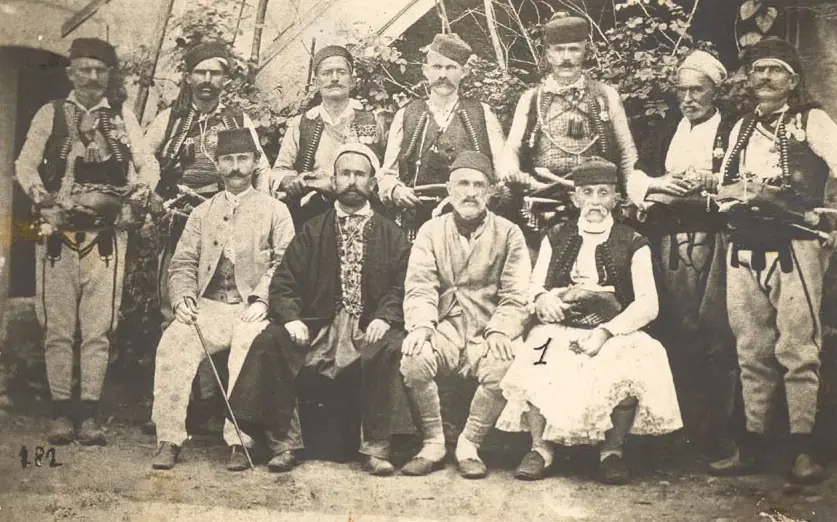
On 10 June 1878 about eighty delegates met in Prizren and founded the League for the Defence of the Rights of the Albanian Nation.

On 7 March 1887 the first secular Albanian-language school opened in Korçë, a date now marked as Teachers' Day.

In November 1908 Albanian delegates meeting in Manastir adopted a Latin-based alphabet, the basis of the modern Albanian alphabet.

1913 – 1938
A prince, a republic and a king in a new state.
The Principality under Wilhelm of Wied, wartime occupation, the Congress of Lushnjë and Tirana as capital (1920), Fan Noli's revolution and Ahmet Zogu's republic and kingdom.

On 7 March 1914 the German prince chosen by the Great Powers landed at Durrës to rule the new Principality of Albania.
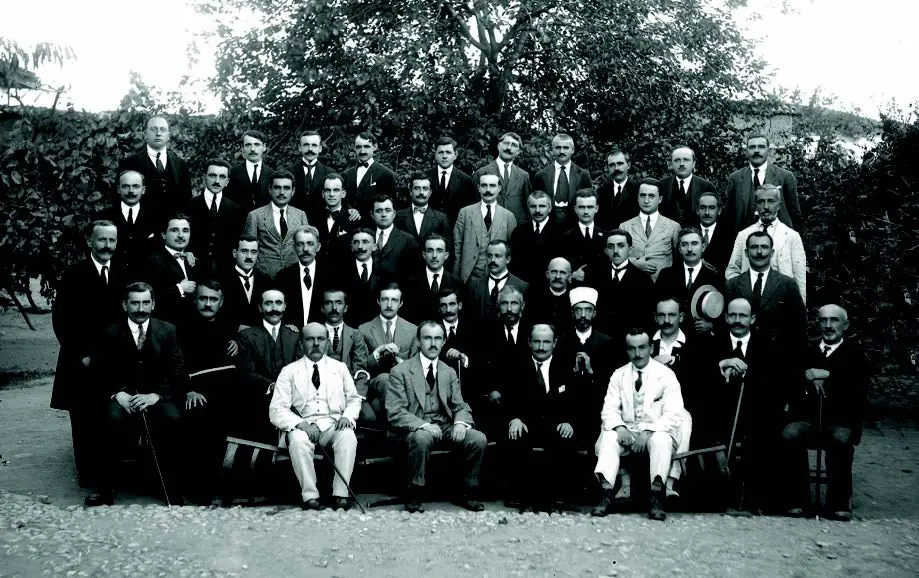
In January 1920 delegates at Lushnjë rejected foreign protection and partition and set up a new national government.

On 11 February 1920 the new national government moved to Tirana, a modest market town that became the capital of Albania.

On 16 June 1924 the bishop, poet and translator Fan Noli formed a reformist government that tried to modernise Albania.
Population: Linear interpolation between 1930 (Census 1930: 1,003,097 (Wikipedia, Demographics of Albania)) and 1945 (Census 1945: 1,122,044 (Wikipedia, Demographics of Albania)).

1939 – 1944
Invasion, resistance and civil conflict.
Italy invaded on 7 April 1939; Albanians fought on both sides as Balli Kombëtar and the communist-led National Liberation Movement struggled; Albanians sheltered Jews under German occupation.

On 28 October 1940 Italy invaded Greece from Albania, and the war was fought largely on Albanian soil.

In 1943–1944 Albanian families, honouring the code of besa, hid Jewish residents and refugees from the German occupiers.

In May 1944 the National Liberation Movement met at Përmet and created a provisional legislative council and a committee that acted as a government.

On 17 November 1944, after nearly three weeks of fighting, partisan forces drove the last German troops out of the capital.
Population: Linear interpolation between 1930 (Census 1930: 1,003,097 (Wikipedia, Demographics of Albania)) and 1945 (Census 1945: 1,122,044 (Wikipedia, Demographics of Albania)).

1945 – 1990
Enver Hoxha's isolated Stalinist state.
Enver Hoxha's Stalinist state broke with Yugoslavia, the USSR and China in turn, banned religion (1967), built hundreds of thousands of bunkers and imprisoned tens of thousands before collapsing in 1990–91.

In June–July 1948, after the Tito–Stalin split, Albania sided with Moscow, expelled the Yugoslav advisers and annulled its agreements with Belgrade.

In December 1961 the Soviet Union and Albania broke off diplomatic relations after Khrushchev denounced Hoxha.
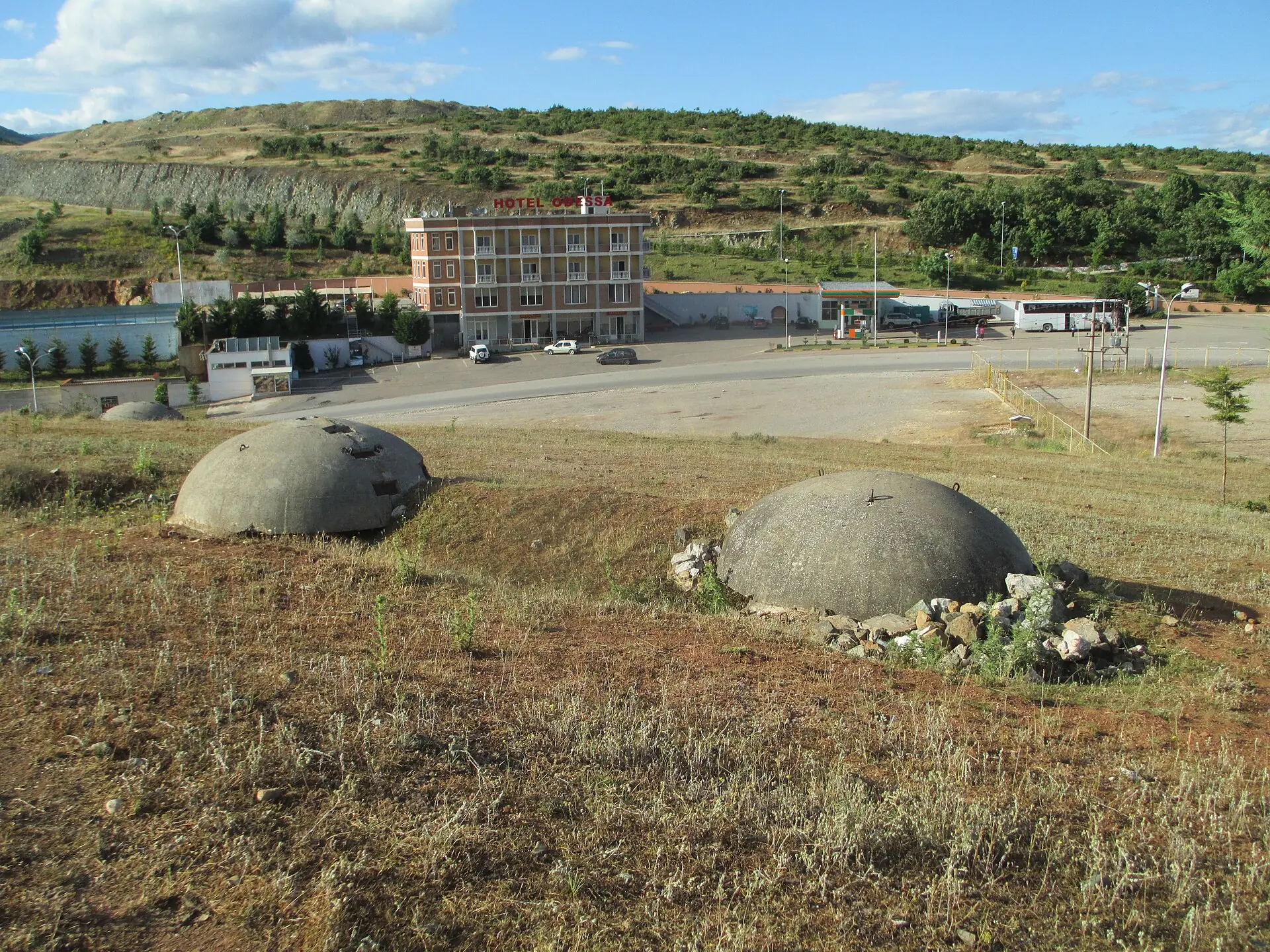
From 1967 to 1986 the regime covered the country with hundreds of thousands of concrete bunkers against an invasion that never came.

In December 1990 student protests in Tirana forced the regime to allow opposition parties, and the Democratic Party was founded.
Population: Linear interpolation between 1989 (Census 1989: 3,182,417 (Wikipedia, Demographics of Albania)) and 2001 (Census 2001: 3,069,275 (Wikipedia, Demographics of Albania)).

1991 – present
Pluralism, crisis and the road to NATO and the European Union.
Pluralism, mass emigration, the 1997 pyramid crisis, the Kosovo refugee crisis, NATO membership (2009), EU candidacy and accession talks, and the governments of Berisha and Rama.
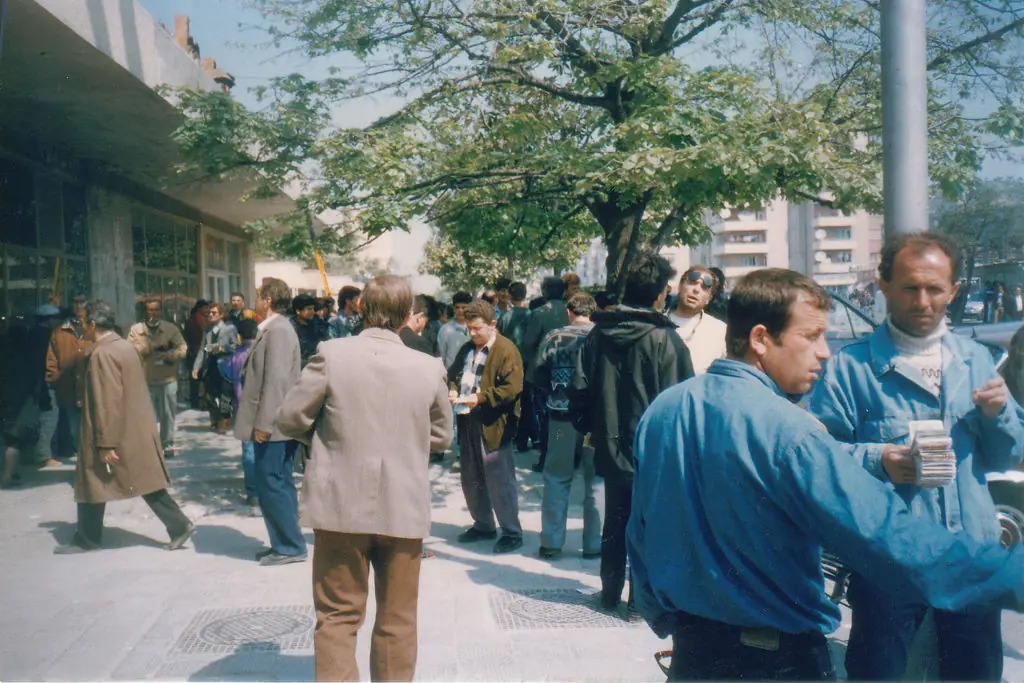
In January 1997 Albania's huge pyramid investment schemes collapsed, wiping out the savings of a large part of the population and leading to civil unrest.

On 1 April 2009 Albania became a member of NATO together with Croatia, fulfilling a central goal of its post-communist foreign policy.

On 27 June 2014 the European Council granted Albania the status of candidate for membership of the European Union.

On 26 November 2019 a magnitude 6.4 earthquake struck near Durrës before dawn, killing 51 people and damaging thousands of buildings.
Population: Linear interpolation between 2023 (Census 2023: 2,402,113 (Wikipedia, Demographics of Albania)) and 2025 (INSTAT estimate 2025: 2,349,622 (Wikipedia, Demographics of Albania)).
Illyrians, Skanderbeg, Sultans and the Republic – Prehistory to Today
From Illyrian kingdoms and the Greek colonies of Epidamnos and Apollonia to Roman Illyricum, Byzantium, the Principality of Arbanon and the Angevin kingdom, Skanderbeg’s League of Lezhë, four centuries of Ottoman rule, independence in 1912, Zog’s kingdom, occupation, Hoxha’s communist state and the Republic of Albania.
If the page stays blank, the site doesn't allow embedding — use “Open in new tab”.
From the Greek and Roman ruins of Butrint and Apollonia and the stone houses of Berat and Gjirokastër to the mountains of the north, the history of Albania has left the world the heritage of an ancient Balkan people and language, the memory of Skanderbeg, a country that was Catholic, Orthodox and Muslim at once, the Kanun and the code of besa, the national awakening that gave the Albanians an alphabet and a state in 1912, the memory of the most isolated communist regime in Europe, and the experience of a young democracy that has gone through emigration, crisis and reform on its way to NATO and the European Union, between Tirana, Pristina, Athens, Rome, Belgrade, Skopje, Istanbul and Brussels.
Butrint, the Greek, Roman and Byzantine city on the strait of Corfu, was the first Albanian site inscribed on the UNESCO World Heritage List, in 1992. It was joined by the historic centre of Gjirokastër in 2005 and by Berat, whose houses climb the hillside as the city of a thousand windows, in 2008, by the ancient beech forests of the Carpathians and other regions of Europe, in which Albania has a share, in 2017, and by the Albanian shore of Lake Ohrid, added to the Ohrid region in 2019. The amphitheatre of Durrës, built under Trajan for some 20,000 spectators, the Greek city of Apollonia, the castles of Krujë and of Rozafa at Shkodër, the Lead Mosque of Shkodër and the Et'hem Bey Mosque of Tirana recall the many rulers of the coast and the mountains, and the rows of concrete bunkers that still stand on beaches and in fields are the monuments of the communist age.
Albanian forms a branch of its own among the Indo-European languages and is spoken in two main dialects, Gheg in the north and Tosk in the south, with the Shkumbin river as the rough dividing line. The Formula e Pagëzimit of 1462 is the earliest surviving text in Albanian, Gjon Buzuku's Meshari of 1555 the oldest known printed book, and Pjetër Budi, Frang Bardhi and Pjetër Bogdani carried writing through the 17th century. The 19th-century awakening gave the language Veqilharxhi's alphabet, De Rada's poetry, the Society for Albanian Letters, Naim Frashëri's verse and the first schools, and the Congress of Manastir of 1908 adopted the Latin alphabet in which Albanian is written today. Gjergj Fishta, Fan Noli, Faik Konica and Migjeni followed, the Orthography Congress of 1972 fixed the standard literary language on a Tosk basis, and Ismail Kadare, who died in 2024, became the best-known Albanian writer abroad, with novels such as The General of the Dead Army. The iso-polyphonic singing of southern Albania is on the UNESCO list of intangible heritage.
Christianity came early to Dyrrachium and the coast, and the Great Schism of 1054 later divided Catholics in the north from Orthodox in the south. Under the Ottomans most Albanians became Muslims, mainly Sunni, and the Bektashi order, a Sufi order whose world headquarters stand in Tirana, spread through the south, while Catholic communities survived in the northern mountains and Orthodox ones around Korçë and Gjirokastër. The Albanian Orthodox Church became autocephalous at the Congress of Berat in 1922, and the national movement of the 19th century deliberately rose above religion: the poet Pashko Vasa wrote that the religion of the Albanians is Albanianism. The communist regime persecuted the clergy from 1945 and in 1967 closed all mosques and churches and proclaimed Albania the world's first atheist state. The first public Mass was held at Shkodër in November 1990, Archbishop Anastasios restored the Orthodox Church from 1992, Pope John Paul II visited Shkodër in 1993 and Pope Francis visited Tirana in 2014, and the religious tolerance of modern Albania, with a Muslim majority and large Orthodox and Catholic communities, is often described as one of its distinguishing features.
Albania has always lived beside other peoples. Greeks live in the south, around Himara and Dropull, Aromanians (Vlachs) in the mountains and around Voskopojë, once the great trading city of Moscopole, and there are smaller Macedonian, Montenegrin, Roma and Balkan Egyptian communities. Only a few hundred Jews lived in Albania before the Second World War, but after refugees arrived and the Germans demanded lists in 1943, Muslim and Christian families sheltered them under the code of besa, and many Jews survived. Albanians also live outside the state: the Albanians of Kosovo, North Macedonia and Montenegro were left outside the borders of 1913, the Arbëreshë of southern Italy and the Arvanites of Greece have kept their language for centuries, and the diaspora in Italy, Greece and the United States, with its Vatra federation founded in Boston in 1912, grew again after 1991, when emigration helped to reduce the population from about 3.18 million in 1989 to about 2.4 million in 2023.
The Second World War remains a disputed chapter. The partisans of the National Liberation Movement, led by the communists, liberated Tirana on 17 November 1944 and Shkodër on 29 November, but the nationalist Balli Kombëtar and other groups were also part of the story, and after the war the new regime executed and imprisoned its opponents. The Sigurimi secret police, the prisons of Burrel and Spaç, where a revolt broke out in 1973, and the internment camp of Tepelenë are remembered by former prisoners, and the House of Leaves, the former headquarters of the secret police in Tirana, and the Bunk'Art museums have been opened as places of memory. The Albanians who sheltered Jews are honoured at Yad Vashem. The collapse of the pyramid schemes and the civil unrest of 1997 and the Kosovo refugee crisis of 1999 are the memories of the democratic age, and 28 and 29 November, Independence Day and Liberation Day, are kept as national holidays.
Albanian polyphony, the epic songs of the highlands accompanied by the lahuta, the Song Festival and the films of the state studio were among the chief arts of the 20th century, and Albanian cinema included the Soviet–Albanian film The Great Warrior Skanderbeg of 1953. Mother Teresa, who was born in Skopje of an Albanian family and received the Nobel Peace Prize in 1979, is claimed by Albanians as a native daughter, and Albanian scholars, from the philologists of the national awakening to the archaeologists Frano Prendi and Muzafer Korkuti, who excavated Maliq and Konispol, created the modern study of the country's past. Football is the most popular sport, and the national team played in its first major tournament at Euro 2016 in France, while weightlifting has been the country's strongest Olympic sport. Recent years have also brought a boom in tourism on the Albanian Riviera and in the mountains.
The red flag with the black double-headed eagle, the banner of Skanderbeg, was raised at Vlorë on 28 November 1912 and is the symbol of the state. Albanians call their country Shqipëria and themselves Shqiptarë, and the anthem, the Hymn to the Flag, was written by Asdreni to music by Ciprian Porumbescu. Skanderbeg, whose statue stands in the central square of Tirana, is the national hero, and the Kanun of Lekë Dukagjini, the customary law of the northern mountains, and the code of besa, the sworn word of honour, are part of the identity of the highlands. Independence Day is kept on 28 November, Liberation Day on 29 November, Alphabet Day on 22 November, the end of the Congress of Manastir, and Teachers' Day on 7 March, the day the Korçë school opened in 1887. The monarchy was rejected in the referendum of 1997, and the symbols of communism, from the red star to the memory of Enver Hoxha, still divide public opinion.
Albania lies where the Adriatic and Ionian seas, the Balkans and the Mediterranean meet, and the Via Egnatia, the road from Dyrrachium to the east, symbolised its role as a bridge between Rome and Constantinople. It was divided by the Great Schism, ruled by Byzantium, Venice, Serbia and the Ottomans, and is bound to Italy across the Adriatic, as the invasion of 1939, the exodus of the Vlora ship in 1991 and the migration deal of 2023 show. Its history is shared with its neighbours: Greek historians see Northern Epirus and the Greek minority of the south, Serbian and Montenegrin ones Kosovo and the northern frontier, and Albanian ones the unity of the Albanian nation divided by the borders of 1913. Independent Albania joined NATO in 2009, became a candidate for the European Union in 2014 and opened accession negotiations in 2022, and judicial reform, the fight against corruption and the emigration of the young remain the great questions of the country's future.
The timeline is built from the project's own research dossier and its event, ruler, head-of-government and map datasets, checked against English Wikipedia, Encyclopaedia Britannica, the Albanian Institute of Statistics (INSTAT), the Office of the President, the Prime Minister's Office, the Parliament and the Central Election Commission of Albania, Yad Vashem, UNESCO, Balkan Insight and other references. Linked articles are starting points for verification, not proof that every claim has been independently checked. Prehistoric dates are archaeological estimates and the reigns of the Illyrian kings are approximate and marked circa or disputed. The origin of the Albanians and the meaning of the 11th-century references to the Albanoi are debated, the dates of Gregorios Kamonas and Golem of Arbanon are uncertain, Islamisation was gradual and its causes are discussed, the date of Ali Pasha's death differs between the Old and New Style, the end of Zog's reign is given as 7 April 1939 although some lists give 9 April, and the dates of the Fier uprising of 1935 and of the annexation decree of 1941 could not be confirmed to the day. Estimates of the numbers imprisoned and killed under the communist regime and the crowd figures of recent protests vary by source. Population figures are census counts from 1923 to 2023, with the INSTAT estimate for 2025. The most recent events, from 2024 to 2026, rest on sources that are still changing; the shading of districts on the map is indicative and approximates historical frontiers by groups of modern districts.
Every event and every ruler has its own sources. See Sources & Further Reading in each timeline entry and ruler profile.
History is connected. Explore the bigger picture.
AllHistories is an independent visual history project designed to make the past easier to understand, explore, and connect.
History is more than a collection of dates, rulers, and battles. Events rarely happen in isolation. Borders shift, civilizations influence one another, ideas spread, and decisions made centuries ago continue to shape the world today.
Through interactive timelines, historical maps, and visual storytelling, AllHistories helps uncover these connections and makes complex historical subjects more accessible and engaging.
Travel through centuries, discover turning points, and understand how historical events unfold and connect.
Explore how borders, civilizations, populations, trade routes, beliefs, and spheres of influence have changed over time.
Go beyond dates and discover the individuals, places, decisions, and circumstances behind historical developments.
Explore connections between countries, empires, civilizations, and historical themes to better understand cause and consequence.
Features vary depending on the historical subject.
AllHistories draws on historical research, published references, public archives, and available historical datasets. The information is organized and presented through interactive digital experiences.
History is not always certain or universally agreed upon. Dates, territorial boundaries, population figures, and interpretations may differ between sources. Some information is necessarily simplified or estimated for visual presentation.
The goal is to encourage curiosity and independent exploration, not to replace academic publications or specialist historical research.
When you visit AllHistories, the web server may process technical information such as your IP address, requested pages, browser details and access times to deliver pages and maintain the service.
Some pages load Google Analytics, Google Fonts, externally hosted images, maps or other third-party resources. Requests to these providers can transmit technical information, including your IP address. Contact forms may use Google reCAPTCHA to help prevent abuse. These providers apply their own privacy policies.
The website uses browser storage for preferences such as the selected theme. Country microsites also use a session cookie to support website functionality, including request protection. Analytics or other third-party services may use additional cookies or storage, depending on the page and your browser settings.
When you submit a correction or contact form, the information you provide, such as your name, email address and message, is processed to review and respond to your request. Please avoid including sensitive personal information.
You can manage cookies and site storage in your browser and control third-party requests through browser privacy settings. For privacy questions or requests concerning information you submitted, use the contact option on the microsite where you sent it.
Links to sources and other websites take you to services with their own privacy practices. Review their policies before providing personal information.
AllHistories provides historical information for general education and exploration. Its content is not professional, legal, financial or other specialist advice.
We aim to present useful, well-sourced summaries, but cannot guarantee that every date, statement, translation or interpretation is complete or accurate. Verify important claims against the cited sources and relevant scholarship. Content may be corrected or updated.
Maps are simplified historical illustrations. Borders, place names and territorial labels may vary by period and source. Their appearance does not express a position on sovereignty or present-day territorial disputes.
Images and source material may belong to their respective creators or rights holders. Consult the image credit, source page and license before reusing material. A link or credit does not grant additional reuse rights.
External links are provided for reference. AllHistories does not control the content, availability or policies of third-party websites.
To report an error or a concern about credited material, use the contact option on the relevant country microsite and identify the page, material and supporting details.