Key facts of the era
Key Events
Scroll the timeline, open an event, and discover the people and turning points that shaped Turkey.
Explore rulers and ruling periods across Anatolia, Turkic origins, the Ottoman Empire and the Republic. Some reigns overlap; these are not one continuous succession.
A land bridge between Europe and Asia, home in turn to Hittites, Byzantines and Ottomans, and since 1923 a republic governed from Ankara.
Anatolia holds some of the oldest monuments made by people, from the stone circles of Göbekli Tepe to the early farming town of Çatalhöyük. In the Bronze Age the Hittites ruled the plateau from Hattusa; Phrygians, Lydians, Persians, Greeks and Romans followed.
Constantine made the old Greek town of Byzantium his new capital in 330, and as Constantinople it led the Byzantine Empire for more than a thousand years. After the Seljuk victory at Manzikert in 1071, Turkic settlers spread across Anatolia.
The small frontier state of Osman I grew into the Ottoman Empire, which took Constantinople in 1453 and came to rule lands on three continents. Its long decline ended in defeat in the First World War, years also marked by the deportations and massacres of the Armenians.
Mustafa Kemal, later called Atatürk, led the War of Independence and proclaimed the Republic in 1923, with Ankara as its capital. The secular state joined NATO in 1952, became a candidate for the European Union in 1999, and in 2022 asked the world to call it Türkiye.
Mid-year estimates (World Bank): growth has roughly halved since 2020, and the official register count of 86.1 million for the end of 2025 leaves out Syrians under temporary protection.
The eight countries that share a land border with Turkey
 Iraneast
 Iraqsouth-east

A white crescent and star on red, taken over from an Ottoman flag made official in 1844. The Republic kept it; a flag law of 1936 fixed its proportions and shade of red, and the law of 1983 still governs it.
Image credits
Pictures on this page, from Wikimedia Commons and Natural Earth
 Topkapı PalaceBjørn Christian TørrissenCC BY-SA 3.0 / GFDL
 Sultan Mehmed IIGentile BelliniPublic domainFlag of TurkeyDavid Benbennick (SVG), after Turkish Flag Law No. 2893; folds addedPublic domainFlag of IranDesigner: Hamid Nadimi; construction: ISIRI (SVG: SiBr4)Public domain (PD-Iran)Flag of IraqGovernment of Iraq (SVG: Wikimedia Commons contributors, see file history)Public domain (PD-Iraq)
From the Hittites to the Republic, 1300 BCE – 2024
From the Hittite Empire and Lydia through Persia, Rome and Byzantium to the Seljuks, the Ottoman Empire and the Republic of Turkey. See who ruled Anatolia in each age, and how far their power reached.
Borders are approximate dated snapshots, not interpolated between chapters, and the states shown were not all Turkish: each chapter highlights the powers that ruled Anatolia at the time. Shapes are clipped to the map window, so larger empires extend beyond it; the dashed line is modern Turkey. Click a capital to open its Wikipedia article.
Sultan of the Ottoman Empire
Abdul Hamid II proclaimed the first constitution and then suspended it, ruling autocratically for thirty years while modernising education and railways.

Click to expand • 3 family members
If the page stays blank, the site doesn't allow embedding — use “Open in new tab”.
The history of Anatolia and Turkey has many legacies. Prehistoric, Hittite, Greek, Persian, Roman, Byzantine, Turkic, Ottoman and republican histories overlap across the region; no single tradition accounts for them all.
Göbekli Tepe, Çatalhöyük, Hattusa and the cities of the Aegean preserve very different stages of life in Anatolia, from the first monumental sanctuaries and farming towns to Bronze Age capitals and Greek and Roman cities. Constantinople and Ottoman Istanbul added Hagia Sophia, Topkapı Palace and the mosques of Sinan to this layered landscape.
The Orkhon inscriptions, the poetry of Rumi and Yunus Emre, Ottoman travel writing and modern Turkish literature belong to connected but distinct cultural worlds. Trade, migration and translation carried ideas across imperial borders, from the first coins of Lydia and the philosophers of Miletus to the caravanserais of the Seljuks.
Ottoman institutions, the Tanzimat reforms, the constitutional movements of 1876 and 1908 and the founding of the Republic in 1923 shaped debates about government and citizenship. Republican reforms changed education, law and the written language, and multi-party democracy, military interventions and the executive presidency continue to define modern Turkish politics.
War, persecution, the Armenian genocide, the Greek–Turkish population exchange and forced migration profoundly changed the region. These histories belong alongside accounts of conquest, cultural achievement and state building.
Explore the timeline for the individual events and their sources.
Some chapters of Turkey’s past are too big for a single timeline entry. Each of these has a site of its own, with maps, people, sources and the full story, told from start to finish.
 The Battle of Marathon
The battle was small. The story became enormous. 490 BC: the Ionian Revolt and the Persian reply, the two armies on the plain, the battle phase by phase, the run to Athens and the myths it left behind.
Read the story
(opens in a new tab)
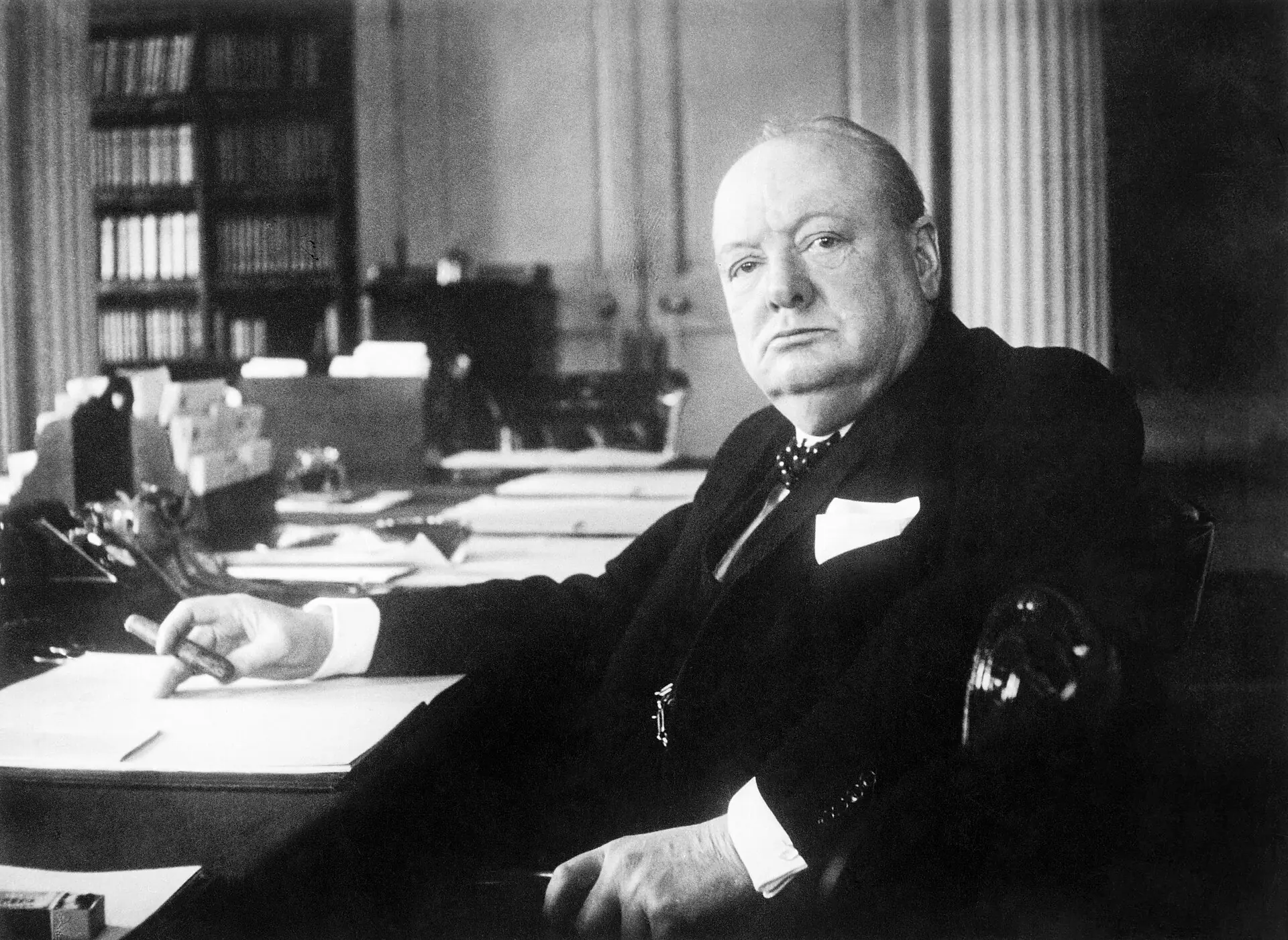 Winston Churchill
The man Britain needed most. The life of the soldier, reporter and twice prime minister who led Britain through the Second World War: eleven chapters, the cabinet of May 1940, the map of his journeys and wars, the people around him and the case for and against.
Read the life
(opens in a new tab)
 World War I
Two shots. Thirty-seven days. Four empires gone. How a wrong turn in Sarajevo became a world war: the July Crisis, the fronts year by year, the cost, the fall of four empires and the peace that led to the next war.
Read the story
(opens in a new tab)
The timeline follows the History of Turkey research dataset (410 events and 124 rulers and ruling periods). Each event includes its own references. Dates in prehistory and antiquity are approximate, and Hittite reigns follow the conventional middle chronology; summaries and source links should be reviewed as the research develops.
Every event has its own sources. See Sources & Further Reading in each timeline entry. Britannica topic-search links are discovery aids, not citations to a verified article.
History is connected. Explore the bigger picture.
AllHistories is an independent visual history project designed to make the past easier to understand, explore, and connect.
History is more than a collection of dates, rulers, and battles. Events rarely happen in isolation. Borders shift, civilizations influence one another, ideas spread, and decisions made centuries ago continue to shape the world today.
Through interactive timelines, historical maps, and visual storytelling, AllHistories helps uncover these connections and makes complex historical subjects more accessible and engaging.
Travel through centuries, discover turning points, and understand how historical events unfold and connect.
Explore how borders, civilizations, populations, trade routes, beliefs, and spheres of influence have changed over time.
Go beyond dates and discover the individuals, places, decisions, and circumstances behind historical developments.
Explore connections between countries, empires, civilizations, and historical themes to better understand cause and consequence.
Features vary depending on the historical subject.
AllHistories draws on historical research, published references, public archives, and available historical datasets. The information is organized and presented through interactive digital experiences.
History is not always certain or universally agreed upon. Dates, territorial boundaries, population figures, and interpretations may differ between sources. Some information is necessarily simplified or estimated for visual presentation.
The goal is to encourage curiosity and independent exploration, not to replace academic publications or specialist historical research.
When you visit AllHistories, the web server may process technical information such as your IP address, requested pages, browser details and access times to deliver pages and maintain the service.
Some pages load Google Analytics, Google Fonts, externally hosted images, maps or other third-party resources. Requests to these providers can transmit technical information, including your IP address. Contact forms may use Google reCAPTCHA to help prevent abuse. These providers apply their own privacy policies.
The website uses browser storage for preferences such as the selected theme. Country microsites also use a session cookie to support website functionality, including request protection. Analytics or other third-party services may use additional cookies or storage, depending on the page and your browser settings.
When you submit a correction or contact form, the information you provide, such as your name, email address and message, is processed to review and respond to your request. Please avoid including sensitive personal information.
You can manage cookies and site storage in your browser and control third-party requests through browser privacy settings. For privacy questions or requests concerning information you submitted, use the contact option on the microsite where you sent it.
Links to sources and other websites take you to services with their own privacy practices. Review their policies before providing personal information.
AllHistories provides historical information for general education and exploration. Its content is not professional, legal, financial or other specialist advice.
We aim to present useful, well-sourced summaries, but cannot guarantee that every date, statement, translation or interpretation is complete or accurate. Verify important claims against the cited sources and relevant scholarship. Content may be corrected or updated.
Maps are simplified historical illustrations. Borders, place names and territorial labels may vary by period and source. Their appearance does not express a position on sovereignty or present-day territorial disputes.
Images and source material may belong to their respective creators or rights holders. Consult the image credit, source page and license before reusing material. A link or credit does not grant additional reuse rights.
External links are provided for reference. AllHistories does not control the content, availability or policies of third-party websites.
To report an error or a concern about credited material, use the contact option on the relevant country microsite and identify the page, material and supporting details.