Key facts of the era
Key Events
Journey through the events, people, wars and ideas that shaped Switzerland, from the first hunters between the Alps and the Jura to the present day.
Follow the lake-dwellers and the Helvetii, Roman Aventicum, the Burgundian and Frankish kings, the Federal Charter of 1291, Morgarten and the Burgundian Wars, Zwingli and Calvin, the Helvetic Republic, the Sonderbund War, the federal state of 1848, neutrality through two world wars and modern direct democracy.
From the chiefs of the Helvetii and the Roman emperors through the Burgundian, Frankish and Holy Roman kings to the Federal Diet of the cantons, the Helvetic Republic, Napoleon's Mediation and the Federal Council.
A landlocked Alpine country that grew from a 13th-century pact of three valleys into a federal state of 26 cantons and four languages, neutral since 1815.
The Celtic Helvetii farmed the plateau between the Jura and the Alps until their march into Gaul was stopped by Julius Caesar at Bibracte in 58 BCE. Rome went on to take the Alpine valleys as well, and towns such as Aventicum and Augusta Raurica prospered for some four centuries.
When Roman rule faded, Burgundians settled in the west and Alemanni in the north and east, and the region passed to the Franks and later to the Holy Roman Empire. In 1291 the valley communities of Uri, Schwyz and Unterwalden sealed a pact of mutual help, long remembered as the birth of the Old Swiss Confederacy.
Victories over the Habsburgs and Burgundy enlarged the league until its defeat at Marignano in 1515 put an end to expansion, and the Reformation of Zwingli and Calvin soon divided the cantons by faith. In 1648 the Peace of Westphalia formally freed the Confederacy from the jurisdiction of the Empire.
France imposed the short-lived Helvetic Republic in 1798, and in 1815 the great powers guaranteed Swiss neutrality; after a brief civil war, the constitution of 1848 turned the league into a federal state. Switzerland kept out of both world wars, joined the United Nations only in 2002 and has stayed outside the European Union.
On 1 January of each year (Federal Statistical Office, via Eurostat). The country has added almost 2.4 million people since 1990, much of it through immigration, and passed nine million in 2024.
Landlocked Switzerland shares a border with five countries
 Liechtensteineast

A white cross on a square red field; only the Vatican also has a square national flag. Confederate soldiers sewed the cross on their clothes at Laupen in 1339, it became the flag of the federal army around 1840, and in 1889 its arms were set one sixth longer than they are wide.

The same white cross, set on a red shield. The Diet chose it for the seal of the Confederacy in 1815, and a law in force since 2017 fixes the shield’s shape and a pure red. The Red Cross emblem reverses its colours.
Image credits
Pictures on this page, from Wikimedia Commons and Natural Earth
 MatterhornPhotoglob Co. (Library of Congress Photochrom collection)Public domain
 Hero William TellFerdinand HodlerPublic domainFlag of SwitzerlandSwiss Confederation (SVG: Wikimedia Commons contributors; folds added)Public domainCoat of arms of SwitzerlandRedo by -xfi-, with credits to E Pluribus Anthony, Reisio, Wiki-vr and Zscout370Public domain (PD-Coa-Switzerland)Flag of LiechtensteinMnmazur and othersPublic domain (PD-Flag-Liechtenstein)
The Swiss Lands, 58 BCE – Today
Two thousand years between the Jura and the Alps, from the Helvetii and Roman Helvetia to the 26 cantons of today. Move to any year, or through 30 narrated chapters, and watch three valleys grow into a confederation of cantons, allies and subject lands, then into a federal state.
Move the slider to any year. Inside today's Switzerland every historic territory is coloured by its status in that year: full member canton, associate (zugewandter Ort), subject land or common bailiwick, the Helvetic Republic, annexed by France, or under another power; before the Roman conquest the Celtic and Alpine peoples are shown. Around it, the states of the region are drawn from a dataset of historical borders, green where they ruled the Swiss lands in the current chapter. 30 chapters carry the story, and the slider is stretched so that the dense modern centuries get more room than the long ancient ones. Hover a territory for its status; click a neighbouring state to open its Wikipedia article.
Boundaries are approximate. The historic units are assembled from modern district boundaries, so each carries a single acquisition date and small lordships are simplified; the tribal areas before 15 BCE are indicative only. The dashed line is the border of modern Switzerland, for orientation only.
On 9 April 1917 Vladimir Lenin, his wife Nadezhda Krupskaya and about thirty other Russian exiles left Zürich by train, bound for revolutionary Russia. The German government, hoping Lenin would undermine Russia's war effort, allowed them to cross Germany in a carriage treated as extraterritorial, the so-called 'sealed train'.
Lenin had lived in Switzerland since 1914, first in Bern and then in Zürich, writing and attending socialist conferences, including those in Zimmerwald in 1915 and Kiental in 1916 that brought together anti-war socialists. The Swiss socialist Fritz Platten helped negotiate the journey.
Within seven months of his arrival in Petrograd, Lenin led the Bolsheviks to power.
Lenin's departure from Zürich linked neutral Switzerland to one of the turning points of the 20th century.
 Federal Council (Radical–Conservative Era)
Swiss Federal Council
1891 - 1929
 Edmund Schulthess
President of the Confederation
FDP / Radicals (FDP.The Liberals)
1917
If the page stays blank, the site doesn't allow embedding — use “Open in new tab”.
From the lake-dwellers and the Helvetii to the modern Confederation, Swiss history has given the world a federation of many languages and faiths, direct democracy, armed neutrality, the Reformed churches of Zwingli and Calvin, the Red Cross and international Geneva, and a small country that became a centre of science, industry and finance.
From the alliance of three valleys in 1291 grew a league of thirteen cantons and, in 1848, a federal state of 22 (today 26). The cantons keep their own constitutions, parliaments and taxes, a model of shared sovereignty that inspired federal thinkers far beyond Switzerland.
The Landsgemeinde assemblies of the rural cantons, the optional referendum of 1874 and the popular initiative of 1891 put the people at the centre of Swiss politics. Citizens vote several times a year on laws and constitutional amendments, more often than anywhere else in the world.
After Marignano the Confederates withdrew from great-power wars, and in 1815 the powers recognised Swiss neutrality. Armed neutrality carried the country through two world wars, though its wartime refugee policy and trade with Nazi Germany remain the subject of hard questions.
Zwingli in Zürich and Calvin in Geneva founded the Reformed tradition, which spread to France, the Netherlands, Scotland, Hungary and North America. Geneva's Academy trained its preachers, and the Anabaptists of Zürich were forerunners of the Mennonites and the Amish.
Henry Dunant's Red Cross and the Geneva Convention of 1864 founded modern humanitarian law. Geneva became the seat of the League of Nations, the European headquarters of the United Nations and dozens of international organisations, and the host of summits from 1955 to 1985.
Paracelsus, the Bernoullis and Euler, Haller and Saussure, Agassiz and Pestalozzi made Swiss cities centres of medicine, mathematics, natural science and education. Einstein wrote his papers of 1905 in Bern, and CERN near Geneva gave the world the World Wide Web.
Huguenot refugees and Jura craftsmen made watchmaking a Swiss speciality, and the Swatch revived it after the quartz crisis. Nestlé, Lindt and Suchard, the chemical industry of Basel and banks in Zürich and Geneva made a country without raw materials one of the richest in the world.
Haller's poem The Alps, Rousseau and the first climbers made the mountains a symbol of freedom and nature. The Gotthard, Simplon and Lötschberg tunnels and the rack and Alpine railways made Switzerland the crossroads of Europe, and the Gotthard Base Tunnel of 2016 is the longest railway tunnel in the world.
Some chapters of Switzerland’s past are too big for a single timeline entry. Each of these has a site of its own, with maps, people, sources and the full story, told from start to finish.
 Zurich
Reformed. Refuge. Revolution. Riches. How a Roman customs post on the Limmat became the city of Zwingli's Reformation, a haven for exiles from Lenin to Joyce, and a world centre of money.
Read the story
(opens in a new tab)
 Napoleon Bonaparte
Island. Empire. Island. The life of the Corsican officer who became Emperor of the French: twelve chapters, a map of Europe year by year, sixty battles, the state he built and the people around him.
Read the life
(opens in a new tab)
 Vladimir Lenin
He promised peace, land and bread. The life of the exile who took power in Petrograd in 1917: his 53 years to scale, a dual-calendar 1917, the sealed train, the Civil War map, the Testament, and what he intended, decided and caused, kept apart.
Read the life
(opens in a new tab)
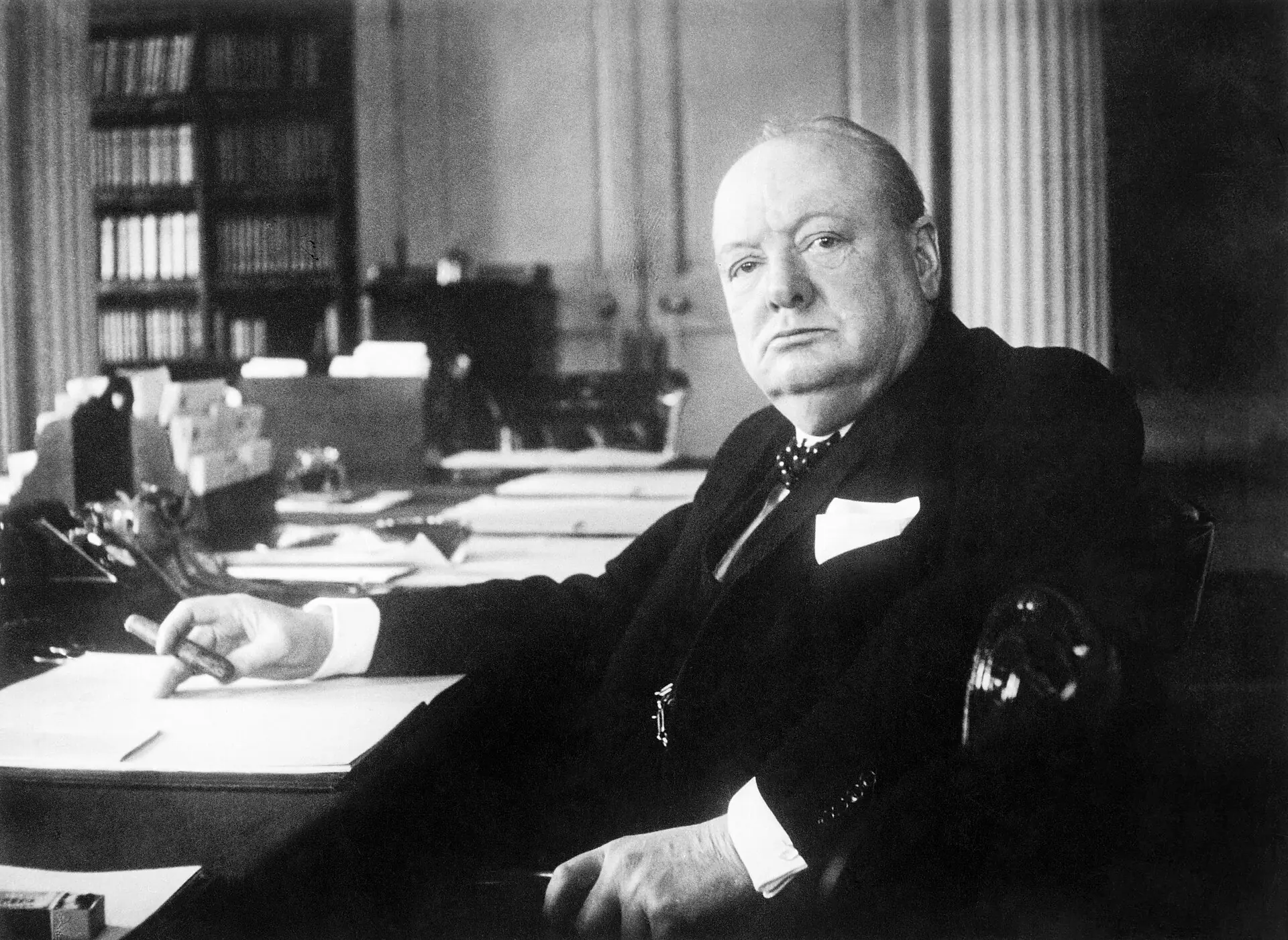 Winston Churchill
The man Britain needed most. The life of the soldier, reporter and twice prime minister who led Britain through the Second World War: eleven chapters, the cabinet of May 1940, the map of his journeys and wars, the people around him and the case for and against.
Read the life
(opens in a new tab)
The timeline is built from the project's own research dossier and its event, ruler, president and map datasets, checked against the Historical Dictionary of Switzerland (HLS), English Wikipedia and scholarly references. Linked articles are starting points for verification, not proof that every claim has been independently checked. Prehistoric and early medieval dates are approximate, traditions such as William Tell and the Rütli oath are legends first written down in the fifteenth century, and historical borders are reconstructions.
Every event and every ruler has its own sources. See Sources & Further Reading in each timeline entry and ruler profile.
History is connected. Explore the bigger picture.
AllHistories is an independent visual history project designed to make the past easier to understand, explore, and connect.
History is more than a collection of dates, rulers, and battles. Events rarely happen in isolation. Borders shift, civilizations influence one another, ideas spread, and decisions made centuries ago continue to shape the world today.
Through interactive timelines, historical maps, and visual storytelling, AllHistories helps uncover these connections and makes complex historical subjects more accessible and engaging.
Travel through centuries, discover turning points, and understand how historical events unfold and connect.
Explore how borders, civilizations, populations, trade routes, beliefs, and spheres of influence have changed over time.
Go beyond dates and discover the individuals, places, decisions, and circumstances behind historical developments.
Explore connections between countries, empires, civilizations, and historical themes to better understand cause and consequence.
Features vary depending on the historical subject.
AllHistories draws on historical research, published references, public archives, and available historical datasets. The information is organized and presented through interactive digital experiences.
History is not always certain or universally agreed upon. Dates, territorial boundaries, population figures, and interpretations may differ between sources. Some information is necessarily simplified or estimated for visual presentation.
The goal is to encourage curiosity and independent exploration, not to replace academic publications or specialist historical research.
When you visit AllHistories, the web server may process technical information such as your IP address, requested pages, browser details and access times to deliver pages and maintain the service.
Some pages load Google Analytics, Google Fonts, externally hosted images, maps or other third-party resources. Requests to these providers can transmit technical information, including your IP address. Contact forms may use Google reCAPTCHA to help prevent abuse. These providers apply their own privacy policies.
The website uses browser storage for preferences such as the selected theme. Country microsites also use a session cookie to support website functionality, including request protection. Analytics or other third-party services may use additional cookies or storage, depending on the page and your browser settings.
When you submit a correction or contact form, the information you provide, such as your name, email address and message, is processed to review and respond to your request. Please avoid including sensitive personal information.
You can manage cookies and site storage in your browser and control third-party requests through browser privacy settings. For privacy questions or requests concerning information you submitted, use the contact option on the microsite where you sent it.
Links to sources and other websites take you to services with their own privacy practices. Review their policies before providing personal information.
AllHistories provides historical information for general education and exploration. Its content is not professional, legal, financial or other specialist advice.
We aim to present useful, well-sourced summaries, but cannot guarantee that every date, statement, translation or interpretation is complete or accurate. Verify important claims against the cited sources and relevant scholarship. Content may be corrected or updated.
Maps are simplified historical illustrations. Borders, place names and territorial labels may vary by period and source. Their appearance does not express a position on sovereignty or present-day territorial disputes.
Images and source material may belong to their respective creators or rights holders. Consult the image credit, source page and license before reusing material. A link or credit does not grant additional reuse rights.
External links are provided for reference. AllHistories does not control the content, availability or policies of third-party websites.
To report an error or a concern about credited material, use the contact option on the relevant country microsite and identify the page, material and supporting details.