Key facts of the era
Key Events
Scroll through the centuries, meet the rulers, and explore the moments that shaped Russia.
Explore princes, tsars, emperors, Soviet leaders, presidents and lines of succession.
The largest country on Earth, grown from the princes of Kievan Rus’ and the tsars of Muscovy into an empire, the Soviet Union and today’s Russian Federation.
In the 9th century Varangian princes took charge of the East Slavs, and from Kyiv the realm of Kievan Rus’ spread along the rivers between the Baltic and the Black Sea. In 988 its ruler Vladimir accepted Orthodox Christianity from Byzantium.
After the Mongol conquest of the 1240s, Moscow slowly gathered the Russian lands and threw off Tatar overlordship in 1480. Ivan IV was crowned the first tsar in 1547, and from 1613 the Romanov dynasty ruled for three centuries.
Under Peter the Great the country became the Russian Empire in 1721, a state that came to reach from the Baltic to the Pacific. Revolution swept away the monarchy in 1917, and the Bolsheviks built the Soviet Union, which helped defeat Nazi Germany and became a superpower.
The USSR broke apart in 1991, and the Russian Federation took over its seat at the United Nations. In 2014 Russia annexed Crimea from Ukraine, a step most states do not recognise, and on 24 February 2022 it began a full-scale invasion of Ukraine.
World Bank mid-year estimates for Russia’s internationally recognised territory, so Crimea is not counted (Russia’s own figures add it and run about 2.5 million higher). Numbers fell from the mid-1990s to 2010, recovered for a decade and have slipped again since 2020.
The 14 countries that share a land border with Russia
 Belaruswest
 Kazakhstansouth
 Mongoliasouth

Three bands of white, blue and red. The design dates from the late 17th century under Peter the Great, flew first on ships and became the sole national flag in 1896; set aside for the Soviet red banner after 1917, it returned on 22 August 1991.

A golden double-headed eagle under three crowns, holding a sceptre and an orb, with a horseman slaying a dragon on its breast. Ivan III took up the eagle in the 15th century; this version replaced the Soviet emblem by decree on 30 November 1993.
Image credits
Pictures on this page, from Wikimedia Commons and Natural Earth
 Moscow KremlinAndrey KorzunCC BY-SA 4.0
 Emperor Peter the GreatPaul DelarochePublic domainFlag of RussiaDrawn for this collagePublic domain (national flag)Coat of arms of the Russian FederationYevgeny Ukhnalyov (design); SVG from Wikimedia CommonsPublic domain in Russia (official symbol); CC BY-SA 2.0 elsewhereFlag of BelarusGovernment of Belarus (SVG: Zscout370)Public domainFlag of KazakhstanShaken Niyazbekop (after the official measurements)Public domain (state symbol, PD-KZ-exempt)Flag of MongoliaWikimedia Commons (after Mongolian standard MNS 6262:2011)Public domain (state symbol, PD-Mongolia-exempt)
The Territory of the Russian State, 850 – 2026
From the river ports of the Rus’ to an empire across Eurasia and Alaska, the Soviet Union and the Russian Federation. Follow Russia’s borders year by year, and the events that moved them.
President of Russia
Medvedev served one term as president while Putin was prime minister, then swapped roles with him in 2012.

Click to expand • 3 family members
If the page stays blank, the site doesn't allow embedding — use “Open in new tab”.
Russian history has shaped religion, culture, science and world politics. Its legacies include remarkable achievements and the enduring consequences of empire, repression and war.
The adoption of Christianity around 988 connected Rus’ to Byzantine religious and artistic traditions. Its churches, chronicles and political heritage belong to the histories of Russia, Ukraine and Belarus.
Expansion across the Volga, Siberia, the Caucasus and Central Asia created a vast and diverse state. Its legacy includes cultural exchange as well as conquest, dispossession and resistance.
From Peter I’s reforms to the emancipation of the serfs in 1861 and the upheaval of 1905, attempts at change repeatedly confronted concentrated state power and deep social inequality.
Russian literature, music, ballet and visual art became influential around the world. The timeline follows cultural achievements alongside the institutions, censorship and social conditions that shaped them.
The revolutions of 1917 and the Soviet experiment reshaped global politics. Industrialisation and mass education accompanied dictatorship, forced collectivisation, famine, deportation and the Gulag.
The war against Nazi Germany inflicted immense losses across the Soviet Union. The memory of victory and civilian suffering remains central to family histories and public life.
Sputnik, Yuri Gagarin’s flight and Valentina Tereshkova’s mission transformed humanity’s relationship with space. Scientific achievement also developed within military competition and the Cold War.
The dissolution of the USSR created independent states and new political and economic systems. Russia’s subsequent history includes contested reforms, increasing centralisation and wars whose consequences extend beyond its borders.
Some chapters of Russia’s past are too big for a single timeline entry. Each of these has a site of its own, with maps, people, sources and the full story, told from start to finish.
 Saint Petersburg
Four names. Three centuries. One city that refused to die. Peter the Great's city on conquered Swedish marshland: imperial capital, cradle of revolution, and the city that held out through 872 days of siege, under four different names.
Read the story
(opens in a new tab)
 The Battle of Poltava
One empire ended before noon. Another began. 1709: Charles XII’s march into the Cossack Hetmanate, the Russian camp and its redoubts, the battle hour by hour, the surrender at Perevolochna and three countries’ memories of it.
Read the story
(opens in a new tab)
 Napoleon Bonaparte
Island. Empire. Island. The life of the Corsican officer who became Emperor of the French: twelve chapters, a map of Europe year by year, sixty battles, the state he built and the people around him.
Read the life
(opens in a new tab)
 The Napoleonic Wars
One man. Fifteen years. A continent redrawn. Campaigns, battles and rulers of the wars that remade Europe, 1792 to 1815.
Read the story
(opens in a new tab)
 Vladimir Lenin
He promised peace, land and bread. The life of the exile who took power in Petrograd in 1917: his 53 years to scale, a dual-calendar 1917, the sealed train, the Civil War map, the Testament, and what he intended, decided and caused, kept apart.
Read the life
(opens in a new tab)
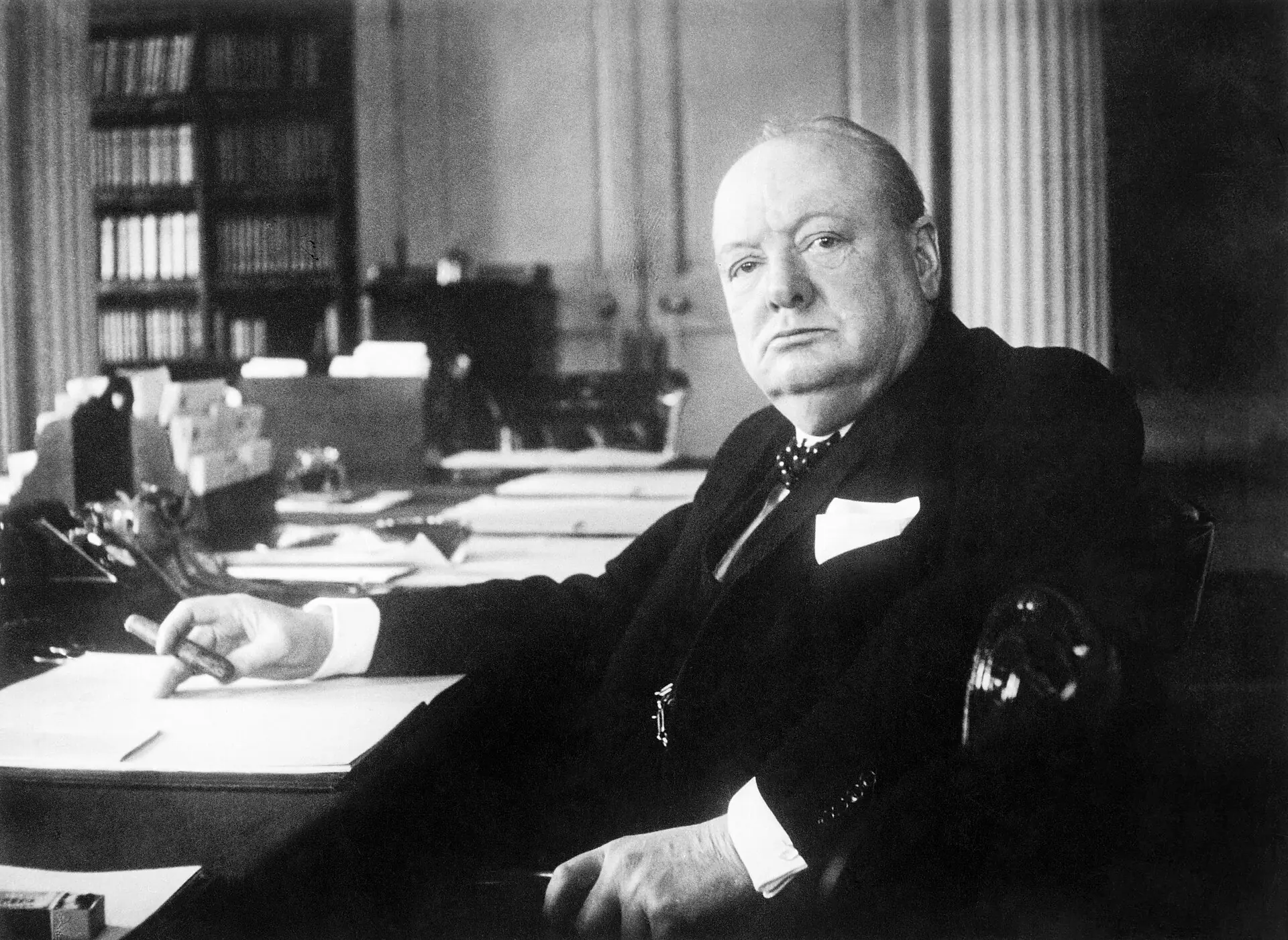 Winston Churchill
The man Britain needed most. The life of the soldier, reporter and twice prime minister who led Britain through the Second World War: eleven chapters, the cabinet of May 1940, the map of his journeys and wars, the people around him and the case for and against.
Read the life
(opens in a new tab)
 World War I
Two shots. Thirty-seven days. Four empires gone. How a wrong turn in Sarajevo became a world war: the July Crisis, the fronts year by year, the cost, the fall of four empires and the peace that led to the next war.
Read the story
(opens in a new tab)
 The Soviet Union
Born twice. Died once. Born by revolution in 1917 and by treaty in 1922, dissolved in 1991 almost without a shot: fifteen republics, eight leaders, the planned economy, life and space, what-ifs, 355 events and a map through time.
Read the story
(opens in a new tab)
 The Battle of Stalingrad
Five months fighting for a city. Four days to lose an army. August 1942 to February 1943: the drive to the Volga, the city fought for street by street, the encirclement of the Sixth Army and how the battle is remembered.
Read the story
(opens in a new tab)
The timeline is based on the Russian-history research dossier prepared on 24 September 2026. Early dates are approximate; entries distinguish Julian and Gregorian dates where relevant.
Every event and every ruler has its own sources. See Sources & Further Reading in each timeline entry and ruler profile.
Kievan Rus’ is treated as a shared heritage of Russia, Ukraine and Belarus. From the fragmentation of Rus’, the ruler sequence follows the north-eastern principalities, Vladimir and Moscow. Period records represent societies without a single ruler. Sources for individual events provide context for contested interpretations.
Historical portraits and maps are shown only when artwork is available. Decorative introductory artwork and placeholder symbols are not documentary evidence.
History is connected. Explore the bigger picture.
AllHistories is an independent visual history project designed to make the past easier to understand, explore, and connect.
History is more than a collection of dates, rulers, and battles. Events rarely happen in isolation. Borders shift, civilizations influence one another, ideas spread, and decisions made centuries ago continue to shape the world today.
Through interactive timelines, historical maps, and visual storytelling, AllHistories helps uncover these connections and makes complex historical subjects more accessible and engaging.
Travel through centuries, discover turning points, and understand how historical events unfold and connect.
Explore how borders, civilizations, populations, trade routes, beliefs, and spheres of influence have changed over time.
Go beyond dates and discover the individuals, places, decisions, and circumstances behind historical developments.
Explore connections between countries, empires, civilizations, and historical themes to better understand cause and consequence.
Features vary depending on the historical subject.
AllHistories draws on historical research, published references, public archives, and available historical datasets. The information is organized and presented through interactive digital experiences.
History is not always certain or universally agreed upon. Dates, territorial boundaries, population figures, and interpretations may differ between sources. Some information is necessarily simplified or estimated for visual presentation.
The goal is to encourage curiosity and independent exploration, not to replace academic publications or specialist historical research.
When you visit AllHistories, the web server may process technical information such as your IP address, requested pages, browser details and access times to deliver pages and maintain the service.
Some pages load Google Analytics, Google Fonts, externally hosted images, maps or other third-party resources. Requests to these providers can transmit technical information, including your IP address. Contact forms may use Google reCAPTCHA to help prevent abuse. These providers apply their own privacy policies.
The website uses browser storage for preferences such as the selected theme. Country microsites also use a session cookie to support website functionality, including request protection. Analytics or other third-party services may use additional cookies or storage, depending on the page and your browser settings.
When you submit a correction or contact form, the information you provide, such as your name, email address and message, is processed to review and respond to your request. Please avoid including sensitive personal information.
You can manage cookies and site storage in your browser and control third-party requests through browser privacy settings. For privacy questions or requests concerning information you submitted, use the contact option on the microsite where you sent it.
Links to sources and other websites take you to services with their own privacy practices. Review their policies before providing personal information.
AllHistories provides historical information for general education and exploration. Its content is not professional, legal, financial or other specialist advice.
We aim to present useful, well-sourced summaries, but cannot guarantee that every date, statement, translation or interpretation is complete or accurate. Verify important claims against the cited sources and relevant scholarship. Content may be corrected or updated.
Maps are simplified historical illustrations. Borders, place names and territorial labels may vary by period and source. Their appearance does not express a position on sovereignty or present-day territorial disputes.
Images and source material may belong to their respective creators or rights holders. Consult the image credit, source page and license before reusing material. A link or credit does not grant additional reuse rights.
External links are provided for reference. AllHistories does not control the content, availability or policies of third-party websites.
To report an error or a concern about credited material, use the contact option on the relevant country microsite and identify the page, material and supporting details.