Key facts of the era
Key Events
Journey through the events, people, wars and ideas that shaped Iran, from the first farmers of the Zagros to the present day.
Follow Elam and the Medes, Cyrus the Great and the Achaemenid Empire of Persepolis, Alexander and the Seleucids, the Parthians and the Sasanians, the Arab conquest, the Iranian dynasties that revived Persian letters, the Seljuks and the Mongols, the Timurids, Safavid Isfahan, Nader Shah and Karim Khan, the Qajars and the Constitutional Revolution, the Pahlavi shahs, the revolution of 1979 and the Iran of today.
From the kings of Elam and the Medes, the kings of kings of the Achaemenid, Parthian and Sasanian empires, the caliphs, emirs, sultans and khans, to the shahs and the Leaders of the Islamic Republic, with its presidents and prime ministers.
The heartland of Persia, home to empires from Cyrus to the Safavids, ruled by shahs into the 20th century and an Islamic republic since 1979.
The Elamites built cities around Susa long before the Medes and Persians rose on the plateau. In about 550 BCE Cyrus the Great founded the Achaemenid Empire, and under Darius I it stretched from Egypt to the Indus, with a ceremonial capital at Persepolis.
Alexander the Great destroyed that empire in 330 BCE, but Iranian rule returned with the Parthians and then the Sasanians, who fought Rome for four centuries. Arab armies brought Islam in the 640s; Persian survived as the language of poets such as Ferdowsi, under Seljuk and Mongol rulers alike.
The Safavids reunited the country in 1501 and made Shia Islam its faith, and Shah Abbas I turned Isfahan into a showpiece capital. The Qajars ruled from Tehran but lost the Caucasus to Russia, and the Constitutional Revolution of 1906 gave Iran its first parliament.
Reza Shah founded the Pahlavi dynasty in 1925; his son Mohammad Reza Shah regained full power through the 1953 coup against Mosaddegh. The revolution of 1979 brought Ayatollah Khomeini’s Islamic Republic, followed by an eight-year war with Iraq and, later, sanctions and conflict over its nuclear programme.
Mid-year estimates (World Bank, from UN figures). The Statistical Centre of Iran counts fewer people: just over 87 million in 2026, against the UN-based 92 million for 2025.
The seven countries that share a land border with Iran. Afghanistan is shown with the flag of the republic that fell in 2021; the Taliban government now in power uses a white flag of its own.
 Iraqwest
 Turkmenistannorth-east
 Afghanistaneast

Green, white and red bands, with the national emblem in the centre and Allahu Akbar repeated 22 times in Kufic script along the edges. The tricolour dates from the constitutional era of 1906–07, when it bore the Lion and Sun; the present design was adopted in July 1980.

Four crescents and a sword shape a stylised word Allah, which is also read as a tulip, a symbol of those who die for their country. Designed by Hamid Nadimi, it was approved on 9 May 1980 and replaced the Lion and Sun.
Image credits
Pictures on this page, from Wikimedia Commons and Natural Earth
 Si-o-se-pol bridge, IsfahanReza Haji-pourCC BY 3.0
 Shah Abbas IBishandasPublic domainFlag of IranPalotabarátCC BY-SA 4.0Emblem of Iran (red, as on the flag)Madden (original), derivative by Zscout370Public domain (PD-Iran; insignia)Flag of IraqGovernment of Iraq (SVG: Wikimedia Commons contributors, see file history)Public domain (PD-Iraq)Flag of TurkmenistanGovernment of Turkmenistan (SVG: Open Clip Art, modified by Vzb83)Public domain (PD-TK-exempt, PD-OpenClipart)Flag of Afghanistan (2013–2021 design, as on this site’s Afghanistan pages)Government of Afghanistan (SVG: Wikimedia Commons contributors)Public domain
From the Zagros Farmers to the Islamic Republic, 8000 BCE – Today
Elam and the Medes, the empires of Cyrus, the Parthians and the Sasanians, the Iranian dynasties under the caliphs, the Seljuk and Mongol conquests, Safavid Iran, Nader Shah, and the treaties that fixed Iran's borders.
King of Kings
Child son of Kavad II who reigned under regents during the civil war that followed Khosrow II's fall; he was killed by the general Shahrbaraz.

If the page stays blank, the site doesn't allow embedding — use “Open in new tab”.
From the ziggurat of Chogha Zanbil to the squares of Isfahan, the history of Iran has given the world the Persian language and its poetry, one of the oldest living religious traditions, the model of the first world empire, the qanat and the Persian garden, carpets and tilework, the science of Avicenna and al-Khwarizmi, a celebrated cinema, the Shi'a tradition of Islam and a long and unfinished argument about constitution, revolution and rights.
Persian, an Indo-European language written in the Arabic script since the Islamic conquest, has been a language of literature for more than a thousand years. Rudaki and Ferdowsi, whose Shahnameh of about 1010 preserved the memory of ancient Iran, were followed by Nizami, Attar, Rumi, Saadi, Omar Khayyam and Hafez, whose poems are still recited and consulted in Iranian homes. Persian was the language of courts from Anatolia to Mughal India, and English owes to it words such as paradise, bazaar, caravan, pyjamas and checkmate. It is spoken today in Iran, Afghanistan and Tajikistan.
On the dry plateau, Iranians dug qanats, gently sloping underground channels that carry groundwater from the foothills to villages and fields, a technique that spread across Asia and North Africa and is still in use; the Persian Qanat is a World Heritage Site. The Persian garden, a walled quarter-divided enclosure with water, trees and pavilions, goes back to Pasargadae; the Greek word for such a park, paradeisos, comes from an Old Persian word, and the tradition of the chahar bagh passed to Spain, India and beyond.
Persian carpets, from the Ardabil Carpet of 1539 to the village weavings of Fars, Kerman and Kashan, are among the best known of Iranian arts, and miniature painting, calligraphy and lacquer flourished at the courts of Herat, Tabriz and Isfahan. Persian builders developed the iwan, the dome on squinches and glazed tilework, from the Seljuk mosque of Isfahan to the blue tiles of the Shah Mosque and Naqsh-e Jahan Square, a World Heritage Site. Persepolis, Pasargadae, Bisotun and Taq Kasra preserve the architecture of the ancient empires.
Zoroastrianism, associated with the prophet Zarathustra, taught the worship of Ahura Mazda and a struggle between truth and falsehood, and shaped the religious thought of ancient Iran; Parsi communities in India preserve the faith, and some scholars see its influence on later ideas of judgment and the afterlife. The Achaemenid kings built an empire that governed many peoples through satraps, a royal road and a postal system, and the Cyrus Cylinder, often cited as an early declaration of tolerance although historians read it as a conventional Babylonian royal text, remains a symbol of Persian kingship.
Iranian scholars were at the centre of the learning of the Islamic world. Al-Khwarizmi, of Khwarazmian origin, wrote the treatise on algebra and gave his name to the algorithm; al-Razi wrote on medicine, al-Biruni measured the earth and described India, and Avicenna's Canon of Medicine, completed in 1025, was a standard text for centuries in the Islamic world and in Europe. Omar Khayyam was a mathematician and astronomer who took part in the Jalali calendar reform, and is known abroad as the poet of the quatrains, and Nasir al-Din al-Tusi directed the observatory at Maragheh. In 2014 Maryam Mirzakhani became the first woman to win the Fields Medal.
Nowruz, the Persian New Year at the spring equinox, is observed in Iran and across a wide region of Central and South-West Asia, and is on UNESCO's list of intangible heritage; it is kept with the haft-sin table, house-cleaning, visits and the fire-jumping of the preceding Wednesday. Persian cuisine joins rice, herbs, saffron, pomegranates, walnuts, dried limes and lamb in dishes such as fesenjan and ghormeh sabzi, with tea and sweets at the centre of hospitality, and Yalda, the longest night of the year, is celebrated with poetry, pomegranates and watermelon.
Sadegh Hedayat's The Blind Owl (1937) is a landmark of modern Persian fiction, and Forugh Farrokhzad, Ahmad Shamlou and Simin Daneshvar renewed poetry and prose in the twentieth century. Iranian cinema, whose New Wave began with Dariush Mehrjui's The Cow (1969), won international acclaim: Abbas Kiarostami's Taste of Cherry shared the Palme d'Or at Cannes in 1997, and Asghar Farhadi's A Separation won the Academy Award for Best International Feature in 2012. Marjane Satrapi's graphic memoir Persepolis reached a wide public abroad.
The Safavids made Twelver Shi'ism the religion of the state in 1501, and Iran, with the shrines of Mashhad and Qom, remains the centre of the Shi'a world, while Sunni, Sufi and other Muslim communities, Zoroastrians, Jews, Christians and Baha'is have also lived in the country. Iranian lands lay on the Silk Road, and merchants, craftsmen and ideas travelled between Rome, India and China. Since 1979 millions of Iranians have settled abroad, and through scholarship, film and literature the diaspora and the country itself continue to debate the legacies of constitutional government, revolution and reform.
Some chapters of Iran’s past are too big for a single timeline entry. Each of these has a site of its own, with maps, people, sources and the full story, told from start to finish.
 The Battle of Marathon
The battle was small. The story became enormous. 490 BC: the Ionian Revolt and the Persian reply, the two armies on the plain, the battle phase by phase, the run to Athens and the myths it left behind.
Read the story
(opens in a new tab)
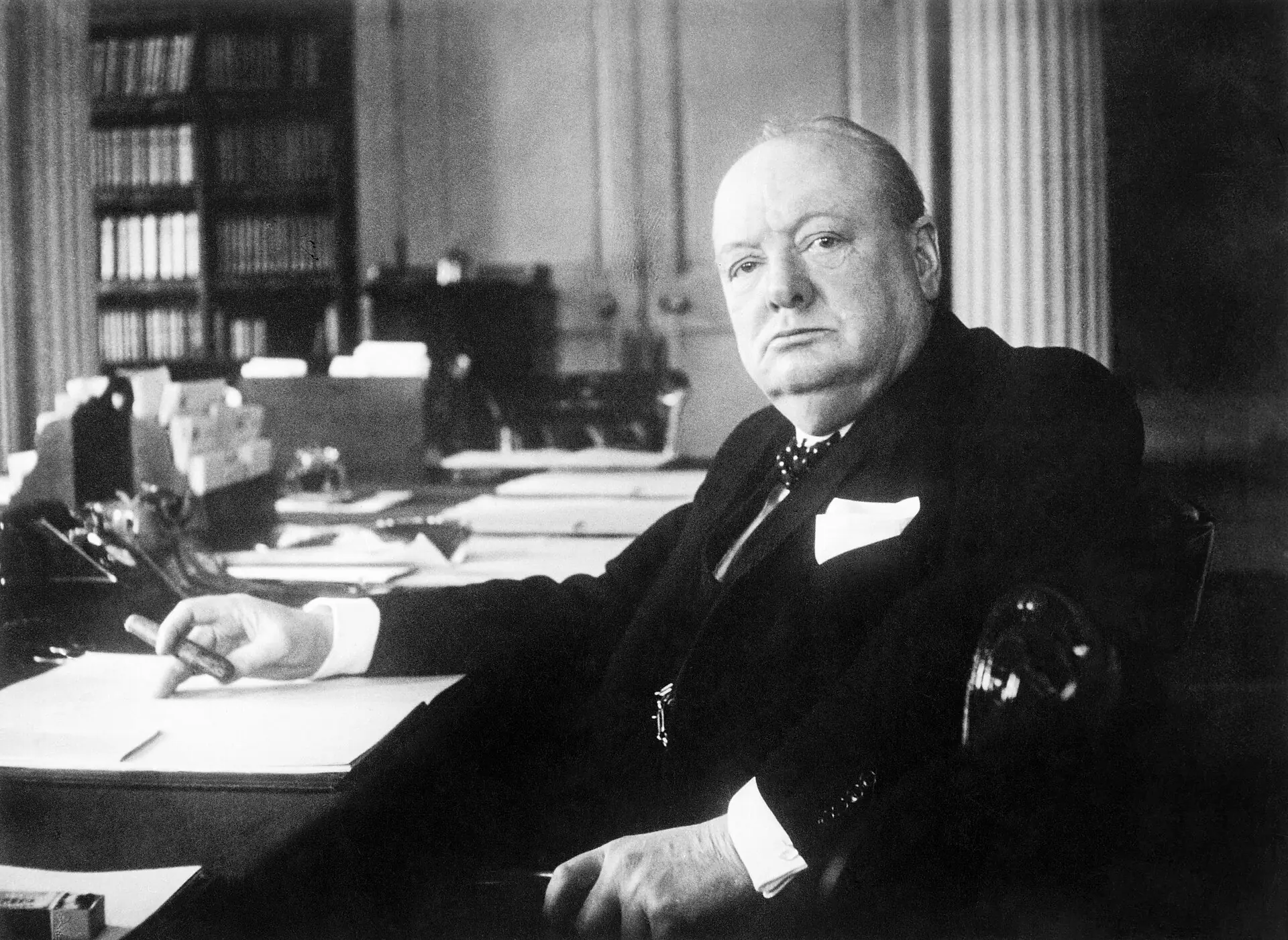 Winston Churchill
The man Britain needed most. The life of the soldier, reporter and twice prime minister who led Britain through the Second World War: eleven chapters, the cabinet of May 1940, the map of his journeys and wars, the people around him and the case for and against.
Read the life
(opens in a new tab)
The timeline is built from the project's own research dossier and its event, ruler and map datasets, checked against English Wikipedia, the Encyclopaedia Iranica, UNESCO and the Statistical Centre of Iran and, for 2025–2026, major news organisations. Linked articles are starting points for verification, not proof that every claim has been independently checked. Dates before about 550 BCE are approximate, the dates of Zoroaster and the extent of the Median kingdom are disputed, and the death tolls of 1988, 2019 and 2026 are given as the ranges reported. The most recent events rest on news reports that should be re-checked; historical frontiers on the map are approximate zones of control.
Every event and every ruler has its own sources. See Sources & Further Reading in each timeline entry and ruler profile.
History is connected. Explore the bigger picture.
AllHistories is an independent visual history project designed to make the past easier to understand, explore, and connect.
History is more than a collection of dates, rulers, and battles. Events rarely happen in isolation. Borders shift, civilizations influence one another, ideas spread, and decisions made centuries ago continue to shape the world today.
Through interactive timelines, historical maps, and visual storytelling, AllHistories helps uncover these connections and makes complex historical subjects more accessible and engaging.
Travel through centuries, discover turning points, and understand how historical events unfold and connect.
Explore how borders, civilizations, populations, trade routes, beliefs, and spheres of influence have changed over time.
Go beyond dates and discover the individuals, places, decisions, and circumstances behind historical developments.
Explore connections between countries, empires, civilizations, and historical themes to better understand cause and consequence.
Features vary depending on the historical subject.
AllHistories draws on historical research, published references, public archives, and available historical datasets. The information is organized and presented through interactive digital experiences.
History is not always certain or universally agreed upon. Dates, territorial boundaries, population figures, and interpretations may differ between sources. Some information is necessarily simplified or estimated for visual presentation.
The goal is to encourage curiosity and independent exploration, not to replace academic publications or specialist historical research.
When you visit AllHistories, the web server may process technical information such as your IP address, requested pages, browser details and access times to deliver pages and maintain the service.
Some pages load Google Analytics, Google Fonts, externally hosted images, maps or other third-party resources. Requests to these providers can transmit technical information, including your IP address. Contact forms may use Google reCAPTCHA to help prevent abuse. These providers apply their own privacy policies.
The website uses browser storage for preferences such as the selected theme. Country microsites also use a session cookie to support website functionality, including request protection. Analytics or other third-party services may use additional cookies or storage, depending on the page and your browser settings.
When you submit a correction or contact form, the information you provide, such as your name, email address and message, is processed to review and respond to your request. Please avoid including sensitive personal information.
You can manage cookies and site storage in your browser and control third-party requests through browser privacy settings. For privacy questions or requests concerning information you submitted, use the contact option on the microsite where you sent it.
Links to sources and other websites take you to services with their own privacy practices. Review their policies before providing personal information.
AllHistories provides historical information for general education and exploration. Its content is not professional, legal, financial or other specialist advice.
We aim to present useful, well-sourced summaries, but cannot guarantee that every date, statement, translation or interpretation is complete or accurate. Verify important claims against the cited sources and relevant scholarship. Content may be corrected or updated.
Maps are simplified historical illustrations. Borders, place names and territorial labels may vary by period and source. Their appearance does not express a position on sovereignty or present-day territorial disputes.
Images and source material may belong to their respective creators or rights holders. Consult the image credit, source page and license before reusing material. A link or credit does not grant additional reuse rights.
External links are provided for reference. AllHistories does not control the content, availability or policies of third-party websites.
To report an error or a concern about credited material, use the contact option on the relevant country microsite and identify the page, material and supporting details.