Key facts of the era
Key Events
Scroll through the centuries, meet the rulers, and explore the moments that shaped Britain.
Explore Britain’s kings, queens, royal houses, republican governments and lines of succession, and every prime minister of Great Britain and the United Kingdom.
The United Kingdom of Great Britain and Northern Ireland: England, Scotland, Wales and Northern Ireland under one crown, a parliamentary democracy that once ruled a worldwide empire.
Rome conquered southern Britain from AD 43, and after the legions left, Anglo-Saxon kingdoms grew into England. The Norman victory at Hastings in 1066 brought a new ruling class, and in 1215 the barons forced Magna Carta on King John.
In 1603 James VI of Scotland inherited the English throne, so two kingdoms shared one monarch. The Acts of Union of 1707 merged their parliaments into Great Britain, and union with Ireland in 1801 created the United Kingdom.
Britain led the Industrial Revolution and built the largest empire of its age, governed for most of the 19th century under Queen Victoria. In 1922 most of Ireland left as a free state, while Northern Ireland stayed in the Union.
The country ended both world wars on the winning side, then let most of its colonies go as the empire gave way to the Commonwealth. It belonged to the European Community and the EU from 1973 to 2020, and since 1999 Scotland, Wales and Northern Ireland have had their own devolved governments.
Mid-year estimates from the Office for National Statistics. The population has grown by more than 12 million since 1990.
The only land border, with Ireland, plus the Channel Tunnel to France

The first union flag of 1606 joined the crosses of St George and St Andrew after England and Scotland came to share a king. The red saltire of St Patrick was added for Ireland on 1 January 1801; Wales, then counted as part of England, has no place in it.

England’s three lions fill two quarters, with the red lion rampant of Scotland and the harp of Ireland in the others. A crowned lion and a chained unicorn hold the shield; the arms have kept this form since 1837, and Scotland uses its own version.
Image credits
Pictures on this page, from Wikimedia Commons and Natural Earth
 Palace of WestminsterDiliffCC BY-SA 2.5
 Queen Elizabeth IAttributed to George GowerPublic domainUnion FlagStefano Brivio (buggolo)CC BY 2.0Royal coat of arms of the United KingdomSodacan (ed. Colohisto), Wikimedia CommonsCC BY-SA 4.0
From Roman Britannia to the United Kingdom, 43 – 2024
From a Roman frontier province to an empire covering a quarter of the world’s land, and back to four nations and fourteen Overseas Territories. See how the realm grew, united, expanded overseas and let go.
Borders are approximate snapshots of claims, not a record of effective control. Protectorates, princely states and Company territories were not all British sovereign territory, and medieval French possessions were often fiefs held of the French crown. The area counter adds up the mapped home realm, colonial claims and Dominions; it is indicative, not an authoritative empire total.
Known source limitations: England’s outline includes Scotland before the 1707 Union; Canada and New Zealand remain grouped with the colonial empire beyond Dominion status; some East African borders lag independence. Overseas Territory markers reflect the historical dataset, not a current sovereignty assessment.
Prime Minister of the United Kingdom
Mentor to the young Queen Victoria. William Lamb, Viscount Melbourne was prime minister for 6 years and 8 months over 2 terms, serving under William IV and Victoria. Terms: July 1834 – November 1834 (Whig); April 1835 – August 1841 (Whig).

If the page stays blank, the site doesn't allow embedding — use “Open in new tab”.
Britain’s legacy is layered and contested: constitutional ideas, industry, language and culture travelled widely, while conquest and empire produced exploitation, resistance and consequences that remain visible today.
Magna Carta, the Civil Wars, the Bill of Rights and successive Reform Acts helped establish government constrained by law, parliamentary authority and a widening electorate. These changes were gradual, disputed and never linear.
Royal courts, precedent, jury trials and parliamentary statute created a legal tradition that evolved across centuries. English common law later influenced legal systems throughout the Commonwealth and beyond.
Old English, Norse, Norman French and many migrant languages shaped modern English. Writers from Chaucer and Shakespeare to Austen and contemporary voices gave British literature an enduring international reach.
Steam power, mechanised production, railways and scientific institutions made Britain an early centre of industrialisation. The resulting prosperity came with harsh labour, urban crowding and environmental damage.
The British Empire connected territories through trade, migration and administration, but rested on conquest, slavery, extraction and racial hierarchy. Decolonisation created independent states while leaving complex political, economic and cultural legacies.
England, Scotland, Wales and Northern Ireland share institutions but retain distinct histories and identities. Union, partition, devolution and independence movements continue to shape how the United Kingdom understands itself.
Mass education, local government, social insurance and the post-war welfare state expanded public responsibility for health and security. The NHS became one of modern Britain’s most recognised institutions.
Britain has always been shaped by movement—from prehistoric settlers and Roman soldiers to Huguenot, Irish, Caribbean, South Asian, African and European communities. Their experiences are central to British culture and identity.
Some chapters of Britain’s past are too big for a single timeline entry. Each of these has a site of its own, with maps, people, sources and the full story, told from start to finish.
 London
Burned. Plagued. Bombed. Rebuilt. A Roman river port that was burned, plagued and bombed again and again over nearly two thousand years, and came back larger every time.
Read the story
(opens in a new tab)
 Manchester
It made the modern world. Then it remade itself. How a Roman fort on the Irwell became Cottonopolis, the first city of the factory age, and remade itself once its mills and docks had closed.
Read the story
(opens in a new tab)
 The British Empire
The sun never set. Then, in thirty years, it did. How a small island came to rule a quarter of the world and let it go within one lifetime: fifteen dispatches, a map through time, 407 events, monarchs, prime ministers and what-ifs.
Read the story
(opens in a new tab)
 Napoleon Bonaparte
Island. Empire. Island. The life of the Corsican officer who became Emperor of the French: twelve chapters, a map of Europe year by year, sixty battles, the state he built and the people around him.
Read the life
(opens in a new tab)
 The Napoleonic Wars
One man. Fifteen years. A continent redrawn. Campaigns, battles and rulers of the wars that remade Europe, 1792 to 1815.
Read the story
(opens in a new tab)
 The Battle of Waterloo
Three armies. Nine hours. Twenty-three years of war, over. 18 June 1815: the Hundred Days, the three armies, the battle hour by hour from Hougoumont to the Guard, its three names and how it has been remembered.
Read the story
(opens in a new tab)
 Vladimir Lenin
He promised peace, land and bread. The life of the exile who took power in Petrograd in 1917: his 53 years to scale, a dual-calendar 1917, the sealed train, the Civil War map, the Testament, and what he intended, decided and caused, kept apart.
Read the life
(opens in a new tab)
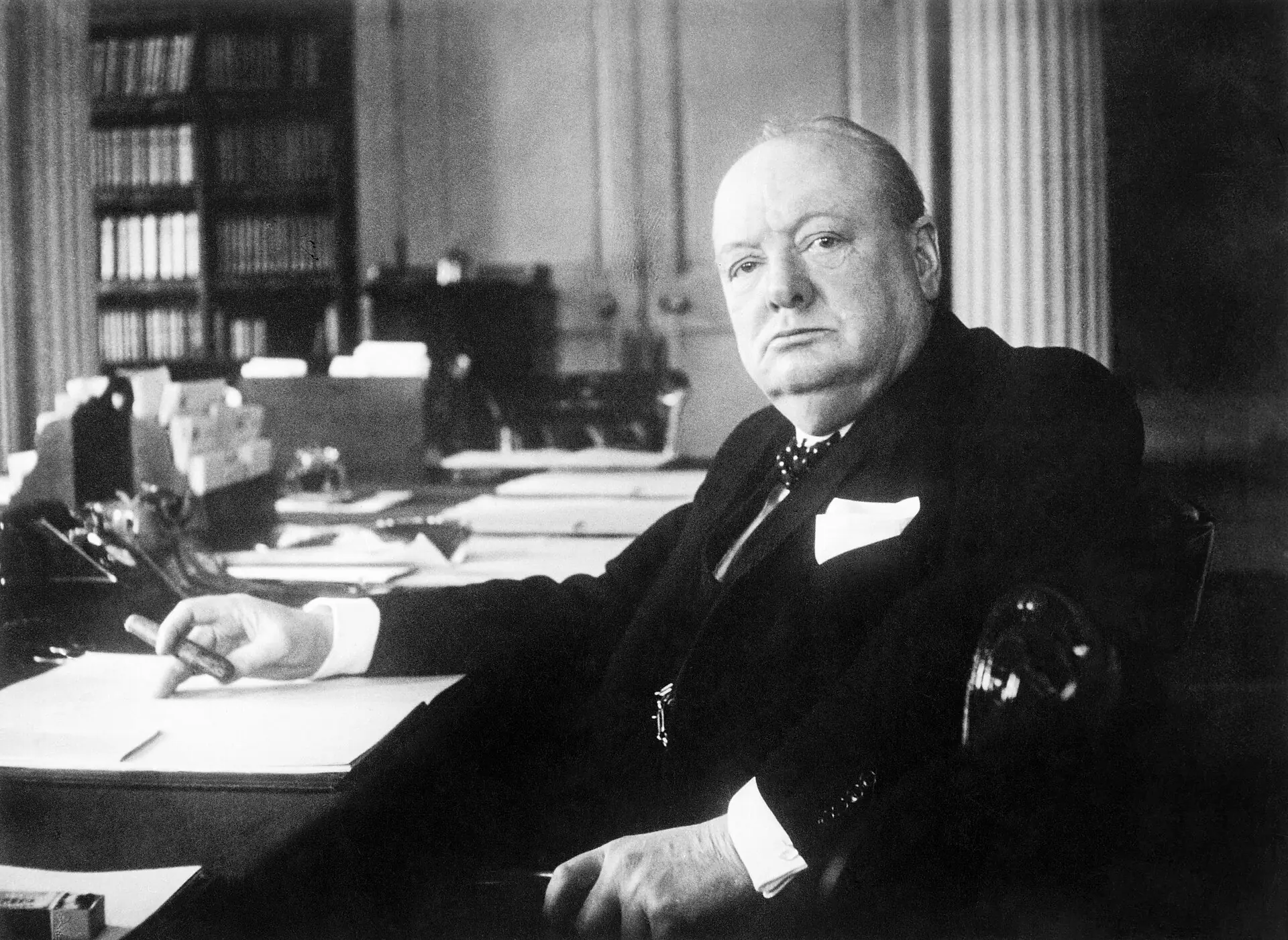 Winston Churchill
The man Britain needed most. The life of the soldier, reporter and twice prime minister who led Britain through the Second World War: eleven chapters, the cabinet of May 1940, the map of his journeys and wars, the people around him and the case for and against.
Read the life
(opens in a new tab)
 World War I
Two shots. Thirty-seven days. Four empires gone. How a wrong turn in Sarajevo became a world war: the July Crisis, the fronts year by year, the cost, the fall of four empires and the peace that led to the next war.
Read the story
(opens in a new tab)
 The European Union
They melted down the weapons of war — and forged a union. How enemies built a union: from coal and steel in 1950 to 27 states, the euro, the crises and Brexit, with a membership map.
Read the story
(opens in a new tab)
The timeline draws on general histories, period studies and the collections of Britain’s national archives, libraries and museums. Linked articles are starting points for verification, not proof that every claim has been independently checked, and early dates — especially for prehistory and the post-Roman centuries — are approximate.
Every event and every ruler has its own sources. See Sources & Further Reading in each timeline entry and ruler profile.
History is connected. Explore the bigger picture.
AllHistories is an independent visual history project designed to make the past easier to understand, explore, and connect.
History is more than a collection of dates, rulers, and battles. Events rarely happen in isolation. Borders shift, civilizations influence one another, ideas spread, and decisions made centuries ago continue to shape the world today.
Through interactive timelines, historical maps, and visual storytelling, AllHistories helps uncover these connections and makes complex historical subjects more accessible and engaging.
Travel through centuries, discover turning points, and understand how historical events unfold and connect.
Explore how borders, civilizations, populations, trade routes, beliefs, and spheres of influence have changed over time.
Go beyond dates and discover the individuals, places, decisions, and circumstances behind historical developments.
Explore connections between countries, empires, civilizations, and historical themes to better understand cause and consequence.
Features vary depending on the historical subject.
AllHistories draws on historical research, published references, public archives, and available historical datasets. The information is organized and presented through interactive digital experiences.
History is not always certain or universally agreed upon. Dates, territorial boundaries, population figures, and interpretations may differ between sources. Some information is necessarily simplified or estimated for visual presentation.
The goal is to encourage curiosity and independent exploration, not to replace academic publications or specialist historical research.
When you visit AllHistories, the web server may process technical information such as your IP address, requested pages, browser details and access times to deliver pages and maintain the service.
Some pages load Google Analytics, Google Fonts, externally hosted images, maps or other third-party resources. Requests to these providers can transmit technical information, including your IP address. Contact forms may use Google reCAPTCHA to help prevent abuse. These providers apply their own privacy policies.
The website uses browser storage for preferences such as the selected theme. Country microsites also use a session cookie to support website functionality, including request protection. Analytics or other third-party services may use additional cookies or storage, depending on the page and your browser settings.
When you submit a correction or contact form, the information you provide, such as your name, email address and message, is processed to review and respond to your request. Please avoid including sensitive personal information.
You can manage cookies and site storage in your browser and control third-party requests through browser privacy settings. For privacy questions or requests concerning information you submitted, use the contact option on the microsite where you sent it.
Links to sources and other websites take you to services with their own privacy practices. Review their policies before providing personal information.
AllHistories provides historical information for general education and exploration. Its content is not professional, legal, financial or other specialist advice.
We aim to present useful, well-sourced summaries, but cannot guarantee that every date, statement, translation or interpretation is complete or accurate. Verify important claims against the cited sources and relevant scholarship. Content may be corrected or updated.
Maps are simplified historical illustrations. Borders, place names and territorial labels may vary by period and source. Their appearance does not express a position on sovereignty or present-day territorial disputes.
Images and source material may belong to their respective creators or rights holders. Consult the image credit, source page and license before reusing material. A link or credit does not grant additional reuse rights.
External links are provided for reference. AllHistories does not control the content, availability or policies of third-party websites.
To report an error or a concern about credited material, use the contact option on the relevant country microsite and identify the page, material and supporting details.