Key facts of the era
Key Events
Journey through the events, people, wars and ideas that shaped Egypt and the Nile valley, from the first humans to the present day.
Follow the unification of the Two Lands, the pyramids of Giza, the empire of the New Kingdom, Alexandria and Cleopatra, Roman and Coptic Egypt, Fatimid Cairo and the Mamluks, Muhammad Ali, the Suez Canal and the revolutions of 1952 and 2011.
From the first kings of the Nile and the pharaohs of thirty dynasties through Persian kings, Ptolemies, Roman emperors, caliphs and sultans to the khedives, kings and presidents of modern Egypt.
The land of the Nile, one of the first states in history, ruled by pharaohs, Greeks, Romans, caliphs, Mamluks, Ottomans and the British before it became independent in 1922 and a republic in 1953.
Farming villages along the Nile were joined into one kingdom around 3100 BCE, by tradition under Narmer. For almost three thousand years pharaohs ruled from Memphis and Thebes, building the pyramids of Giza and the temples of Karnak.
After Persian rule, Alexander the Great took the country in 332 BCE, and the Greek dynasty of the Ptolemies reigned from Alexandria until Cleopatra’s death made Egypt a Roman province in 30 BCE. Arab armies arrived in the 640s, and over the centuries Islam and Arabic became the faith and speech of most Egyptians.
The Fatimids founded Cairo in 969; under Saladin and the Mamluks it grew into a leading city of the Islamic world, until the Ottomans took it in 1517. In the 19th century Muhammad Ali built a modern army and state and the Suez Canal opened in 1869, but debts led to British occupation in 1882.
Britain ended its protectorate in 1922, and in 1952 the Free Officers overthrew the monarchy; Gamal Abdel Nasser nationalised the Suez Canal in 1956, and peace with Israel followed in 1979. A popular uprising toppled Hosni Mubarak in 2011, and after the army removed Mohamed Morsi in 2013, Abdel Fattah el-Sisi became president in 2014.
Mid-year World Bank estimates, based on UN figures, which run well above the count of CAPMAS, Egypt’s own statistics office (108 million in August 2025); on either count the population has about doubled since 1990.
Countries and territories that share a land border with Egypt. Palestine (here the Gaza Strip) is a UN non-member observer state recognised by most UN members. On the Red Sea coast the Hala’ib Triangle is claimed by both Egypt and Sudan and administered by Egypt; the smaller Bir Tawil next to it is claimed by neither.

Red, white and black bands, officially read as the struggle before 1952, the bloodless revolution of that year and the end of monarchy and colonial rule. The golden Eagle of Saladin in the middle took the place of a hawk on 4 October 1984.
Image credits
Pictures on this page, from Wikimedia Commons and Natural Earth
 Great Sphinx of GizaPetar MiloševićCC BY-SA 4.0
 Bust of Queen NefertitiPhilip PikartCC BY-SA 3.0Flag of EgyptMarie Thérèse Hébert & Jean Robert ThibaultCC BY-SA 2.0
The Nile Valley, c. 3000 BCE – Today
Five thousand years of borders on the Nile, from the Two Lands to the Arab Republic. Move to any year, or through 38 narrated chapters, and watch Egypt rise, fall under foreign empires and rise again.
Move the slider to any year: every polity recorded for that year is drawn. Egyptian states are gold, the power that ruled Egypt in the current chapter is green, and everything else is grey; 38 chapters carry the story. Borders change only where the dataset records a change, and they fade rather than morph between dated polygons. The slider is stretched so that the dense modern centuries get more room than the long ancient ones. Hover a territory for its name and dates; click it to open its Wikipedia article.
Boundaries are approximate reconstructions. Borders in the deserts, Nubia and the Levant are especially uncertain, and ancient dates before 664 BCE are approximate. The dataset has no Egyptian polygon before about 3000 BCE, so the map starts at unification; New Kingdom vassals in Canaan and Syria are not drawn as Egyptian; the Ikhshidid period (935–969) appears under the Abbasid Caliphate; Saladin’s first years (1169–1176) are labelled “Zengid dynasty”; and between 1885 and 1921 Egypt is drawn inside “British Africa” (the British occupation and protectorate). The dashed line is modern Egypt, for orientation only: its southern edge follows the 22nd parallel, and the Halaib Triangle is administered by Egypt but claimed by Sudan.
Pharaoh
Ramesses II, often called Ramesses the Great, ruled for about 66 years and is regarded as one of Egypt's most powerful pharaohs. He fought the Hittites at Kadesh and later concluded the earliest known peace treaty with them. He built monuments on a vast scale and founded a new capital, Pi-Ramesses, in the Delta.

Click to expand • 9 family members
If the page stays blank, the site doesn't allow embedding — use “Open in new tab”.
More than five thousand years of Egyptian history along the Nile have left one of the world's earliest writing systems, its most famous monuments, a long religious tradition and a modern nation shaped by revolution and war.
Hieroglyphs appeared before 3000 BCE and were used for more than three thousand years. Egyptian lives on in Coptic, the liturgical language of the Coptic Church, while Arabic became the language of government in 706. Champollion's decipherment of 1822, built on the Rosetta Stone, founded Egyptology.
From Djoser's Step Pyramid and the Great Pyramid of Khufu, the tallest human-made structure for more than 3,800 years, to Karnak, Luxor and Abu Simbel, Egyptian builders created the ancient world's best-known monuments. Medieval Cairo added mosques, madrasas and the Citadel.
The cults of Ra, Amun, Osiris and Isis, and Akhenaten's short-lived worship of the Aten, gave way to Christianity. Egypt was a birthplace of monasticism, and the Coptic Church has kept its own tradition since Chalcedon in 451. After the Arab conquest Egypt became largely Muslim, and al-Azhar, founded in 970, became a leading centre of Sunni learning.
Middle Kingdom tales and wisdom texts, tomb painting and sculpture, Coptic textiles and Mamluk metalwork mark a long artistic tradition. In the twentieth century Cairo led Arab music, cinema and publishing, from Umm Kulthum to Naguib Mahfouz, who won the Nobel Prize in Literature in 1988.
Egypt gave the world the 365-day calendar and early medical texts. Ptolemaic Alexandria, with its Library and Mouseion, was home to Euclid and Eratosthenes; Fatimid Cairo to Ibn al-Haytham's work on optics. In 1999 Ahmed Zewail won the Nobel Prize in Chemistry.
The Urabi revolt, the Revolution of 1919, independence in 1922 and the Free Officers' coup of 1952 marked Egypt's path out of British control. Nasser's nationalisation of the Suez Canal in 1956 made him a hero of Arab nationalism, and the uprising of 25 January 2011 ended Mubarak's thirty-year rule.
The Suez Crisis, the defeat of 1967 and the crossing of the canal on 6 October 1973 shape national memory, and the 1979 peace treaty with Israel remains contested. How to remember the monarchy, Nasser, and the events of 2011 and 2013 is still debated.
For millennia the annual Nile flood fed Egypt, measured on Nilometers and managed by basin irrigation. The Suez Canal of 1869 put the country on a world trade route, the Aswan High Dam, completed in 1970, ended the flood, and the Nile's waters remain a question of national security.
Some chapters of Egypt’s past are too big for a single timeline entry. Each of these has a site of its own, with maps, people, sources and the full story, told from start to finish.
 The British Empire
The sun never set. Then, in thirty years, it did. How a small island came to rule a quarter of the world and let it go within one lifetime: fifteen dispatches, a map through time, 407 events, monarchs, prime ministers and what-ifs.
Read the story
(opens in a new tab)
 Napoleon Bonaparte
Island. Empire. Island. The life of the Corsican officer who became Emperor of the French: twelve chapters, a map of Europe year by year, sixty battles, the state he built and the people around him.
Read the life
(opens in a new tab)
 The Scramble for Africa
Who drew Africa? Not a ruler in Berlin. Who drew Africa? Treaties, guns, rivers and resistance in the partition of a continent, 1870–1914, and the borders it left behind.
Read the story
(opens in a new tab)
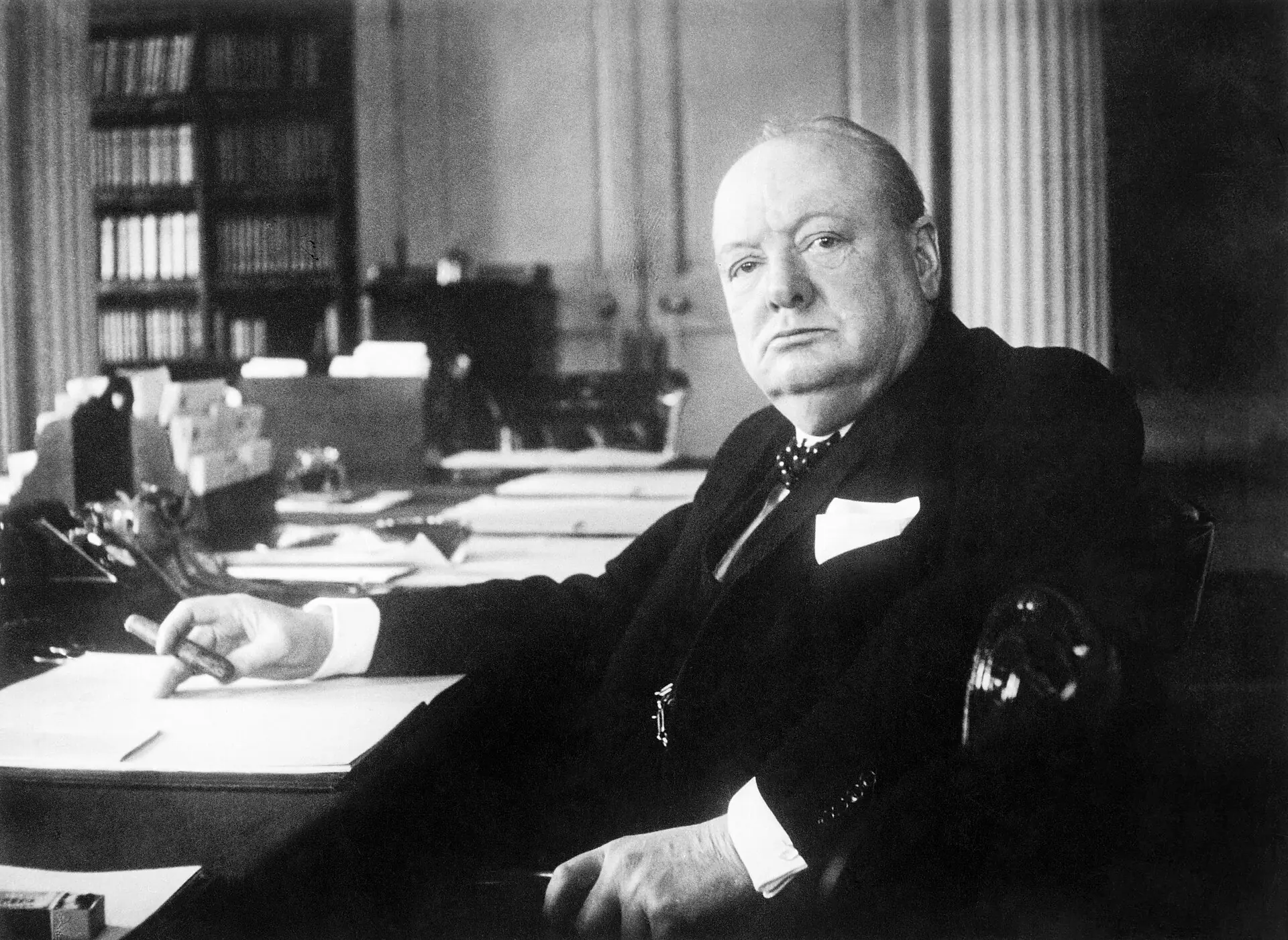 Winston Churchill
The man Britain needed most. The life of the soldier, reporter and twice prime minister who led Britain through the Second World War: eleven chapters, the cabinet of May 1940, the map of his journeys and wars, the people around him and the case for and against.
Read the life
(opens in a new tab)
The timeline is built from the project's own research dossier and its event, ruler, prime minister and map datasets, checked against English Wikipedia, Encyclopaedia Britannica and museum and scholarly references. Linked articles are starting points for verification, not proof that every claim has been independently checked. Dates before 664 BCE follow Ian Shaw's Oxford History of Ancient Egypt and are approximate; other chronologies differ by up to a century in the earliest periods, and historical borders are reconstructions.
Every event and every ruler has its own sources. See Sources & Further Reading in each timeline entry and ruler profile.
History is connected. Explore the bigger picture.
AllHistories is an independent visual history project designed to make the past easier to understand, explore, and connect.
History is more than a collection of dates, rulers, and battles. Events rarely happen in isolation. Borders shift, civilizations influence one another, ideas spread, and decisions made centuries ago continue to shape the world today.
Through interactive timelines, historical maps, and visual storytelling, AllHistories helps uncover these connections and makes complex historical subjects more accessible and engaging.
Travel through centuries, discover turning points, and understand how historical events unfold and connect.
Explore how borders, civilizations, populations, trade routes, beliefs, and spheres of influence have changed over time.
Go beyond dates and discover the individuals, places, decisions, and circumstances behind historical developments.
Explore connections between countries, empires, civilizations, and historical themes to better understand cause and consequence.
Features vary depending on the historical subject.
AllHistories draws on historical research, published references, public archives, and available historical datasets. The information is organized and presented through interactive digital experiences.
History is not always certain or universally agreed upon. Dates, territorial boundaries, population figures, and interpretations may differ between sources. Some information is necessarily simplified or estimated for visual presentation.
The goal is to encourage curiosity and independent exploration, not to replace academic publications or specialist historical research.
When you visit AllHistories, the web server may process technical information such as your IP address, requested pages, browser details and access times to deliver pages and maintain the service.
Some pages load Google Analytics, Google Fonts, externally hosted images, maps or other third-party resources. Requests to these providers can transmit technical information, including your IP address. Contact forms may use Google reCAPTCHA to help prevent abuse. These providers apply their own privacy policies.
The website uses browser storage for preferences such as the selected theme. Country microsites also use a session cookie to support website functionality, including request protection. Analytics or other third-party services may use additional cookies or storage, depending on the page and your browser settings.
When you submit a correction or contact form, the information you provide, such as your name, email address and message, is processed to review and respond to your request. Please avoid including sensitive personal information.
You can manage cookies and site storage in your browser and control third-party requests through browser privacy settings. For privacy questions or requests concerning information you submitted, use the contact option on the microsite where you sent it.
Links to sources and other websites take you to services with their own privacy practices. Review their policies before providing personal information.
AllHistories provides historical information for general education and exploration. Its content is not professional, legal, financial or other specialist advice.
We aim to present useful, well-sourced summaries, but cannot guarantee that every date, statement, translation or interpretation is complete or accurate. Verify important claims against the cited sources and relevant scholarship. Content may be corrected or updated.
Maps are simplified historical illustrations. Borders, place names and territorial labels may vary by period and source. Their appearance does not express a position on sovereignty or present-day territorial disputes.
Images and source material may belong to their respective creators or rights holders. Consult the image credit, source page and license before reusing material. A link or credit does not grant additional reuse rights.
External links are provided for reference. AllHistories does not control the content, availability or policies of third-party websites.
To report an error or a concern about credited material, use the contact option on the relevant country microsite and identify the page, material and supporting details.